Eric Alden Smith – författare
Visar alla böcker från författaren Eric Alden Smith. Handla med fri frakt och snabb leverans.
11 produkter
Evolutionary Ecology and Human Behavior
Av Eric Alden Smith, Eric Alden Smith
Inbunden, 1992
2512 kr
Lägg i varukorg
"à required reading for anyone interested in the economy, ecology, and demography of human societies." --American Journal of Human Biology "This excellent book can serve both as a text¼book and as a scholarly reference." --American Scientist
Evolutionary Ecology and Human Behavior
Av Eric Alden Smith, Eric Alden Smith
Häftad, 1992
764 kr
Lägg i varukorg
"à required reading for anyone interested in the economy, ecology, and demography of human societies." --American Journal of Human Biology "This excellent book can serve both as a text¼book and as a scholarly reference." --American Scientist
Rethinking Human Adaptation
Biological And Cultural Models
Av Rada Dyson-hudson, Michael A. Little m. fl.
Inbunden, 2019
1901 kr
Lägg i varukorg
Most anthropologists agree that a comprehension of adaptation and adaptive processes is central to an understanding of human biological and behavioural systems. However, there is little agreement among archaeologists, cultural anthropologists, and human biologists as to what adaptation means and …
Rethinking Human Adaptation
Biological And Cultural Models
Av Rada Dyson-hudson, Michael A. Little m. fl.
Häftad, 2020
691 kr
Lägg i varukorg
Most anthropologists agree that a comprehension of adaptation and adaptive processes is central to an understanding of human biological and behavioural systems. However, there is little agreement among archaeologists, cultural anthropologists, and human biologists as to what adaptation means and …
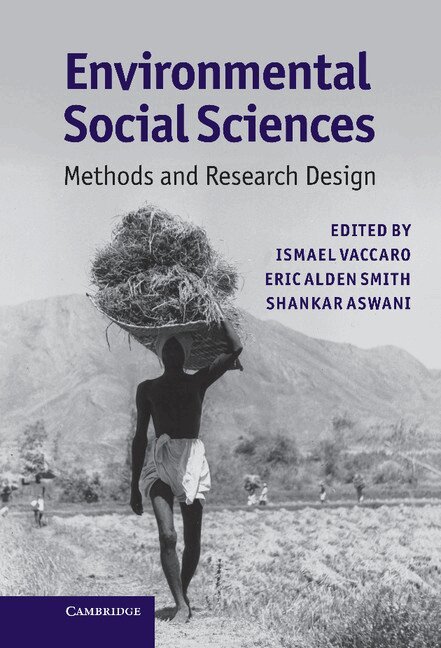
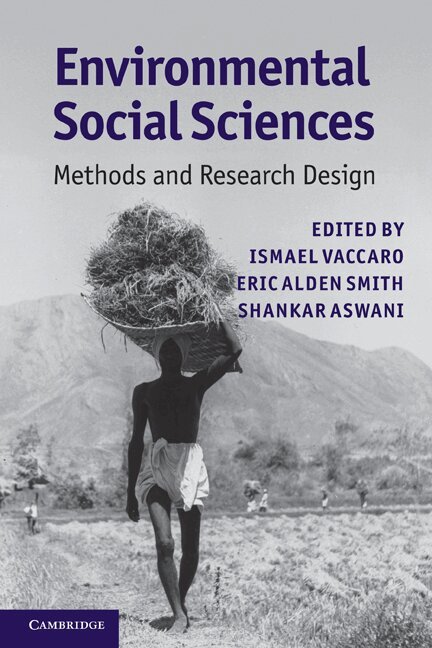
Environmental Social Sciences
Methods and Research Design
Av Ismael Vaccaro, Eric Alden Smith m. fl.
Inbunden, 2010
1003 kr
Lägg i varukorg
The relationship between human communities and the environment is extremely complex. In order to resolve the issues involved with this relationship, interdisciplinary research combining natural sciences, social sciences, and humanities is necessary. In this 2010 book, specialists summarise methods …
Environmental Social Sciences
Methods and Research Design
Av Ismael Vaccaro, Eric Alden Smith m. fl.
Häftad, 2010
740 kr
Lägg i varukorg
The relationship between human communities and the environment is extremely complex. In order to resolve the issues involved with this relationship, interdisciplinary research combining natural sciences, social sciences, and humanities is necessary. In this 2010 book, specialists summarise methods …
Rethinking Human Adaptation
Biological And Cultural Models
Av Eric Alden Smith, Michael A. Little m. fl.
E-bok, 2019
814 kr
Lägg i varukorg
Most anthropologists agree that a comprehension of adaptation and adaptive processes is central to an understanding of human biological and behavioural systems. However, there is little agreement among archaeologists, cultural anthropologists, and human biologists as to what adaptation means and …
Rethinking Human Adaptation
Biological And Cultural Models
Av Eric Alden Smith, Michael A. Little m. fl.
E-bok, 2019
788 kr
Lägg i varukorg
Most anthropologists agree that a comprehension of adaptation and adaptive processes is central to an understanding of human biological and behavioural systems. However, there is little agreement among archaeologists, cultural anthropologists, and human biologists as to what adaptation means and …
Evolutionary Ecology and Human Behavior
E-bok, 2017
901 kr
Lägg i varukorg
""à required reading for anyone interested in the economy, ecology, and demography of human societies."" --American Journal of Human Biology ""This excellent book can serve both as a text¼book and as a scholarly reference."" --American Scientist
Evolutionary Ecology and Human Behavior
E-bok, 2017
901 kr
Lägg i varukorg
""à required reading for anyone interested in the economy, ecology, and demography of human societies."" --American Journal of Human Biology ""This excellent book can serve both as a text¼book and as a scholarly reference."" --American Scientist
Contested Arctic
Indigenous Peoples, Industrial States, and the Circumpolar Environment
Av Eric Alden Smith, Joan McCarter
Häftad, 1997
308 kr
Tillfälligt slut
The Arctic may be the last frontier of colonialism, where industrial societies are aggressively exploiting the resources and undermining the social cohesion of indigenous peoples. In fact, this colonization of the circumpolar north is only now reaching its full momentum. Among the new conquistadors …