Franklin D. Murphy Lectures - Böcker
Visar alla böcker i serien Franklin D. Murphy Lectures. Handla med fri frakt och snabb leverans.
6 produkter
6 produkter
411 kr
Skickas inom 7-10 vardagar
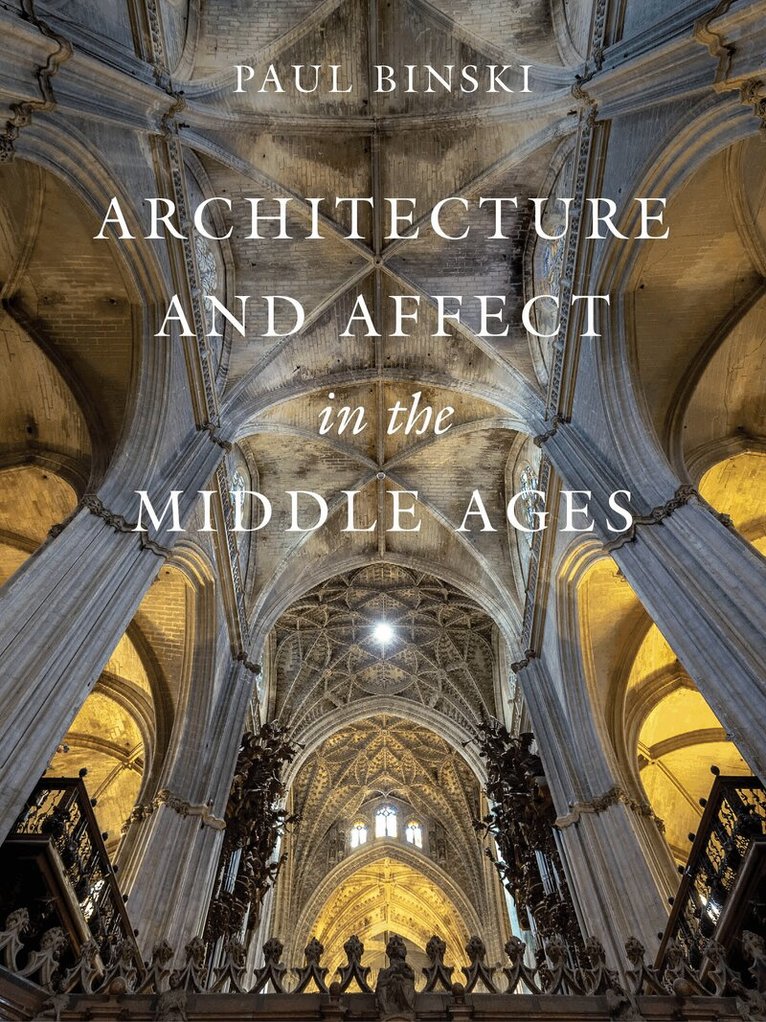
How did people living in the Middle Ages respond to spectacular buildings, such as the Gothic cathedrals? While contemporary scholarship places a large emphasis on the emotional content of Western medieval figurative art, the emotion of architecture has largely gone undiscussed. In a radical new approach, Architecture and Affect in the Middle Ages explores the relationship between medieval buildings and the complexity of experience they engendered. Paul Binski examines long-standing misconceptions about the way viewers responded to medieval architecture across Western Europe and in Byzantine and Arabic culture between late antiquity and the end of the medieval period. He emphasizes the importance of the experience itself within these built environments, essentially places of action, space, and structure but also, crucially, of sound and emotion.
290 kr
Skickas inom 7-10 vardagar
Flags and Faces, based on David Lubin's 2008 Franklin D. Murphy Lectures at the University of Kansas, shows how American artists, photographers, and graphic designers helped shape public perceptions about World War I. In the book's first section, Art for War's Sake," Lubin considers how flag-based patriotic imagery prompted Americans to intervene in Europe in 1917. Trading on current anxieties about class, gender, and nationhood, American visual culture made war with Germany seem inevitable. The second section, Fixing Faces," contemplates the corrosive effects of the war on soldiers who literally lost their faces on the battlefield, and on their families back home. Unable to endure distasteful reminders of war's brutality, postwar Americans grew obsessed with physical beauty, as seen in the simultaneous rise of cosmetic surgery, the makeup industry, beauty pageants, and the cult of screen goddesses such as Greta Garbo, who was worshipped for the masklike perfection of her face. Engaging, provocative, and filled with arresting and at times disturbing illustrations, Flags and Faces offers striking new insights into American art and visual culture from 1915 to 1930.
411 kr
Skickas inom 7-10 vardagar
This ground breaking study examines decorative Chinese works of art and visual culture, known as chinoiserie, in the context of church and state politics, with a particular focus on the Catholic missions' impact on Western attitudes toward China and the Chinese. Art-historical examinations of chinoiserie have largely ignored the role of the Church and its conversion efforts in Asia. Johns, however, demonstrates that the emperor's 1722 prohibition against Catholic evangelization, which occurred after almost a century and a half of tolerance, prompted a remarkable change in European visualizations of China in Roman Catholic countries. China and the Church considers the progress of Christianity in China during the late Ming and early Qing dynasties, examines authentic works of Chinese art available to the European artists who produced chinoiserie, and explains how the East Asian male body in Western art changed from "normative" depictions to whimsical, feminized grotesques after the collapse of the missionary efforts during the 1720s.
411 kr
Skickas inom 7-10 vardagar
Although objects associated with the Passion and suffering of Christ are among the most important and sacred relics venerated by the Catholic Church, this is the first study that considers how they were presented to the faithful. Cynthia Hahn adopts an accessible, informative, and holistic approach to the important history of Passion relics—first the True Cross, and then the collective group of Passion relics—examining their display in reliquaries, their presentation in church environments, their purposeful collection as centerpieces in royal and imperial collections, and finally their veneration in pictorial form as Arma Christi. Tracing the ways that Passion relics appear and disappear in response to Christian devotion and to historical phenomena, ranging from pilgrimage and the Crusades to the promotion of imperial power, this groundbreaking investigation presents a compelling picture of a very important aspect of late medieval and early modern devotion.
535 kr
Skickas
Articles crafted from lacquer, silk, cotton, paper, ceramics, and iron were central to daily life in early modern Japan. They were powerful carriers of knowledge, sociality, and identity, and their facture was a matter of serious concern among makers and consumers alike. In this innovative study, Christine M. E. Guth offers a holistic framework for appreciating the crafts produced in the city and countryside, by celebrity and unknown makers, between the late sixteenth and mid-nineteenth centuries. Her study throws into relief the confluence of often overlooked forces that contributed to Japan’s diverse, dynamic, and aesthetically sophisticated artifactual culture. By bringing into dialogue key issues such as natural resources and their management, media representations, gender and workshop organization, embodied knowledge, and innovation, she invites readers to think about Japanese crafts as emerging from cooperative yet competitive expressive environments involving both human and nonhuman forces. A focus on the material, sociological, physiological, and technical aspects of making practices adds to our understanding of early modern crafts by revealing underlying patterns of thought and action within the wider culture of the times.
535 kr
Kommande
How does still life “matter”? The two essays in this book, based on Carol Armstrong’s lectures as part of the 2020 Franklin D. Murphy Lectureship at the University of Kansas, explore the concept of “material thought” as it relates to still life. Armstrong looks at two major figures of European still-life painting: eighteenth-century French artist Jean-Baptiste-Siméon Chardin and twentieth-century Italian painter Giorgio Morandi. She discusses their paintings alongside the works of other European painters, philosophers, and critics. These close readings consider the question of how we understand materiality in relation to still-life painting and the material objects this genre represents.