Fronteras Series - Böcker
Visar alla böcker i serien Fronteras Series. Handla med fri frakt och snabb leverans.
3 produkter
3 produkter
269 kr
Skickas inom 10-15 vardagar
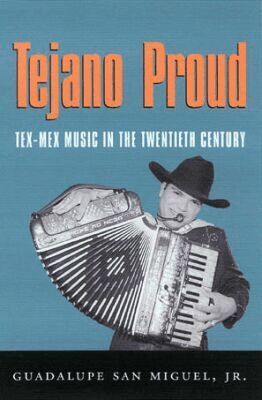
From the dance halls to the main stage, from small town Texas to the big cities, ""musica tejana"" is rapidly becoming known as a rich and vibrant form of American music. The 20th century has seen Texas Mexican music balance between the traditional and the modern, remaining rooted in Mexico while taking nourishment from Africa, Europe, the Caribbean and the United States. In this book the author provides a history of the evolution of ""musica tejana"" - its ups and downs and its importance to Mexican Texas culture in the context of Anglo-Mexican relations. He also discusses the more recent development of the Tejano recording industry and the role women have begun to play in an industry long dominated by men.
214 kr
Skickas inom 10-15 vardagar
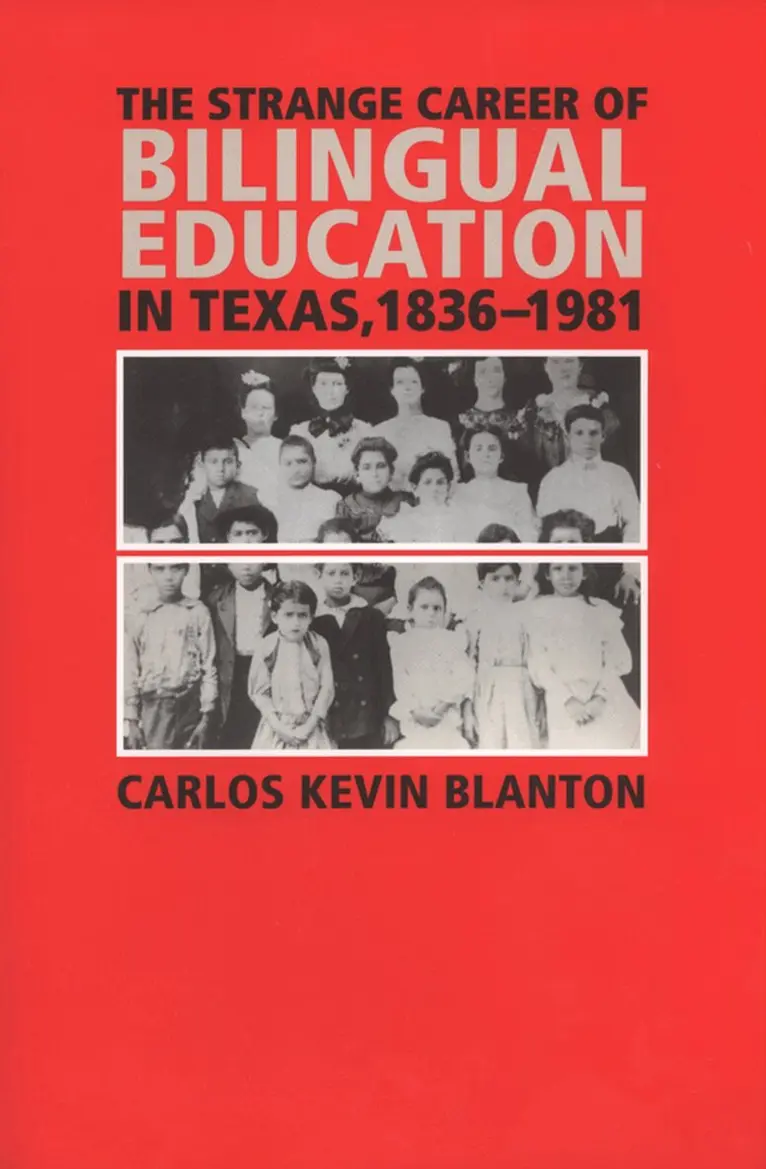
Despite controversies over current educational practices, Texas boasts a rich and vibrant bilingual tradition - and not just for Spanish-English instruction, but for Czech, German, Polish, and Dutch as well. Over the course of the nineteenth and twentieth centuries, Texas educational policymakers embraced, ignored, rejected, outlawed, and then once again embraced this tradition. In ""The Strange Career of Bilingual Education in Texas, 1836-1981"", Carlos Kevin Blanton traces the educational policies and their underlying rationales, from Stephen F. Austin's proposal in the 1830s to ""Mexicanize"" Anglo children by teaching them Spanish along with English and French, through the 1981 passage of the most encompassing bilingual education law in the state's history. Drawing on primary materials, Blanton presents the Texas experience in light of national trends and movements, such as Progressive Education, the Americanization Movement, and the Good Neighbor Movement. By tracing the many changes that eventually led to the re-establishment of bilingual education in its modern form in the 1960s and the 1981 passage of a landmark state law, Blanton reconnects Texas with its bilingual past.
241 kr
Skickas inom 10-15 vardagar
Claiming Citizenship spotlights a community where Mexican Americans, regardless of social class, embraced a common ideology and worked for access to the full rights of citizenship without confrontation or radicalization. Victoria, Texas, is a small city with a sizable Mexican-descent population dating to the period before the U.S. annexation of the state. There, a complex and nuanced story of ethnic politics unfolded in the middle of the twentieth century.Focusing on grassroots, author Anthony Quiroz shows how the experience of the Mexican American citizens of Victoria, who worked within the system, challenges common assumptions about the power of class to inform ideology and demonstrates that embracing ethnic identity does not always mean rejecting Americanism. Quiroz identifies Victoria as a community in which Mexican Americans did not engage in overt resistance, labor organization, demonstrations, or the rejection of capitalism, democracy, or Anglo culture and society.Victoria's Mexican Americans struggled for equal citizenship as the "loyal opposition," opposing exclusionary practices while embracing many of the values and practices of the dominant society.Various individuals and groups worked, beginning in the 1940s, to bring about integrated schools, better political representation, and a professional class of Mexican Americans whose respectability would help advance the cause of Mexican equality. Their quest for public legitimacy was undertaken within a framework of a bicultural identitythat was adaptable to the private, Mexican world of home, church, neighborhood, and family, as well as to the public world of school, work, and politics. Coexistence with Anglo American society and sharing the American dream constituted the desired ideal.Quiroz's study makes a major contribution to our understanding of the Mexican American experience by focusing on groups who chose a more subtle, less confrontational path toward equality. Perhaps, indeed, he describes the more common experience of this ethnic population in twentieth-century America.