Frontiers in Computer Science - Böcker
Visar alla böcker i serien Frontiers in Computer Science. Handla med fri frakt och snabb leverans.
5 produkter
5 produkter
1 625 kr
Skickas inom 10-15 vardagar
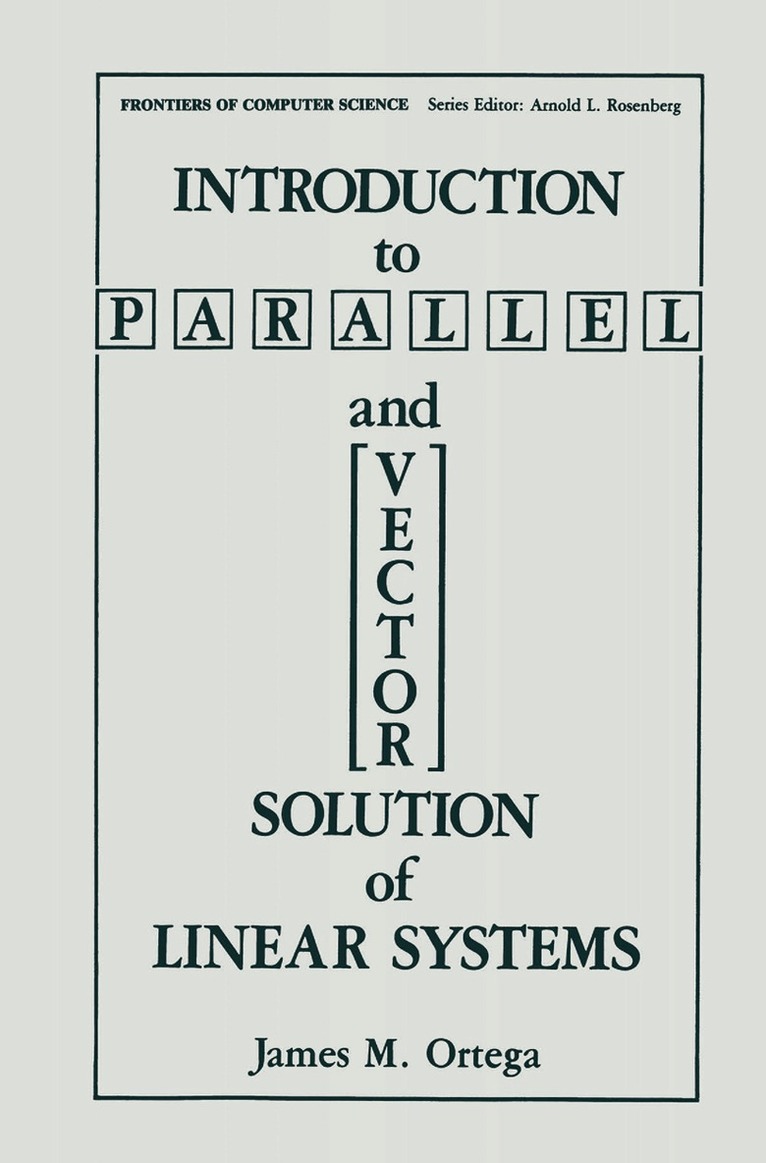
Although the origins of parallel computing go back to the last century, it was only in the 1970s that parallel and vector computers became available to the scientific community. The first of these machines-the 64 processor llliac IV and the vector computers built by Texas Instruments, Control Data Corporation, and then CRA Y Research Corporation-had a somewhat limited impact. They were few in number and available mostly to workers in a few government laboratories. By now, however, the trickle has become a flood. There are over 200 large-scale vector computers now installed, not only in government laboratories but also in universities and in an increasing diversity of industries. Moreover, the National Science Foundation's Super computing Centers have made large vector computers widely available to the academic community. In addition, smaller, very cost-effective vector computers are being manufactured by a number of companies. Parallelism in computers has also progressed rapidly. The largest super computers now consist of several vector processors working in parallel. Although the number of processors in such machines is still relatively small (up to 8), it is expected that an increasing number of processors will be added in the near future (to a total of 16 or 32). Moreover, there are a myriad of research projects to build machines with hundreds, thousands, or even more processors. Indeed, several companies are now selling parallel machines, some with as many as hundreds, or even tens of thousands, of processors.
1 064 kr
Skickas inom 10-15 vardagar
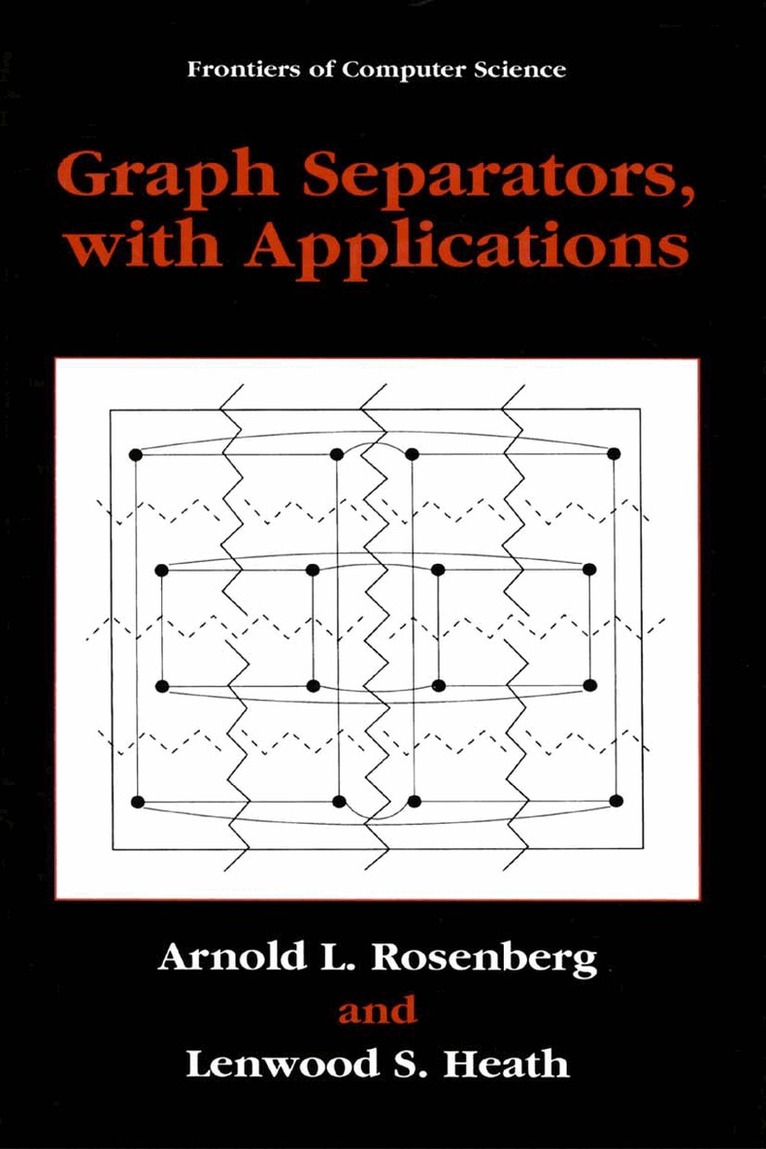
This text is devoted to techniques for obtaining upper and lower bounds on the sizes of graph separators - upper bounds being obtained via decomposition algorithms. The book surveys the main approaches to obtaining good graph separations, while its main focus is on techniques for deriving lower bounds on the sizes of graph separators. This asymmetry in focus reflects the perception that the work on upper bounds, or algorithms, for graph separation is much better represented in the standard theory literature than is the work on lower bounds, which we perceive as being much more scattered throughout the literature on application areas.
552 kr
Skickas inom 10-15 vardagar
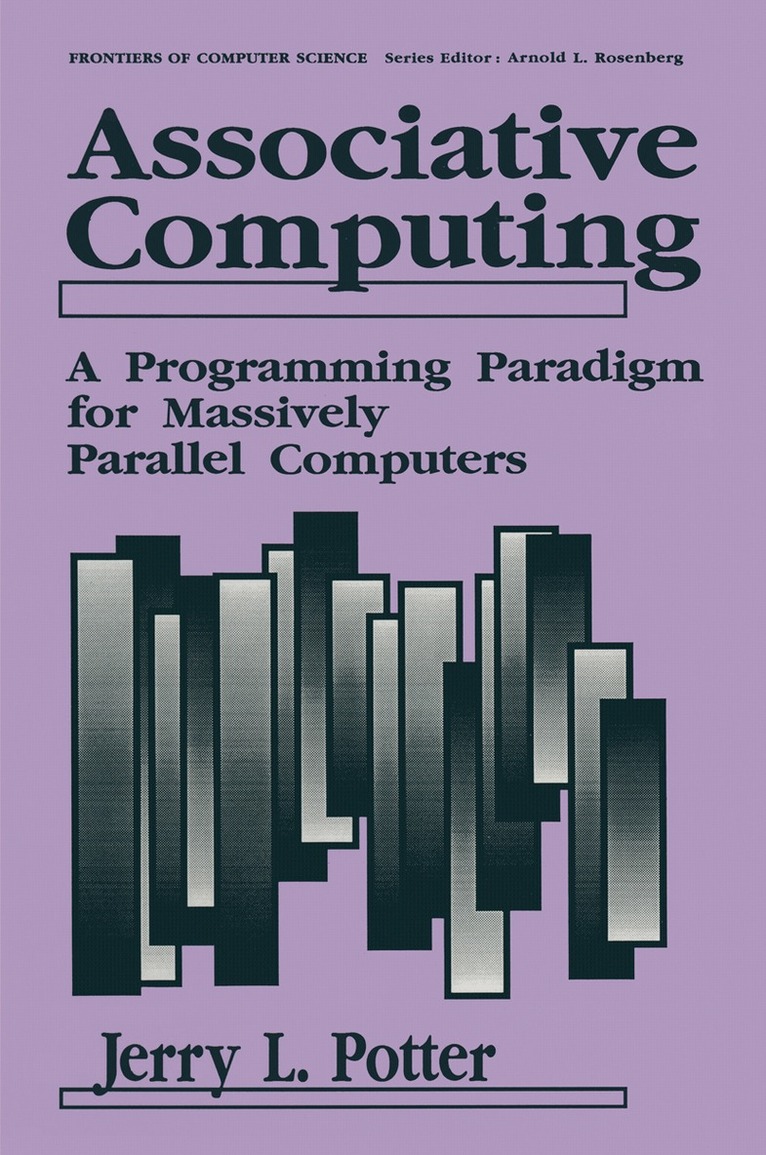
Integrating associative processing concepts with massively parallel SIMD technology, this volume explores a model for accessing data by content rather than abstract address mapping.
1 064 kr
Skickas inom 10-15 vardagar
Graph Separators with Applications is devoted to techniques for obtaining upper and lower bounds on the sizes of graph separators - upper bounds being obtained via decomposition algorithms. The book surveys the main approaches to obtaining good graph separations, while the main focus of the book is on techniques for deriving lower bounds on the sizes of graph separators. This asymmetry in focus reflects our perception that the work on upper bounds, or algorithms, for graph separation is much better represented in the standard theory literature than is the work on lower bounds, which we perceive as being much more scattered throughout the literature on application areas. Given the multitude of notions of graph separator that have been developed and studied over the past (roughly) three decades, there is a need for a central, theory-oriented repository for the mass of results. The need is absolutely critical in the area of lower-bound techniques for graph separators, since these techniques have virtually never appeared in articles having the word `separator' or any of its near-synonyms in the title. Graph Separators with Applications fills this need.
1 625 kr
Skickas inom 10-15 vardagar
Although the origins of parallel computing go back to the last century, it was only in the 1970s that parallel and vector computers became available to the scientific community. The first of these machines-the 64 processor llliac IV and the vector computers built by Texas Instruments, Control Data Corporation, and then CRA Y Research Corporation-had a somewhat limited impact. They were few in number and available mostly to workers in a few government laboratories. By now, however, the trickle has become a flood. There are over 200 large-scale vector computers now installed, not only in government laboratories but also in universities and in an increasing diversity of industries. Moreover, the National Science Foundation's Super computing Centers have made large vector computers widely available to the academic community. In addition, smaller, very cost-effective vector computers are being manufactured by a number of companies. Parallelism in computers has also progressed rapidly. The largest super computers now consist of several vector processors working in parallel. Although the number of processors in such machines is still relatively small (up to 8), it is expected that an increasing number of processors will be added in the near future (to a total of 16 or 32). Moreover, there are a myriad of research projects to build machines with hundreds, thousands, or even more processors. Indeed, several companies are now selling parallel machines, some with as many as hundreds, or even tens of thousands, of processors.