• Fri frakt över 249 kr
  • •
  • Snabba leveranser
  • •
  • Billiga böcker
Kundservice

Du är på sajten för privatpersoner.

Företag, bibliotek eller offentlig verksamhet?

Du handlar på classic.bokus.com, där alla dina funktioner finns intakta.
Till classic.bokus.com
Bokus logotyp. Gå till startsidan.
  • Erbjudanden
  • Student
  • Topplistor
  • Barn & ungdom
  • Bokus Play
  • E-böcker
  • Ljudböcker
  • Pocketböcker
  • Spel & pussel

Upp till 25% på utvalda nyheter →

Sidfot

Mina sidor

    Hjälp

    • Kundservice
    • Vanliga frågor och svar
    • Frakt och leverans
    • Retur vid ångerrätt
    • Reklamera vara
    • Betalning
    • Köpvillkor
    • Allmänna villkor
    • Information om webbplatsens tillgänglighet

    Om Bokus

    • Om oss
    • Pressrum
    • För studenter
    • För företag
    • För bibliotek och offentlig verksamhet
    • För leverantörer
    • Hållbarhet

    Populärt

    • Aktuella erbjudanden
    • Presentkort
    • Studentlitteratur
    • Nya böcker
    • Topplistor
    • Signerade böcker
    • Engelska böcker

    Inspiration

    • Boktips
    • BookTok
    • Populära bokserier
    • Barnbokskaraktärer
    • Populära författare
    Logotyp för Bokus
    Följ oss på Facebook (extern länk)Följ oss på Instagram (extern länk)Följ oss på YouTube (extern länk)Följ oss på TikTok (extern länk)
    bokus @ CookiesAnpassa cookiesIntegritetspolicyKöpvillkor
    Till Citymail hemsida (extern länk)Till Budbee hemsida (extern länk)Till Postnord hemsida (extern länk)Till Schenker hemsida (extern länk)Till Early Bird hemsida (extern länk)Till Walleys hemsida (extern länk)
    1. Data och IT
    2. Systemvetenskap och AI

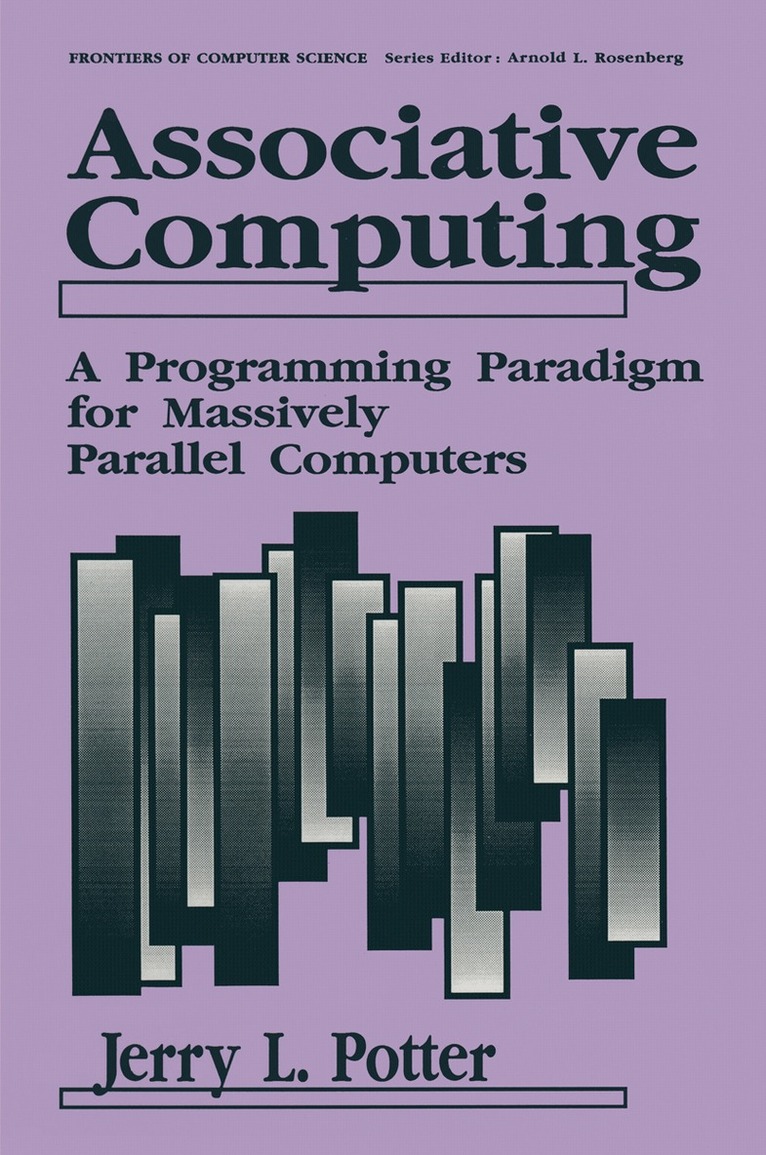
    Associative Computing

    A Programming Paradigm for Massively Parallel Computers

    AvJerry L. Potter

    Häftad, Engelska, 2012

    Del i serien Frontiers in Computer Science

    563 kr

    Beställningsvara. Skickas inom 10-15 vardagar. Fri frakt över 249 kr.

    Fler format och utgåvor

    Inbunden

    896 kr

    E-bok

    732 kr

    Beskrivning

    Integrating associative processing concepts with massively parallel SIMD technology, this volume explores a model for accessing data by content rather than abstract address mapping.

    Produktinformation

    • Utgivningsdatum:2012-10-21
    • Mått:152 x 229 x 17 mm
    • Vikt:443 g
    • Format:Häftad
    • Språk:Engelska
    • Serie:Frontiers in Computer Science
    • Antal sidor:286
    • Förlag:Springer-Verlag New York Inc.
    • ISBN:9781461364528

    Utforska kategorier

    • Systemvetenskap och AI inom Data och IT
    • Nätverk och kommunikation inom Data och IT

    Innehållsförteckning

    • 1. Introduction.- 1.1. SITDAC Terminology.- 1.2. The SITDAC Model.- 1.3. SITDAC versus Other Models.- 1.4. Hardware Ramifications of SITDAC.- 1.5. SITDAC Algorithms.- 1.6. History.- 1.7. The Nature of SITDAC Programming.- 1.8. Reduced Programming Complexity.- 1.9. Throughput Analysis.- 1.10. Conclusion.- 2. Basic Concepts of Associative Programming.- 2.1. SIMD Parallelism.- 2.2. Flow of Control.- 2.3. The Classroom Model.- 2.4. Memory Allocation.- 2.5. Massive Parallel Searching.- 2.6. Tabular Arrays.- 2.7. Bit-Serial Arithmetic.- 2.8. Responders and Numeric Searching.- 2.9. Responder Iteration.- 2.10. Corner Turning.- 2.11. Bucket-Brigade Communication.- 2.12. Data Mapping.- 2.13. Data Replication.- 2.14. Conclusion.- 3. An Associative Model of Computation.- 3.1. The SITDAC Model of Computation.- 3.2. Cycle Nesting.- 3.3. Items and Expressions.- 3.4. Item Declarations.- 3.5. The Associative Statement.- 3.6. The Allocate and Release Statements.- 3.7. The If Statement.- 3.8. The For and While Statements.- 3.9. The Loop Statement.- 3.10. The Get Statement.- 3.11. The Next Statement.- 3.12. The Any Statement.- 3.13. The Setscope Statement.- 3.14. Maximum, Minimum, Nth and Count.- 3.15. Item Equivalences.- 3.16. ASC Pronouns and Articles.- 3.17. Module Types—Main and Subroutine.- 3.18. The I/O Statements.- 3.19. Interprocessor Communication.- 3.20. Contiguous Data Allocation.- 3.21. Indirect Addressing.- 3.22. Conclusion.- 4. Elementary ASC Programs.- 4.1. Simple Arithmetic Tasks.- 4.2. Associative Stacks and Queues.- 4.3. A Dataflow Interpreter.- 4.4. Minimal Spanning Tree.- 4.5. Conclusion.- 5. Associative Data Structures.- 5.1. An Associative Program.- 5.2. Structure Codes.- 5.3. Data Structures as Extended Associations.- 5.4. Simultaneous Multiple Data Organizations.-5.5. Generalized Array Data Structure Codes.- 5.6. Associative Data Structure References.- 5.7. Data Structure Code Manipulation.- 5.8. Synonymous Data Structures.- 5.9. Lists and Linked Lists.- 5.10. Structure-Code Functions.- 5.11. List Manipulation.- 5.12. Structure-Code Searching Functions.- 5.13. Structure-Code I/O (SCIO).- 5.14. Structure Codes for Graphs.- 5.15. Conclusion.- 6. ASC Recursion.- 6.1. The Recursewhile Construct.- 6.2. A Simple Recursewhile Example.- 6.3. How to Use Recursewhile.- 6.4. A Complex Recursewhile Example.- 6.5. Conclusion.- 7. Complex Searching.- 7.1. A Brief OPS5 Background.- 7.2. Pattern Data Structures.- 7.3. Local and Global Variables.- 7.4. The Andif Statement.- 7.5. The Andfor Statement.- 7.6. Flow of Control for And Constructs.- 7.7. Conclusion.- 8. Context-Sensitive Compilation.- 8.1. Context Sensitivity.- 8.2. A Brief Overview.- 8.3. Context-Sensitive Compilation.- 8.4. Execution of a Procedural Rule.- 8.5. Conclusion.- 9. Associative Prolog.- 9.1. Background.- 9.2. Unification.- 9.3. The Binding Association.- 9.4. Search Organization.- 9.5. Inference Engine.- 9.6. Clause Filtering.- 9.7. Binding Variables.- 9.8. Prolog I/O.- 9.9. Example of a Prolog Program.- 9.10. Additional Details.- 9.11. Conclusion.- 10. An Associative Processor Design.- 10.1. Design Rationale.- 10.2. Re-locatable Data.- 10.3. Communication Paths.- 10.4. The Basic Design.- 10.5. VLSI Organization.- 10.6. Associative Multitasking/Multiuser Parallelism.- 10.7. The Basic Associative Intermediate Level Instruction Set.- 10.8. Conclusion.- Appendix. ASC Tables.- References.