Genocide: A Critical Bibliographic Review – Serie
Visar alla böcker i serien Genocide: A Critical Bibliographic Review. Handla med fri frakt och snabb leverans.
6 produkter
6 produkter
833 kr
Skickas inom 10-15 vardagar
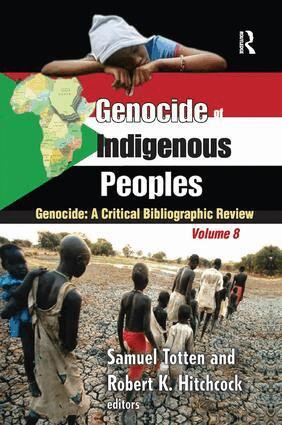
An estimated 350 to 600 million indigenous people reside across the globe. Numerous governments fail to recognize its indigenous peoples living within their borders. It was not until the latter part of the twentieth century that the genocide of indigenous peoples became a major focus of human rights activists, non-governmental organizations, international development and finance institutions such as the United Nations and the World Bank, and indigenous and other community-based organizations.Scholars and activists began paying greater attention to the struggles between Fourth World peoples and First, Second, and Third World states because of illegal actions of nation-states against indigenous peoples, indigenous groups' passive and active resistance to top-down development, and concerns about the impacts of transnational forces including what is now known as globalization.This volume offers a clear message for genocide scholars and others concerned with crimes against humanity and genocide: much greater attention must be paid to the plight of all peoples, indigenous and otherwise, no matter how small in scale, how little-known, how "invisible" or hidden from view.
714 kr
Skickas inom 10-15 vardagar
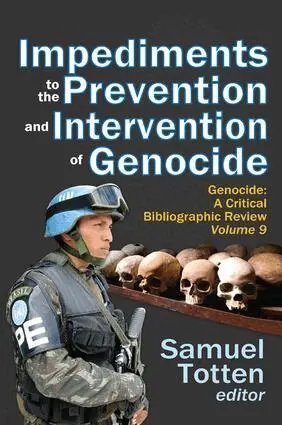
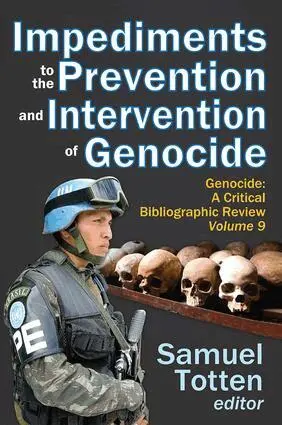
Academics, NGOs, the United Nations, and individual nations are focused on the prevention and intervention of genocide. Traditionally, missions to prevent or intervene in genocide have been sporadic and under-resourced. The contributors to this volume consider some of the major stumbling blocks to the avoidance of genocide.Bartrop and Totten argue that realpolitik is the major impediment to the elimination of genocide. Campbell examines the lack of political will to confront genocide, and Theriault describes how denial becomes an obstacle to intervention against genocide. Loyle and Davenport discuss how intervention is impeded by a lack of reliable data on genocide violence, and Macgregor presents an overview of the influence of the media. Totten examines how the UN Convention on Genocide actually impedes anti-genocide efforts; and how the institutional configuration of the UN is itself often a stumbling block.Addressing an issue that is often overlooked, Travis examines the impact of global arms trade on genocide. Finally, Hiebert examines how international criminal prosecution of atrocities can impede preventive efforts, and Hirsch provides an analysis of the strengths, weaknesses, and effectiveness of major international and national prescriptions developed over the last decade. The result is a distinguished addition to Transaction's prestigious Genocide Studies series.
686 kr
Skickas inom 10-15 vardagar
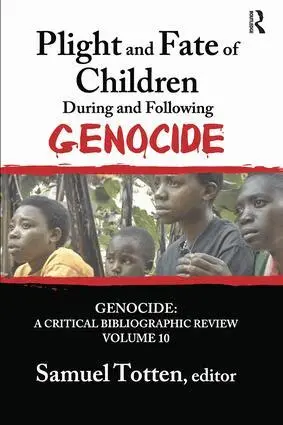
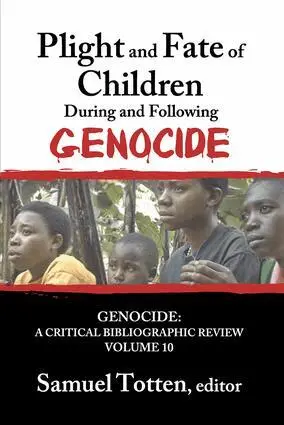
Plight and Fate of Children During and Following Genocide examines why and how children were mistreated during genocides in the twentieth and twenty-first centuries. Among the cases examined are the Australian Aboriginals, the Armenian genocide, the Holocaust, the Mayans in Guatemala, the 1994 Rwanda genocide, and the genocide in Darfur. Two additional chapters examine the issues of sexual and gender-based violence against children and the phenomenon of child soldiers.Following an introduction by Samuel Totten, the essays include: "Australia's Aboriginal Children"; "Hell is for Children"; "Children: The Most Vulnerable Victims of the Armenian Genocide"; "Children and the Holocaust"; "The Fate of Mentally and Physically Disabled Children in Nazi Germany"; "The Plight and Fate of Children vis-a-vis the Guatemalan Genocide"; "The Plight of Children During and Following the 1994 Rwandan Genocide"; "Darfur Genocide"; "Sexual and Gender-Based Violence against Children during Genocide"; and, "Child Soldiers." Contributors include: Colin Tatz, Henry C. Theriault, Asya Darbinyan, Rubina Peroomian, Jeffrey Blutinger, Amanda Grzyb, Elisa von Joeden-Forgey, Sara Demir, Hannibal Travis, and Samuel Totten.The editor and several of the contributors have personally investigated and witnessed the aftermath of genocidal campaigns.
2 113 kr
Skickas inom 10-15 vardagar
An estimated 350 to 600 million indigenous people reside across the globe. Numerous governments fail to recognize its indigenous peoples living within their borders. It was not until the latter part of the twentieth century that the genocide of indigenous peoples became a major focus of human rights activists, non-governmental organizations, international development and finance institutions such as the United Nations and the World Bank, and indigenous and other community-based organizations.Scholars and activists began paying greater attention to the struggles between Fourth World peoples and First, Second, and Third World states because of illegal actions of nation-states against indigenous peoples, indigenous groups' passive and active resistance to top-down development, and concerns about the impacts of transnational forces including what is now known as globalization.This volume offers a clear message for genocide scholars and others concerned with crimes against humanity and genocide: much greater attention must be paid to the plight of all peoples, indigenous and otherwise, no matter how small in scale, how little-known, how "invisible" or hidden from view.
2 243 kr
Skickas inom 10-15 vardagar
Academics, NGOs, the United Nations, and individual nations are focused on the prevention and intervention of genocide. Traditionally, missions to prevent or intervene in genocide have been sporadic and under-resourced. The contributors to this volume consider some of the major stumbling blocks to the avoidance of genocide.Bartrop and Totten argue that realpolitik is the major impediment to the elimination of genocide. Campbell examines the lack of political will to confront genocide, and Theriault describes how denial becomes an obstacle to intervention against genocide. Loyle and Davenport discuss how intervention is impeded by a lack of reliable data on genocide violence, and Macgregor presents an overview of the influence of the media. Totten examines how the UN Convention on Genocide actually impedes anti-genocide efforts; and how the institutional configuration of the UN is itself often a stumbling block.Addressing an issue that is often overlooked, Travis examines the impact of global arms trade on genocide. Finally, Hiebert examines how international criminal prosecution of atrocities can impede preventive efforts, and Hirsch provides an analysis of the strengths, weaknesses, and effectiveness of major international and national prescriptions developed over the last decade. The result is a distinguished addition to Transaction's prestigious Genocide Studies series.
1 148 kr
Tillfälligt slut
Plight and Fate of Children During and Following Genocide examines why and how children were mistreated during genocides in the twentieth and twenty-first centuries. Among the cases examined are the Australian Aboriginals, the Armenian genocide, the Holocaust, the Mayans in Guatemala, the 1994 Rwanda genocide, and the genocide in Darfur. Two additional chapters examine the issues of sexual and gender-based violence against children and the phenomenon of child soldiers.Following an introduction by Samuel Totten, the essays include: "Australia's Aboriginal Children"; "Hell is for Children"; "Children: The Most Vulnerable Victims of the Armenian Genocide"; "Children and the Holocaust"; "The Fate of Mentally and Physically Disabled Children in Nazi Germany"; "The Plight and Fate of Children vis-a-vis the Guatemalan Genocide"; "The Plight of Children During and Following the 1994 Rwandan Genocide"; "Darfur Genocide"; "Sexual and Gender-Based Violence against Children during Genocide"; and, "Child Soldiers." Contributors include: Colin Tatz, Henry C. Theriault, Asya Darbinyan, Rubina Peroomian, Jeffrey Blutinger, Amanda Grzyb, Elisa von Joeden-Forgey, Sara Demir, Hannibal Travis, and Samuel Totten.The editor and several of the contributors have personally investigated and witnessed the aftermath of genocidal campaigns.