Geological Conservation Review Series – serie
Visar alla böcker i serien Geological Conservation Review Series. Handla med fri frakt och snabb leverans.
6 produkter
6 produkter
3 172 kr
Skickas inom 10-15 vardagar
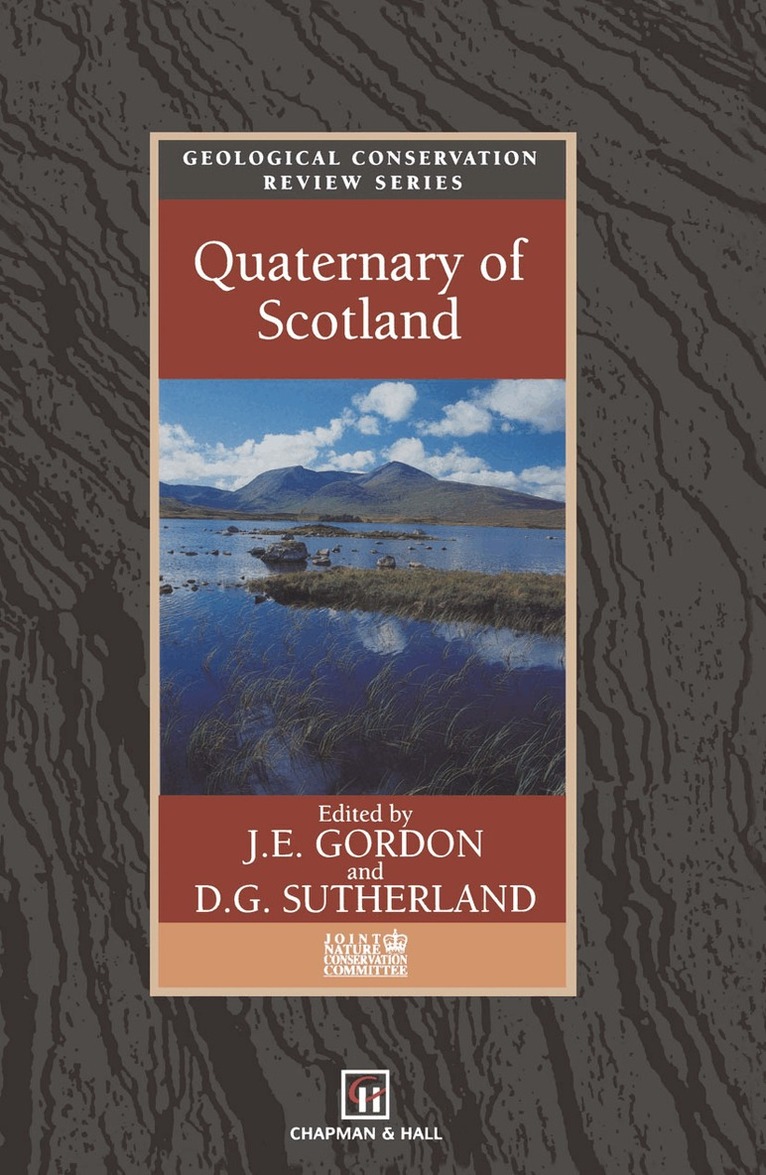
The aim of the "Geological Conservation Review Series" is to provide a public record of the features of interest at localities being considered for notification as Sites of Special Scientific Interest (SSSIs). It is written to the highest scientific standards and incorporates the cumulative insights of generations of leading Earth scientists, but in such a way that the assessment and conservation value of the site is clear. In describing the geomorphological heritage of Scotland, this volume offers an account of how the natural environment responded - in terms of landforms, processes and plant communities - to severe climatic change as the Quaternary era progressed over the last 2 millions years. This legacy, as preserved in the 138 nationally important GCR sites described, documents a remarkable diversity of landforms in a relatively small area. The rugged highlands contrast with the rolling hills and flat plains found further south, while the western and northern islands, together with the highly indented coastline, add further to the scenic diversity.How this variety of landscapes came into being, the forces which shaped it, and the climatic extremes which drove it, are the themes explored in this volume.
2 117 kr
Skickas inom 10-15 vardagar
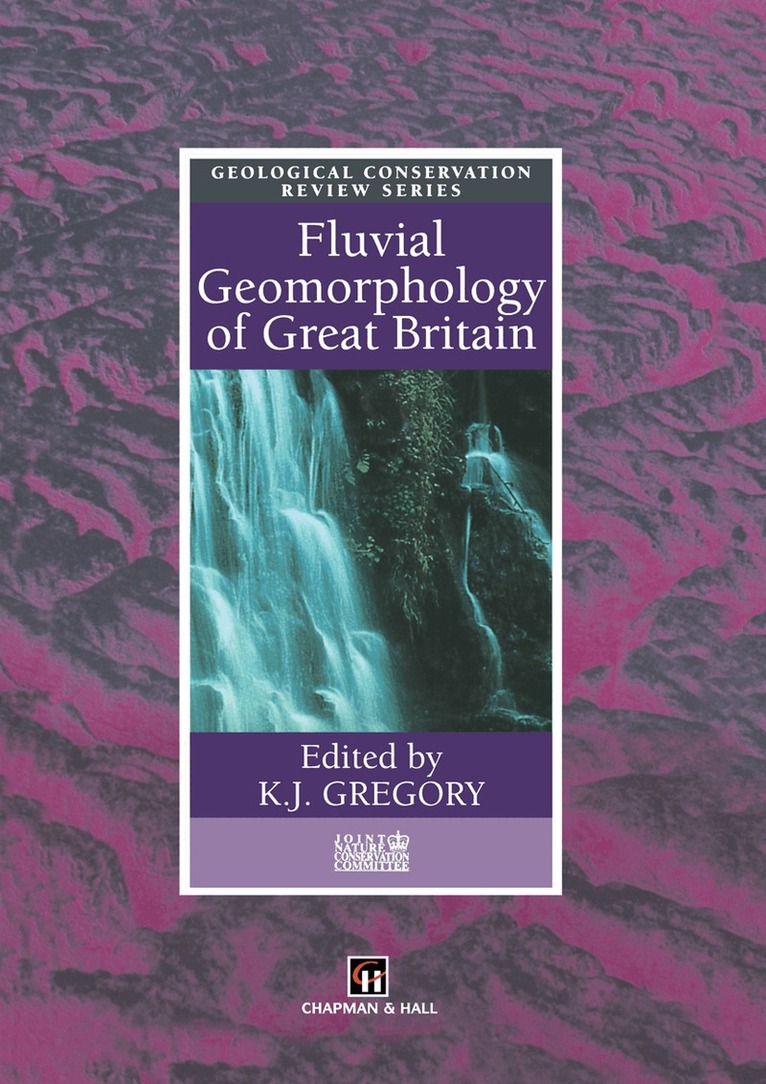
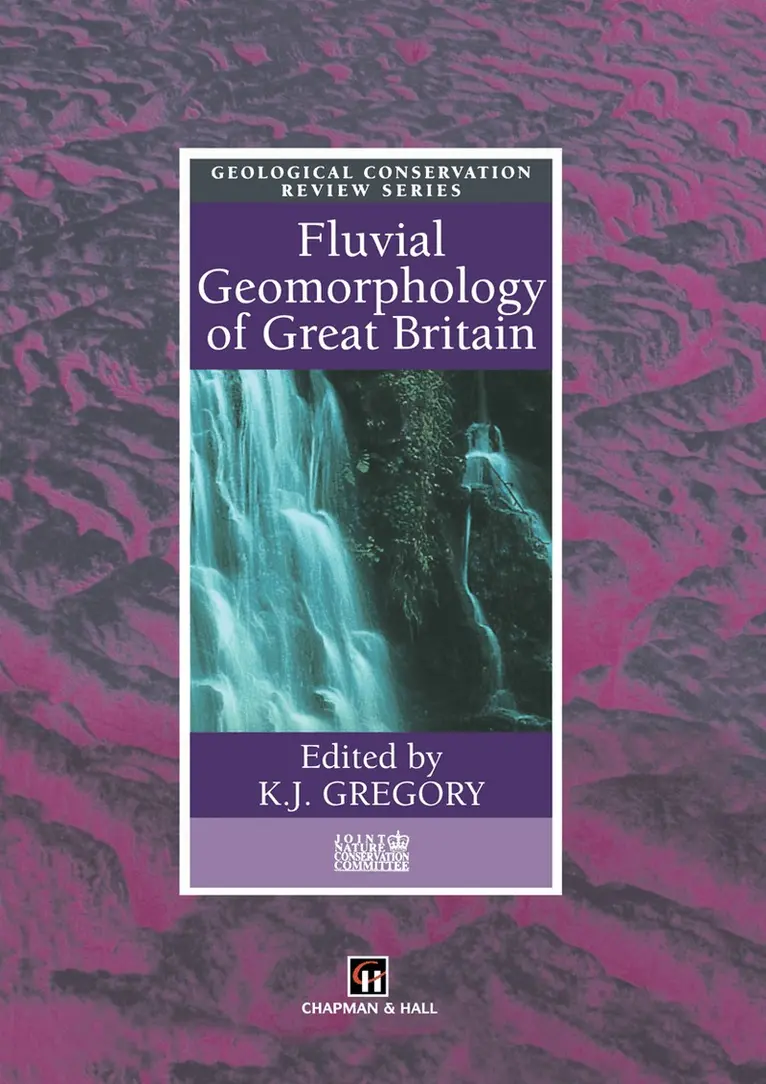
Water is the key to understanding the present physical landscape of Britain, which is fashioned largely by rain and rivers. The hydrological cycle is therefore of fundamental significance in the formation of the landscape. Fluvial geomorphology studies the development of river-made land forms, together with the associated fluvial processes. There are many sites of scientific interest and value throughout the UK. The "Geological Conservation Review" sites decribed in this volume represent the wide range of fluvial land forms in the UK, and the accounts provide scientific descriptions of all the fluvial geomorphology sites in Britain selected for statutory nature conservation as "Sites of Special Scientific Interest". Starting with an outline of fluvial processes in Britain, the book is split into five major sections, each of which introduces a specific area of Britain, followed by detailed and illustrated descriptions of the sites included in those areas. This book, a summary of fluvial sites in the UK, is intended as a resource for all those interested in fluvial processes, from conservation and environmental specialists to managers of rivers and river channels.This book should be of interest to water authorities; environmental consultants and agencies; and conservation specialists.
534 kr
Skickas inom 10-15 vardagar
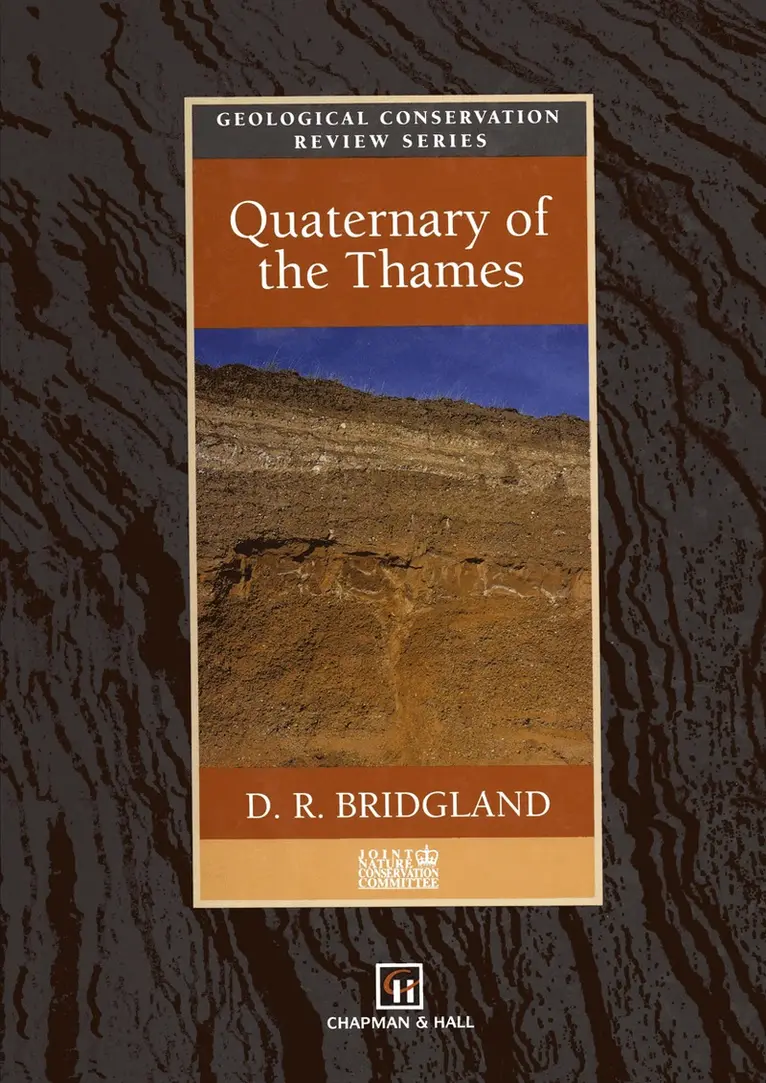
The principal aim of this volume is to provide descriptions of Sites of Special Scientific Interest, selected as part of the Geological Conservation Review, that yield evidence for the Pleistocene history of the River Thames and its tributaries. Although defined thematically, the volume covers all Pleistocene GCR sites in the Thames valley. A number of sites in southern East Anglia are also included because they provide important evidence bearing on the history of the Thames system. The justification for a GCR volume devoted to the Thames lies in the special importance of the river in the British Quaternary. The volume is con cerned with the history of Britain over approximately the last two million years of geological time, during the repeated glacial phases of the Quaternary 'Ice Age' and the warmer intervals between them. Many such climatic fluctuations are recorded in the deposits of the Thames, which can be shown to have existed as the predominant west to east drainage line in south-eastern England throughout the Pleistocene. The Thames has left a detailed record of its earlier presence in the form of deposits, which comprise fluvially aggraded floodplain sediments (predominantly gravels) preserved on the valley sides, where they form geomorphological terrace features. The oldest deposits are at the highest levels, forming a terrace 'staircase' that records successive stages in the evolution of the valley.
2 117 kr
Skickas inom 10-15 vardagar
In describing the geomorphological heritage of Scotland, this volume offers a remarkable account of how the natural environment responded in terms of landforms, processes and plant communities, to severe climatic change as the Quaternary era progressed over the last two million years. This legacy, as preserved in the 138 nationally important GCR sites described, documents a remarkable diversity of landforms in a relatively small area. The rugged highland contrast with the rolling hills and flat plains found further south, while the western and northern islands, together with the highly-indented coastline add further to the scenic diversity. How this variety of landscapes came into being, the forces which shaped it , and the climatic extremes which drove it, are the themes explored in this volume.
534 kr
Skickas inom 10-15 vardagar
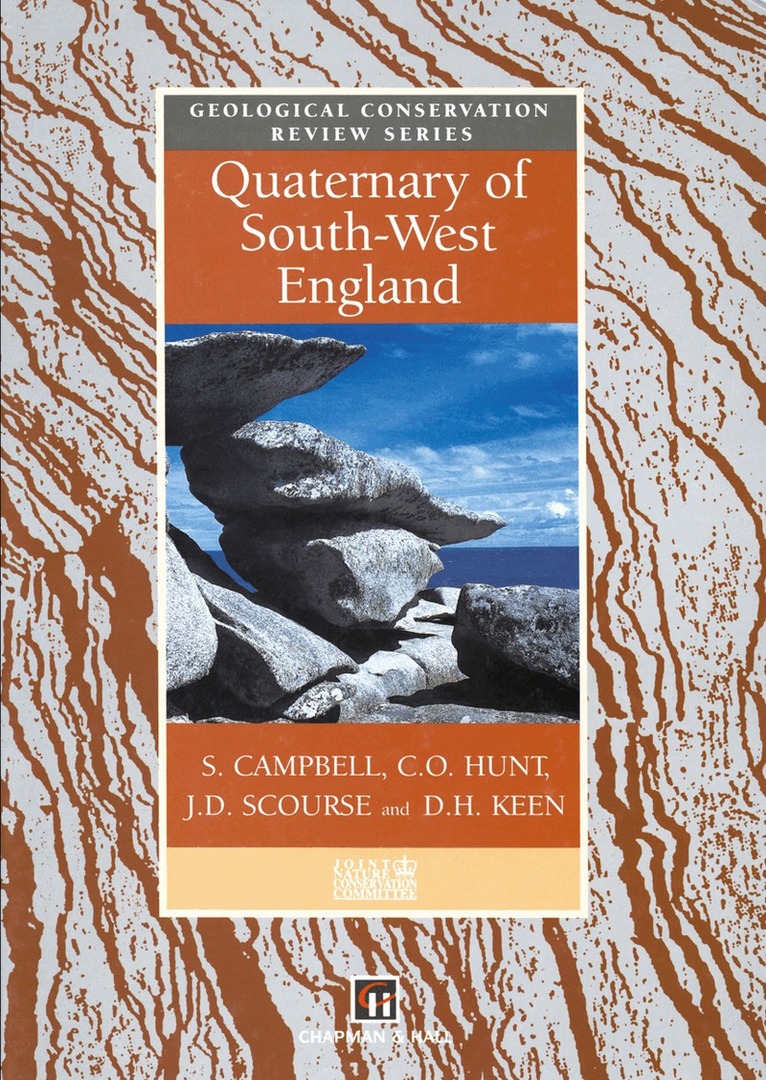
STRUCTURE OF THE VOLUME AND TERMINOLOGY USED This book contains scientific descriptions of 63 localities (Figure A) of at least national importance for Quaternary geology, geomorphology and environmental change in South-West England. These sites were selected by the Geological Conservation Review and are accordingly designated 'GCR' sites. Chapter 1 provides an introduction to the Quaternary. Chapter 2 synthesizes the geomorphological development and Quaternary history of the region, and outlines the principles involved in site selection. The individual GCR site descriptions form the core of the book. In the following chapters, sites are arranged and described in broad geographic areas and by research topic. This is necessitated by the widely disparate nature of the field evidence in Soutb West England: sites demonstrating the full range of Quaternary and geomorphological features are not evenly and conveniently dispersed throughout the region, and some areas have significant gaps. Neither do the individual chapters contain sites that neces sarily equate with particular site selection networks. Rather, the chosen chapter headings provide the least repetitive means of describing the sites and background material. Where possible, a chronological approach, from oldest to youngest, has been used to describe sites within a given chapter. Again, this approach is not always possi ble, and a group of sites may show variations on landform or Stratigraphie evidence broadly within one major time interval or chronostratigraphic stage; inevitably there are many overlaps.
2 117 kr
Skickas inom 10-15 vardagar
Fluvial Geomorphology of Great Britain studies the development of river-made land forms, together with the associated fluvial processes. There are many sites of scientific interest and value throughout the UK. The GCR sites described in this volume represent the wide range of fluvial land forms in the UK, and the accounts provide scientific descriptions of all the fluvial geomorphology sites in Britain selected for statutory nature conservation as SSSIs.