German Studies in Australia and Aotearoa New Zealand – serie
Visar alla böcker i serien German Studies in Australia and Aotearoa New Zealand. Handla med fri frakt och snabb leverans.
3 produkter
3 produkter
Del 23 - German Studies in Australia and Aotearoa New Zealand
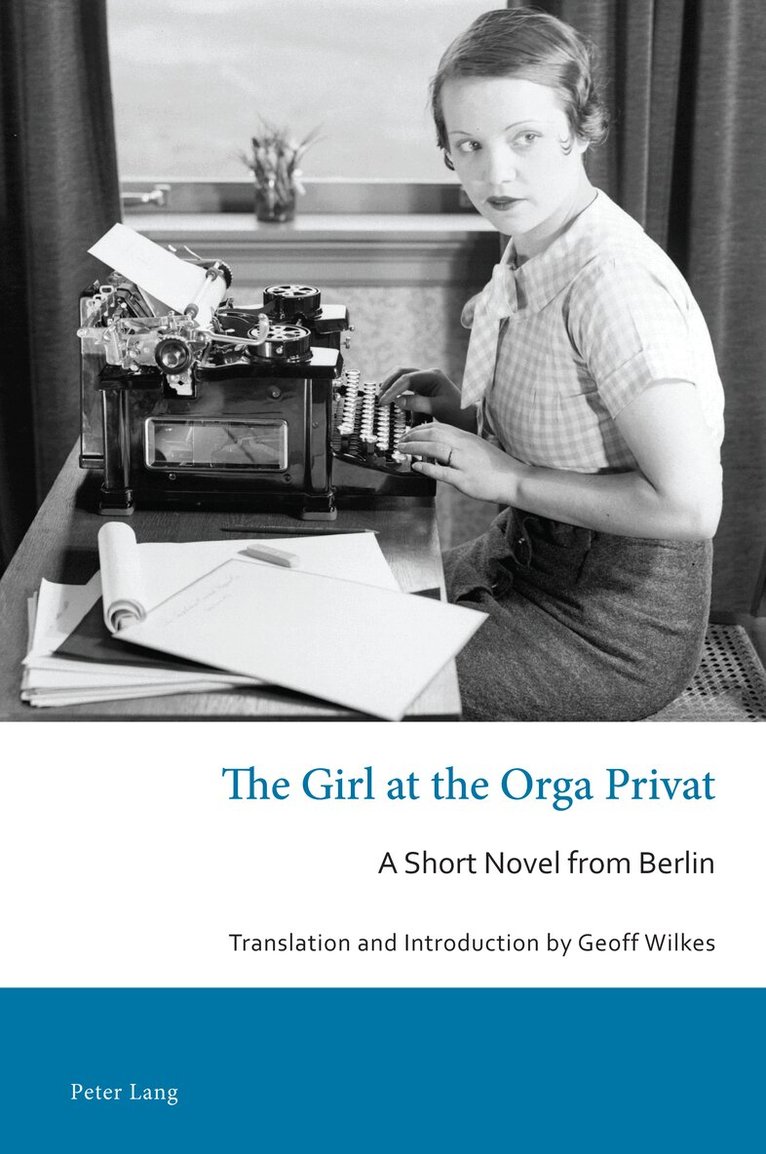
Girl at the Orga Privat
A Short Novel from Berlin
Häftad, Engelska, 2024
609 kr
Skickas inom 5-8 vardagar
In the spring of 1928, the coal miner’s daughter Erna Halbe leaves her provincial hometown for Berlin, where she takes an office job. Her new colleagues laugh at her unfashionable clothes and dub her «The Girl at the Orga Privat» when she is given an old typewriter of that make to work on.The eighteen-year-old Erna must find her way not only in the big city, and among the other young women, but also through the difficult conditions at work, where the salaries are barely enough to live on and the male bosses harass the female employees. When her coworker Trude becomes pregnant by her boss and is sacked, Erna draws on her working-class background to organize her more genteel colleagues into a protest strike.Rudolf Braune’s Erna is a more radical literary example of the Weimar Republic’s resourceful – but often politically indifferent – «New Woman» than Irmgard Keun’s Doris and Vicki Baum’s Flämmchen.
Del 21 - German Studies in Australia and Aotearoa New Zealand
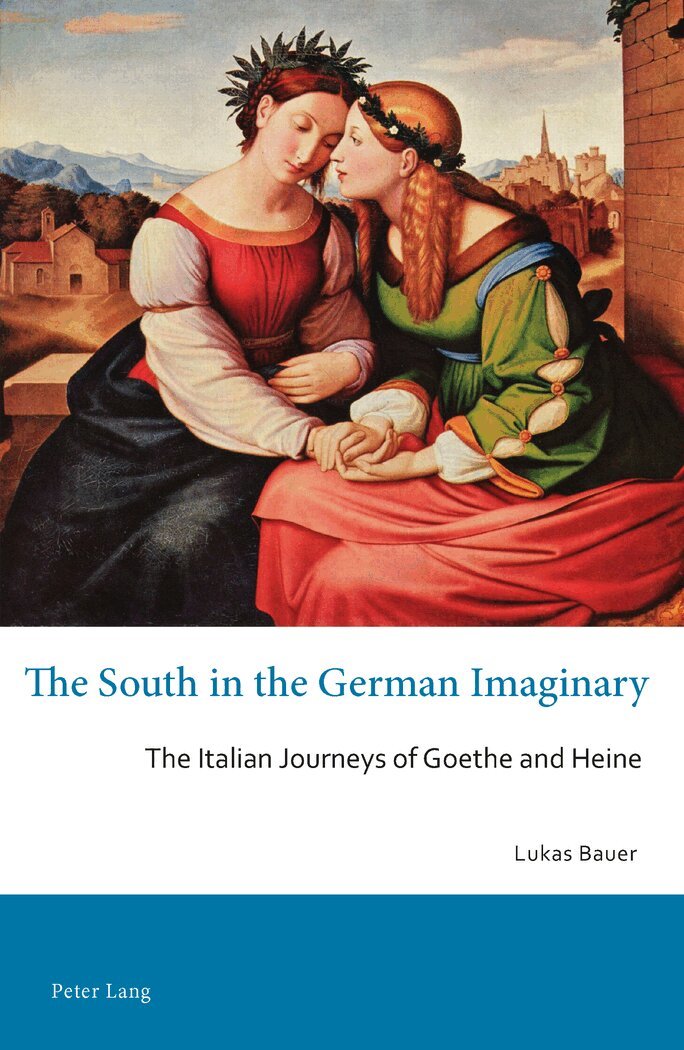
South in the German Imaginary
The Italian Journeys of Goethe and Heine
Häftad, Engelska, 2015
859 kr
Skickas inom 5-8 vardagar
The division between North and South in Europe represents a geographical as well as a cultural boundary that has influenced the way many European nations think about their history and identity. This divide is particularly prominent in the cultural dialogue between Germany and Italy and has played an important role in the construction of German identity. This study explores German representations of Italy in the early nineteenth century by examining the Italian travel writings of Johann Wolfgang von Goethe and Heinrich Heine. It analyses Goethe’s Italienische Reise and Heine’s Italian Reisebilder and focuses on the negotiation of cultural identity through representations of the North-South divide.The book compares Goethe’s complex attitudes towards Germany during this period with Heine’s wrestling with his place in German culture, as seen through their depictions of Italy. Goethe pointed to the classical heritage of Greek antiquity as the source not only of Italian, but also of German, cultural traditions and therefore as an essential element of German identity. Heine called into question Goethe’s experience of Italy and instead used his travels to reveal the instability of German identity and the changing nature of the European community. By investigating the travel narratives of Goethe and Heine, this study reveals the influences of historical and political change on perspectives on the South in Germany.
Del 22 - German Studies in Australia and Aotearoa New Zealand
Travel Texts and Moving Cultures
German Literature and the Mobilities Turn
Häftad, Engelska, 2016
642 kr
Skickas inom 5-8 vardagar
How does the experience of travel transform culture over time? This question is at the heart of this book, which brings together two main areas of scholarship: the cultural analysis of German literature and film and the emerging field of mobilities studies, which places movement and travel at the centre of human experience. The author grounds her analysis in two main concepts or ways of being: dwelling, or remaining in one place, which connotes stability, groundedness and permanence; and mobility, or travel to other destinations, which connotes movement, change and uncertainty. Travel Texts and Moving Cultures provides a comparison of travel writing from two significant periods of global social change: historical (1770–1830) and contemporary (1985–2010). The study includes literature such as Georg Forster’s A Voyage Round the World (1777), which recounts the young German scientist’s journey to New Zealand with Captain Cook; Erich Loest’s Zwiebelmuster [Blue Onion] (1985), which exposes the travel desires of East Germans before the Wende via a semi-autobiographical narrator; and Bernhard Schlink’s Die Heimkehr [Homecoming] (2006), which recontextualises and deconstructs Homer’s Odyssey in the present moment through a son’s search for his father. Whereas a culture founded on mobilities and a desire for travel emerges in the historical period, the contemporary period reveals an increasingly mobile world in which travel is regarded as a human right. The approach taken in this book sheds light on the ethics of ever-increasing mobility and problematises the possibility of homecoming.