Gingko Library Art Series - Böcker
Visar alla böcker i serien Gingko Library Art Series. Handla med fri frakt och snabb leverans.
4 produkter
4 produkter
496 kr
Skickas inom 7-10 vardagar
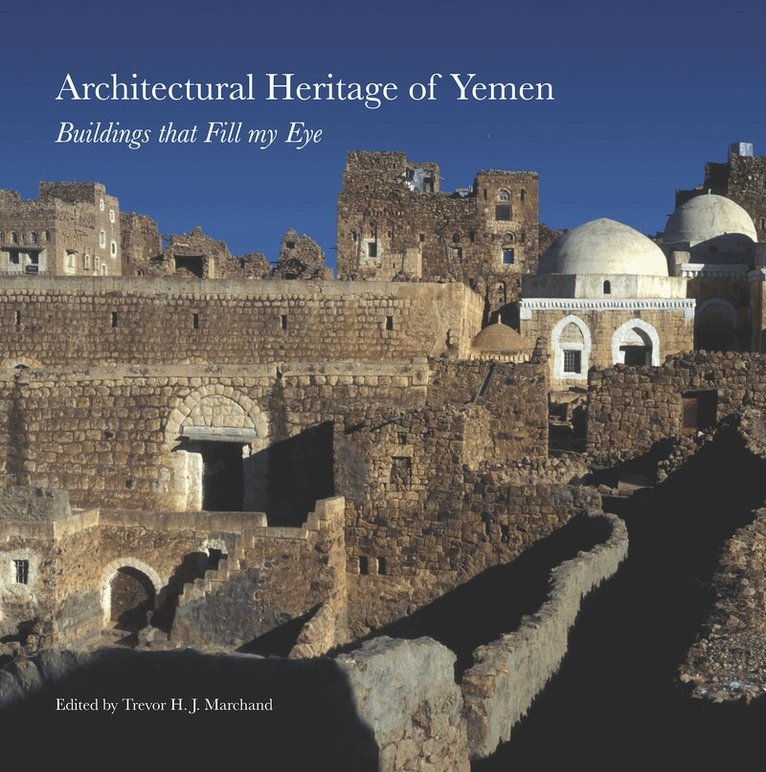
Twenty chapters, authored by leading scholars from around the world, explore the astonishing variety of building styles and traditions that have evolved over millennia in a region of diverse terrains, extreme climates and distinctive local histories. Generations of highly-skilled masons, carpenters and craftspeople have deftly employed the materials-to-hand and indigenous technologies to create urban architectural assemblages, gardens and rural landscapes that dialogue harmoniously with the natural contours and geological conditions of southern Arabia. A sharp escalation in military action and violence in the country since the 1990s has had a devastating impact on the region's rich cultural heritage. In bringing together the astute observations and reflections of an international and interdisciplinary group of acclaimed scholars, the principal aim of this book is to raise awareness among the general public and policy makers of Yemen's long history of cultural creativity, and of the very urgent need for international collaboration to protect it and its people from the destructive forces that have beset the region.Following the editor's introduction, the book is divided into three parts.Part One introduces readers to the astonishing variety of architecture and building traditions across the country, from the Red Sea coast, eastward into the mountainous highlands, to the edge of the Sahara desert, and southward into the deep, dramatic wadis of the Hadhramaut. Part Two is dedicated to exploring the issues and the challenges of conserving and preserving Yemen's rich architectural heritage. Part Three offers vivid personal insights - both historical and contemporary - into the making of place and the construction of identities.
Mercantile Effect
Art and Exchange in the Islamicate World During the 17th and 18th Centuries
Häftad, Engelska, 2019
426 kr
Skickas inom 7-10 vardagar
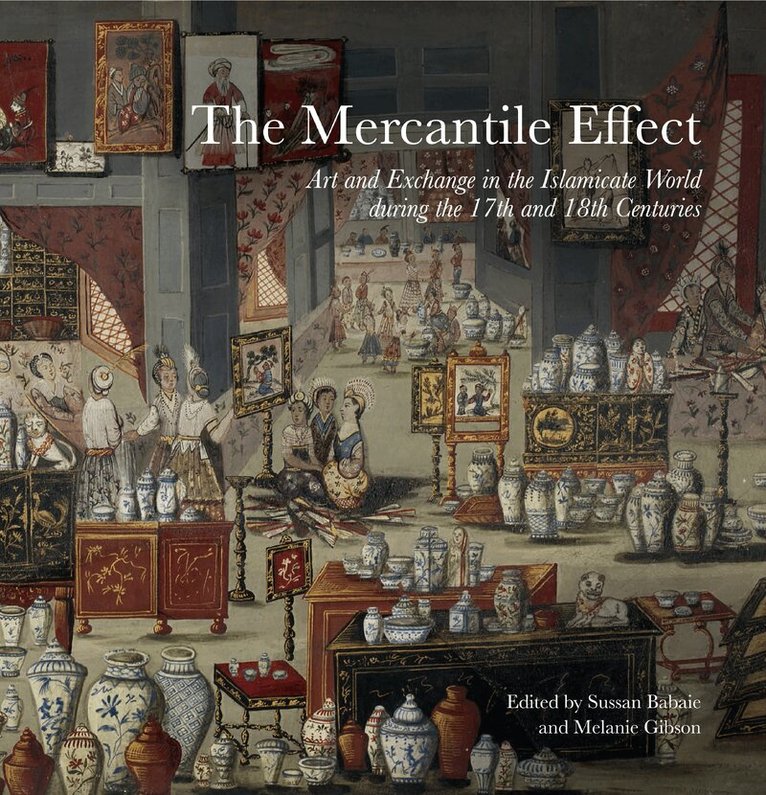
This lavishly illustrated volume of essays introduces a fascinating array of subjects, each exploring an aspect of the far-reaching "mercantile effect" and its impact across western Asia in the early modern era. In the seventeenth and eighteenth centuries the increased movement of merchants and goods from China to Europe brought desirable commodities to new markets, but also spread ideas, tastes, and technologies across western Asia as never before. Through the newly-established Dutch, English, and French East India companies, as well as much older mercantile networks, commodities including silk, ivory, books, and glazed porcelains were transported both east and west. The Mercantile Effect shows a fascinating array of trade objects and the customs and traditions of traders that brought about a period of intense cultural interchange.
820 kr
Skickas inom 7-10 vardagar
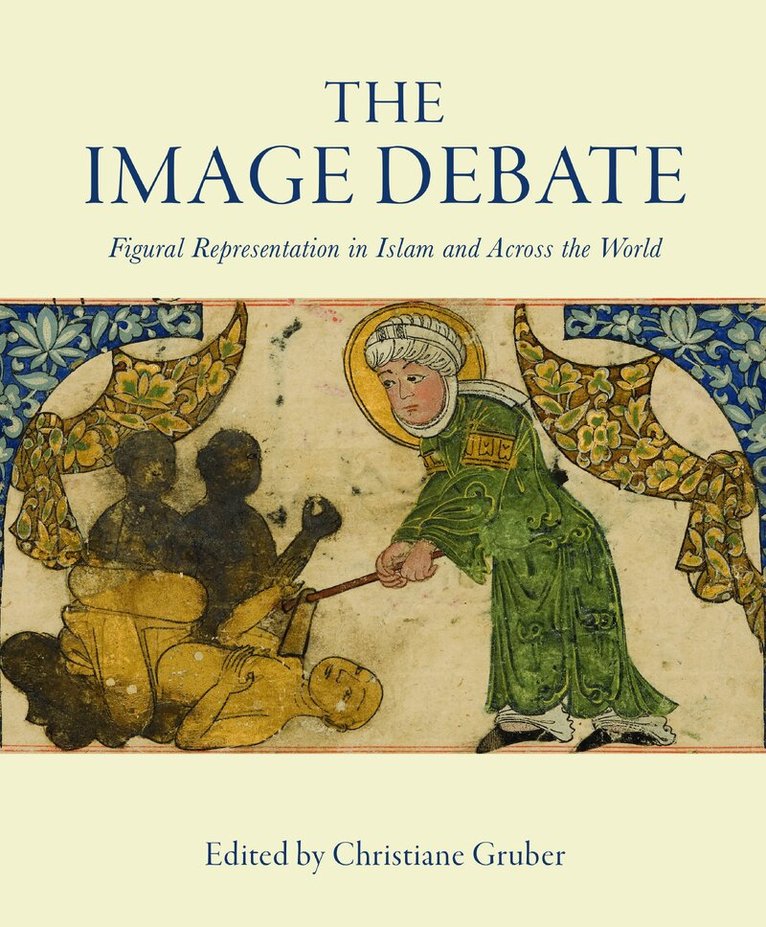
The images released by Islamic State of militants smashing statues at ancient sites were a horrifying aspect of their advance across Northern Iraq and Syria during 2015-16. Their leaders justified this iconoclasm (destruction of images) by arguing that such actions were divinely decreed in Islam, a notion that has remained fixed in the public consciousness. The Image Debate: Figural Representation in Islam and Across the World is a collection of thirteen essays which examine the controversy surrounding the use of images in Islamic and other religious cultures and seek to redress some of the misunderstandings that have arisen. Written by leading academics from the United States, Australia, Turkey, Israel and the United Kingdom, the book has a foreword by Stefano Carboni, Director of the Art Gallery of Western Australia, followed by an introduction by the editor Christiane Gruber, who sets the subject in context with a detailed examination of the debates over idols and the production offigural images in Islamic traditions. Twelve further articles are divided into three sections: the first deals with pre-modern Islam:Mika Natif looks at tensions between the Hadith prohibition on images and the praxis of image-making under the Umayyad dynasty and argues that the Umayyad rulers used imagery to establish their political and religious authority; Finbarr Barry Flood examines the practice of epigraphic erasure, i.e., the removal of names of rulers and patrons from historical inscriptions from the medieval Islamic world; and Oya Pancaroglu focuses on the figural conventions of an illustrated manuscript of Varqa and Gulshah, a medieval Persian romance composed in the masnavi (rhyming couplet) form by the 11th-century poet `Ayyuqi.The second section addresses the situation outside Islam: Alicia Walker surveys attitudes toward the production and veneration of religious images in Byzantium from the earliest years of the Christian Roman Empire (early 4th century) to the aftermath of the Iconoclast controversy (late 9th century); Steven Fine explores the history of Jewish engagement with`art' from Roman antiquity through the high middle ages through a detailed exploration of the 3rd-century Dura Europos synagogue and its wall paintings; Michael Shenkar examines evidence for the employment of figural images in the cultic practices of some of the major ancient Iranian cultural and political entities, offering a broad perspective on perceptions ofimages in ancient Iranian worship; and Robert DeCaroli delves into the question of why no image of the Buddha was made during the first five hundred years of Buddhism. The third section brings the reader back to Islamic lands with five articles examining aspects of the issue in the modern and contemporary periods: Yousuf Saaed investigates South Asian mass-produced images, especially posters that include illustrations of local Sufi shrines, portraits of saints and Shi`i iconography; James Bennett explores the visual depiction of Javanese shadow puppets (wayang kulit), including the sage Begawan Abiyasa, whose narratives convey key elements of Sufi mystical philosophy; Allen and Mary Roberts consider images of Cheikh Amadu Bamba, the founding Sufi saint of the Senegalese Mouride order; Rose Issa addresses how the term `Islamic' relates to contemporary art, how artists manage to create work in countries in constant turmoil and to what extent such works reflect their conceptual, aesthetic, and socio-political concerns; and finally Shiva Balaghi traces the use of the figure, along its symbolic shadows and silhouettes, in works by notable Iranian artists living in Iran and in diaspora.
Treasures of Herat
Two Manuscripts of the Khamsah of Nizami in the British Library
Inbunden, Engelska, 2022
845 kr
Skickas inom 7-10 vardagar
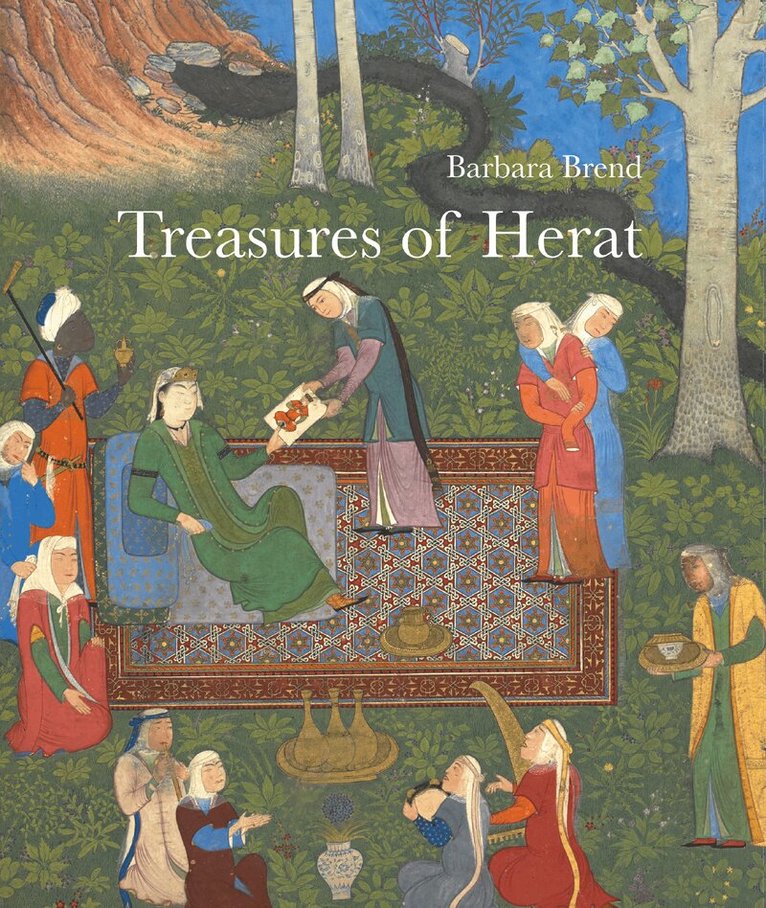
An illustrated reference book for students and scholars of Persian art, poetry, and literature.With this book, Barbara Brend provides thorough consideration of two celebrated Persian manuscripts housed in the British Library. These two copies of the Khamsah (Quintet) a set of five narrative poems by twelfth-century poet Nizami, a master of allegorical poetry in Persian literature, were produced in Herat in the fifteenth century, one of the greatest periods of Persian painting. Although well known, the manuscripts have never before been written about in relation to each other. Brend tells the story of each poem and the painting that illustrates it, and she formally analyzes the images, placing them in their historical and artistic context. The images from both highly prized manuscripts are beautifully reproduced in color, and the ownership history of one of the manuscripts-recorded in the form of seal impressions and inscriptions- is also included. Ursula Sims-Williams provides a translation and commentary of these important marks of ownership which identify the Mughal rulers Akbar, Jahangir, Shah Jahan, and Aurangzeb, among many others.