Global Black Writers in Translation - Böcker
Visar alla böcker i serien Global Black Writers in Translation. Handla med fri frakt och snabb leverans.
10 produkter
10 produkter
262 kr
Skickas inom 7-10 vardagar
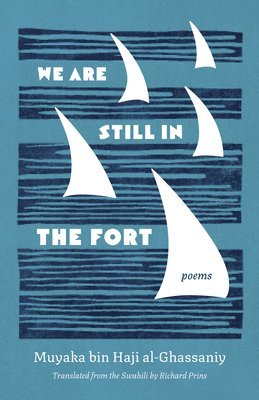
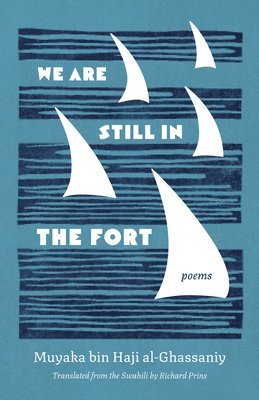
We Are Still in the Fort is a curated selection of about seventy poems by Muyaka bin Haji al-Ghassaniy divided into three sections spanning the quotidian, the amorous, and the political. The first part, “I Swipe Their String of Fish: Poems of Mombasan Society,” features his often satirical commentary on daily life in Mombasa. The second part, “Take Your Misery With You: Poems of Love and Marriage,” focuses on his psychologically sensitive observations on the volatility of love, marriage, and illicit affairs. The last part, “We Are Still in the Fort: Poems of War and State,” includes epigrammatic critiques of local political leaders and a series of anti-imperialist poems defending Mombasa’s independence against the invading Omani Empire. The volume also features contextual materials on Muyaka and the context of Swahili poetry, a translator’s note, and introductions for each of the three sections.
917 kr
Skickas inom 7-10 vardagar
We Are Still in the Fort is a curated selection of about seventy poems by Muyaka bin Haji al-Ghassaniy divided into three sections spanning the quotidian, the amorous, and the political. The first part, “I Swipe Their String of Fish: Poems of Mombasan Society,” features his often satirical commentary on daily life in Mombasa. The second part, “Take Your Misery With You: Poems of Love and Marriage,” focuses on his psychologically sensitive observations on the volatility of love, marriage, and illicit affairs. The last part, “We Are Still in the Fort: Poems of War and State,” includes epigrammatic critiques of local political leaders and a series of anti-imperialist poems defending Mombasa’s independence against the invading Omani Empire. The volume also features contextual materials on Muyaka and the context of Swahili poetry, a translator’s note, and introductions for each of the three sections.
320 kr
Kommande
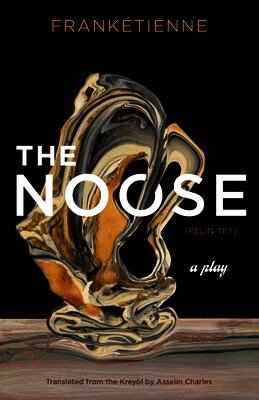
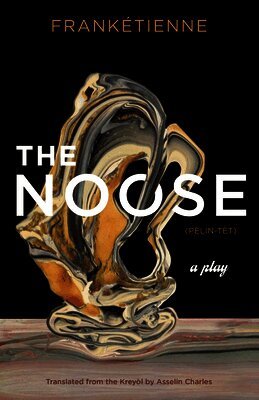
The Noose (also known as Pèlin-Tèt) focuses on the lives of two Haitian immigrants living in a grubby basement apartment in New York City in 1978. One, Polydor, is a middle-class intellectual and political refugee. The other, Pyram, is a lower-class laborer. For the sake of saving money, the two have been sharing the apartment for three years. While Pyram is away working, Polydor apparently does nothing but read books on political theory. His source of funds remains a mystery.With recent productions in Canada and the United States, the publication of this play in English will provide a new generation of audiences access to this important text, accompanied by an introduction by translator Asselin Charles and an afterword by Jean Jonassaint, both preeminent scholars of Frankétienne’s literary output.
1 344 kr
Kommande
The Noose (also known as Pèlin-Tèt) focuses on the lives of two Haitian immigrants living in a grubby basement apartment in New York City in 1978. One, Polydor, is a middle-class intellectual and political refugee. The other, Pyram, is a lower-class laborer. For the sake of saving money, the two have been sharing the apartment for three years. While Pyram is away working, Polydor apparently does nothing but read books on political theory. His source of funds remains a mystery.With recent productions in Canada and the United States, the publication of this play in English will provide a new generation of audiences access to this important text, accompanied by an introduction by translator Asselin Charles and an afterword by Jean Jonassaint, both preeminent scholars of Frankétienne’s literary output.
410 kr
Kommande
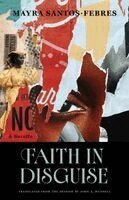
Faith in Disguise follows Martín Tirado, a white Puerto Rican digital historian and research assistant to Fe Verdejo, an Afro-Venezuelan scholar curating an exhibition in Chicago on enslaved and freed Black women in Latin America. As Martín becomes increasingly enmeshed in Fe’s intellectual and erotic orbit, his role as subordinate and interpreter exposes the entanglement of race, power, and desire in the production of historical knowledge. Through the interplay of archival fragments and contemporary encounters, Mayra Santos-Febres illuminates how the afterlives of slavery persist within Latin American racial and sexual imaginaries, and how the erotic, as both method and experience, may gesture toward forms of liberation from them.
1 241 kr
Kommande
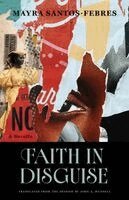
Faith in Disguise follows Martín Tirado, a white Puerto Rican digital historian and research assistant to Fe Verdejo, an Afro-Venezuelan scholar curating an exhibition in Chicago on enslaved and freed Black women in Latin America. As Martín becomes increasingly enmeshed in Fe’s intellectual and erotic orbit, his role as subordinate and interpreter exposes the entanglement of race, power, and desire in the production of historical knowledge. Through the interplay of archival fragments and contemporary encounters, Mayra Santos-Febres illuminates how the afterlives of slavery persist within Latin American racial and sexual imaginaries, and how the erotic, as both method and experience, may gesture toward forms of liberation from them.
217 kr
Skickas inom 7-10 vardagar
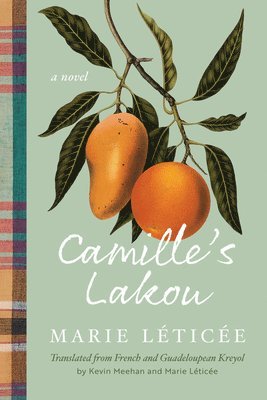
Camille has worked her way up from the Guadeluopean lakou where she was born and raised to the heights of Orlando, where she is a successful motivational speaker. Her assistant, Evelyn, is struggling as a single mother, especially since she has been keeping the existence of her son a secret from her family in Jamaica. As Camille relates the story of her life to Evelyn, she urges Evelyn to see her difficult life as one of great fortune—“My girl, a woman falls, but she never despairs”—and to fully share her joys and successes with her loved ones.Camille’s Lakou tells the story of Camille, a young Caribbean girl living with her single‑parent mother in a 1960s urbanized zone at the edge of Pointe‑à‑Pitre, Guadeloupe, following her through her adult life as a Caribbean migrant in Florida. Author Marie Léticée explores neocolonial culture clash and identity conflict themes that will be familiar to readers of the Francophone Caribbean coming‑of‑age novel and its revisions by women writers such as Capécia, Lacrosil, Manicom, Schwarz‑Bart, Condé, Pineau, and others. Léticée makes it her own by fleshing out a time and place not well‑represented in Guadeloupean literature. While previous bildungsromane from the writers mentioned here typically focus on rural peasant or urban bourgeois settings, Camille’s Lakou shifts location to an impoverished urban environment. “Lakou” is translated as “courtyard” or, more colloquially, “yard.” The author explores the culture and politics of lakou society while raising the issue of how this social dynamic is transformed through the impact of globalization and dispersal into a diasporic experience outside the island milieu of Camille’s childhood.In a collaborative translation effort between the author and Kevin Meehan, Camille’s Lakou will bring the realities and joys of Léticée’s Guadeloupe to an English audience for the first time.
917 kr
Skickas inom 7-10 vardagar
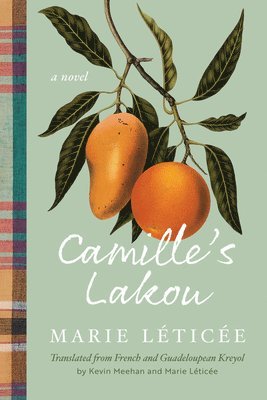
Camille has worked her way up from the Guadeluopean lakou where she was born and raised to the heights of Orlando, where she is a successful motivational speaker. Her assistant, Evelyn, is struggling as a single mother, especially since she has been keeping the existence of her son a secret from her family in Jamaica. As Camille relates the story of her life to Evelyn, she urges Evelyn to see her difficult life as one of great fortune—“My girl, a woman falls, but she never despairs”—and to fully share her joys and successes with her loved ones.Camille’s Lakou tells the story of Camille, a young Caribbean girl living with her single‑parent mother in a 1960s urbanized zone at the edge of Pointe‑à‑Pitre, Guadeloupe, following her through her adult life as a Caribbean migrant in Florida. Author Marie Léticée explores neocolonial culture clash and identity conflict themes that will be familiar to readers of the Francophone Caribbean coming‑of‑age novel and its revisions by women writers such as Capécia, Lacrosil, Manicom, Schwarz‑Bart, Condé, Pineau, and others. Léticée makes it her own by fleshing out a time and place not well‑represented in Guadeloupean literature. While previous bildungsromane from the writers mentioned here typically focus on rural peasant or urban bourgeois settings, Camille’s Lakou shifts location to an impoverished urban environment. “Lakou” is translated as “courtyard” or, more colloquially, “yard.” The author explores the culture and politics of lakou society while raising the issue of how this social dynamic is transformed through the impact of globalization and dispersal into a diasporic experience outside the island milieu of Camille’s childhood.In a collaborative translation effort between the author and Kevin Meehan, Camille’s Lakou will bring the realities and joys of Léticée’s Guadeloupe to an English audience for the first time.
235 kr
Skickas inom 7-10 vardagar
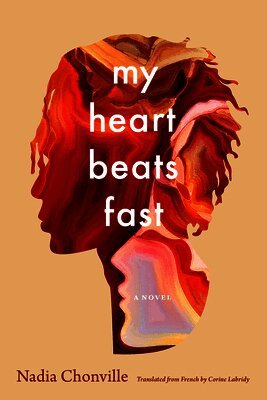
Situated in contemporary Martinique, My Heart Beats Fast centers Kim, a young man accused of murdering his father, his sister’s partner, and her young son. The narration braids three temporalities: the present of the trial; the recent past of Kim’s youth shaped by Martinique’s entanglement with late‑stage capitalism and/as neocolonialism; and a longer duration that stretches back to slavery and the plantation, where Kim’s Antillean matrilineal origins have their roots. This nonlinear narrative makes generous use of analepses, as the spirits of the ancestors whisper visions and memories to Kim’s sister Edith, who attempts to understand what led her brother to commit such a horrific act. In addition to blending elements of realism and the marvelous, My Heart Beats Fast is written in a particularly poetic, urgent yet precise prose that has earned Nadia Chonville many accolades.Chonville’s novel is at the vanguard of a new Antillean literature that moves beyond créolité (the last identifiable literary movement in the Antillean canon) in several important ways: First, although it does reflect on the past (as indeed prescribed by the créolistes), it is firmly anchored in the present, which Chonville, a trained social scientist, captures unflinchingly. Second, it complexifies the Antilles gender landscape with characters whose intersectional realities are explored with depth and care.
917 kr
Skickas inom 7-10 vardagar
Situated in contemporary Martinique, My Heart Beats Fast centers Kim, a young man accused of murdering his father, his sister’s partner, and her young son. The narration braids three temporalities: the present of the trial; the recent past of Kim’s youth shaped by Martinique’s entanglement with late‑stage capitalism and/as neocolonialism; and a longer duration that stretches back to slavery and the plantation, where Kim’s Antillean matrilineal origins have their roots. This nonlinear narrative makes generous use of analepses, as the spirits of the ancestors whisper visions and memories to Kim’s sister Edith, who attempts to understand what led her brother to commit such a horrific act. In addition to blending elements of realism and the marvelous, My Heart Beats Fast is written in a particularly poetic, urgent yet precise prose that has earned Nadia Chonville many accolades.Chonville’s novel is at the vanguard of a new Antillean literature that moves beyond créolité (the last identifiable literary movement in the Antillean canon) in several important ways: First, although it does reflect on the past (as indeed prescribed by the créolistes), it is firmly anchored in the present, which Chonville, a trained social scientist, captures unflinchingly. Second, it complexifies the Antilles gender landscape with characters whose intersectional realities are explored with depth and care.