Global Middle East – serie
Visar alla böcker i serien Global Middle East. Handla med fri frakt och snabb leverans.
6 produkter
6 produkter
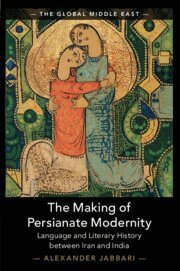
Making of Persianate Modernity
Language and Literary History between Iran and India
Häftad, Engelska, 2025
462 kr
Skickas inom 7-10 vardagar
From the ninth to the nineteenth centuries, Persian was the pre-eminent language of learning far beyond Iran, stretching from the Balkans to China. In this book, Alexander Jabbari explores what became of this vast Persian literary heritage in the nineteenth and twentieth centuries in Iran and South Asia, as nationalism took hold and the Persianate world fractured into nation-states. He shows how Iranians and South Asians drew from their shared past to produce a 'Persianate modernity', and create a modern genre, literary history. Drawing from both Persian and Urdu sources, Jabbari reveals the important role that South Asian Muslims played in developing Iranian intellectual and literary trends. Highlighting cultural exchange in the region, and the agency of Asian modernizers, Jabbari charts a new way forward for area studies and opens exciting possibilities for thinking about language and literature.
1 160 kr
Skickas inom 7-10 vardagar
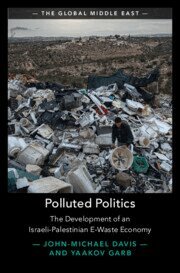
This book describes the politically charged afterlife of Israeli electronics gathered by and processed in a cluster of rural Palestinian villages that has emerged as an informal regional e-waste hub. As with many such hubs throughout the global South, rudimentary recycling practices represent a remarkable entrepreneurial means of livelihood amidst poverty and constraint, that generates staggering damage to local health and the environment, with tensions between these reaching a breaking point. John-Michael Davis and Yaakov Garb draw on a decade of community-based action research with and within these villages to contextualise the emergence, realities and future options of the Palestinian hub within both the geo-political realities of Israel's occupation of the West Bank as well as shifting understandings of e-waste and recycling dynamics and policies globally. Their stories and analysis are a poignant window into this troubled region and a key sustainability challenge in polarized globalized world.
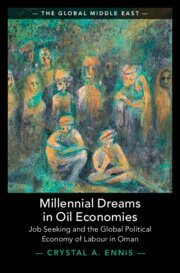
Millennial Dreams in Oil Economies
Job Seeking and the Global Political Economy of Labour in Oman
Inbunden, Engelska, 2025
1 363 kr
Skickas inom 7-10 vardagar
This book shifts the analysis of economic development in Oman from the traditional focus on oil to the perspective of labour. Focusing on the experiences of workers, jobseekers, and the governance of labour markets, Crystal A. Ennis offers a fresh perspective on regional development and rentier neoliberalism in the Gulf. Highlighting Oman's position within global capitalism, Ennis makes a compelling case for de-exceptionalising the Gulf, arguing that the region's labour markets are global and subject to similar pressures as other global economies. Moving beyond oil also allows Ennis to focus on the social conditions of Oman, where over sixty four percent of the population are under the age of thirty. Ennis offers a rich analysis of historical lineages of labour governance, class formation; and, following protests after 2011 as youth unemployment soared in the region, how authoritarian states react to public pressure and social unrest around perceived economic decline.
1 192 kr
Skickas inom 7-10 vardagar
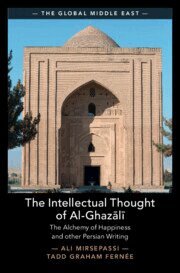
Abu Hamid Muhammad al-Ghazālī (1058–1111) was one of the most influential philosophers of the classical Islamic period, with his intellectual innovations spanning the fields of theology, logic, and law. Despite this, contemporary assessments of Ghazālī often present him as hostile to rationality, and a guardian of dogma and orthodoxy. This study provides an innovative reassessment of Ghazālī's legacy, offering a compelling depiction of a reformer in his own time with increasing relevance to the issues gripping multicultural and globalized societies today. Ali Mirsepassi and Tadd Graham Fernée closely study Ghazālī's major Persian-language text Kīmīyā-e saʿādat (The Alchemy of Happiness) and its scholarly reception, alongside his lesser-read works, arguing that Ghazālī shared a message of reform, and critique of Abbasid institutions. Ghazālī's critical stance is revealed as both pragmatic and cosmopolitan in its recognition of autonomy from religion in many aspects of life, and in the value placed upon scientific contribution.
Economy of Revolution
Globalization, Violence and Security in Late Ottoman Empire
Inbunden, Engelska, 2026
1 292 kr
Kommande
How did the global circulation of modern technologies of warfare transform armed resistance? Focusing on the European territories of the Ottoman Empire, Ramazan Hakkı Öztan explores how revolutionary organizations navigated a world newly rich in material resources by the late nineteenth century. Unlike those who came before them, these revolutionaries operated in an increasingly connected global economy of violence that fed military-grade surplus weapons and newly invented explosives into their hands. Tracing commodity flows, Öztan profiles arms dealers, smugglers, and informers active in this economy of revolution. While revolutionaries tapped into transnational circuits, exchanged technical know-how, and engaged in calculated acts of violence, bureaucrats sought to dismantle black markets, gather counterintelligence, and wage their own campaigns of repression. Situating these connected histories across time and space, this global history explains the transformation of rebellion and imperial coercion by the turn of the twentieth century. This is a Flip it Open title and may be available open access on Cambridge Core.
Economy of Revolution
Globalization, Violence and Security in Late Ottoman Empire
Häftad, Engelska, 2026
486 kr
Kommande
How did the global circulation of modern technologies of warfare transform armed resistance? Focusing on the European territories of the Ottoman Empire, Ramazan Hakkı Öztan explores how revolutionary organizations navigated a world newly rich in material resources by the late nineteenth century. Unlike those who came before them, these revolutionaries operated in an increasingly connected global economy of violence that fed military-grade surplus weapons and newly invented explosives into their hands. Tracing commodity flows, Öztan profiles arms dealers, smugglers, and informers active in this economy of revolution. While revolutionaries tapped into transnational circuits, exchanged technical know-how, and engaged in calculated acts of violence, bureaucrats sought to dismantle black markets, gather counterintelligence, and wage their own campaigns of repression. Situating these connected histories across time and space, this global history explains the transformation of rebellion and imperial coercion by the turn of the twentieth century. This is a Flip it Open title and may be available open access on Cambridge Core.