Globalities - Böcker
Visar alla böcker i serien Globalities. Handla med fri frakt och snabb leverans.
7 produkter
7 produkter
278 kr
Skickas inom 7-10 vardagar
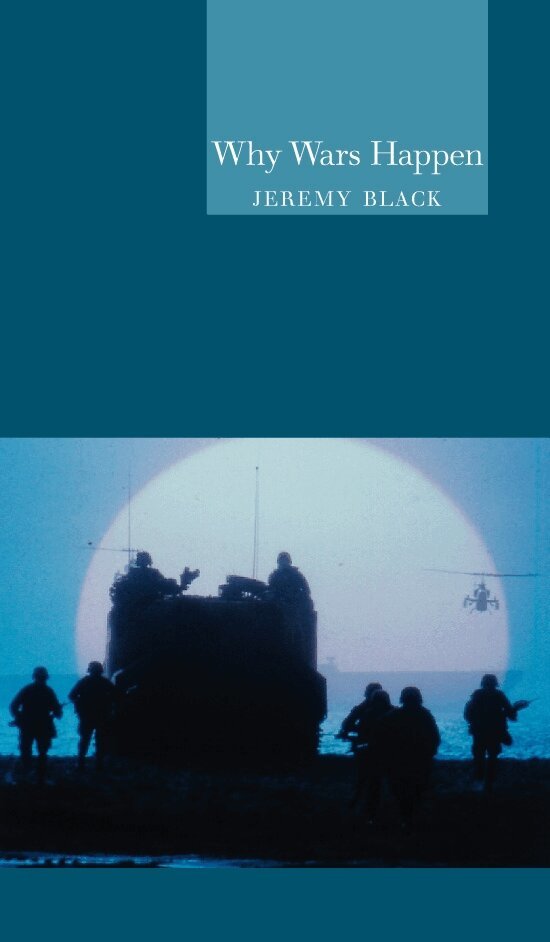
In this deeply informed book, renowned historian Jeremy Black addresses the crucial question of why wars happen, bridging the disciplines of history, political science and international relations, and spanning over the centuries. Black marshals an astonishing range of material from all corners of the globe, and demonstrates the universalities of conflict. What then causes wars? Do they primarily reflect bellicosity in societies and states, or do they arise as the result of the breakdown of diplomatic systems? How far are the causes of war related to changes in the nature of warfare, of the international system or of the internal character of states? Black looks at the problems of deepening war, and analyses the three main forms of conflict: wars across cultures, wars within cultures and civil war. He also assesses the present situation and asks where we are heading in terms of future wars.
354 kr
Skickas inom 7-10 vardagar
This book traces the evolution of the highly integrated global financial system from 1750 to the present. It examines the corporate form of business organization in the eighteenth century that saw an explosion of growth in the nineteenth, which facilitated the international movement of capital. The author also deals with the parallel growth of financial markets and explains how the need to finance public debts paved the way for stock markets as well as outlining the role of private merchant bankers, who originated as international bankers with family-run offices accross Europe. He charts the development of banks into public corporations and follows the evolution of modern paper money, explaining the emergence of institutions such as the International Monetary Fund and the World Bank. While tracing the development of foreign-exchange markets and the history of trading blocs, the book also examines how economic powers such as Britain and France used access to capital to wield power in less-developed parts of the world. Finally, an history of financial crises is presented, revealing how economic shocks reverberate from one country to another today through the global financial network.
162 kr
Skickas
From the earliest scratches on stone and bone to the languages of computers and the internet, A History of Writing offers an investigation into the origin and development of writing throughout the world. Commencing with the first stages of information storage – knot records, tally sticks, pictographic storytelling – the book then focuses on the emergence of complete writing systems in Mesopotamia in the fourth millennium BC, and their diffusion to Egypt, the Indus Valley and points east, with special attention given to Semitic writing systems and their eventual spread to the Indian subcontinent.Also documented is the rise of Phoenician and its effect on the Greek alphabet, generating the many alphabetic scripts of the West. Chinese, Korean and Japanese writing systems and scripts are dealt with in depth, as is writing in pre-Colombian America. Also explored are Western Europe’s medieval manuscripts and the history of printing, leading to the innovations in technology and spelling rules of the 19th and 20th centuries. Illustrated with numerous examples, this book offers a global overview in a form that everyone can follow. The author also reveals his own discoveries made since the early 1980s, making it a useful reference for both students and specialists as well as the general reader.
209 kr
Skickas inom 7-10 vardagar
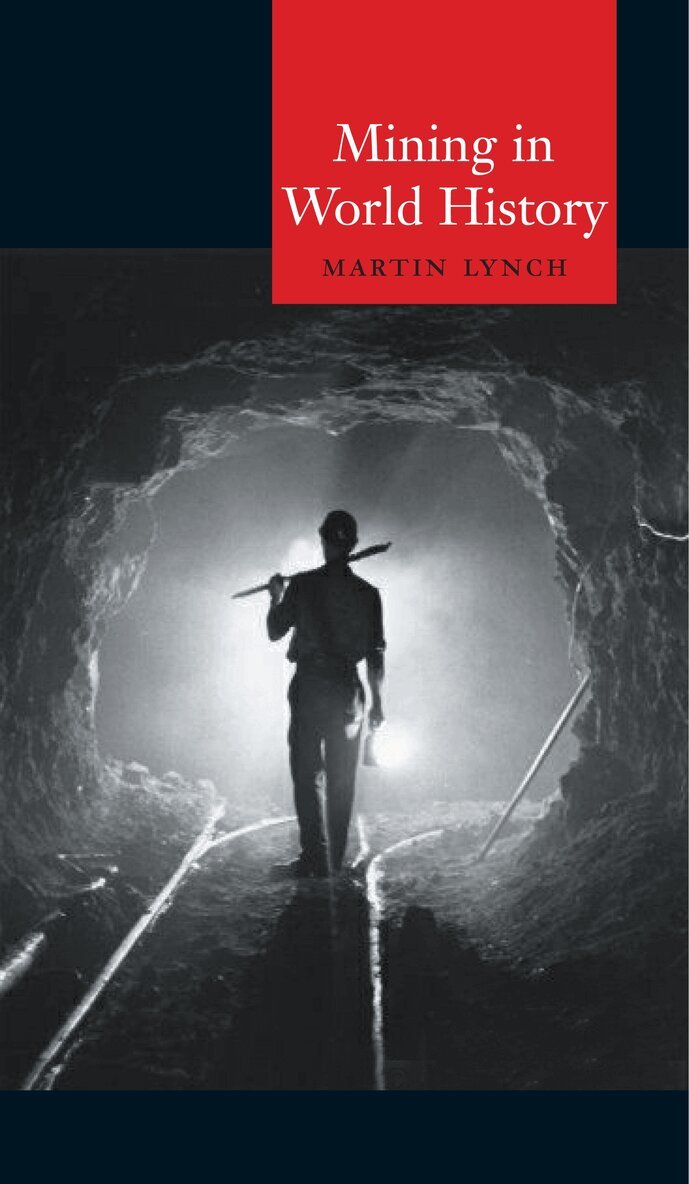
Mining in World History deals with the history of mining and smelting from the Renaissance to the present day, drawing out, in an engaging and fast-paced fashion, the interplay of personalities, politics and technology which have together shaped the metallurgical industries over the last 500 years.Martin Lynch opens with the invention, sometime before the year 1453, of a revolutionary technique for separating silver from copper, an event that revived the rich copper-silver mines of central Europe and the ruling ambitions of the Habsburg emperors who owned them. The author shows how the flood of silver from Spain’s newly-conquered American colonies brought about the demise of these mines, and goes on to examine the far-reaching changes brought to mining and smelting by the steam engine and the Industrial Revolution. The book then looks at the era of the gold rushes and the comprehensive developments in mineral extraction and technology that took place in the United States and South Africa at the end of the nineteenth century, and describes the spread of mass metal-production techniques across the world amid the violent struggles of the twentieth century and the energy crises of the 1970s.Written by an author vastly experienced in the field, Mining in World History is the first book to provide an account of how and why change and advance in this global industry have taken place in different eras and locations around the world. As such it will appeal to the industry specialist as well as to the general reader who wants to know more about a field that has been fundamental to the construction of industrial civilization.
217 kr
Skickas inom 7-10 vardagar
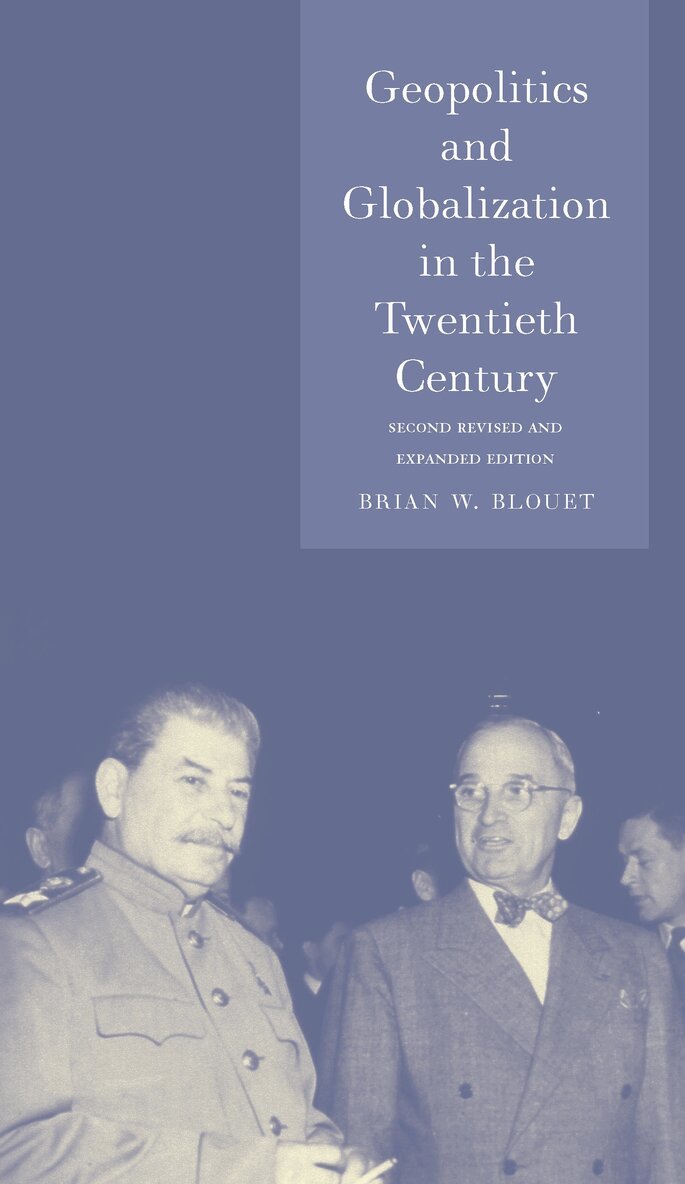
Geopolitics and Globalization in the Twentieth Century
Second Revised and Expanded Edition
Häftad, Engelska, 2010
386 kr
Skickas inom 7-10 vardagar
This book looks at the struggle between the processes of globalization and geopolitical forces over the last 150 years. The twentieth century witnessed a struggle between geopolitical states who wanted to close off and control earth space, resources and population and globalizing ones who wished to open up the world to the free flow of ideas, goods and services. Brian W. Blouet analyses the tug-of-war between these tendencies, the playing out of which determined the shape and behaviour of today’s world. Beginning his survey in the late nineteenth century, Blouet shows how the Second World War served to focus international awareness on the ramifications of global controls, and how we may be facing the end of geopolitics today.
475 kr
Skickas inom 7-10 vardagar
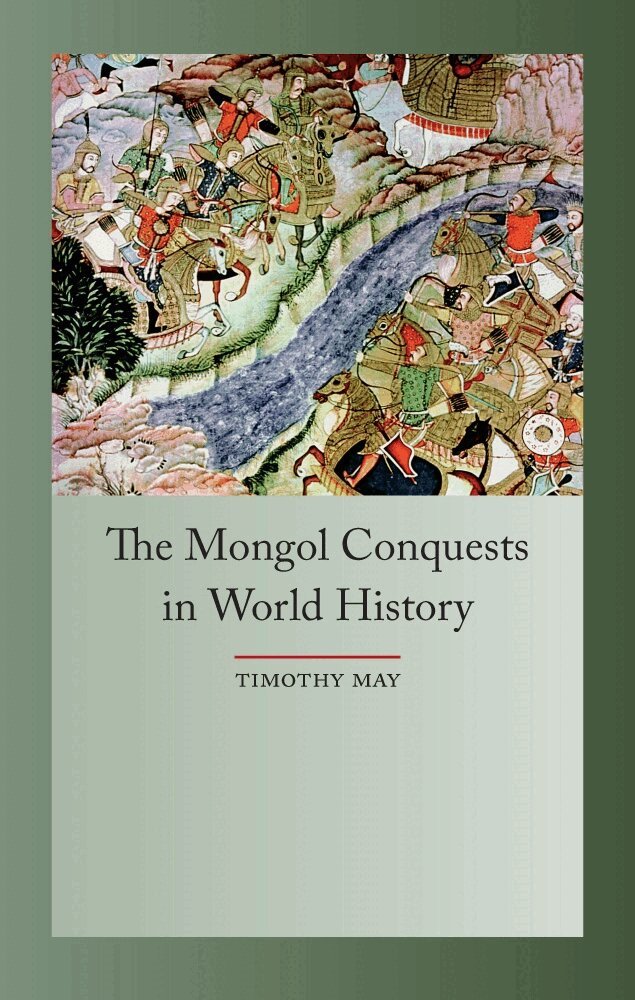
The Mongol Empire (c. 1200-1350) in many ways marks the beginning of the modern age, as well as globalization. While communications between the extremes of Eurasia existed prior to the Mongols, they were infrequent and often through intermediaries. The rise of the Mongol Empire changed everything: through their conquests the Mongols swept away dozens of empires and kingdoms and replaced them with the largest contiguous empire in history.While the Mongols were the most destructive force in the pre-modern world, the Pax Mongolica had stabilizing effects on the social, cultural and economic life of the inhabitants of the vast territory, allowing merchants and missionaries to traverse Eurasia. The conquests also set in motion other changes in warfare, medicine, food, culture and scientific knowledge.When Mongol power declined, it was replaced with over a dozen successors who retained elements of the Mongol Empire, but none of its unity. The Mongol Conquest in World History examines the many ways in which the conquests were a catalyst for change. The memory of the Empire fired the collective mind into far-reaching endeavours: the desire for luxury goods and spices that were once available launched Columbus’ voyages; the Renaissance was inspired by the innovations in art that emerged from the Mongol Empire: China was unified for the first time in 300 years and the Islamic world doubled in size.This fascinating book offers comprehensive coverage of the entire empire, rather than a more regional approach, as well as providing a long view of the Mongol Empire’s legacy. It will appeal to all those interested in this vast, epoch-making empire, as well as specialists in the field.