Great Battles - Böcker
Visar alla böcker i serien Great Battles. Handla med fri frakt och snabb leverans.
20 produkter
20 produkter
231 kr
Skickas inom 5-8 vardagar
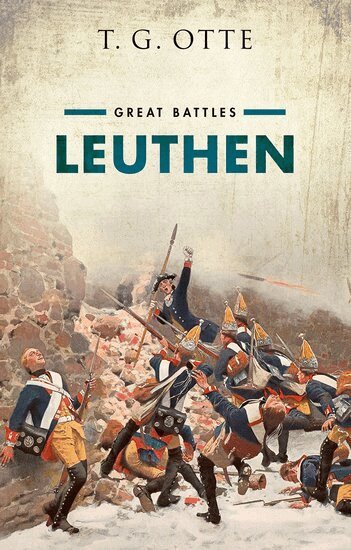
Leuthen (1757) is one of the best-known battles of the Seven Years' War, the most consequential conflict in continental Europe between the Thirty Years' War and the wars of Revolutionary and then Napoleonic France. It was a victory against the odds, over a vastly superior Austrian enemy who held the initiative in the war. Leuthen confirmed the reputation of Frederick II ('the Great') of Prussia as one of history's greatest military commanders. His victory rested on superior drill and firepower, intelligent use of the terrain, and his perfecting of the 'oblique battle order'. But faulty intelligence and flawed decision-making on the Austrian side were no less important, as T.G. Otte shows in this reappraisal of events.Leuthen was of profound significance for the war and for the future course of European history. Frederick's victory reversed the military dynamic of the current conflict. It kept Prussia in the war, preserved the existence of the Prussian state, and laid the foundations of its further rise with consequences beyond Frederick's own times. It also ensured Britain's final commitment to what was becoming a global conflict.The significance of Prussia's victory extended beyond the military sphere. The 'Leuthen myth', encapsulated in the evocative image of Frederick's exhausted grenadiers intoning the church hymn 'Now thank ye all our Lord', shaped political and historical disputes in nineteenth- and twentieth-century Germany. It also influenced the intellectual assumptions that underpinned Prusso-German war planning before the First World War. The 'Chorale of Leuthen' provided the accompanying chords of German cultural developments up to the collapse of the Third Reich in the burning ruins of Berlin. But even to the present day its echo can still be heard. As with other great battles, Leuthen is constantly reassessed and rewritten as an element of national culture and identity.
292 kr
Skickas inom 5-8 vardagar
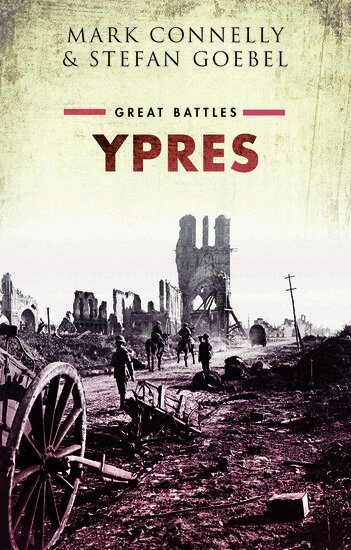
In 1914, Ypres was a sleepy Belgian city admired for its magnificent Gothic architecture. The arrival of the rival armies in October 1914 transformed it into a place known throughout the world, each of the combatants associating the place with it its own particular palette of values and imagery. It is now at the heart of First World War battlefield tourism, with much of it's economy devoted to serving the interests of visitors from across the world. The surrounding countryside is dominated by memorials, cemeteries, and museums, many of which were erected in the 1920s and 1930s, but the number of which are being constantly added to as fascination with the region increases. Mark Connelly and Stefan Goebel explore the ways in which Ypres has been understood and interpreted by Britain and the Commonwealth, Belgium, France, and Germany, including the variants developed by the Nazis, looking at the ways in which different groups have struggled to impose their own narratives on the city and the region around it. They explore the city's growth as a tourist destination and examine the sometimes tricky relationship between local people and battlefield visitors, on the spectrum between respectful pilgrims and tourists seeking shocks and thrills. The result of new and extensive archival research across a number of countries, this new volume in the Great Battles series offers an innovative overview of the development of a critical site of Great War memory.
318 kr
Skickas inom 5-8 vardagar
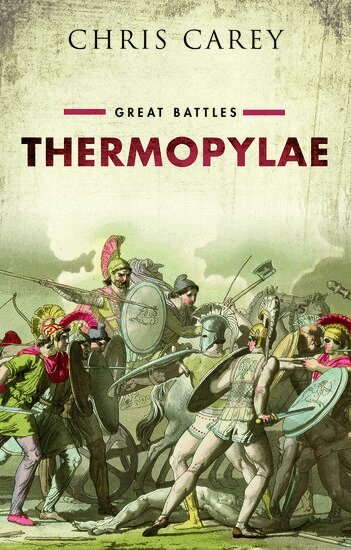
During the Battle of Thermopylae in 480 BC, a Greek force of approximately 7,000 faced the biggest army ever seen in the Greek peninsula. For three days, the Persians--the greatest military force in the world--were stopped in their tracks by a vastly inferior force, before the bulk of the Greek army was forced to retreat with their rear guard wiped out in one of history's most famous last stands. In strict military terms it was a defeat for the Greeks. But like the British retreat from Dunkirk or the massacre at the Alamo, this David and Goliath story has taken on the aura of success. Thermopylae has acquired a glamour exceeding the other battles of the Persian Wars, passing from history into myth, and lost none of that appeal in the modern era. In Thermopylae, Chris Carey analyses the origins and course of this pivotal battle, as well as the challenges facing the historians who attempt to separate fact from myth and make sense of an event with an absence of hard evidence. Carey also considers Thermopylae's cultural legacy, from its absorbtion into Greek and Roman oratorical traditions, to its influence over modern literature, poetry, public monuments, and mainstream Hollywood movies. This new volume in the Great Battles series offers an innovative view of a battle whose legacy has overtaken its real life practical outcomes, but which showed that a seemingly unstoppable force could be resisted.
147 kr
Skickas
The story of Thermopylae, the battle that helped define the identity of the ancient Greeks: how it was fought, how it has been remembered, and what it means for us today.During the Battle of Thermopylae in 480 BC, a Greek force of approximately 7,000 faced the biggest army ever seen in the Greek peninsula. For three days, the Persians—the greatest military force in the world—were stopped in their tracks by a vastly inferior force, before the bulk of the Greek army was forced to retreat with their rear guard wiped out in one of history's most famous last stands.In strict military terms it was a defeat for the Greeks. But like the British retreat from Dunkirk or the massacre at the Alamo, this David and Goliath story has taken on the aura of success. Thermopylae has acquired a glamour exceeding the other battles of the Persian Wars, passing from history into myth, and lost none of that appeal in the modern era.In Thermopylae, Chris Carey analyses the origins and course of this pivotal battle, as well as the challenges facing the historians who attempt to separate fact from myth and make sense of an event with an absence of hard evidence. Carey also considers Thermopylae's cultural legacy, from its absorbtion into Greek and Roman oratorical traditions, to its influence over modern literature, poetry, public monuments, and mainstream Hollywood movies. This new volume in the Great Battles series offers an innovative view of a battle whose legacy has overtaken its real life practical outcomes, but which showed that a seemingly unstoppable force could be resisted.
147 kr
Skickas
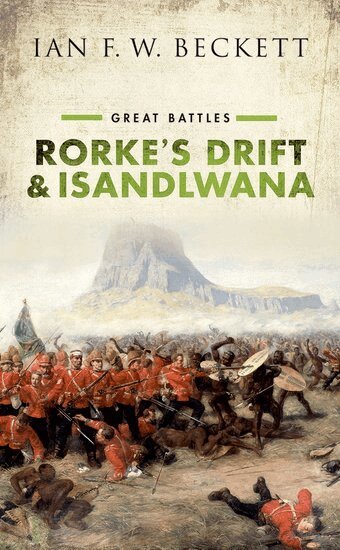
This volume recounts the battles of Isandlwana and Rorke's Drift, exploring how they were fought, how they have been remembered, and what they mean for us today.The battle of Isandlwana on 22 January 1879, the first major battle in the Anglo-Zulu war, witnessed the worst single day's loss of British troops between the battle of Waterloo in 1815 and the opening campaignns of the First World War in August 1914. Moreover, decisive defeat at the hands of the Zulu came as an immense shock to a Victorian public that had become used to easy victories over less technologically advanced indigenous foes in an expanding empire.The successful defence of Rorke's Drift, which immediately followed the encounter at Isandlwana (and for which 11 Victoria Crosses were awarded), averted military disaster and went some way to restore wounded British pride, but the sobering memory of defeat at Isandlwana lingered for many years, while the legendary tale of the defence of Rorke's Drift was reawakened for a new generation in the epic 1964 film Zulu, starring Michael Caine.In this new volume in the Great Battles series, Ian F. W. Beckett tells the story of both battles, investigating not only their immediate military significance but also providing the first overarching account of their continuing cultural impact and legacy in the years since 1879, not just in Britain but also from the once largely inaccessible and overlooked Zulu perspective.
292 kr
Skickas
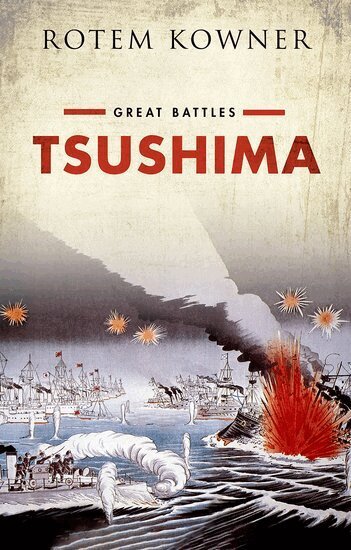
The Battle of Tsushima was the most decisive naval engagement in the century that elapsed since the Battle of Trafalgar in 1805. Although these two battles are often compared, the Battle of Tsushima, in which the Japanese Imperial Navy defeated the Russian Imperial Navy, was also unprecedented in many ways. It marks the first naval victory of an Asian power over a major European power; the most devastating defeat suffered by the Imperial Russian Navy in its entire history; and the only truly decisive engagement between two battleship fleets in modern times. In addition, the Battle of Tsushima was also the most decisive naval engagement of the Russo-Japanese War and one that exerted a major impact on the course of that war. Its impact was so dramatic, in fact, that the two belligerents concluded a peace agreement within three months of the battle's conclusion. At the same time, and because it involved two of the world's largest fleets, the influence this battle exerted was both far reaching and long standing. In subsequent years, the symbolic victory of an "Eastern" power over Tsarist Russia using modern technology was feared and celebrated in both the Western and the Colonial worlds. Similarly, and in both Japan and Russia, the Battle of Tsushima had a prolonged impact on their respective navies as well as on their geopolitical ambitions in Asia and beyond. By relying on a diverse array of primary sources, this book examines the battle in depth and is the first to offer a penetrating analysis of its global impact as well as the way its memory has evolved in both Japan and Russia.
212 kr
Skickas inom 5-8 vardagar
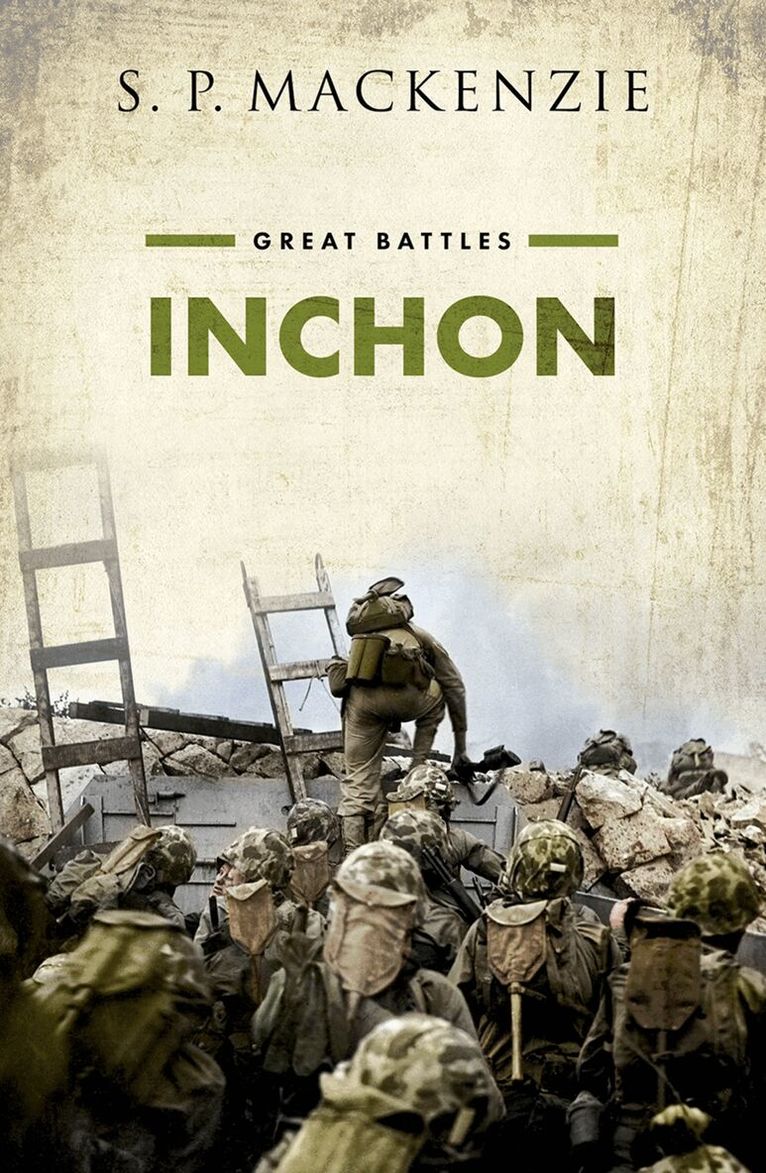
Inchon: the battle that saved South KoreaOperation Chromite, the American-led amphibious landing at the port of Inchon [Incheon] in September 1950, is arguably the most famous battle of the Korean War. Often hailed as a masterstroke on the part of its creator, General Douglas MacArthur, its consequences were vast. Seoul was liberated by the end of the month, the invasion of South Korea by North Korea rapidly reversed, and the stage set for an advance toward the Yalu River by United Nations and South Korean forces that would lead to Chinese intervention and a whole new war. The Inchon-Seoul campaign is also noteworthy for the way in which participating states and commanders developed different and sometimes irreconcilable accounts of what had transpired and conclusions as to its ultimate meaning. This volume chronicles the origins and course of the battle itself, and then examine its cultural afterlife-first through press coverage, then through published memoirs, in official histories, on the big screen, and finally via sites of commemoration-down to the present in the United States and the two Koreas. The overarching aim of Inchon is to explore how complimentary or competing narratives at both the national and individual level developed over a timespan of more than seven decades.
283 kr
Skickas
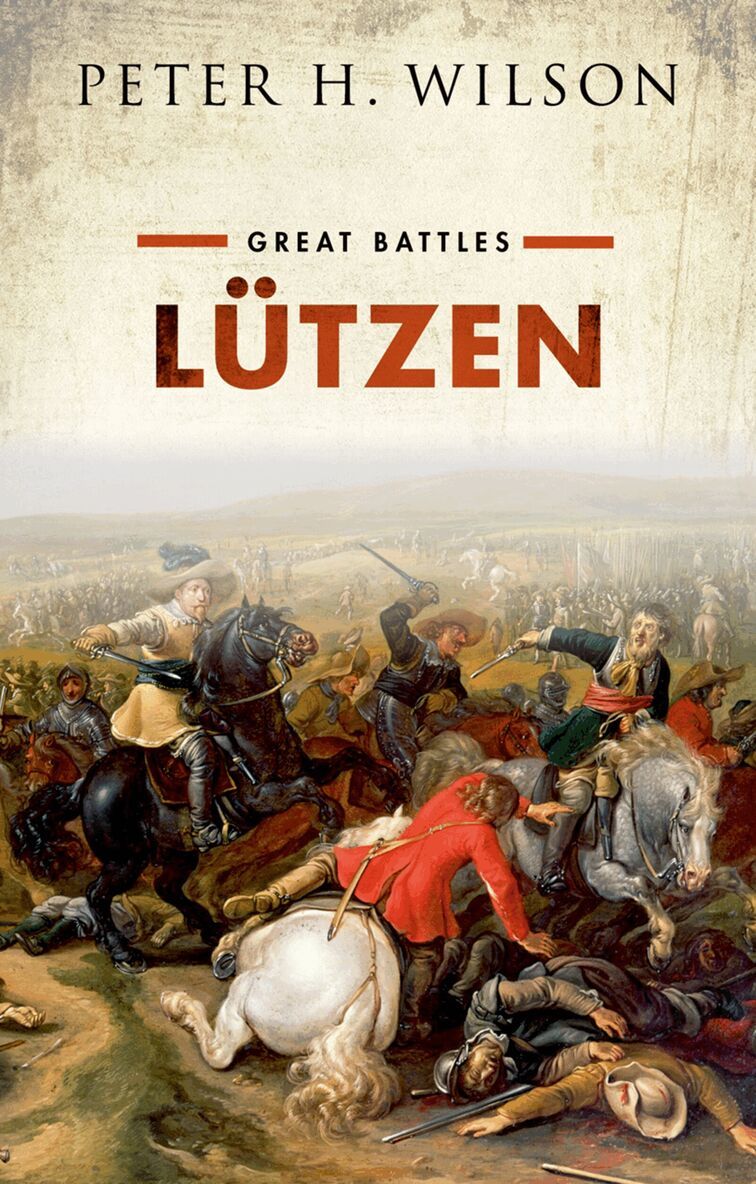
The Thirty Years' War (1618-48) was Europe's most destructive conflict prior to the two world wars. Two of European history's greatest generals faced each other at Lützen in November 1632, mid-way through this terrible war. Neither achieved his objective. Albrecht von Wallenstein withdrew his battered imperial army at nightfall, unaware that his opponent, King Gustavus Adolphus of Sweden, had died a few hours earlier. The indecisive military outcome found an immediate echo in image and print, and became the object of political and historical disputes. Swedish propaganda swiftly fostered the lasting image of the king's sacrifice for the Protestant cause against the spectre of Catholic Habsburg 'universal monarchy'. The standard assumption that the king had 'met his death in the hour of victory' became integral to how Gustavus Adolphus's contribution to modern warfare has been remembered, even celebrated, while the study of Lützen's wider legacy shows how such events are constantly rewritten as elements of propaganda, religious and national identity, and professional military culture. The battle's religious and political associations also led to its adoption as a symbol by those advocating German unification under Prussian leadership. The battlefield remains a place of pilgrimage to this day and a site for the celebration of Protestant German and Nordic culture. This book is the first to combine analysis of the battle itself with an assessment of its cultural, political and military legacy, and the first to incorporate recent archaeological research within a reappraisal of the events and their significance. It challenges the accepted view that Lützen is a milestone in military development, arguing instead that its impact was more significant on the cultural and political level.
250 kr
Skickas
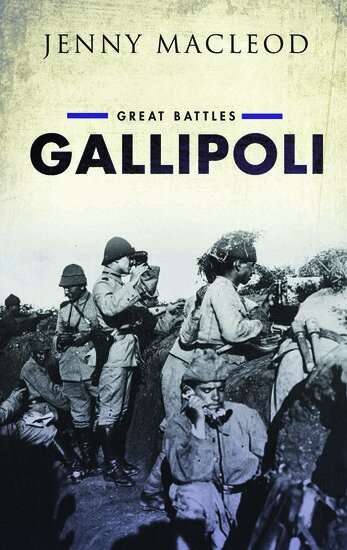
The British-led Mediterranean Expeditionary Force that attacked the Ottoman Empire at Gallipoli in 1915 was a multi-national affair, including Australian, New Zealand, Irish, French, and Indian soldiers. Ultimately a failure, the campaign ended with the withdrawal of the Allied forces after less than nine months and the unexpected victory of the Ottoman armies and their German allies.In Britain, the campaign led to the removal of Churchill from his post as First Lord of the Admiralty and the abandonment of the plan to attack Germany via its 'soft underbelly' in the East. Thereafter, it was largely forgotten on a national level, commemorated only in specific localities linked to the campaign. In post-war Turkey, by contrast, the memory of Gallipoli played an important role in the formation of a Turkish national identity, celebrating both the ordinary soldier and the genius of the republic's first president, Mustafa Kemal. The campaign served a similarly important formative role in both Australia and New Zealand, where it is commemorated annually on Anzac Day. For the southern Irish, meanwhile, the bitter memory of service for the King in a botched campaign was forgotten for decades. Shaped initially by the imperatives of war-time, and the needs of the grief-stricken and the bereft, the memory of Gallipoli has been re-made time and again over the last century. For the Turks an inspirational victory, for many on the Allied side a glorious and romantic defeat, for others still an episode best forgotten, 'Gallipoli' has meant different things to different people, serving by turns as an occasion of sincere and heartfelt sorrow, an opportunity for separatist and feminist protest, and a formative influence in the forging of national identities.
243 kr
Skickas
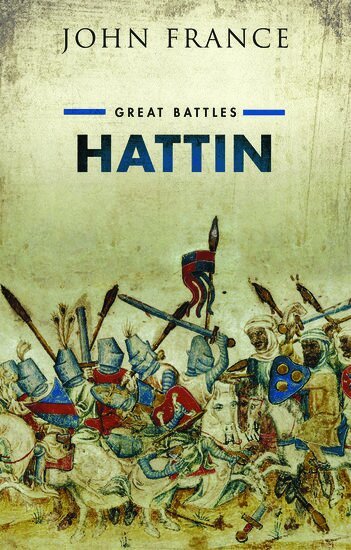
On 4 July 1187 the legendary Muslim leader Saladin destroyed the Crusader army of the Latin Kingdom of Jerusalem with a terrible slaughter at the battle of Hattin - and went on to restore the Holy City of Jerusalem to Islamic rule. The carnage at Hattin was the culmination of almost a century of religious wars between Christian and Muslim in the Holy Land. It had enormous consequences for the whole medieval world because it produced an intensification of holy war between Islam and Europe for over another century - and in retrospect marked the beginning of the end for the Crusader presence in the Middle East. In the 20th century memory of the battle was revived as a symbol of Arab hope for liberation from Crusader-Imperialism, and in the 21st it has become a rallying cry for radical Muslim fundamentalists in their struggle for the soul of Islam.In this new volume in the Great Battles series, John France analyses the origins and course of this pivotal battle, illuminating the roots of the bitter hatred which underlay it, and explains its significance in world history - from medieval times to the present.
251 kr
Skickas inom 7-10 vardagar
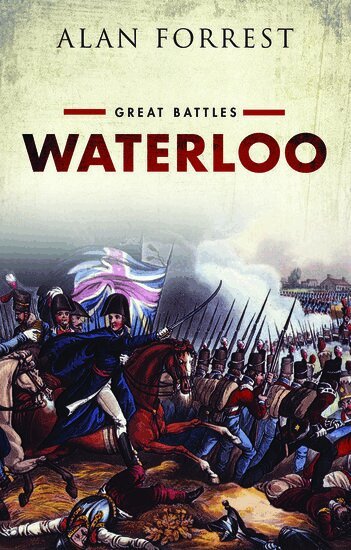
Waterloo was the last battle fought by Napoleon and the one which finally ended his imperial dreams. It involved the deployment of huge armies and incurred heavy losses on both sides; for those who fought in it, Dutch and Belgians, Prussians and Hanoverians as well as British and French troops, it was a murderous struggle. It was a battle that would be remembered very differently across Europe. In Britain it would be seen as an iconic battle whose memory would be enmeshed in British national identity across the following century. In London news of the victory unleashed an outburst of patriotic celebration and captured the imagination of the public. The Duke of Wellington would go on to build his political career on it, and towns and cities across Britain and the Empire raised statues and memorials to the victor. But it was only in Britain that Waterloo acquired this iconic status. In Prussia and Holland its memory was muted - in Prussia overshadowed by the Battle of the Nations at Leipzig, in Holland a simple appendage to the prestige of the House of Orange. And in France it would be portrayed as the very epitome of heroic defeat. Encapsulated in the bravery of General Cambronne and the last stand of the Old Guard, remembered movingly in the lines of Stendhal and Victor Hugo, the memory of Waterloo served to sustain the romantic legend of the Napoleonic Wars - and contributed to the growing cult of Napoleon himself.
189 kr
Skickas inom 5-8 vardagar
Waterloo was the last battle fought by Napoleon and the one which finally ended his imperial dreams. It involved the deployment of huge armies and incurred heavy losses on both sides; for those who fought in it, Dutch and Belgians, Prussians and Hanoverians as well as British and French troops, it was a murderous struggle. It was a battle that would be remembered very differently across Europe. In Britain it would be seen as an iconic battle whose memory would be enmeshed in
243 kr
Skickas
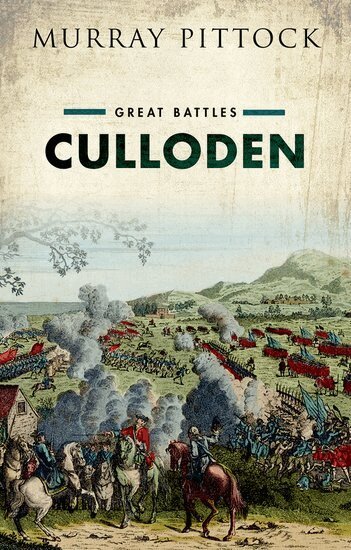
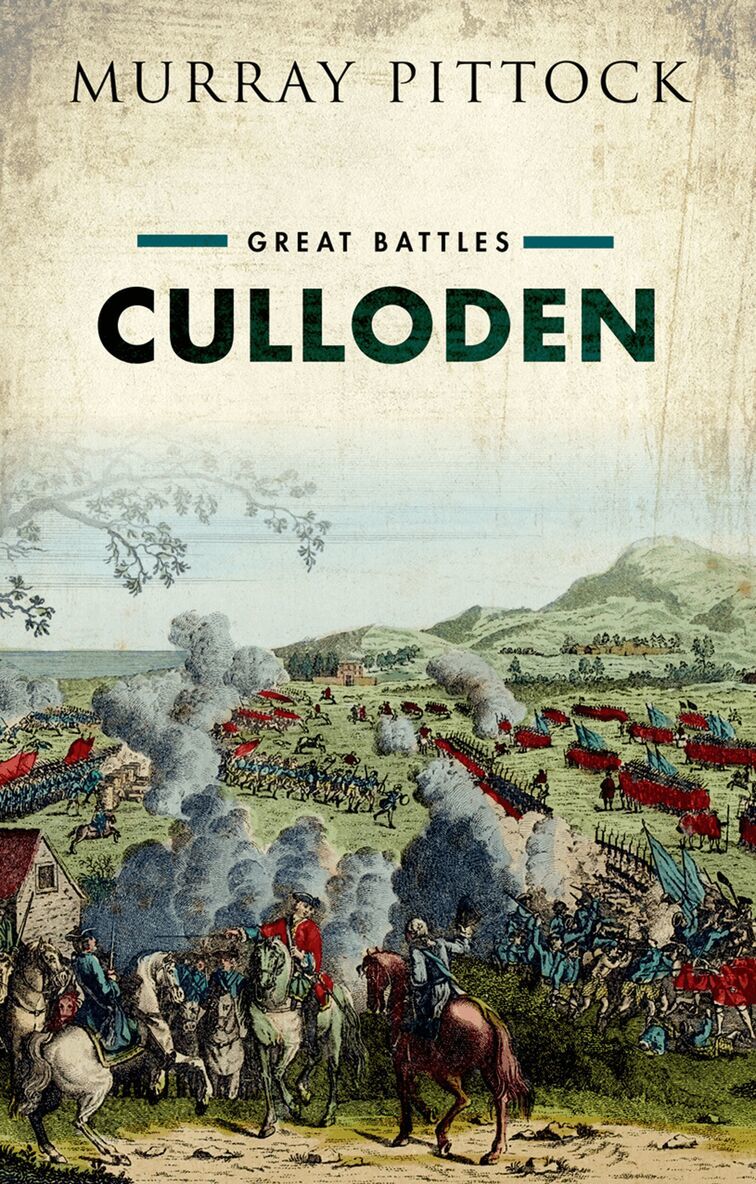
The battle of Culloden lasted less than an hour. The forces involved on both sides were small, even by the standards of the day. And it is arguable that the ultimate fate of the 1745 Jacobite uprising had in fact been sealed ever since the Jacobite retreat from Derby several months before. But for all this, Culloden is a battle with great significance in British history. It was the last pitched battle on the soil of the British Isles to be fought with regular troops on both sides. It came to stand for the final defeat of the Jacobite cause. And it was the last domestic contestation of the Act of Union of 1707, the resolution of which propelled Great Britain to be the dominant world power for the next 150 years. If the battle itself was short, its aftermath was brutal - with the depredations of the Duke of Cumberland followed by a campaign to suppress the clan system and the Highland way of life. And its afterlife in the centuries since has been a fascinating one, pitting British Whig triumphalism against a growing romantic memorialization of the Jacobite cause. On both sides there has long been a tendency to regard the battle as a dramatic clash, between Highlander and Lowlander, Celt and Saxon, Catholic and Protestant, the old and the new. Yet, as this account of the battle and its long cultural afterlife suggests, while viewing Culloden in such a way might be rhetorically compelling, it is not necessarily good history.
143 kr
Skickas
The battle of Culloden lasted less than an hour. The forces involved on both sides were small, even by the standards of the day. And it is arguable that the ultimate fate of the 1745 Jacobite uprising had in fact been sealed ever since the Jacobite retreat from Derby several months before.But for all this, Culloden is a battle with great significance in British history. It was the last pitched battle on the soil of the British Isles to be fought with regular troops on both sides. It came to stand for the final defeat of the Jacobite cause. And it was the last domestic contestation of the Act of Union of 1707, the resolution of which propelled Great Britain to be the dominant world power for the next 150 years.If the battle itself was short, its aftermath was brutal - with the depredations of the Duke of Cumberland followed by a campaign to suppress the clan system and the Highland way of life. And its afterlife in the centuries since has been a fascinating one, pitting British Whig triumphalism against a growing romantic memorialization of the Jacobite cause.On both sides there has long been a tendency to regard the battle as a dramatic clash, between Highlander and Lowlander, Celt and Saxon, Catholic and Protestant, the old and the new. Yet, as this account of the battle and its long cultural afterlife suggests, while viewing Culloden in such a way might be rhetorically compelling, it is not necessarily good history.
212 kr
Skickas inom 5-8 vardagar
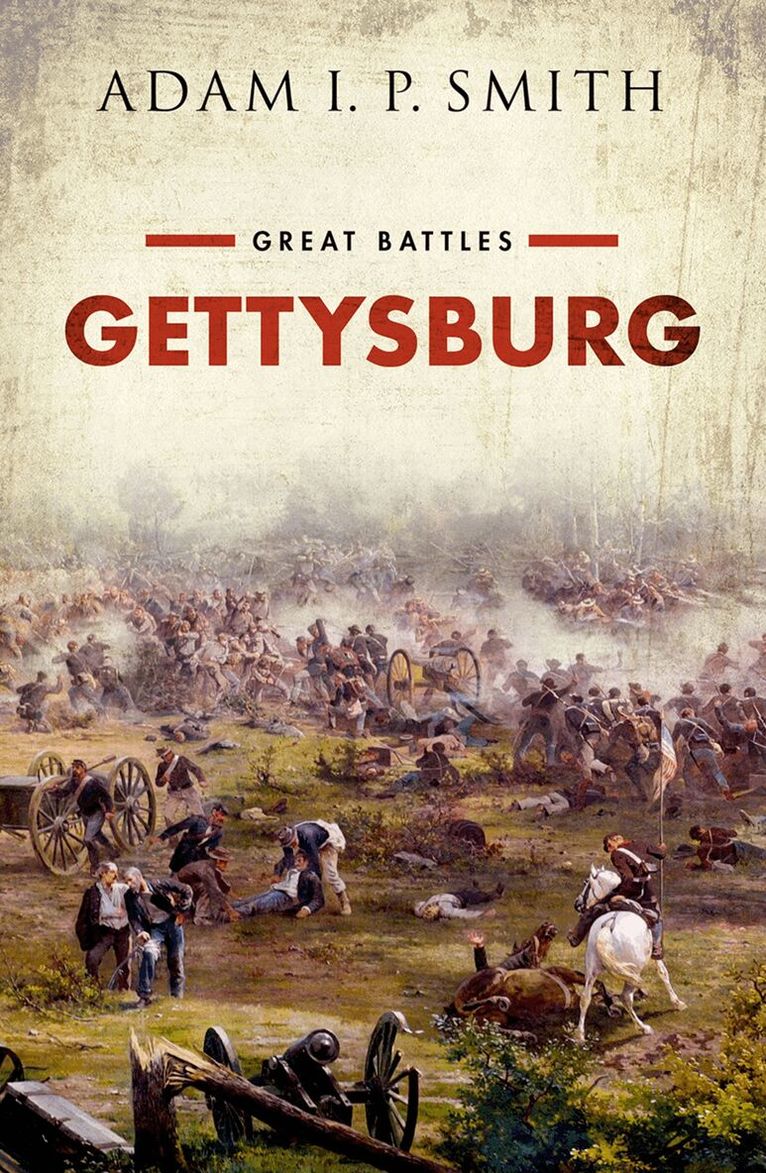
How did Gettysburg become the most famous battle of the American Civil War and one of the most consequential in world history? Why is the most visited battlefield, the place where veterans came in the greatest numbers, where Presidents pay homage, and millions of families have vacationed? What was it about this three-day struggle in July 1863 in the rolling hills of Pennsylvania that made it seem the "turning point of the war", or the "high-water mark" of the Confederate rebellion? Gettysburg explains the battle's place in the Civil War, why two vast armies clashed there, and how, in the century and a half since, it has been re-imagined, re-created and re-enacted. It is the story of a battle which no one planned but which became the bloodiest encounter of the war, and one with dramatically high stakes. The postwar romanticisation of Gettysburg as the place of "might-have-beens" is based on a kernel of reality. But it also suited the interests of both the winners and the losers for Gettysburg to become the Civil War in miniature: a glorious, storied, tragic tale small enough to comprehend, but large enough to be inspirational. If this was the battle that determined the war, Confederates could tell themselves that if only they had made different tactical choices, they would have won their independence, while Northerners could credit valour for their victory, without the unromantic need to invoke superior resources. Yet there was only a war because of slavery, and Gettysburg's importance lies in its role in ending it. In the speech Abraham Lincoln gave there, four months after the battle, he expressed the hope that Union victory would inaugurate a "new birth of freedom". The history of the battle has been shaped by a contest over what that means.
263 kr
Kommande
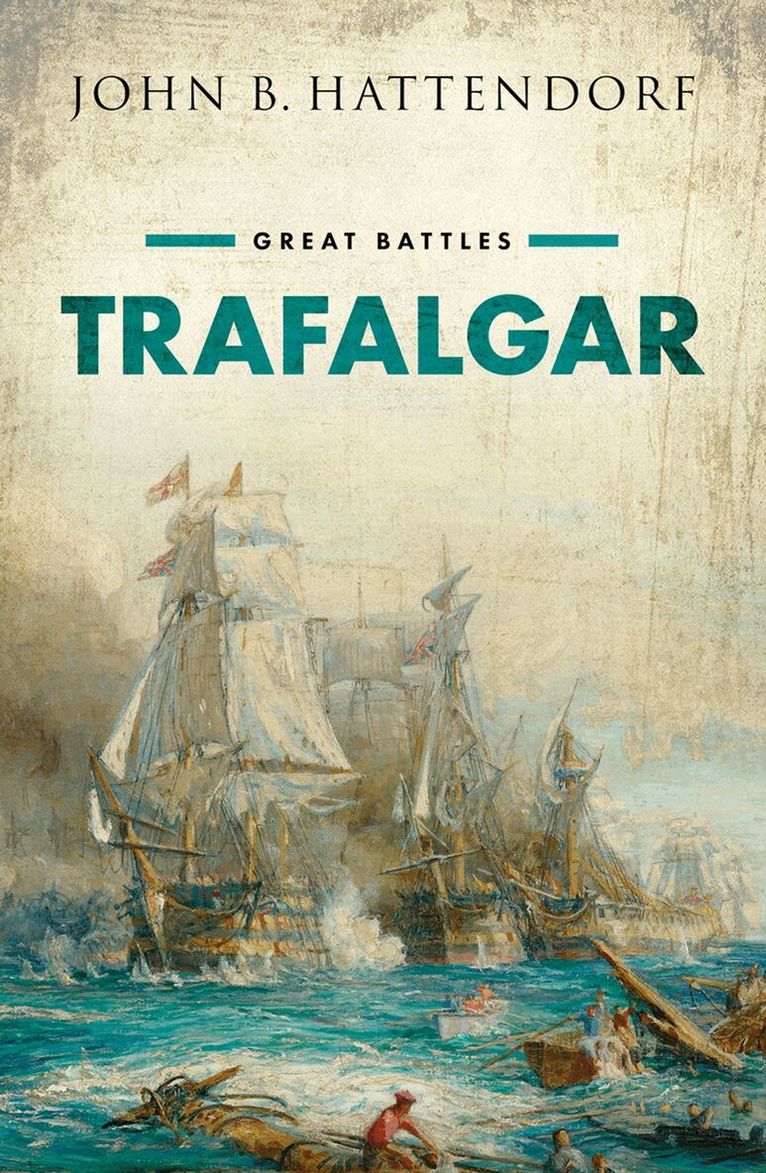
Trafalgar: the full story of one of the most famous naval engagements in historyDuring the Napoleonic War, the British Royal Navy faced French and Spanish fleets off the South-Western coast of Spain in one of the most recognised naval engagements in history. In the latest instalment of the Great Battles series, John B. Hattendorf orients readers to the battle of Trafalgar.In Trafalgar, Hattendorf places equal emphasis on all sides of the conflict and its legacy. His focus on initial reports of the battle highlights the ways in which these records differ, complement and contribute to broader, historical accounts in order to illustrate the variety and range of commemorations that took shape across different artistic outlets in the years that followed. Hattendorf considers Trafalgar's appearance in popular culture through contemporary poetry, pamphlets, newspapers, caricatures and popular prints, and addresses the battle's presence in professional naval cultures around the world. With its focus on interpretation, close analysis and scholarly research, this new volume in the Great Battles series offers an engaging overview of Trafalgar's memorialisation throughout the years.
251 kr
Skickas inom 7-10 vardagar
Agincourt (1415) is an exceptionally famous battle, one that has generated a huge and enduring cultural legacy in the six hundred years since it was fought. Everybody thinks they know what the battle was about. Even John Lennon, aged 12, wrote a poem and drew a picture headed 'Agincourt'. But why and how has Agincourt come to mean so much, to so many? Why do so many people claim their ancestors served at the battle? Is the Agincourt of popular image the real Agincourt, or is our idea of the battle simply taken from Shakespeare's famous depiction of it? Written by the world's leading expert on the battle, this book shows just why it has occupied such a key place in English identity and history in the six centuries since it was fought, exploring a cultural legacy that stretches from bowmen to Beatles, via Shakespeare, Dickens, and the First World War. Anne Curry first sets the scene, illuminating how and why the battle was fought, as well as its significance in the wider history of the Hundred Years War. She then takes the Agincourt story through the centuries from 1415 to 2015, from the immediate, and sometimes surprising, responses to it on both sides of the Channel, through its reinvention by Shakespeare in King Henry V (1599), and the enduring influence of both the play and the film versions of it, especially the patriotic Laurence Olivier version of 1944, at the time of the D-Day landings in Normandy. But the legacy of Agincourt does not begin and end with Shakespeare's play: from the eighteenth century onwards, on both sides of the Channel and in both the English and French speaking worlds the battle was used as an explanation of national identity, giving rise to jingoistic works in print and music. It was at this time that it became fashionable for the gentry to identify themselves with the victory, and in the Victorian period the Agincourt archer came to be emphasized as the epitome of 'English freedom'. Indeed, even today, historians continue to 'refight' the battle - an academic contest which has intensified over recent years, in the run-up to the sixth hundredth anniversary year of 2015.
147 kr
Skickas inom 5-8 vardagar
From Shakespeare to The Beatles, the battle of Agincourt has dominated the cultural landscape as one of the most famous battles in British history. Anne Curry seeks to find out how and why the legacy of Agincourt has captured the popular imagination.Agincourt (1415) is an exceptionally famous battle, one that has generated a huge and enduring cultural legacy in the six hundred years since it was fought. Everybody thinks they know what the battle was about. Even John Lennon, aged 12, wrote a poem and drew a picture headed 'Agincourt'. But why and how has Agincourt come to mean so much, to so many? Why do so many people claim their ancestors served at the battle? Is the Agincourt of popular image the real Agincourt, or is our idea of the battle simply taken from Shakespeare's famous depiction of it? Written by the world's leading expert on the battle, this book shows just why it has occupied such a key place in English identity and history in the six centuries since it was fought, exploring a cultural legacy that stretches from bowmen to Beatles, via Shakespeare, Dickens, and the First World War. Anne Curry first sets the scene, illuminating how and why the battle was fought, as well as its significance in the wider history of the Hundred Years War. She then takes the Agincourt story through the centuries from 1415 to now, from the immediate, and sometimes surprising, responses to it on both sides of the Channel, through its reinvention by Shakespeare in King Henry V (1599), and the enduring influence of both the play and the film versions of it, especially the patriotic Laurence Olivier version of 1944, at the time of the D-Day landings in Normandy. But the legacy of Agincourt does not begin and end with Shakespeare's play: from the eighteenth century onwards, on both sides of the Channel and in both the English and French speaking worlds the battle was used as an explanation of national identity, giving rise to jingoistic works in print and music. It was at this time that it became fashionable for the gentry to identify themselves with the victory, and in the Victorian period the Agincourt archer came to be emphasized as the epitome of 'English freedom'. Indeed, even today, historians continue to 'refight' the battle.
251 kr
Skickas inom 5-8 vardagar
El Alamein was one of the pivotal battles of the Second World War, fought by armies and air forces on the cutting edge of military technology. Yet Alamein has always had a patchy reputation - with many commentators willing to knock its importance. This book explains just why El Alamein is such a controversial battle. Based on an intensive reading of the contemporary sources, in particular the extensive and recently declassified British bugging of Axis prisoners of war, military historian Simon Ball turns Alamein on its head, explaining it as a cultural defeat for Britain. Alamein is a military history of the battle - showing how different it looks stripped of later cultural excrescences. But it also shows how 'Alamein culture' saturated the post-war world, when archival sources mingled with film, novels, magazines, popular histories, and the rest of Alamein's footprint. Whether you are interested in the battle itself or its cultural afterlife, if you have an opinion about Alamein, you'll question it after reading this book.
130 kr
Skickas
The vivid account of how a brilliant plan turned into an epic tragedy - made into the BAFTA award-winning film A BRIDGE TOO FAR'Alive with the detail that evokes the smoking background' DAILY TELEGRAPH'Finely recorded...truly the battle of Arnhem has been fortunate in its historian' SUNDAY TIMESThis book tells the true story of the Battle of Arnhem which was fought in September 1944. Nine thousand men of the First British Airborne Division were parachuted into the peaceful countryside that surrounded Arnhem. Their objective was to capture and hold the bridge over the Rhine ahead of the advancing British Second Army. Nine days later, after some of the fiercest street-fighting of the war, 2000 paratroopers managed to escape to safety.Made famous by the film A BRIDGE TOO FAR