Great Lakes Books - Böcker
Visar alla böcker i serien Great Lakes Books. Handla med fri frakt och snabb leverans.
14 produkter
14 produkter
Detroit's Wayne State University Law School
Future Leaders in the Legal Community
Inbunden, Engelska, 2022
392 kr
Skickas inom 7-10 vardagar
Account of the critical role students played in the history of an urban public law school.Most histories of law schools focus on the notable deans and professors, and the changes in curricula over time. In Detroit's Wayne State University Law School: Future Leaders in the Legal Community, Alan Schenk highlights the students and their influence on the school's development, character, and employment opportunities.Detroit's Wayne State University Law School begins by placing the school in historical context. Public law schools in major American cities were rare in the 1920s. WSU Law School started as a night-only school on the brink of the Great Depression. It was administered by the Detroit Board of Education's Colleges of the City of Detroit and was minimally funded out of student tuition and fees. From its opening days, the school admitted students who had the required college credits, without regard to their gender, race, or ethnic backgrounds, when many law schools restricted or denied admission to women, people of color, and Jewish applicants. The school maintained its steadfast commitment to a racially and gender-diverse student body, though it endured significant challenges along the way. Denied employment at selective law firms and relegated to providing basic legal services, WSU law students pressed the school to expand the curriculum and establish programs that provided them with the credentials afforded graduates from elite law schools. It took the persistence of the students and a persuasive dean to change the conversation about the quality of the graduates and for law firms representing the largest corporations and wealthiest individuals to start hiring WSU graduates who now heavily populate those firms. In the twenty-first century, the school gained strength in international legal studies and established two law centers that reflect the institution's longstanding commitment to public interest and civil rights.While much of the material was gathered from university and law school archives, valuable information was derived from the author's recorded interviews with alumni, deans, and professors. This book will strike the hearts of WSU law school students and alumni, as well as those interested in urban legal education and history.
299 kr
Skickas inom 7-10 vardagar
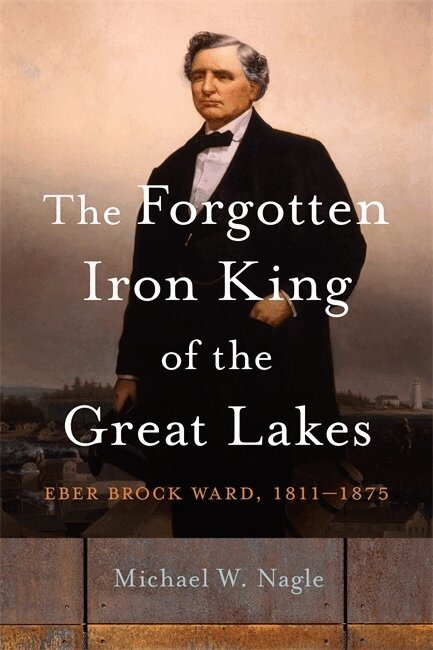
A Gilded Age industrialist becomes Michigan's wealthiest resident and helps shape the nation.Eber Brock Ward (1811–1875) began his career as a cabin boy on his uncle's sailing vessels, but when he died in 1875, he was the wealthiest man in Michigan. His business activities were vast and innovative. Ward was engaged in the steamboat, railroad, lumber, mining, and iron and steel industries. In 1864, his facility near Detroit became the first in the nation to produce steel using the more efficient Bessemer method. Michael W. Nagle demonstrates how much of Ward's success was due to his ability to vertically integrate his business operations, which were undertaken decades before other more famous moguls, such as Andrew Carnegie and John D. Rockefeller. And yet, despite his countless successes, Ward's life was filled with ruthless competition, labor conflict, familial dispute, and scandal. Nagle makes extensive use of Ward's correspondence, business records, contemporary newspaper accounts, and other archival material to craft a balanced profile of this fascinating figure whose actions influenced the history and culture of the Great Lakes and beyond.
490 kr
Skickas inom 7-10 vardagar
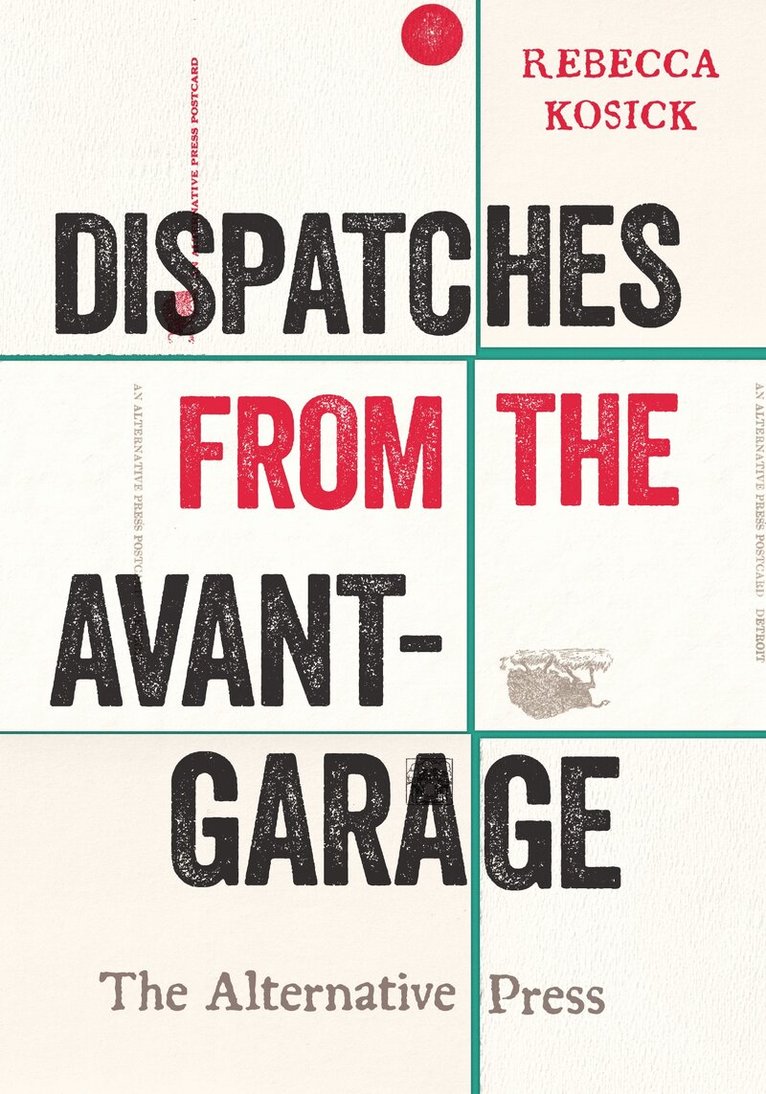
The innovative countercultural movement from one of the most notable twentieth-century presses.In this long-awaited book, Rebecca Kosick chronicles the rise, work, and legacy of the Alternative Press, a grassroots art and poetry publishing initiative founded in 1969 in Detroit, Michigan. Operated by Ken and Ann Mikolowski out of their home, the Alternative Press published original countercultural artwork and poetry by nationally renowned artists, including Alice Notley, Victor Hernández Cruz, and Robert Creeley, and Detroit-based powerhouse artists, such as Jim Gustafson, Donna Brook, Ray Johnson, and John Sinclair. The postcards, bumper stickers, bookmarks, and broadsides produced by the Alternative Press circulated among poets, creatives, and subscribers across the United States. Kosick's research reanimates the Alternative Press's unconventional publications with more than one hundred full-color images, while illuminating the national impact their avant-garde interventions had at the intersection of politics, art, and life in the twentieth century.
385 kr
Skickas inom 7-10 vardagar
Race, Religion, and the Pulpit
Rev. Robert L. Bradby and the Making of Urban Detroit
Häftad, Engelska, 2024
261 kr
Skickas
The history of one man's work during the Great Migration to create a cultural cornerstone for Detroit's African American community.Black churches were essential community centers that made, reshaped, and galvanized urban areas during the Great Migration. In Detroit, there was one church and one minister in particular that demonstrated this power of the pulpit—Second Baptist Church of Detroit and its nineteenth pastor, the Reverend Robert L. Bradby. In Race, Religion, and the Pulpit: Rev. Robert L. Bradby and the Making of Urban Detroit, author Julia Marie Robinson explores how Bradby's church became the catalyst for economic empowerment, community building, and the formation of an African American working class in Detroit. Robinson highlights Rev. Bradby's efforts as an activist and "race leader" by examining the role the minister played in high-profile events, such as the organizing of Detroit's NAACP chapter, the Ossian Sweet trial of the mid-1920s, the Scottsboro Boys trials in the 1930s, and the controversial rise of the United Auto Workers in Detroit in the 1940s.
313 kr
Skickas inom 7-10 vardagar
279 kr
Skickas
Journey to the edges of the Great Lakes in this engaging history of picnicking, wilderness, and foodways.This stunning venture into the American picnic explores how innovation, exploitation, and the changing wilderness of Michigan's Upper Peninsula have shaped the experience of eating outdoors. From a photo of her grandmother picnicking in 1911, to the outdoor lunches of miners and loggers, to the picnics of vacationing celebrities like Henry Ford and Ernest Hemingway, author Candice Goucher opens an aperture into historic memories of picnics past to consider what the picnic sparks in our senses and to bring the borderlands of humans and nature into view. Through pictures, postcards, paintings, and recipes, Goucher traces the creation of a modern notion of wilderness as it emerged in the North American imagination and popular culture to navigate an entangled environmental and culinary history of the Upper Peninsula. Drawing on themes from Indigenous knowledge and the African American experience to labor activism and women's history, this tantalizing chronicle offers a taste of Americana, seasoned by the changing global forces of industrialization, transportation, immigration, tourism, war, and climate.
299 kr
Skickas inom 7-10 vardagar
371 kr
Skickas inom 7-10 vardagar
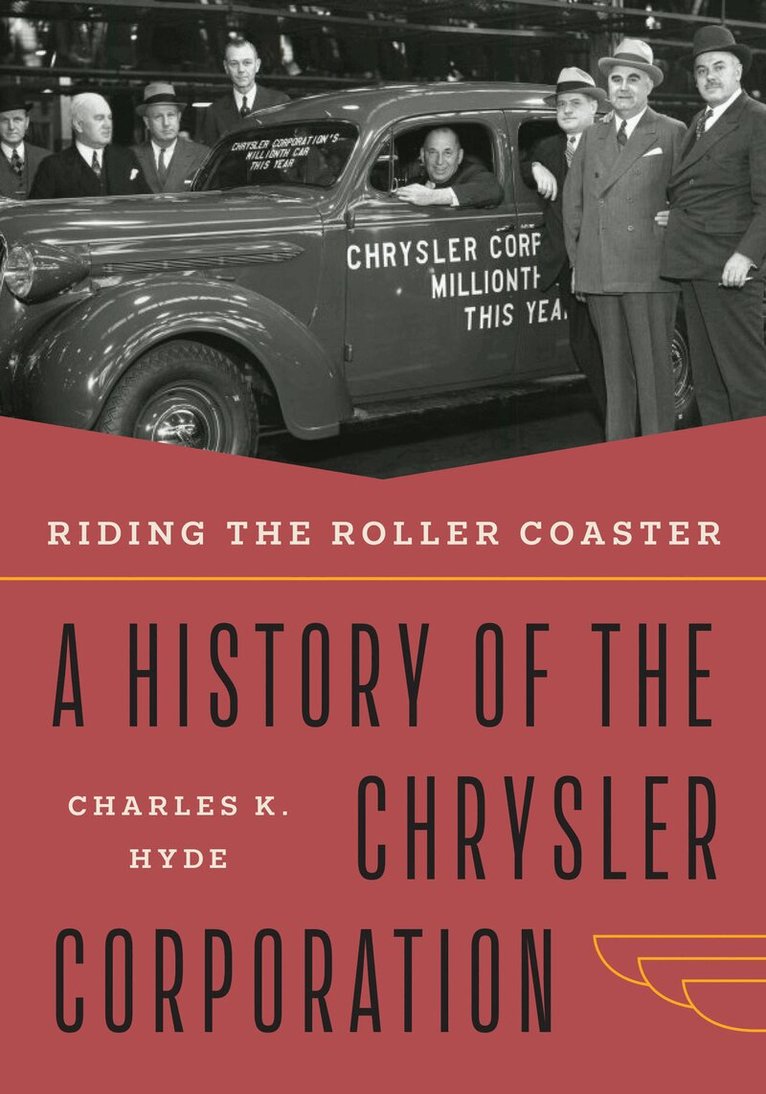
The first comprehensive history of the Chrysler Corporation, this book is intended for readers interested in the history of automobiles and of American business, and for fans and critics of Chrysler's products.From the Chrysler Six of 1924 to the front-wheel-drive vehicles of the 70s and 80s to the minivan, Chrysler boasts an impressive list of technological "firsts." But even though the company has catered well to a variety of consumers, it has come to the brink of financial ruin more than once in its seventy-five-year history. How Chrysler has achieved monumental success and then managed colossal failure and sharp recovery is explained in Riding the Roller Coaster, a lively, unprecedented look at a major force in the American automobile industry since 1925. Charles Hyde tells the intriguing story behind Chrysler-its products, people, and performance over time-with particular focus on the company's management. He offers a lens through which the reader can view the U.S. auto industry from the perspective of the smallest of the automakers who, along with Ford and General Motors, make up the "Big Three."The book covers Walter P. Chrysler's life and automotive career before 1925, when he founded the Chrysler Corporation, to 1998, when it merged with Daimler-Benz. Chrysler made a late entrance into the industry in 1925 when it emerged from Chalmers and Maxwell, and further grew when it absorbed Dodge Brothers and American Motors Corporation. The author traces this journey, explaining the company's leadership in automotive engineering, its styling successes and failures, its changing management, and its activities from auto racing to defense production to real estate. Throughout, the colorful personalities of its leaders-including Chrysler himself and Lee Iacocca-emerge as strong forces in the company's development, imparting a risk-taking mentality that gave the company its verve.
290 kr
Skickas inom 7-10 vardagar
305 kr
Kommande
305 kr
Kommande
452 kr
Skickas inom 7-10 vardagar
The architectural legacy of Albert Kahn established on the global stage.In this new authoritative biography, author Chris Meister brings a fresh perspective to the legacy of internationally renowned Detroit architect Albert Kahn, utilizing a broad range of newly seen archival resources. In Detroit, Kahn's daylight factories and commercial designs have shaped the distinctive workplaces and streetscapes of the city. Placing Kahn's design and production of iconic architecture—like the Belle Isle Aquarium & Horticultural Building as well as the Fisher Building—alongside less-heralded projects, Meister outlines how Kahn's ingenuity and broad networks cultivated the spread of his influence through his advocacy of daylight in traditionally dark working environments. Beyond Detroit, Meister addresses the complicated global impact of Kahn's work by highlighting his pragmatic approach to architectural design and his involvement in fraught projects such as the plants designed for the USSR in Europe's interwar period. This exploration of Kahn's dynamic career establishes the architect as a vital figure for the global development of architectural modernism and to twentieth-century economic and political history.
341 kr
Kommande