Greenwood Cultural Center Series in African Diaspora History and Culture – serie
Visar alla böcker i serien Greenwood Cultural Center Series in African Diaspora History and Culture. Handla med fri frakt och snabb leverans.
5 produkter
5 produkter
288 kr
Skickas inom 5-8 vardagar
There was a time when countless young people in the Midwest, South, and Southwest went to dances and stage shows to hear a territory band play. Territory bands traveled from town to town, performing jazz and swing music, and Tulsa-based musician Ernie Fields (1904–97) led one of the best. In Going Back to T-Town, Ernie’s daughter, Carmen Fields, tells a story of success, disappointment, and perseverance extending from the early jazz era to the 1960s. This is an enlightening account of how this talented musician and businessman navigated the hurdles of racial segregation during the Jim Crow era.Because few territory bands made recordings, their contributions to the development of jazz music are often overlooked. Fortunately, Ernie Fields not only recorded music but also loved telling stories. He shared his “tales from the road” with his daughter, a well-known Boston journalist, and his son, Ernie Fields Jr., who has carried on his legacy as a successful musician and music contractor. As much as possible, Carmen Fields tells her father’s story in his own voice: how he weathered the ups and downs of the music industry and maintained his optimism even while he faced entrenched racial prejudice and threats of violence.After traveling with his band all over the United States, Fields eventually caught the attention of renowned music producer John Hammond. In 1939, Hammond arranged for recording sessions and bookings that included performances in the famed Apollo Theater in New York. Ernie finally scored a top-ten hit in 1959 with his rock-and-roll rendition of “In the Mood.” At a time when most other territory bands had faded, the Ernie Fields Orchestra continued to perform.A devoted husband and family man, Ernie Fields also respected and appreciated his fellow musicians. The book includes a “Roll Call” of his organization’s members, based on notes he kept about them. Going Back to T-Town is a priceless source of information for historians of American popular music and African American history.
360 kr
Skickas inom 10-15 vardagar
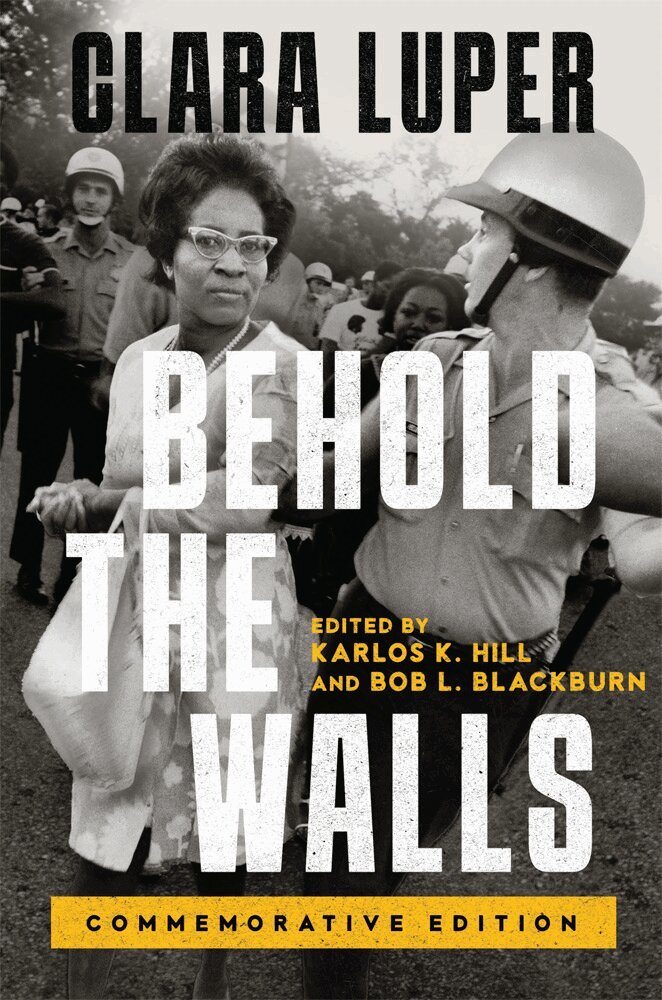
On August 19, 1958, Clara Luper and thirteen Black youth walked into Katz Drug Store in Oklahoma City and sat down at the lunch counter. When they tried to order, they were denied service. As they sat in silence, refusing to leave, the surrounding white customers unleashed a torrent of threats and racial slurs. This first organized sit-in in Oklahoma—almost two years before the more famous sit-ins in Greensboro, North Carolina—sparked other demonstrations in Oklahoma and other states. Behold the Walls is Luper’s engrossing firsthand account of how the movement she helped launch ended legal racial segregation.First published in 1979, Behold the Walls now features a new introduction and 33 newly selected historical photos. Luper’s direct, unvarnished account captures the immediacy of the events she witnessed. As a Black woman, Luper refused to let either her race or her gender deter her from stepping forth as a leader. Born in 1923, Clara Luper taught history in Oklahoma public schools and led the NAACP Youth Council. The students who sat in at Katz Drug and other businesses belonged to that organization. Luper highlights the contributions of others, especially young people, in breaking down the walls of segregation in Oklahoma through numerous demonstrations, marches, and voter registration campaigns.This commemorative edition of Luper’s eye-opening autobiography, published near what would have been her 100th birthday, as well as the 65th anniversary of the sit-ins, offers invaluable insight into the history of protest in the early years of the civil rights movement. With racial inequality still at the forefront of national debate, Behold the Walls places Luper’s efforts in the larger national context of the struggle to resist injustice and inspire positive change.
245 kr
Skickas inom 7-10 vardagar
There was a time when countless young people in the Midwest, South, and Southwest went to dances and stage shows to hear a territory band play. Territory bands traveled from town to town, performing jazz and swing music, and Tulsa-based musician Ernie Fields (1904–97) led one of the best. In Going Back to T-Town, Ernie’s daughter, Carmen Fields, tells a story of success, disappointment, and perseverance extending from the early jazz era to the 1960s. This is an enlightening account of how this talented musician and businessman navigated the hurdles of racial segregation during the Jim Crow era.Because few territory bands made recordings, their contributions to the development of jazz music are often overlooked. Fortunately, Ernie Fields not only recorded music but also loved telling stories. He shared his “tales from the road” with his daughter, a well-known Boston journalist, and his son, Ernie Fields Jr., who has carried on his legacy as a successful musician and music contractor. As much as possible, Carmen Fields tells her father’s story in his own voice: how he weathered the ups and downs of the music industry and maintained his optimism even while he faced entrenched racial prejudice and threats of violence.After traveling with his band all over the United States, Fields eventually caught the attention of renowned music producer John Hammond. In 1939, Hammond arranged for recording sessions and bookings that included performances in the famed Apollo Theater in New York. Ernie finally scored a top-ten hit in 1959 with his rock-and-roll rendition of “In the Mood.” At a time when most other territory bands had faded, the Ernie Fields Orchestra continued to perform.A devoted husband and family man, Ernie Fields also respected and appreciated his fellow musicians. The book includes a “Roll Call” of his organization’s members, based on notes he kept about them. Going Back to T-Town is a priceless source of information for historians of American popular music and African American history.
238 kr
Skickas inom 5-8 vardagar
On August 19, 1958, Clara Luper and thirteen Black youth walked into Katz Drug Store in Oklahoma City and sat down at the lunch counter. When they tried to order, they were denied service. As they sat in silence, refusing to leave, the surrounding white customers unleashed a torrent of threats and racial slurs. This first organized sit-in in Oklahoma - almost two years before the more famous sit-ins in Greensboro, North Carolina - sparked other demonstrations in Oklahoma and other states. Behold the Walls is Luper's engrossing firsthand account of how the movement she helped launch ended legal racial segregation. First published in 1979, Behold the Walls now features a new introduction and 33 newly selected historical photos. Luper's direct, unvarnished account captures the immediacy of the events she witnessed. As a Black woman, Luper refused to let either racism or sexism deter her from stepping forth as a leader. Born in 1923, Clara Luper taught history in Oklahoma public schools and led the NAACP Youth Council. The students who sat in at Katz Drug and other businesses belonged to that organization. Luper highlights the contributions of others, especially young people, in breaking down the walls of segregation in Oklahoma through numerous demonstrations, marches, and voter registration campaigns. This commemorative edition of Luper's eye-opening autobiography, published near what would have been her 100th birthday, as well as the 65th anniversary of the sit-ins, offers invaluable insight into the history of protest in the early years of the civil rights movement. With racial inequality still at the forefront of national debate, Behold the Walls places Luper's efforts in the larger national context of the struggle to resist injustice and inspire positive change.
We Are Black, Too Volume 3
Aboriginal Australians and the Black Panther Party
Inbunden, Engelska, 2026
607 kr
Skickas inom 5-8 vardagar
In December of 1971 the Black Panther Party expanded to Australia. This might seem an odd place for a quintessentially African American political force, but as Jacynda Ammons reveals in this expansive work, Aboriginal Australians had long looked to the example of African Americans in their fight against white supremacy. Against a background of Australia's history of colonization and racialization, We Are Black, Too traces Aboriginal Australians' adoption of strains of Black activism from Marcus Garvey through the Civil Rights Movement and ultimately the Black Panther Party. In 1971 an International Section of the Black Panther Party was established in Algeria, but as Ammons shows, it was not until the demise of this section and a "split" within the party in the United States that a chapter of the Black Panther Party was formed in Australia.Tapping archival research from the United States and Australia, and in light of the emphasis on international activism by Huey P. Newton and the Oakland Panthers, We Are Black, Too explores the links between the American and Australian chapters of the BPP. As it brings to light these unexpected connections, the book adds to our understanding of both the Black Panther movement and Aboriginal activism in Australia. And as it expands the larger analysis of “transnational blackness” and the global Black Diaspora, it offers powerful insights, and holds valuable lessons, for the activism and internationalism of African Americans today in movements of global solidarity to end systemic racism.