Guides to the Good Life - Böcker
Visar alla böcker i serien Guides to the Good Life. Handla med fri frakt och snabb leverans.
7 produkter
7 produkter
198 kr
Skickas inom 5-8 vardagar
Ancient and enduring, rich and wide-ranging, the tradition of Confucianism offers profound insights into how we can lead good lives--lives built on understanding that we are deeply connected to one another. For thousands of years, Confucian thinkers have carefully honed a philosophy for living fully, passing that knowledge along to their students over generations. Kongzi, also known as Confucius (551-479 BCE), is the most famous of the 2500-year-long tradition's philosophers. Though Kongzi lived more than two millennia ago and on the other side of the earth from many picking up this book, his teachings about how to live reverberate everywhere there are parents, children, and families; everywhere people feel stirrings of compassion for others, but sometimes selfishly ignore them; everywhere people wonder how they should interact with their environment.In Growing Moral, philosopher Stephen C. Angle engages readers to reflect on and to practice the teachings of Confucianism in the contemporary world. Angle draws on the whole history of Confucianism, focusing on three thinkers from the classical era (Kongzi, Mengzi, and Xunzi) and two from the Neo-Confucian era (Zhu Xi and Wang Yangming). While laying out the fundamental teachings of Confucianism, the book highlights the enduring lessons that the philosophy offers contemporary readers. Although the book reveals the many helpful ways we can engage Confucian philosophy in our modern lives, it also scrutinizes those elements of Confucianism that may not align with 21st-century standpoints. Angle questions whether Confucianism, historically affiliated with patriarchal societies and monarchical governments, genuinely can be attractive to those committed to gender equality and democratic politics, and points the way towards a progressive, evolving version of Confucianism that is nonetheless consistent with the principles it has upheld over the centuries. At its core, Confucianism describes a way for humans to live and grow together in our world--a way characterized at its best by joy, beauty, and harmony. This book builds a case for modern Confucianism as a way of life well worth the attention of reflective modern readers no matter their age, where they live, or the paths they've taken so far.
203 kr
Skickas inom 5-8 vardagar
Many of us, even on our happiest days, struggle to quiet the constant buzz of anxiety in the background of our minds. All kinds of worries--worries about losing people and things, worries about how we seem to others--keep us from peace of mind. Distracted or misled by our preoccupations, misconceptions, and, most of all, our obsession with ourselves, we don't see the world clearly--we don't see the world as it really is.In our search for happiness and the good life, this is the main problem. But luckily there is a solution, and on the path to understanding it, we can make use of the rich and varied teachings that have developed over centuries of Buddhist thought. With clarity and compassion, Nicolas Bommarito explores the central elements of centuries of Buddhist philosophy and practice, explaining how they can improve your life and teach you to live without fear. Mining important texts and lessons for practical guidance, he provides a friendly guide to the very practical goals that underpin Buddhist philosophy. After laying out the basic ideas, Bommarito walks readers through a wide range of techniques and practices we can adopt to mend ingrained habits. Rare for its exploration of both the philosophy that motivates Buddhism and its practical applications, this is a compassionate guide to leading a good life that anyone can follow.
198 kr
Skickas
While existentialism has long been associated with Parisian Left Bank philosophers sipping cocktails in smoke-filled cafés, or with a brooding, angst-filled outlook on life, Gosetti-Ferencei shows how vital and heterogeneous the movement really was.In this concise, accessible book, Gosetti-Ferencei offers a new vision of existentialism. As she lucidly demonstrates, existentialism is a rich and diverse philosophy that encourages meaningful engagement with the world around us, offering a host of fascinating concepts that pertain to life as we experience it. The movement was as heterogeneous as it is now misunderstood, influenced by jazz music, involving diverse thinkers from around the world, challenging received ideas about the meaning of human existence. Part of the difficulty in defining existentialism is that it was never a unified philosophy, but came to identify a set of shared concerns about the meaning and possibility of human freedom, as it may be expressed in authentic choices, actions, and projects. Existentialists all explored how, in the absence of traditional reassurances about the meaning of life, we may transcend our present circumstances, and give our situation new meaning. With existentialism, concrete, lived experience of the single individual emerged from the shadow of abstract systems and long-defended traditions, and became subject-matter in its own right for philosophical inquiry. Far from solipsistic, Gosetti-Ferencei shows that existentialist attention to the human self can be intertwined with ways of conceiving the world, our being with others, the earth, and the encompassing concept of being. Fully appreciating what existentialism has to offer requires recognizing the rich diversity of its prospects, which involve not only anxiety, absurdity, awareness of death and the loss of religious meaning, but also hope, the striving for happiness, and a sense of the transcendent. On Being and Becoming unpacks this philosophical movement's insights, and reveals how its core ideas promote creative responses to the question of life's meaning.
198 kr
Skickas
An exploration of everything Kant's philosophy can teach us about being the best people we can be, from using our human reasoning to its fullest potential to being affably drunk at dinner parties.Immanuel Kant is well known as one of the towering figures of Western philosophical history, but he is less well known for his savvy advice about hosting dinner parties. This philosophical genius was a man of many interests and talents: his famously formal and abstract ethical system is only part of his story. But Kant not only made a profound impact on how people think about big questions like how to treat one another--he also offered wise insights on things people confront in everyday life: things like gossip, friendship, manners, self-respect, cheerfulness, gratitude, mockery, contempt, and yes, dinner parties. In this book, philosopher Karen Stohr shows you how Kant's whole ethical picture fits together. It's a picture that is as relevant and useful now as it was in the 18th century--and maybe even more so. A Kantian way of living means using reason to guide your choices so that your life reflects your true nature as a free, rational being. This nature is one we share with others; Kantianism emphasizes the fundamental dignity and equality of each person. It presents an ideal for how we should live together without downplaying the challenges we face in the actual world. Though realistic about human weaknesses, Kant remained optimistic about our capacities and possibilities. He had great faith in the ability of human reason to point us in the direction of moral progress and to get us there. Each of us has the power within us to know and choose the right path--we just have to be willing to make that choice, and to discover how worthwhile life can be in the process.
231 kr
Skickas
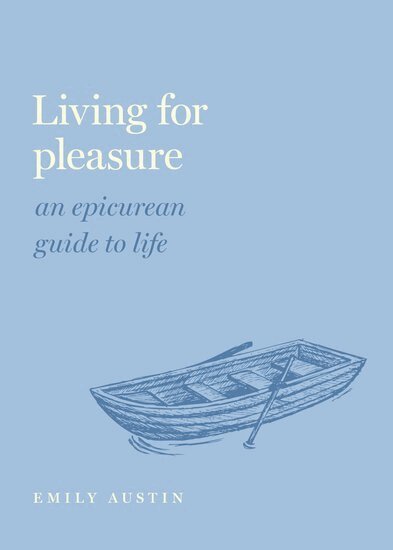
If we all want happiness and pleasure so much, then why are we so bad at getting it?Pleasure feels amazing! Anxiety, however, does not. The Ancient Greek Philosopher Epicurus rolled these two strikingly intuitive claims into a simple formula for happiness and well-being--pursue pleasure without causing yourself anxiety. But wait, is that even possible? Can humans achieve lasting pleasure without suffering anxiety about failure and loss? Epicurus thinks we can, at least once we learn to pursue pleasure thoughtfully. In Living for Pleasure, philosopher Emily Austin offers a lively, jargon-free tour of Epicurean strategies for diminishing anxiety, achieving satisfaction, and relishing joys. Epicurean science was famously far ahead of its time, and Austin shows that so was its ethics and psychology. Epicureanism can help us make and keep good friends, prepare for suffering, combat imposter syndrome, build trust, recognize personal limitations, value truth, cultivate healthy attitudes towards money and success, manage political anxiety, develop gratitude, savor food, and face death.Readers will walk away knowing more about an important school of philosophy, but moreover understanding how to get what they want in life--happiness--without the anxiety of striving for it.
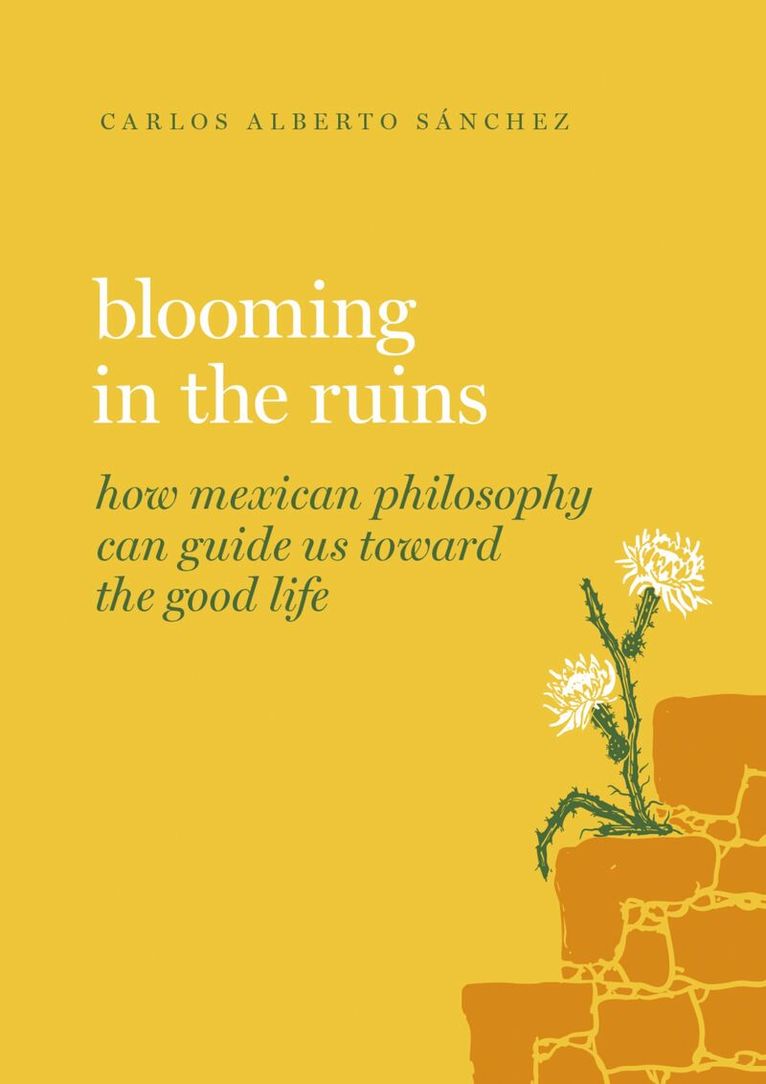
Blooming in the Ruins
How Mexican Philosophy Can Guide Us toward the Good Life
Inbunden, Engelska, 2024
203 kr
Skickas inom 5-8 vardagar
When we think of philosophy that can guide us in our everyday lives, we are more likely to think of Ancient Greece or Rome than we are 20th-century Mexico. But Mexican philosophy, which came into focus in the last century, following the Mexican Revolution, is a rich and wide-ranging tradition with much to offer readers today. Emerging in defiance of the Western philosophy bound up with colonial power--first brought to Mexico with the Augustinians in the 16th century, and, like so much else, imposed on Mexicans for centuries after that--it boasts a range of powerful ideas and advice for modern-day life. A tradition deeply tied to Mexico's history of colonization, revolution, resistance, and persistence through hardship, this philosophy has much to teach us.Mexican philosophers had to grapple with questions particular to Mexico that have implications that anyone can and should learn from. Given the way we all must contend with life's unexpected twists and turns, how can we preserve a sense of ourselves, and a coherent way of thinking about the world? If history is really a sequence of accidents, each affecting the next, how can we think about what we should be doing in our lives? How can we understand who we are, if we are the product of such accidents of history? How can we deal with emotions that conflict with one another? How can we keep our spirits up when we feel like we are always on our way to a far-off goal? Mexican philosophy offers a specific, historically- and culturally-rooted way to think about these universal questions. We can appreciate the way its ideas followed from the accidents of history that created modern-day Mexico, while also appreciating that they are as universally profound as those passed down in the Western tradition. Mexican philosophy also offers an array of fascinating concepts and directives, from recommending cultivating a rival as a source of motivation to teaching how to deal with trouble-makers and reminding us to respect other people on their own terms. Mexican philosophy is a varied, dynamic, and deeply modern resource for meaningful, distinctive wisdom to guide us through our lives. Incorporating stories from his family's and his ancestors' Mexican and Mexican-American experiences, Carlos Alberto Sánchez provides an intriguing guide for readers of all backgrounds, including those who will be learning about philosophy (or Mexico) for the first time.
183 kr
Skickas inom 5-8 vardagar
An exploration of everything Kant's philosophy can teach us about being the best people we can be, from using our human reasoning to its fullest potential to being affably drunk at dinner parties.Immanuel Kant is well known as one of the towering figures of Western philosophical history, but he is less well known for his savvy advice about hosting dinner parties. This philosophical genius was a man of many interests and talents: his famously formal and abstract ethical system is only part of his story. But Kant not only made a profound impact on how people think about big questions like how to treat one another -- he also offered wise insights on things people confront in everyday life: things like gossip, friendship, manners, self-respect, cheerfulness, gratitude, mockery, contempt, and yes, dinner parties. In this book, philosopher Karen Stohr shows how Kant's whole ethical picture fits together. It's a picture that is as relevant and useful now as it was in the 18th century--and maybe even more so. A Kantian way of living means using reason to guide your choices so that your life reflects your true nature as a free, rational being. This nature is one we share with others; Kantianism emphasizes the fundamental dignity and equality of each person. It presents an ideal for how we should live together without downplaying the challenges we face in the actual world. Though realistic about human weaknesses, Kant remained optimistic about our capacities and possibilities. He had great faith in the ability of human reason to point us in the direction of moral progress and to get us there. Each of us has the power within us to know and choose the right path--we just have to be willing to make that choice, and to discover how worthwhile life can be in the process.