History of Education – Serie
Visar alla böcker i serien History of Education. Handla med fri frakt och snabb leverans.
9 produkter
9 produkter
519 kr
Skickas inom 7-10 vardagar
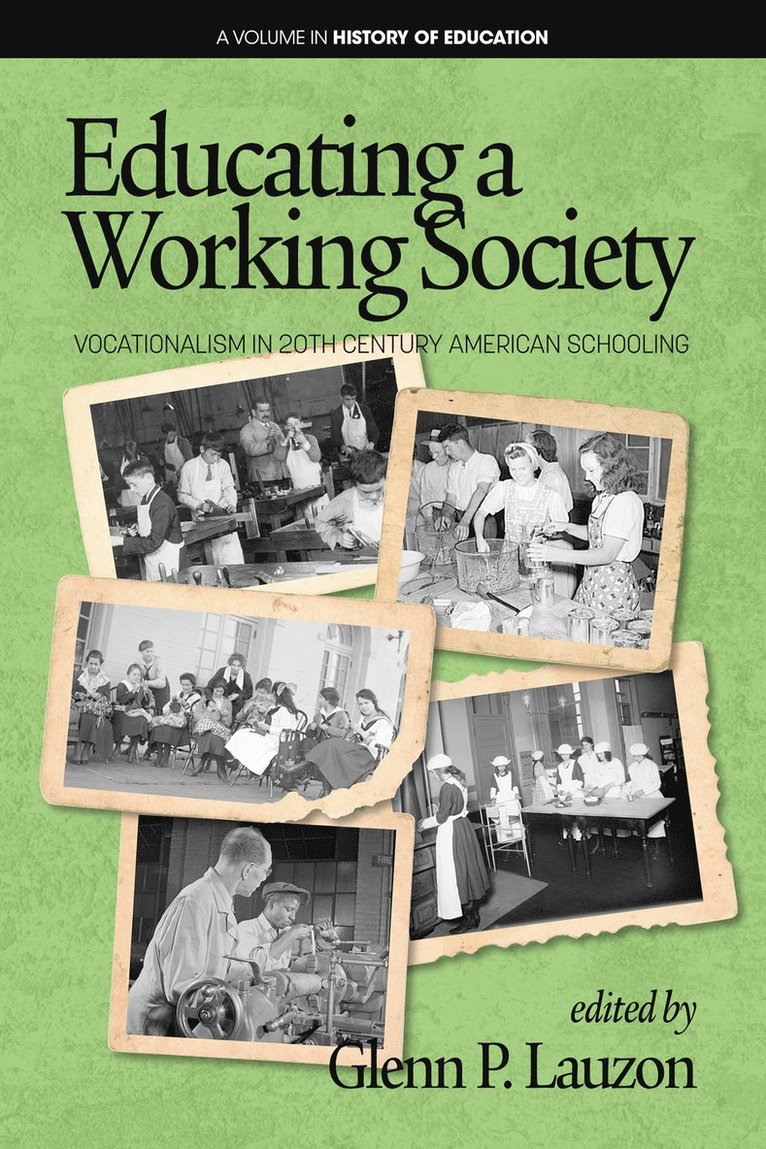
The future looks promising for the field of career and technical education (CTE). The Every Student Succeeds Act of 2015 eases the way to create multiple pathways for high school students to get to college and careers. Philanthropic foundations are funding innovations in career preparation. State departments of education are revamping program guidelines and graduation requirements. In many states, governors have made career preparation a priority.While people plan CTE’s future, Educating a Working Society looks to its past. This book explores twentieth-century efforts to bring schooling and work closer together. Chapters feature timely topics, such as public controversy over vocational programs, the influences of racism in philanthropic giving, students’ choices in course taking, teachers’ efforts to combine the academic and vocational missions of schooling, and contemporary trends in college and career readiness initiatives.Using schools to prepare youth for work has a long and troubled history. The contributors to this book dive into that history, bringing up compelling issues that challenge conventional wisdom about the history of education.
958 kr
Skickas inom 7-10 vardagar
The future looks promising for the field of career and technical education (CTE). The Every Student Succeeds Act of 2015 eases the way to create multiple pathways for high school students to get to college and careers. Philanthropic foundations are funding innovations in career preparation. State departments of education are revamping program guidelines and graduation requirements. In many states, governors have made career preparation a priority.While people plan CTE’s future, Educating a Working Society looks to its past. This book explores twentieth-century efforts to bring schooling and work closer together. Chapters feature timely topics, such as public controversy over vocational programs, the influences of racism in philanthropic giving, students’ choices in course taking, teachers’ efforts to combine the academic and vocational missions of schooling, and contemporary trends in college and career readiness initiatives.Using schools to prepare youth for work has a long and troubled history. The contributors to this book dive into that history, bringing up compelling issues that challenge conventional wisdom about the history of education.
Anti-Blackness and Public Schools in the Border South
Policy, Politics, and Protest in St. Louis, 1865-1972
Häftad, Engelska, 2019
600 kr
Skickas inom 7-10 vardagar
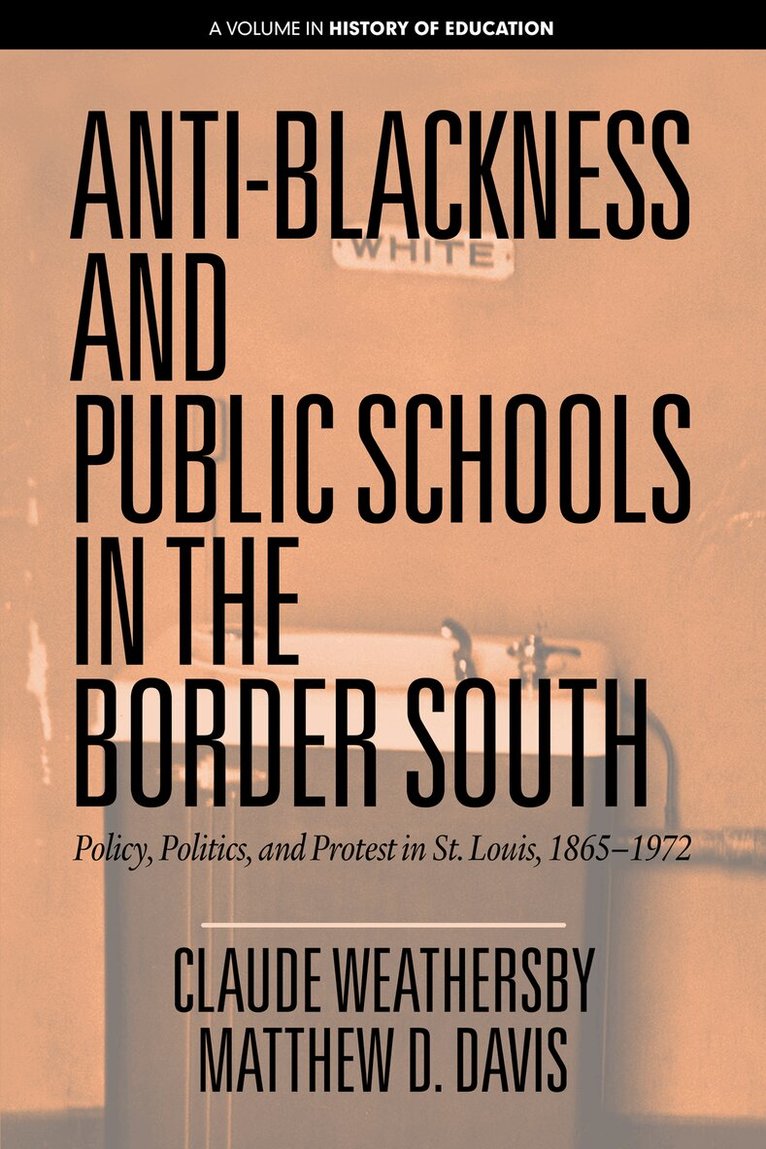
This new book on Black public schooling in St. Louis is the first to fully explore deep racialized antagonisms in St. Louis, Missouri. It accomplishes this by addressing the white supremacist context and anti-Black policies that resulted. In addition, this work attends directly to community agitation and protest against racist school policies. The book begins with post-Civil War schooling of Black children to the important Liddell case that declared unconstitutional the St. Louis Public Schools. The judicial wrangling in the Liddell case, its aftermath, and community reaction against it awaits a next book by the authors of Anti-blackness and public schools.
Anti-Blackness and Public Schools in the Border South
Policy, Politics, and Protest in St. Louis, 1865-1972
Inbunden, Engelska, 2019
1 062 kr
Skickas inom 7-10 vardagar
This new book on Black public schooling in St. Louis is the first to fully explore deep racialized antagonisms in St. Louis, Missouri. It accomplishes this by addressing the white supremacist context and anti-Black policies that resulted. In addition, this work attends directly to community agitation and protest against racist school policies. The book begins with post-Civil War schooling of Black children to the important Liddell case that declared unconstitutional the St. Louis Public Schools. The judicial wrangling in the Liddell case, its aftermath, and community reaction against it awaits a next book by the authors of Anti-blackness and public schools.
Del 1 - History of Education
History of Education - Book 1
SPIRIT: A Journey into the Exoteric and Esoteric Foundations of Education
Häftad, Engelska, 2025
201 kr
Skickas inom 5-8 vardagar
600 kr
Skickas inom 7-10 vardagar
The History of Education Series presents historical analyses and interpretations of matters of concern to education. Each volume in the series is developed and edited in partnership with the Organization of Educational Historians, who, since 1965, has endeavored to promote the pursuit of educational history through opportunities for presentation and discussion of papers at annual meetings, to advance and improve the teaching of the history of education in institutions of higher education, to cultivate fruitful relationships between scholars in the history of education, and to encourage promising young scholars in the field of history of education.
1 062 kr
Skickas inom 7-10 vardagar
The History of Education Series presents historical analyses and interpretations of matters of concern to education. Each volume in the series is developed and edited in partnership with the Organization of Educational Historians, who, since 1965, has endeavored to promote the pursuit of educational history through opportunities for presentation and discussion of papers at annual meetings, to advance and improve the teaching of the history of education in institutions of higher education, to cultivate fruitful relationships between scholars in the history of education, and to encourage promising young scholars in the field of history of education.
600 kr
Skickas inom 7-10 vardagar
In antebellum America, Black children, even those of tax-paying Blacks in most states could not attend White public schools or in some states any schools. Nevertheless, with the signing of the Emancipation Proclamation in 1863, Blacks assumed they would receive all inalienable rights granted to them as American freedmen. For most, the right to a proper public education for their children was paramount. Nevertheless, White educators often neglected or poorly implemented Black schools, especially secondary schools. With their reluctance to provide schools for Blacks, African American communities organized and petitioned school districts to develop Black schools on par with those for Whites. In the book, Black Cultural Capital: Activism that Spurred African American High Schools, authors describe the role of the Black community in the development of high schools. Their narratives reveal White educators’ unwillingness to implement state laws requiring the education of all children. Their lack of engagement galvanized Blacks to petition boards to adhere to the law. Additionally, they forced school districts to hire Black teachers and provide facilities for Black children equal to those of White children. The fruits of their labor enabled Black children to attend suitable facilities, as well as learn from Black teachers who attended outstanding White and Black colleges and universities. Furthermore, stories of the high schools illustrate how communities sprouted up around them during their heydays as well as, for some, their demise as laws and court decisions eradicated Jim Crow and enabled all Americans to live and learn where they desired.
1 062 kr
Skickas inom 7-10 vardagar
In antebellum America, Black children, even those of tax-paying Blacks in most states could not attend White public schools or in some states any schools. Nevertheless, with the signing of the Emancipation Proclamation in 1863, Blacks assumed they would receive all inalienable rights granted to them as American freedmen. For most, the right to a proper public education for their children was paramount. Nevertheless, White educators often neglected or poorly implemented Black schools, especially secondary schools. With their reluctance to provide schools for Blacks, African American communities organized and petitioned school districts to develop Black schools on par with those for Whites. In the book, Black Cultural Capital: Activism that Spurred African American High Schools, authors describe the role of the Black community in the development of high schools. Their narratives reveal White educators’ unwillingness to implement state laws requiring the education of all children. Their lack of engagement galvanized Blacks to petition boards to adhere to the law. Additionally, they forced school districts to hire Black teachers and provide facilities for Black children equal to those of White children. The fruits of their labor enabled Black children to attend suitable facilities, as well as learn from Black teachers who attended outstanding White and Black colleges and universities. Furthermore, stories of the high schools illustrate how communities sprouted up around them during their heydays as well as, for some, their demise as laws and court decisions eradicated Jim Crow and enabled all Americans to live and learn where they desired.