History of the Trans-Appalachian Frontier – serie
Visar alla böcker i serien History of the Trans-Appalachian Frontier. Handla med fri frakt och snabb leverans.
10 produkter
10 produkter
374 kr
Skickas inom 7-10 vardagar
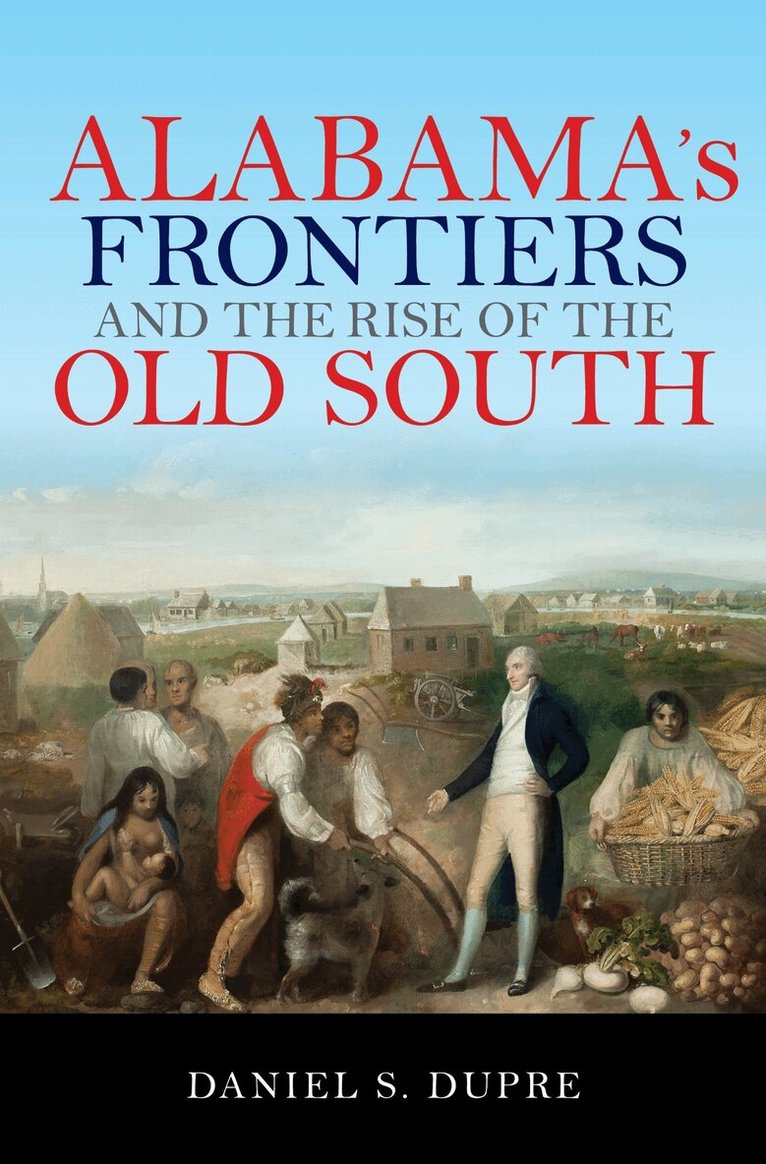
Alabama endured warfare, slave trading, squatting, and speculating on its path to becoming America's 22nd state, and Daniel S. Dupre brings its captivating frontier history to life in Alabama's Frontiers and the Rise of the Old South. Dupre's vivid narrative begins when Hernando de Soto first led hundreds of armed Europeans into the region during the fall of 1540. Although this early invasion was defeated, Spain, France, and England would each vie for control over the area's natural resources, struggling to conquer it with the same intensity and ferocity that the Native Americans showed in defending their homeland. Although early frontiersmen and Native Americans eventually established an uneasy truce, the region spiraled back into war in the nineteenth century, as the newly formed American nation demanded more and more land for settlers. Dupre captures the riveting saga of the forgotten struggles and savagery in Alabama's—and America's—frontier days.
659 kr
Skickas inom 7-10 vardagar
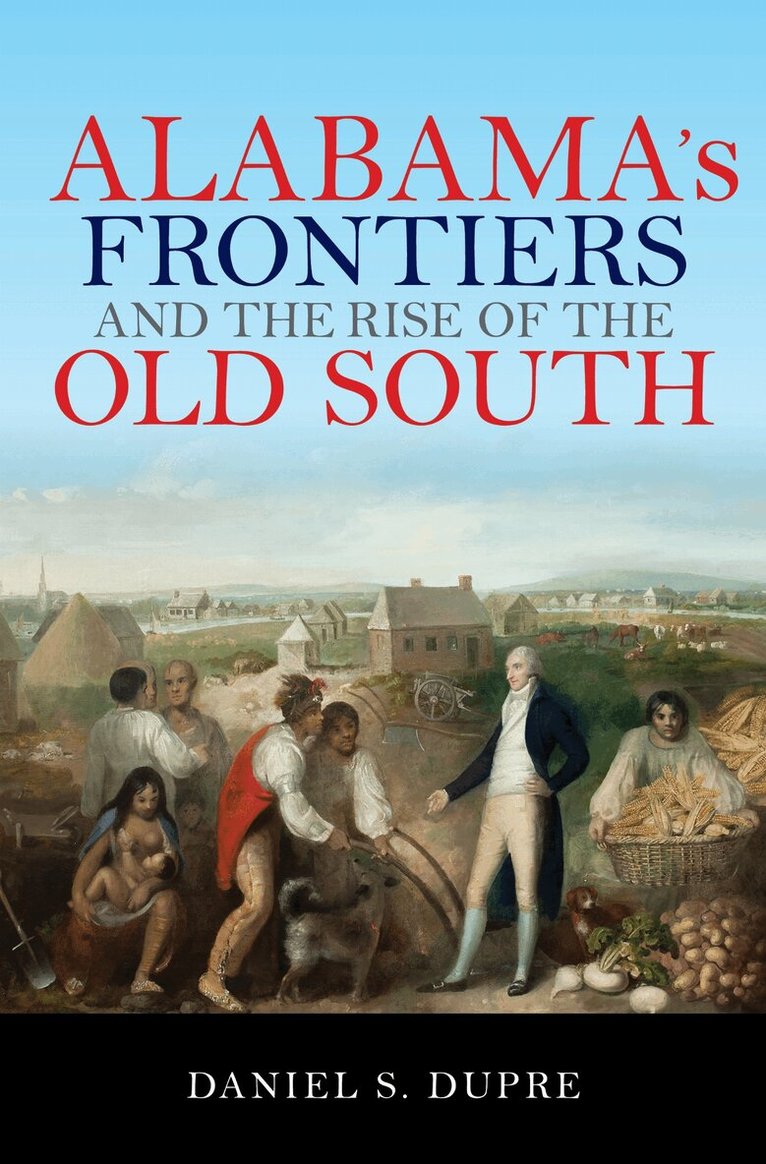
Alabama endured warfare, slave trading, squatting, and speculating on its path to becoming America's 22nd state, and Daniel S. Dupre brings its captivating frontier history to life in Alabama's Frontiers and the Rise of the Old South. Dupre's vivid narrative begins when Hernando de Soto first led hundreds of armed Europeans into the region during the fall of 1540. Although this early invasion was defeated, Spain, France, and England would each vie for control over the area's natural resources, struggling to conquer it with the same intensity and ferocity that the Native Americans showed in defending their homeland. Although early frontiersmen and Native Americans eventually established an uneasy truce, the region spiraled back into war in the nineteenth century, as the newly formed American nation demanded more and more land for settlers. Dupre captures the riveting saga of the forgotten struggles and savagery in Alabama's—and America's—frontier days.
251 kr
Skickas inom 7-10 vardagar
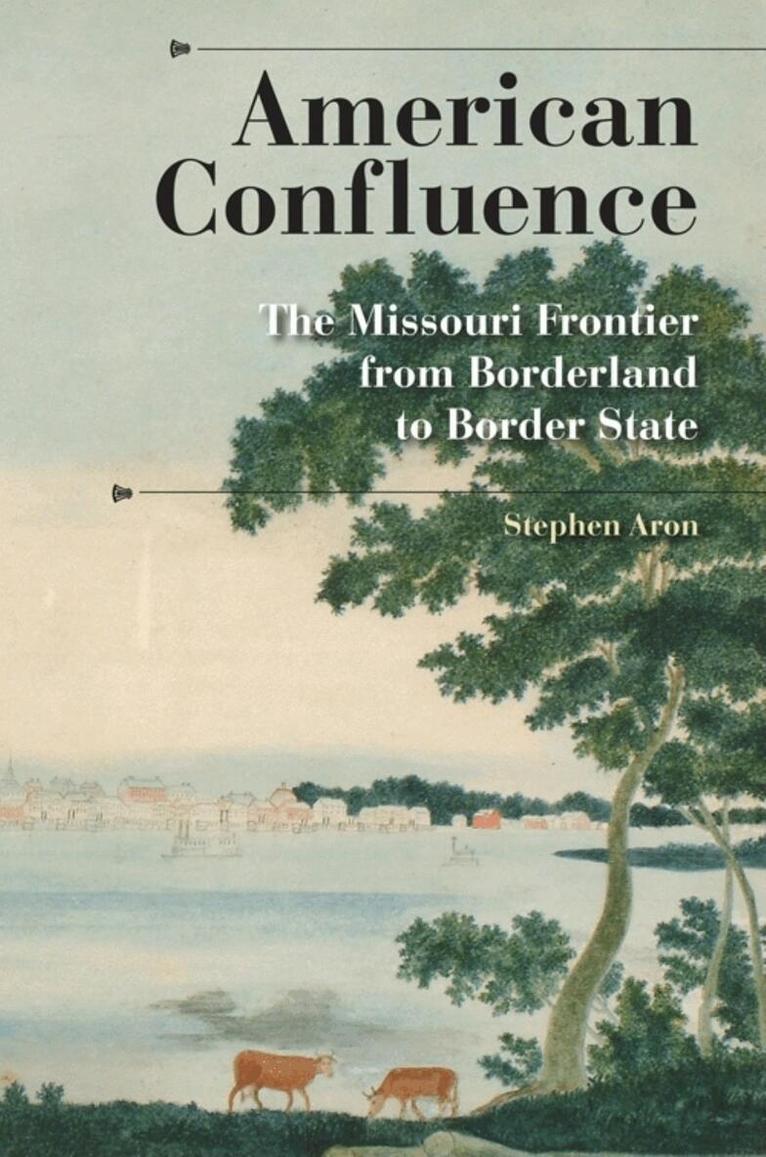
In the heart of North America, the Missouri, Ohio, and Mississippi rivers come together, uniting waters from west, north, and east on a journey to the south. This is the region that Stephen Aron calls the American Confluence. Aron's innovative book examines the history of that region—a home to the Osage, a colony exploited by the French, a new frontier explored by Lewis and Clark—and focuses on the region's transition from a place of overlapping borderlands to one of oppositional border states. American Confluence is a lively account that will delight both the amateur and professional historian.
283 kr
Skickas inom 10-15 vardagar
The Ohio FrontierCrucible of the Old Northwest, 1720–1830R. Douglas Hurt"This exhaustively researched and well-written book provides a comprehensive history of Ohio from 1720 to 1830." —Journal of the Early RepublicNowhere on the American frontier was the clash of cultures more violent than in the Ohio country. There, Shawnees, Wyandots, Delawares, and other native peoples fought to preserve their land claims against an army that was incompetent at the beginning but highly trained and disciplined in the end.Sales territory is worldwideA History of the Trans-Appalachian Frontier1996; 440 pages, 23 b&w photos, 7 maps, bibl. essay, index, 6 x 9cloth0-253-33210-9$39.95 L / £28.50paper0-253-21212-X$19.95 t / £14.50
296 kr
Skickas inom 10-15 vardagar
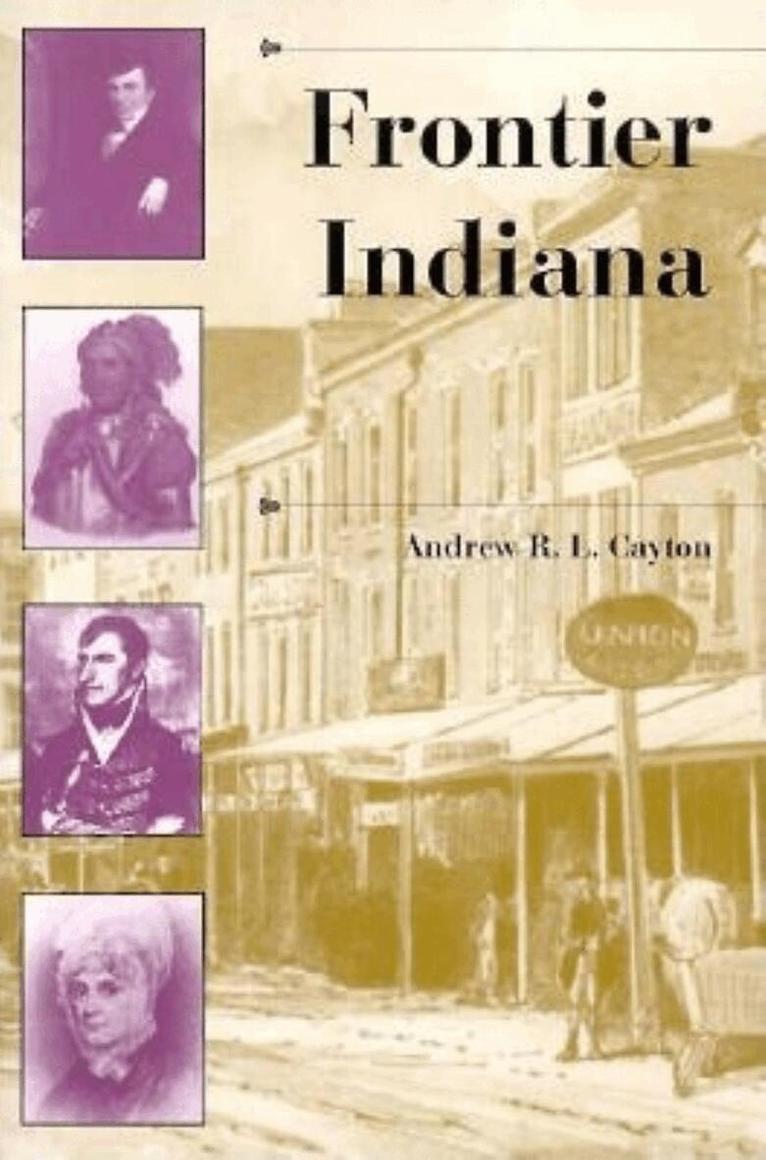
Frontier IndianaAndrew R. L. Cayton"The research and scholarship that went into the work are excellent; so good, in fact, that the book should be on the required text list for all Transappalachian frontier courses." —HistoryCayton's lively new history of the frontier period in Indiana puts the focus on people, on how they lived, how they viewed their world, and what motivated them. Here are the stories of Sieur de Vincennes, John Francis Hamtramck, Little Turtle, Anna Tuthill Symmes Harrison, Tenskwatawa, Calvin Fletcher—along with many more familiar (and not so familiar) early Hoosiers.Sales territory is worldwideA History of the Trans-Appalachian Frontier1996; 360 pages, 20 b&w photos, 2 maps, index, 6 x 9cloth0-253-33048-3$39.95 L / £28.50paper0-253-21217-0$18.95 t / £13.50
324 kr
Skickas inom 10-15 vardagar
Now in paperback!Frontier IllinoisJames E. Davis "A comprehensive, readable history of this distinctive prairie state before the Civil War. . . . This deft synthesis of existing knowledge is likely to become the standard modern history of Illinois." —Kirkus Reviews"Davis provides an incisive portrait of prairie society. . . . A fresh and sophisticated survey of early Illinois." —Choice"O, this is a delightful country!" one newly arrived settler wrote to a friend back East. Indeed, as James E. Davis shows, many newcomers found Illinois a hospitable and relatively peaceful place in which to start a new life. In this sweeping history of the making of the state, Davis tells the story of Illinois from the Ice Age to the eve of the Civil War. He describes the earliest Indiancivilizations, the coming of LaSalle and Joliet and the founding of the French colony, the brief history of British Illinois, and the complex history of subsequent settlement that brought distinct cultural traditions to Illinois.A major theme of this book is the relative absence of violence, at least after the Blackhawk War of 1832, even over explosive issues such as slavery. Davis treats these developments in careful detail, while keeping the reader mindful of the experiences of Illinois' ordinary people.James E. Davis is William and Charlotte Gardner Professor of History and Professor of Geography at Illinois College. He is author of Frontier America, 1800–1840: A ComparativeDemographic Analysis of the Settlement Process and Dreams to Dust.A History of the Trans-Appalachian Frontier series—Walter Nugent and Malcolm Rohrbough, general editorsSales territory is worldwideA History of the Trans-Appalachian Frontier1998; 432 pages, 13 b&w photos, 5 maps, notes, bibl., index, 6 x 9cloth 0-253-33423-3$39.95 L / £28.50paper0-253-21406-8$18.95 t / £13.50
265 kr
Skickas inom 7-10 vardagar
From 17th-century French coureurs de bois to lumberjacks of the 19th century, Wisconsin's frontier era saw thousands arriving from Europe and other areas seeking wealth and opportunity. Indians mixed with these newcomers, sometimes helping and sometimes challenging them, often benefiting from their guns and other trade items. This captivating history reveals the conflicts, the defeats, the victories, and the way the future looked to Wisconsin's peoples at the beginning of the 20th century.
416 kr
Skickas inom 10-15 vardagar
This chronicle of the formation of Tennessee from indigenous settlements to the closing of the frontier in 1840 begins with an account of the prehistoric frontiers and a millennia-long habitation by Native Americans. The rest of the book deals with Tennessee's historic period beginning with the incursion of Hernando de Soto's Spanish army in 1540. John R. Finger follows two narratives of the creation and closing of the frontier. The first starts with the early interaction of Native Americans and Euro-Americans and ends when the latter effectively gained the upper hand. The last land cession by the Cherokees and the resulting movement of the tribal majority westward along the "Trail of Tears" was the final, decisive event of this story. The second describes the period of Euro-American development that lasts until the emergence of a market economy. Though from the very first Anglo-Americans participated in a worldwide fur and deerskin trade, and farmers and town dwellers were linked with markets in distant cities, during this period most farmers moved beyond subsistence production and became dependent on regional, national, or international markets.Two major themes emerge from Tennessee Frontiers: first, that of opportunity the belief held by frontier people that North America offered unique opportunities for advancement; and second, that of tension between local autonomy and central authority, which was marked by the resistance of frontier people to outside controls, and between and among groups of whites and Indians. Distinctions of class and gender separated frontier elites from lesser whites, and the struggle for control divided the elites themselves. Similarly, native society was riddled by factional disputes over the proper course of action regarding relations with other tribes or with whites. Though the Indians lost in fundamental ways, they proved resilient, adopting a variety of strategies that delayed those losses and enabled them to retain, in modified form, their own identity.Along the way, the author introduces the famous personalities of Tennessee's frontier history: Attakullakulla, Nancy Ward, Daniel Boone, John Sevier, Davy Crockett, Andrew Jackson, and John Ross, among others. They remind us that this is the story of real people who dealt with real problems and possibilities in often difficult circumstances.
475 kr
Skickas inom 10-15 vardagar
Florida has had many frontiers. Imagination, greed, missionary zeal, disease, war, and diplomacy have created its historical boundaries. Bodies of water, soil, flora and fauna, the patterns of Native American occupation, and ways of colonizing have defined Florida's frontiers. Paul E. Hoffman tells the story of those frontiers and how the land and the people shaped them during the three centuries from 1565 to 1860.For settlers to La Florida, the American Southeast ca. 1500, better natural and human resources were found on the piedmont and on the western side of Florida's central ridge, while the coasts and coastal plains proved far less inviting. But natural environment was only one important factor in the settlement of Florida. The Spaniards, the British, the Seminole and Miccosuki, the Spaniards once again, and finally Americans constructed their Florida frontiers in interaction with the Native Americans who were present, the vestiges of earlier frontiers, and international events. The near-completion of the range and township surveys by 1860 and of the deportation of most of the Seminole and Miccosuki mark the end of the Florida frontier, though frontier-like conditions persisted in many parts of the state into the early 20th century.For this major work of Florida history, Hoffman has drawn from a broad range of secondary works and from his intensive research in Spanish archival sources of the 16th and 17th centuries. Florida's Frontiers will be welcomed by students of history well beyond the Sunshine State.
406 kr
Skickas inom 10-15 vardagar
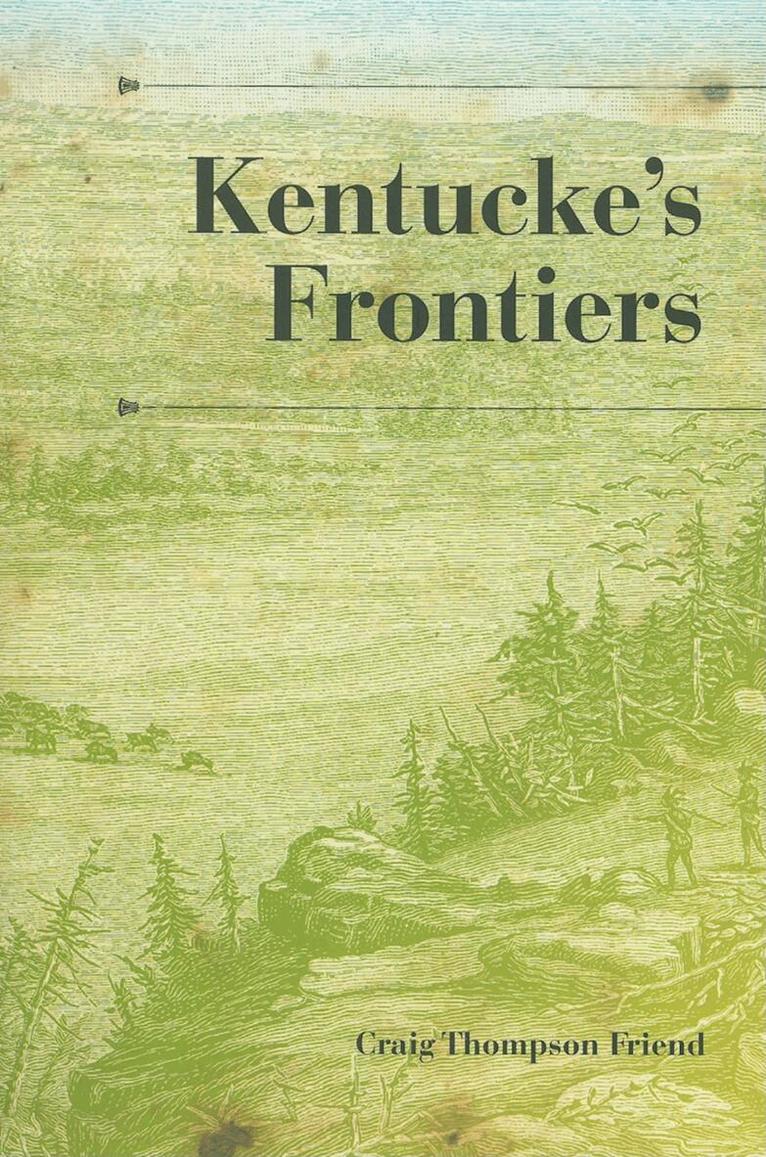
American culture has long celebrated the heroism framed by Kentucky's frontier wars. Spanning the period from the 1720s when Ohio River valley Indians returned to their homeland to the American defeat of the British and their Indian allies in the War of 1812, Kentucke's Frontiers examines the political, military, religious, and public memory narratives of early Kentucky. Craig Thompson Friend explains how frontier terror framed that heroism, undermining the egalitarian promise of Kentucke and transforming a trans-Appalachian region into an Old South state. From county courts and the state legislature to church tribunals and village stores, patriarchy triumphed over racial and gendered equality, creating political and economic opportunity for white men by denying it for all others. Even in remembering their frontier past, Kentuckians abandoned the egalitarianism of frontier life and elevated white males to privileged places in Kentucky history and memory.