Human Factors in Transportation - Böcker
Visar alla böcker i serien Human Factors in Transportation. Handla med fri frakt och snabb leverans.
6 produkter
6 produkter
911 kr
Skickas inom 10-15 vardagar
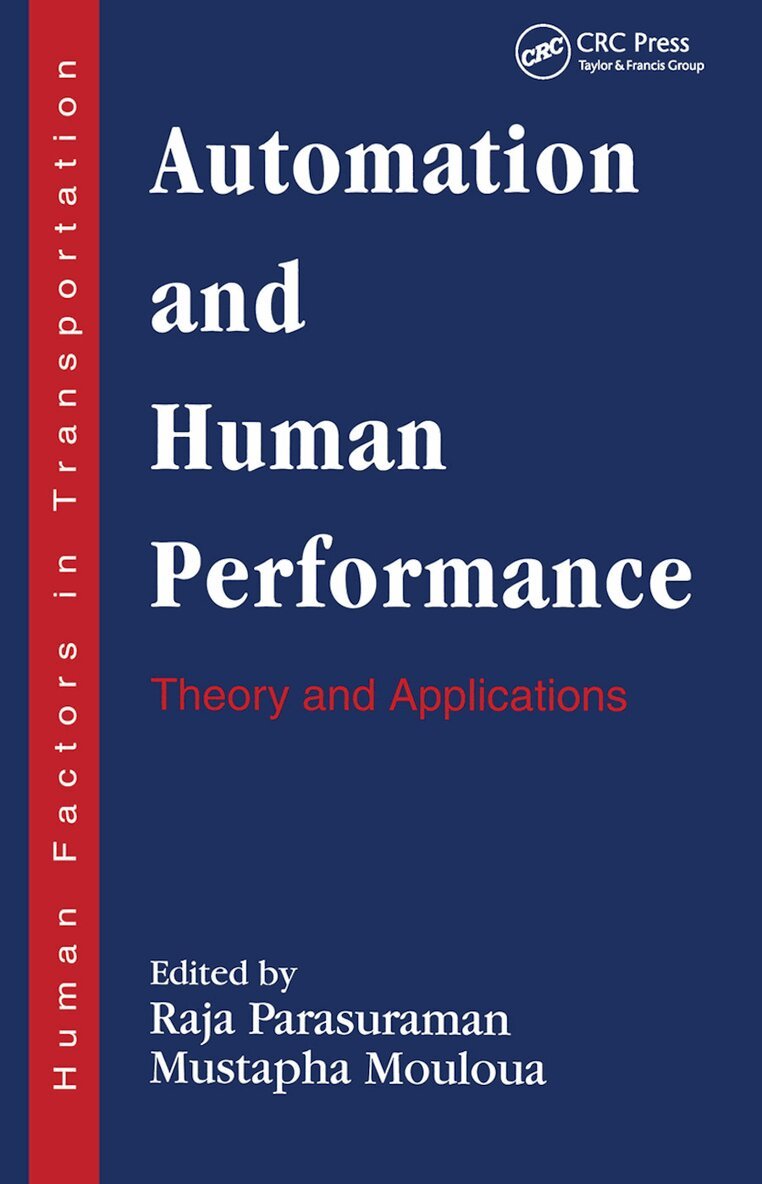
There is perhaps no facet of modern society where the influence of computer automation has not been felt. Flight management systems for pilots, diagnostic and surgical aids for physicians, navigational displays for drivers, and decision-aiding systems for air-traffic controllers, represent only a few of the numerous domains in which powerful new automation technologies have been introduced. The benefits that have been reaped from this technological revolution have been many. At the same time, automation has not always worked as planned by designers, and many problems have arisen--from minor inefficiencies of operation to large-scale, catastrophic accidents. Understanding how humans interact with automation is vital for the successful design of new automated systems that are both safe and efficient.The influence of automation technology on human performance has often been investigated in a fragmentary, isolated manner, with investigators conducting disconnected studies in different domains. There has been little contact between these endeavors, although principles gleaned from one domain may have implications for another. Also, with a few exceptions, the research has tended to be empirical and only theory-driven. In recent years, however, various groups of investigators have begun to examine human performance in automated systems in general and to develop theories of human interaction with automation technology.This book presents the current theories and assesses the impact of automation on different aspects of human performance. Both basic and applied research is presented to highlight the general principles of human-computer interaction in several domains where automation technologies are widely implemented. The major premise is that a broad-based, theory-driven approach will have significant implications for the effective design of both current and future automation technologies. This volume will be of considerable value to researchers in human
2 371 kr
Skickas inom 10-15 vardagar
There is perhaps no facet of modern society where the influence of computer automation has not been felt. Flight management systems for pilots, diagnostic and surgical aids for physicians, navigational displays for drivers, and decision-aiding systems for air-traffic controllers, represent only a few of the numerous domains in which powerful new automation technologies have been introduced. The benefits that have been reaped from this technological revolution have been many. At the same time, automation has not always worked as planned by designers, and many problems have arisen--from minor inefficiencies of operation to large-scale, catastrophic accidents. Understanding how humans interact with automation is vital for the successful design of new automated systems that are both safe and efficient.The influence of automation technology on human performance has often been investigated in a fragmentary, isolated manner, with investigators conducting disconnected studies in different domains. There has been little contact between these endeavors, although principles gleaned from one domain may have implications for another. Also, with a few exceptions, the research has tended to be empirical and only theory-driven. In recent years, however, various groups of investigators have begun to examine human performance in automated systems in general and to develop theories of human interaction with automation technology.This book presents the current theories and assesses the impact of automation on different aspects of human performance. Both basic and applied research is presented to highlight the general principles of human-computer interaction in several domains where automation technologies are widely implemented. The major premise is that a broad-based, theory-driven approach will have significant implications for the effective design of both current and future automation technologies. This volume will be of considerable value to researchers in human factors, human-computer interaction, aviation and cognitive psychology, industrial engineering--and related disciplines as well as computer scientists, aeronautical, biomedical, and mechanical engineers. In addition, it should interest others involved in the design and manufacture of automation technologies. Part I covers broad theoretical perspectives and concepts in automation research. Part II assesses the impact of automation on different aspects of human performance, including monitoring, mental workload, situational awareness, vigilance, decision making, and supervisory control. Aspects of team performance in automated systems are also discussed. Part III examines issues related to human performance in different domains where automation technologies have been introduced including: aviation, different modes of transportation, motor vehicles on the road, maritime operations, medical systems, quality control and maintenance, and oil and gas pipeline operations. Part IV speculates on the future relationship between humans and automation and explores this relationship in the context of understanding the "teleology," or grand purpose in design, of automation technology.
2 302 kr
Skickas inom 10-15 vardagar
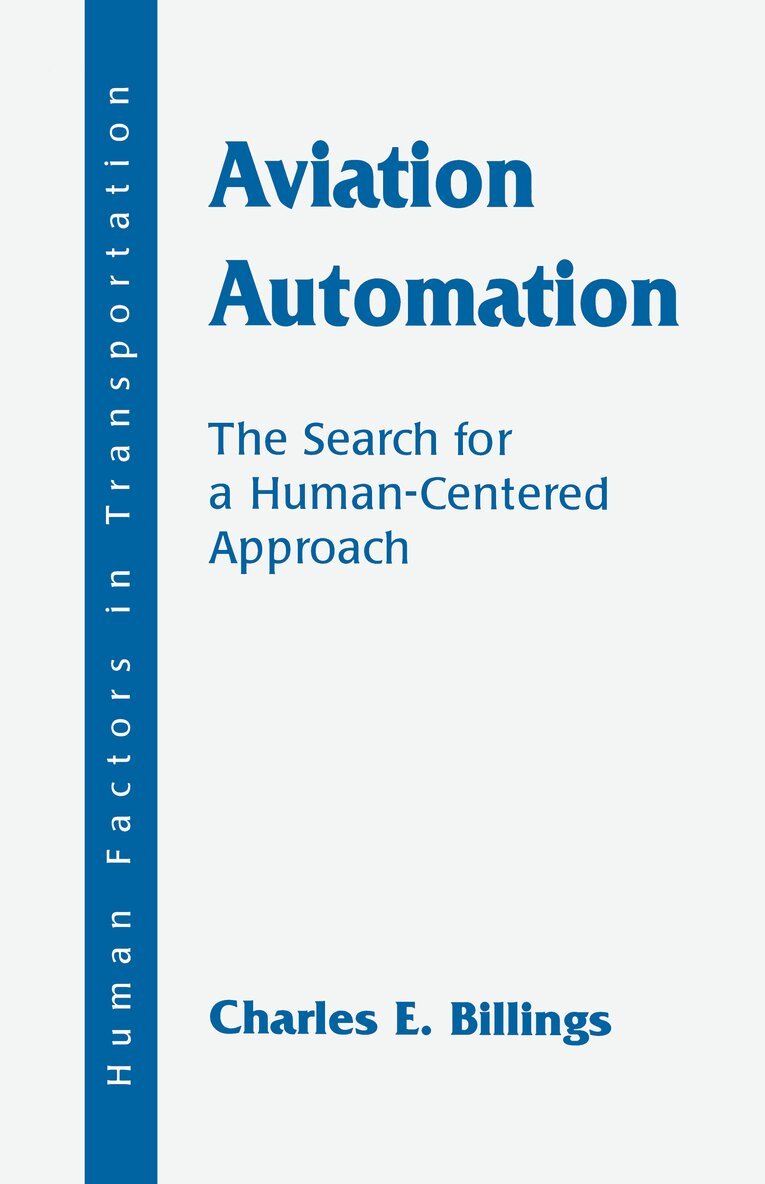
The advent of very compact, very powerful digital computers has made it possible to automate a great many processes that formerly required large, complex machinery. Digital computers have made possible revolutionary changes in industry, commerce, and transportation. This book, an expansion and revision of the author's earlier technical papers on this subject, describes the development of automation in aircraft and in the aviation system, its likely evolution in the future, and the effects that these technologies have had -- and will have -- on the human operators and managers of the system. It suggests concepts that may be able to enhance human-machine relationships in future systems. The author focuses on the ability of human operators to work cooperatively with the constellation of machines they command and control, because it is the interactions among these system elements that result in the system's success or failure, whether in aviation or elsewhere.Aviation automation has provided great social and technological benefits, but these benefits have not come without cost. In recent years, new problems in aircraft have emerged due to failures in the human-machine relationship. These incidents and accidents have motivated this inquiry into aviation automation. Similar problems in the air traffic management system are predicted as it becomes more fully automated. In particular, incidents and accidents have occurred which suggest that the principle problems with today's aviation automation are associated with its complexity, coupling, autonomy, and opacity. These problems are not unique to aviation; they exist in other highly dynamic domains as well. The author suggests that a different approach to automation -- called "human-centered automation" -- offers potential benefits for system performance by enabling a more cooperative human-machine relationship in the control and management of aircraft and air traffic.
1 073 kr
Skickas inom 10-15 vardagar
The advent of very compact, very powerful digital computers has made it possible to automate a great many processes that formerly required large, complex machinery. Digital computers have made possible revolutionary changes in industry, commerce, and transportation. This book, an expansion and revision of the author's earlier technical papers on this subject, describes the development of automation in aircraft and in the aviation system, its likely evolution in the future, and the effects that these technologies have had -- and will have -- on the human operators and managers of the system. It suggests concepts that may be able to enhance human-machine relationships in future systems. The author focuses on the ability of human operators to work cooperatively with the constellation of machines they command and control, because it is the interactions among these system elements that result in the system's success or failure, whether in aviation or elsewhere.Aviation automation has provided great social and technological benefits, but these benefits have not come without cost. In recent years, new problems in aircraft have emerged due to failures in the human-machine relationship. These incidents and accidents have motivated this inquiry into aviation automation. Similar problems in the air traffic management system are predicted as it becomes more fully automated. In particular, incidents and accidents have occurred which suggest that the principle problems with today's aviation automation are associated with its complexity, coupling, autonomy, and opacity. These problems are not unique to aviation; they exist in other highly dynamic domains as well. The author suggests that a different approach to automation -- called "human-centered automation" -- offers potential benefits for system performance by enabling a more cooperative human-machine relationship in the control and management of aircraft and air traffic.
2 302 kr
Skickas inom 10-15 vardagar
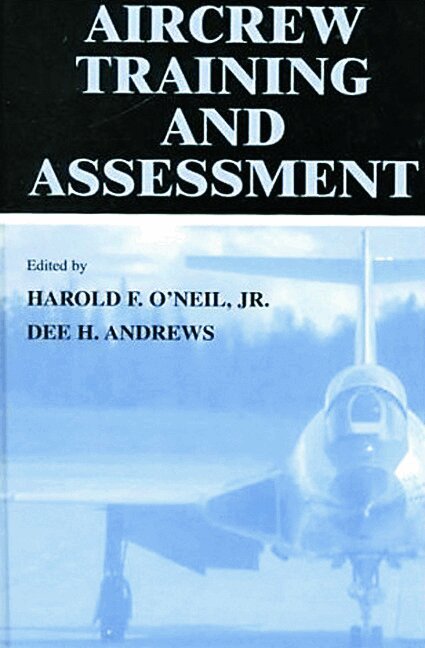
Aircrew Training and Assessment is designed for professionals in the aviation psychology, human factors, assessment and evaluation, vocational, technical, educational psychology, and educational technology communities. It explores the state of the art in the training and assessment of aircrews and includes a review and description of the use of simulations in the area of aircrew training and assessment. An aircrew consists of one or more persons who are responsible for achieving a mission goal through use of an aircraft. Depending on one's point of view, an aircrew can be as small as one pilot flying a single-seat aircraft, or as large as a full crew operating an airliner. Despite advances in aircrew selection and human factors engineering techniques, the need for better aircrew training is still readily apparent. For example, in the military, the missions requiring aircrews keep getting more complex. Simulation is used extensively in both military and civilian training to deal with this complexity.The book is organized into two major sections: models and tools for training of aircrews and models and tools for assessment of aircrew training. Both military and civilian environments are covered, as well as individual and team training.
2 237 kr
Skickas inom 10-15 vardagar
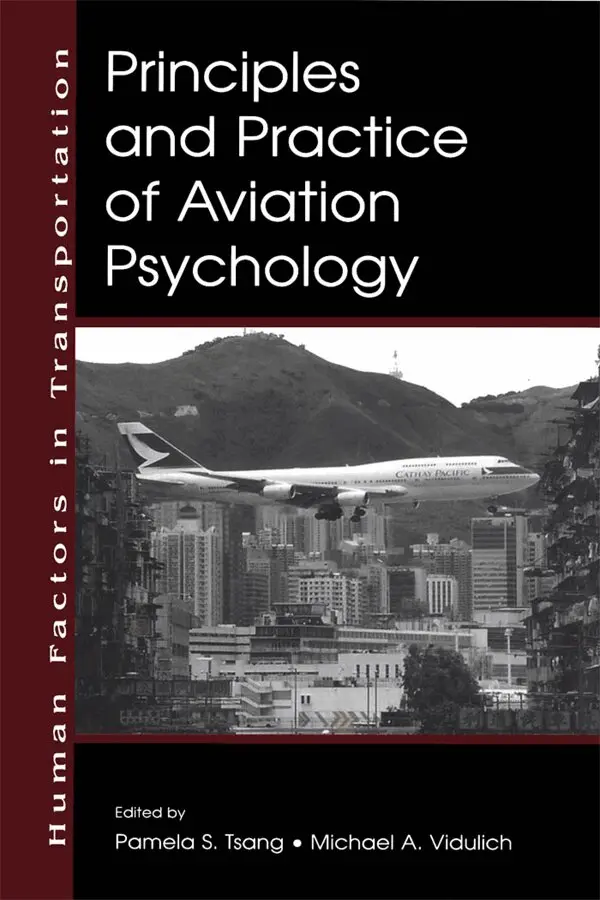
Principles and Practice of Aviation Psychology is an important addition to the literature in aviation psychology. Covering the history of aviation to the actual pilot actions and tasks today, the editors have brought together a wonderful set of contributors who are leaders in this field. The text presents psychological principles and research pertinent to the interface between a pilot and the cockpit. Understanding the cognitive demands and the capabilities and limitations of the pilot has important implications on selection and training of pilots and display/control designs in the cockpit. Emphasis is placed on the scientific methods of achieving this understanding together with the view that theories and principles of human behavior would have much to learn from practical problems and applied studies.