Icons of Pop Music – serie
Visar alla böcker i serien Icons of Pop Music. Handla med fri frakt och snabb leverans.
11 produkter
11 produkter
349 kr
Skickas inom 5-8 vardagar
This book provides the first musicologically-informed account of Icelandic singer-songwriter Bjork's work to date. Bjork is internationally recognised for her unique and innovative musical style, and her collaborative working relationship with artists, musicians and engineers. Her work crosses the boundaries between club and dance culture and 'high art', and has won numerous awards, including an award for Best Actress (Cannes Film Festival) for her role in the film "Dancer the Dark", for which she also wrote and scored the music.This book presents an analysis of audio and video tracks, live performances and recorded sound, looked at through the interviews, videos, critical reception, and fanzines that surround the music. Reference is made to the whole of her career, but the focus is on her solo career from Debut onwards. The analysis reveals recurrent cultural themes brought into focus by her music: landscape and identity, the relationship between humans and technology, song as a vehicle for emotional expression, and female autonomy.There are additional chapters on her compositional process, to include newly gathered interview material, and on the critical-musicological approach adopted in this book.
348 kr
Skickas inom 5-8 vardagar
It's likely that, as an icon of pop music, Elvis Costello still looks like the cover of This Year's Model (1978) and, were he run over by a bus, it's 'Oliver's Army' (1979) that would be played in surprised and sombre tribute. Here to stay, and recognized by Burt Bacharach as 'a great survivor', Costello has produced a large and significant body of work. This is the first book on Costello that sets out to avoid chronological presentation, preferring a thematic approach focused on music and words over the nearly thirty years that separate 'Radio Sweetheart' and 'Country Darkness'.In addition to engaging with the songs Costello has performed as a rock musician, the book will include informed discussion of more recent albums such as Painted from Memory, North, and Il Sogno. There is also discussion of essays Costello has written to support CD reissues of his recordings, a substantial body of writing approaching a critical autobiography. The book may contradict expectation, arguing that on all fronts - music, words, voice, instrumental resource - Costello's work broadens and deepens, as he sets himself the task of expanding the range of expressive material available.
349 kr
Skickas inom 5-8 vardagar
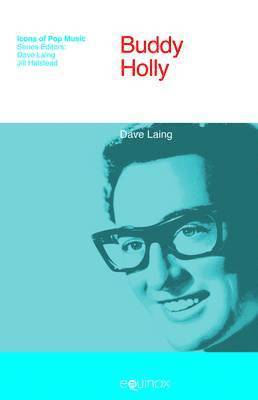
Buddy Holly occupies an enigmatic position in pop and rock music history, partly because of his premature death at the age of 22 in a plane crash in February 1959. Designated in Don MacLean's hit "American Pie" as 'the day the music died', this enabled him to be included in the trope 'the death of rock 'n roll', alongside the less drastic musical demises of Elvis Presley (joined army), Chuck Berry (imprisoned), Jerry Lee Lewis (disgraced) and Little Richard (joined priesthood). The view that Holly belongs only to the 1950s has often obscured the originality of his music. In an era when the music world was divided into hard rockers, soft pop balladeers and hardcore Nashville country & western singers, his songs transcended the boundaries. Equally innovatory was his use of the recording studio as a laboratory, a place to experiment with sounds. In addition, the two guitars, bass and drums line-up of his group the Crickets was the major contributor to the small group template for generations of rock musicians down to the present day. As well as becoming an influence on other musicians in a conventional sense, Buddy Holly has had his own lengthy musical and cultural afterlife.From the vantage point of 2009, a half century after 'the day the music died', Holly has been the longest-serving member of the rock immortals club, those singers and musicians for whom death seemed to inaugurate a new phase of their career.He has been re-embodied in a biopic, a stage show, in iconic images and numerous reissues of his recordings. While he cannot rival Elvis Presley in terms of sightings (nobody, I think, believes Buddy is still alive) or in terms of 'virtual' performance with his old band, he has been re-embodied in a biopic, a stage show, in iconic images and numerous reissues of his recordings. This book is partly based on the author's 1970 study in the "Rockbooks" series. But it aims to provide a new perspective on Buddy Holly by discussing his career and art in the context of his unique contribution to the swiftly-evolving music scene of the late 1950s and his posthumous 50 year multi-media career through films, stage-shows and copious reissues of his oeuvre.
328 kr
Tillfälligt slut
Brian Wilson is a musical genius. Ever since British press agent Derek Taylor launched a publicity campaign with that theme to promote the landmark LP Pet Sounds in 1966, some variation of that claim has been obligatory when discussing the significance of the Beach Boys' founder and chief composer. Originally designed to liberate Wilson from his outmoded image as a purveyor of sun-and-surf teen pop so the symphonic sophistication of his music might be properly appreciated, the assertion has been repeated so often in the forty-plus years since as to render it virtually meaningless. Indeed, if anything, the label today seems an albatross around the man's neck, inasmuch as Wilson's slow-but-steady reemergence as a working musician since 1998 after three decades of mental illness and drug abuse, has been freighted with expectations that he again produce something as epochal as Good VibrationsA" to justify the adoration he inspires in impassioned defenders. Brian Wilson interrogates this and other paradigms that stymie critical appreciation of Wilson's work both with the Beach Boys and as a solo artist.This is the first study of Wilson to eschew chronology in favor of a topical organization that allows discussion of lyrical themes and musical motifs outside of any prejudicial presumptions about their place in the trajectory of his career.The meanings of Brian Wilson's work have tended to be determined by the well-known storyline of his rise, fall, and redemption.A" From abused child to seemingly unstoppable hit-maker to eccentric with a living-room sandbox to the 300-pound Orson Wells of rockA" to the heavily medicated Icarus figure with the full-time Svengali psychiatrist to his current incarnation as a fragile, elder-statesman survivor, Brian Wilson has, quite simply, lived the most celebrated bizarre life in pop music. Its sheer Shakespearean proportions have overshadowed a beauty and gentleness of spirit that is as vibrant in Farmer's DaughterA" (1963) as it is in recent efforts such as Live Let LiveA" (2008).While no one would disagree that Wilson peakedA" in 1966 with Pet Sounds his current CD, That Old Lucky Sun (2008), finds him creating beautiful music steeped in Americana that deserves discussion on its own terms rather than as a coda to the accomplishments of his gold-record youth.
349 kr
Skickas inom 5-8 vardagar
This book explores how funk emerged in the mid-1960s at the very apex of the civil rights movement and shows how this music mirrored the broader changes taking place within the African-American community at a crucial political time and continues to this day to underpin remix culture. It traces the extent of the Brown legacy, musically, culturally and otherwise articulating decisive links between Brown's work and the DJ culture that embraced it so emphatically that Brown is now considered to be the most widely sampled African-American recording artist in history; indeed, we seem to have reached a point where many of Brown's refrains - the screams, the horn stabs, the "funky drummer" breakbeats - have been sampled so often as to have seemingly become part of the public domain. Traversing the past forty years of popular music, the book explores how the ubiquitous presence of Brown's groove, the affective and transformative capacities of a grunt or a well-timed "Good God" or punctuating scream take over where language fails and compel even the most sedate listener to take to the floor.
426 kr
Skickas inom 5-8 vardagar
Elvis Presley remains the single most important figure in twentieth century popular music. To many commentators, however, he has simply embodied the benefits and problems of uncritically embracing capitalism. By 2005 the 'Memphis Flash' sold over a billion records worldwide, yet his cultural significance cannot be measured by these extraordinary sales figures alone. He cannot quite be reduced to a placeholder for the contradictions of commerce. As the most prominent performer of the rock'n'roll era, then as a charismatic global superstar, Elvis fundamentally challenged the established relationship between White and Black culture, drew attention to the social needs of women and young people, and promoted the value of Southern creativity. He functioned as a bridge figure between folk roots and high modernity, and in the process became a controversial symbol of American unity. Elvis interprets the image and music of Elvis Presley to reveal how they have evolved to construct a particularly appealing and powerful myth. Following broad contours of Presley's rollercoaster career, the book uses a range of analytical frames to challenge established perspectives on an icon. Its shows that the controversy around Elvis has effectively tested how far a concern for social equality could be articulated through the marketplace, and ultimately challenged how popular music itself should be assessed.
349 kr
Skickas inom 5-8 vardagar
Of all pop music's icons, the Beatles have attracted more attention and generated more discussion than any other performers. The group's transformation from a semi-professional skiffle group in Liverpool to one of the twentieth century's key historical and cultural events has been told and re-told in numerous forms - on the cinema screen, in print, on stage, on TV and radio. Details of their personal and private histories are familiar to audiences and fans around the world. Their songs are among the best known and most critically acclaimed of the rock'n'roll era. The ways in which they dismantled many routine assumptions about the role of 'pop stars' in the 1960s helped to substantially re-direct the structures and cultures of the popular music industry in subsequent decades. Sixty years after their formation, interest in the group and its music remains as strong as ever.Because of the unprecedented nature of their success, their perennial associations with the century's most beguiling decade, the range of their extra-musical activity, and the dramatic postscripts to a career that effectively ended in 1970, many accounts of the Beatles have adopted a tone that veers between the sensational and the reverential.In addition, such accounts often overlook the significance of the professional, geographical, historical and technological constraints within which the Beatles worked, and which shaped their live and recorded musical output. In this book, Ian Inglis provides a succinct critical appreciation of the group that is balanced, informative and objective. It concentrates above all on the music of the Beatles, the context in which it was created, performed and recorded, and its rapid and often startling evolution which, powered by the formidable writing talents of John Lennon & Paul McCartney, moved from early cover versions through the conventions of the two- or three-minute love song to the lyrical variety and musical innovations of their post-touring years.His account separates myth from reality, documents the uneasy relationship between creativity and control that acted as a catalyst for their artistic development, and supplies fresh insights into the aspirations and achievements of the world's most celebrated popular musicians.
349 kr
Skickas inom 5-8 vardagar
"Bob Dylan" provides a short introduction to the music of Bob Dylan including an examination of the impact of his work over time and key critical responses. This book starts by locating Dylan's work within a much broader context of the history of the American popular song and its various antecedents, examining how his music draws on a rich heritage of folk, blues, country, r'n'b as well as ballads, standards, nursery rhymes and pop tunes. Focusing on a selection of songs, it examines how his use of words, voice, instruments, melody and timbre, can be understood within the context of various traditions.Much of the writing about Bob Dylan tends to privilege a few recordings, and a limited range of recurring stylistic themes, placing considerable emphasis on Dylan's early career as a 'protest' singer, and then his surrealistic, stream of consciousness mid-1960s music. Yet, the vast majority of Dylan's musical output has been somewhat less radical (but not necessarily less imaginative) and concerned with questions of romantic desire, lust and loss.Negus shows how these thematic concerns are frequently woven into a narrative style that draws from a range of storytelling traditions as diverse as broadside ballads, modern novels and Hollywood cinema.Negus then considers Bob Dylan's enduring impact on new generations of artists in various musical traditions and different parts of the world as well as the influences upon Dylan's changing style and performing identity, from the turn to electric guitars in the 1960s, to the embracing of Christianity and gospel influences in the late 1970s, and increasing explicit use of folk, ballad, blues and country styles in his later work. In assessing some of the key critical responses to Dylan, and in considering his canonisation within a specific popular music tradition, Negus finally asks how claims for Bob Dylan's genius might be assessed. Why is Dylan's work accorded so much value within the popular music canon, and is this justified?
360 kr
Skickas inom 5-8 vardagar
Though The Velvet Underground existed for no more than three years with its original members, it is considered to be not just the 'ultimate New York band' but also the most influential group ever. Artists who have acknowledged such influence include David Bowie, The Sex Pistols, Patti Smith, Joy Division, and Nirvana. Witts places the band and its genesis in the cultural context of Manhattan's beatnik bohemianism, its radical artistic environment, and the city's negative reaction to California's 'Hippie' counterculture. Lou Reed's Brill Building background is also considered, while his "Primitives" (1964-5) and "Velvet Underground Songs" (1965-70) are examined within the stylistic context of rock music. The band's sound world is likewise considered in this light. John Cale's experimental contribution is assessed, especially his work for LaMonte Young (The Theatre of Eternal Music) and what he carried from that experience into the Velvet's sound. The visual artist Amdy Warhol, known to the Velvets as Drella, became the band's manager and produce in 1965. He placed his 'superstar' Nico in the line-up (which already included a female drummer).The radical nature of the group's Warhol period performances are examined, together with those aspects related to issues of gender, sexuality and drugs culture by which the Warhol Factory scene was identified, and contemplated in Reed's songs.Witts examines the musical influences of the Velvets on punk, post-punk and subsequent rock movements, culminating in the group's reunion of 1993. He also indexes the variety of media constructions that the group endured through the years and how these affected Cale, Nico and Reed and their attempts to establish solo careers.
984 kr
Tillfälligt slut
Brian Wilson is a genius. Ever since British press agent Derek Taylor launched a publicity campaign with that theme to promote the landmark LP Pet Sounds in 1966, some variation of that claim has been obligatory when discussing the significance of the Beach Boys' founder and chief composer. Originally designed to liberate Wilson from his outmoded image as a purveyor of sun-and-surf teen pop so the symphonic sophistication of his music might be properly appreciated, the assertion has been repeated so often in the forty-plus years since as to render it virtually meaningless. Indeed, if anything, the label today seems an albatross around the man's neck, inasmuch as Wilson's slow-but-steady reemergence as a working musician since the mid-nineties after three decades of mental illness and drug abuse, has been freighted with expectations that he again produce something as epochal as "Good Vibrations" to justify the adoration he inspires in impassioned defenders. Brian Wilson interrogates this and other paradigms that stymie critical appreciation of Wilson's work both with the Beach Boys and as a solo artist.This is the first study of Wilson to eschew chronology for a topical organization that allows discussion of lyrical themes and musical motifs outside of any prejudicial presumptions about their place in the trajectory of his career.The chapter on lyrics explores questions of quality, asking why the words to Wilson's songs are often considered a detriment, before surveying such tendencies as melancholy and introspection, the conceit of childlike wisdom, his depiction of women, and Americana/nostalgia. The section on music focuses on his falsetto, the famous harmonies, the peculiar whiteness of the Beach Boys' sound, as well as song structure. A final chapter on iconicity asks how rock criticism's investment in auteurship both maintains and limits his reputation. Finally, Curnutt examines what Brian Wilson means to his most fervent fans. Together, these issues emphasize the often overlooked point that, despite his status as a "living legend," Brian Wilson does not always fit neatly into the paradigms of taste and value by which critics grant certain artists entry into the pantheon of pop and rock importance.
951 kr
Tillfälligt slut
For ten years between 1965 and 1975, James Brown was the most popular and cutting-edge of any black artist. As one journalist put it, "before Brown, there was music with a beat. After Brown music had found a groove." The drawing out of this "groove," leveraged on "the one," - or the first and third beats of a 4/4 bar, - would provide the key to much of Brown's subsequent musical success and instil within popular music an unprecedented drive that would characterize not only the funk style, but also provide the rhythmic blueprint for dance music up to the present day. This book explores how funk emerged in the mid-1960s at the very apex of the civil rights movement and shows how this music mirrored the broader changes taking place within the African-American community at a crucial political time and continues to this day to underpin remix culture.It traces the extent of the Brown legacy, musically, culturally and otherwise articulating decisive links between Brown's work and the DJ culture that embraced it so emphatically that Brown is now considered to be the most widely sampled African-American recording artist in history; indeed, we seem to have reached a point where many of Brown's refrains - the screams, the horn stabs, the "funky drummer" breakbeats - have been sampled so often as to have seemingly become part of the public domain. Traversing the past forty years of popular music, the book explores how the ubiquitous presence of Brown's groove, the affective and transformative capacities of a grunt or a well-timed "Good God" or punctuating scream take over where language fails and compel even the most sedate listener to take to the floor.