Informal Learning - Böcker
Visar alla böcker i serien Informal Learning. Handla med fri frakt och snabb leverans.
10 produkter
10 produkter
504 kr
Skickas inom 3-6 vardagar
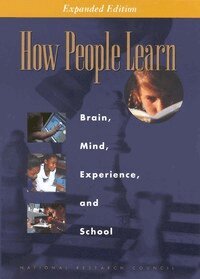
First released in the Spring of 1999, How People Learn has been expanded to show how the theories and insights from the original book can translate into actions and practice, now making a real connection between classroom activities and learning behavior. This edition includes far-reaching suggestions for research that could increase the impact that classroom teaching has on actual learning. Like the original edition, this book offers exciting new research about the mind and the brain that provides answers to a number of compelling questions. When do infants begin to learn? How do experts learn and how is this different from non-experts? What can teachers and schools do-with curricula, classroom settings, and teaching methods--to help children learn most effectively? New evidence from many branches of science has significantly added to our understanding of what it means to know, from the neural processes that occur during learning to the influence of culture on what people see and absorb. How People Learn examines these findings and their implications for what we teach, how we teach it, and how we assess what our children learn.The book uses exemplary teaching to illustrate how approaches based on what we now know result in in-depth learning. This new knowledge calls into question concepts and practices firmly entrenched in our current education system. Topics include: * How learning actually changes the physical structure of the brain. * How existing knowledge affects what people notice and how they learn. * What the thought processes of experts tell us about how to teach. * The amazing learning potential of infants. * The relationship of classroom learning and everyday settings of community and workplace. * Learning needs and opportunities for teachers. * A realistic look at the role of technology in education.
594 kr
Tillfälligt slut
The federal role in precollege science, technology, engineering, and mathematics (STEM) education is receiving increasing attention in light of the need to support public understanding of science and to develop a strong scientific and technical workforce in a competitive global economy. Federal science agencies, such as the National Aeronautics and Space Administration (NASA), are being looked to as a resource for enhancing precollege STEM education and bringing more young people to scientific and technical careers. For NASA and other federal science agencies, concerns about workforce and public understanding of science also have an immediate local dimension. The agency faces an aerospace workforce skewed toward those close to retirement and job recruitment competition for those with science and engineering degrees. In addition, public support for the agency's missions stems in part from public understanding of the importance of the agency's contributions in science, engineering, and space exploration. In the NASA authorization act of 2005 (P.L. 109-555 Subtitle B-Education, Sec.614) Congress directed the agency to support a review and evaluation of its precollege education program to be carried out by the National Research Council (NRC). NASA's Elementary and Secondary Education Program: Review and Critique includes recommendations to improve the effectiveness of the program and addresses these four tasks: 1. an evaluation of the effectiveness of the overall program in meeting its defined goals and objectives; 2. an assessment of the quality and educational effectiveness of the major components of the program, including an evaluation of the adequacy of assessment metrics and data collection requirements available for determining the effectiveness of individual projects; 3. an evaluation of the funding priorities in the program, including a review of the funding level and trend for each major component of the program and an assessment of whether the resources made available are consistent with meeting identified goals and priorities; and 4. a determination of the extent and effectiveness of coordination and collaboration between NASA and other federal agencies that sponsor science, technology, and mathematics education activities.
447 kr
Tillfälligt slut
At a time when scientific and technological competence is vital to the nation's future, the weak performance of U.S. students in science reflects the uneven quality of current science education. Although young children come to school with innate curiosity and intuitive ideas about the world around them, science classes rarely tap this potential. Many experts have called for a new approach to science education, based on recent and ongoing research on teaching and learning. In this approach, simulations and games could play a significant role by addressing many goals and mechanisms for learning science: the motivation to learn science, conceptual understanding, science process skills, understanding of the nature of science, scientific discourse and argumentation, and identification with science and science learning. To explore this potential, Learning Science: Computer Games, Simulations, and Education, reviews the available research on learning science through interaction with digital simulations and games. It considers the potential of digital games and simulations to contribute to learning science in schools, in informal out-of-school settings, and everyday life.The book also identifies the areas in which more research and research-based development is needed to fully capitalize on this potential. Learning Science will guide academic researchers; developers, publishers, and entrepreneurs from the digital simulation and gaming community; and education practitioners and policy makers toward the formation of research and development partnerships that will facilitate rich intellectual collaboration. Industry, government agencies and foundations will play a significant role through start-up and ongoing support to ensure that digital games and simulations will not only excite and entertain, but also motivate and educate.
Chemistry in Primetime and Online
Communicating Chemistry in Informal Environments: Workshop Summary
Häftad, Engelska, 2011
356 kr
Tillfälligt slut
It is critical that we increase public knowledge and understanding of science and technology issues through formal and informal learning for the United States to maintain its competitive edge in today's global economy. Since most Americans learn about science outside of school, we must take advantage of opportunities to present chemistry content on television, the Internet, in museums, and in other informal educational settings. In May 2010, the National Academies' Chemical Sciences Roundtable held a workshop to examine how the public obtains scientific information informally and to discuss methods that chemists can use to improve and expand efforts to reach a general, nontechnical audience. Workshop participants included chemical practitioners (e.g., graduate students, postdocs, professors, administrators); experts on informal learning; public and private funding organizations; science writers, bloggers, publishers, and university communications officers; and television and Internet content producers. Chemistry in Primetime and Online is a factual summary of what occurred in that workshop.Chemistry in Primetime and Online examines science content, especially chemistry, in various informal educational settings. It explores means of measuring recognition and retention of the information presented in various media formats and settings. Although the report does not provide any conclusions or recommendations about needs and future directions, it does discuss the need for chemists to connect more with professional writers, artists, or videographers, who know how to communicate with and interest general audiences. It also emphasizes the importance of formal education in setting the stage for informal interactions with chemistry and chemists.
344 kr
Tillfälligt slut
The global scientific and policy community now unequivocally accepts that human activities cause global climate change. Although information on climate change is readily available, the nation still seems unprepared or unwilling to respond effectively to climate change, due partly to a general lack of public understanding of climate change issues and opportunities for effective responses. The reality of global climate change lends increasing urgency to the need for effective education on earth system science, as well as on the human and behavioral dimensions of climate change, from broad societal action to smart energy choices at the household level. The public's limited understanding of climate change is partly the result of four critical challenges that have slowed development and delivery of effective climate change education. As one response to these challenges, Congress, in its 2009 and 2010 appropriation process, requested that the National Science Foundation (NSF) create a program in climate change education to provide funding to external grantees to improve climate change education in the United States.To support and strengthen these education initiatives, the Board on Science Education of the National Research Council (NRC) created the Climate Change Education Roundtable. The Roundtable convened two workshops. Climate Change Education Goals, Audiences, and Strategies is a summary of the discussions and presentations from the first workshop, held October 21 and 22, 2010. This report focuses on two primary topics: public understanding and decision maker support. It should be viewed as an initial step in examining the research on climate change and applying it in specific policy circumstances.
Climate Change Education
Engaging Family Private Forest Owners on Issues Related to Climate Change: A Workshop Summary
Häftad, Engelska, 2014
495 kr
Tillfälligt slut
The forested land in the United States is an asset that is owned and managed not only by federal, state, and local governments, but also by families and other private groups, including timber investment management organizations and real estate investment trusts. The more than 10 million family forestland owners manage the largest percentage of forestland acreage (35 percent) and the majority of the privately owned forestland (62 percent). The Forest Service of the United States Department of Agriculture, which is responsible for the stewardship of all of the nation's forests, has long worked with private owners of forestland on forest management and preservation. At a time when all forestland is facing intensified threats because of the long-term effects of global climate change, the Forest Service recognizes that family forestland owners play a key role in protecting forestland. It is working to identify optimal ways to engage this diverse group and support them in mitigating threats to the biologically diverse land they own or manage.Climate Change Education: Engaging Family Private Forest Owners on Issues Related to Climate Change is the summary of a workshop, convened by the National Research Council's Board on Science Education and Board on Environmental Change and Society as part of its Climate Change Education Roundtable series, to explore approaches to the challenges that face state foresters, extension agents, private forestry consultants, and others involved with private family forestland owners on how to take climate change into consideration when making decisions about their forests. The workshop focused on how findings from the behavioral, social, and educational sciences can be used to help prepare for the impacts of climate change. The workshop participants discussed the threats to forests posed by climate change and human actions; private forestland owners' values, knowledge, and dispositions about forest management, climate change, and related threats; and strategies for improving communication between forestland owners and service providers about forest management in the face of climate change.
334 kr
Tillfälligt slut
More and more young people are learning about science, technology, engineering, and mathematics (STEM) in a wide variety of afterschool, summer, and informal programs. At the same time, there has been increasing awareness of the value of such programs in sparking, sustaining, and extending interest in and understanding of STEM. To help policy makers, funders and education leaders in both school and out-of-school settings make informed decisions about how to best leverage the educational and learning resources in their community, this report identifies features of productive STEM programs in out-of-school settings. Identifying and Supporting Productive STEM Programs in Out-of-School Settings draws from a wide range of research traditions to illustrate that interest in STEM and deep STEM learning develop across time and settings. The report provides guidance on how to evaluate and sustain programs. This report is a resource for local, state, and federal policy makers seeking to broaden access to multiple, high-quality STEM learning opportunities in their community.
Sharing the Adventure with the Student
Exploring the Intersections of NASA Space Science and Education: A Workshop Summary
Häftad, Engelska, 2015
518 kr
Tillfälligt slut
On December 2-3, 2014, the Space Studies Board and the Board on Science Education of the National Research Council held a workshop on the NASA Science Mission Directorate (SMD) education program - "Sharing the Adventure with the Student." The workshop brought together representatives of the space science and science education communities to discuss maximizing the effectiveness of the transfer of knowledge from the scientists supported by NASA's SMD to K-12 students directly and to teachers and informal educators. The workshop focused not only on the effectiveness of recent models for transferring science content and scientific practices to students, but also served as a venue for dialogue between education specialists, education staff from NASA and other agencies, space scientists and engineers, and science content generators. Workshop participants reviewed case studies of scientists or engineers who were able to successfully translate their research results and research experiences into formal and informal student science learning.Education specialists shared how science can be translated to education materials and directly to students, and teachers shared their experiences of space science in their classrooms. Sharing the Adventure with the Student is the summary of the presentation and discussions of the workshop.
571 kr
Skickas
There are many reasons to be curious about the way people learn, and the past several decades have seen an explosion of research that has important implications for individual learning, schooling, workforce training, and policy.In 2000, How People Learn: Brain, Mind, Experience, and School: Expanded Edition was published and its influence has been wide and deep. The report summarized insights on the nature of learning in school-aged children; described principles for the design of effective learning environments; and provided examples of how that could be implemented in the classroom.Since then, researchers have continued to investigate the nature of learning and have generated new findings related to the neurological processes involved in learning, individual and cultural variability related to learning, and educational technologies. In addition to expanding scientific understanding of the mechanisms of learning and how the brain adapts throughout the lifespan, there have been important discoveries about influences on learning, particularly sociocultural factors and the structure of learning environments.How People Learn II: Learners, Contexts, and Cultures provides a much-needed update incorporating insights gained from this research over the past decade. The book expands on the foundation laid out in the 2000 report and takes an in-depth look at the constellation of influences that affect individual learning. How People Learn II will become an indispensable resource to understand learning throughout the lifespan for educators of students and adults.
684 kr
Tillfälligt slut
The National Aeronautics and Space Administration (NASA) is one of the United States' leading federal science, technology, engineering, and mathematics (STEM) agencies and plays an important role in the landscape of STEM education. In 2015, NASA's Science Mission Directorate (SMD) created the Science Activation (SciAct) program to increase the overall coherence of SMD's education efforts, to support more effective, sustainable, and efficient use of SMD science discoveries for education, and to enable NASA scientists and engineers to engage more effectively and efficiently in the STEM learning environment with learners of all ages. SciAct is now transitioning into its second round of funding, and it is beneficial to review the program's portfolio and identify opportunities for improvement.NASA's Science Activation Program: Achievements and Opportunities assesses SciAct's efforts towards meeting its goals. The key objectives of SciAct are to enable STEM education, improve U.S. scientific literacy, advance national education goals, and leverage efforts through partnerships. This report describes and assesses the history, current status, and vision of the program and its projects. It also provides recommendations to enhance NASA's efforts through the SciAct program.