Institutions of American Democracy Series – Serie
Visar alla böcker i serien Institutions of American Democracy Series. Handla med fri frakt och snabb leverans.
6 produkter
6 produkter
895 kr
Skickas inom 5-8 vardagar
In recent years the Supreme Court has been at the center of such political issues as abortion rights, the administration of police procedures, and the determination of the 2000 presidential election. The checks and balances provided by the three branches of federal government are essential to nurturing and maintaining American democracy. With the guidance of coeditors Kermit L. Hall and Kevin T. McGuire, this volume of essays examines the role of the Judicial Branch in American democracy and the dynamic between the other branches of government, compares international models, and discusses possible measures for reform.The Judicial Branch considers the impact of courts on American life and addresses such central questions as: Is the Supreme Court an institution of social justice? Is there a case for judicially created and protected social rights? Have the courts become sovereign when interpreting the Constitution?Essays examine topics that include the judiciary in the founding of the nation; turning points in the history of the American judicial system; the separation of powers between the other branches of government; how the Supreme Court resolves political conflicts through legal means; what Americans know about the judiciary and its functions; and whether the American scheme of courts is the best way to support democracy.
973 kr
Skickas inom 5-8 vardagar
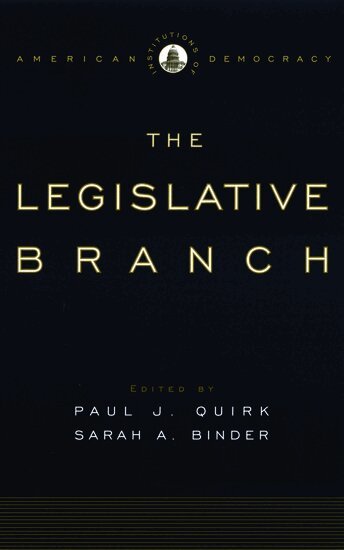
The checks and balances provided by the three branches of federal government are essential to nurturing and maintaining American democracy. With the guidance of coeditors Paul J. Quirk and Sarah A. Binder, this collection of essays examines the role of the Legislature in American democracy and the dynamic between the other branches of government, and discusses possible measures for reform.The volume addresses questions such as: How does Congress serve the values of democracy and American constitutional principles? Which conceptions of those values does it implement, and which does it overlook or fail to realize? What are Congress's strengths and weaknesses in performing the tasks of democratic governance? What reforms, if any, are necessary to ensure the health and success of Congress as an institution of democracy in the future?
346 kr
Skickas inom 5-8 vardagar
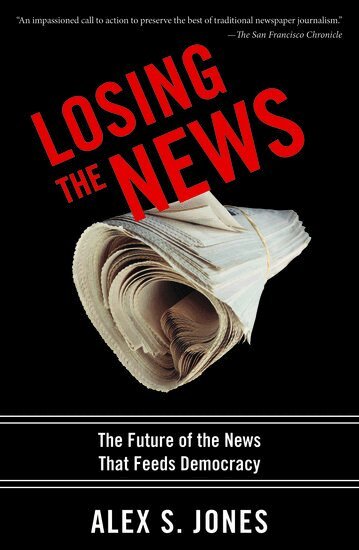
What is wrong with the news?To answer this dismaying question, Pulitzer Prize-winning journalist Alex S. Jones explores how the epochal changes sweeping the media have eroded the core news that has been the essential food supply of our democracy. At a time of dazzling technological innovation, Jones says that what stands to be lost is the fact-based reporting that serves as a watchdog over government, holds the powerful accountable, and gives citizens what they need. In a tumultuous new media era, with cutthroat competition and panic over profits, the commitment of the traditional news media to serious news is fading. Should we lose a critical mass of this news, our democracy will weaken--and possibly even begin to fail. The breathtaking possibilities that the web offers are undeniable, but at what cost? The shattering of the old economic model is taking a toll on journalistic values and standards. Journalistic objectivity and ethics are under assault, as is the bastion of the First Amendment. Pundits and talk show hosts have persuaded Americans that the crisis in news is bias and partisanship. Not so, says Jones. The real crisis is the erosion of the iron core of "accountability" news, a loss that hurts Republicans and Democrats alike. Losing the News is a vivid depiction of the dangers facing fact-based, reported news, but it is also a call to arms. Despite the current crisis, there are many hopeful signs, and Jones closes by looking over the horizon and exploring ways the iron core can be preserved.
468 kr
Skickas inom 5-8 vardagar
American democracy is built on its institutions. The Congress, the presidency, and the judiciary, in particular, undergird the rights and responsibilities of every citizen. The free press, for example, protected by the First Amendment, allows for the dissent so necessary in a democracy. How has this institution changed since the nation's founding? And what can we, as leaders, policymakers, and citizens, do to keep it vital? The freedom of the press is an essential element of American democracy. With the guidance of editors Geneva Overholser and Kathleen Hall Jamieson, this volume examines the role of the press in a democracy, investigating alternative models used throughout world history to better understand how the American press has evolved into what it is today. The commission also examines ways to allow more voices to be heard and to improve the institution of the American free press. The Press, a collection of essays by the nation's leading journalism scholars and professionals will examine the history, identity, roles, and future of the American press, with an emphasis on topics of concern to both practitioners and consumers of American media.
417 kr
Skickas inom 5-8 vardagar
The checks and balances provided by the three branches of federal government are essential to nurturing and maintaining American democracy. With the guidance of coeditors Paul J. Quirk and Sarah A. Binder, this collection of essays examines the role of the Legislature in American democracy and the dynamic between the other branches of government, and discusses possible measures for reform.The volume addresses questions such as: How does Congress serve the values of democracy and American constitutional principles? Which conceptions of those values does it implement, and which does it overlook or fail to realize? What are Congress's strengths and weaknesses in performing the tasks of democratic governance? What reforms, if any, are necessary to ensure the health and success of Congress as an institution of democracy in the future?
248 kr
Skickas inom 5-8 vardagar
In Losing the News, Pulitzer Prize-winning journalist Alex S. Jones offers a probing look at the epochal changes sweeping the media, changes which are eroding the core news that has been the essential food supply of our democracy. At a time of dazzling technological innovation, Jones says that what stands to be lost is the fact-based reporting that serves as a watchdog over government, holds the powerful accountable, and gives citizens what they need. In a tumultuous new media era, with cutthroat competition and panic over profits, the commitment of the traditional news media to serious news is fading. Indeed, as digital technology shatters the old economic model, the news media is making a painful passage that is taking a toll on journalistic values and standards. Journalistic objectivity and ethics are under assault, as is the bastion of the First Amendment. Jones characterizes himself not as a pessimist about news, but a realist. The breathtaking possibilities that the web offers are undeniable, but at what cost? Pundits and talk show hosts have persuaded Americans that the crisis in news is bias and partisanship. Not so, says Jones. The real crisis is the erosion of the iron core of news, something that hurts Republicans and Democrats alike.Losing the News depicts an unsettling situation in which the American birthright of fact-based, reported news is in danger. But it is also a call to arms to fight to keep the core of news intact. Praise for the hardcover:"Thoughtful."--New York Times Book Review"An impassioned call to action to preserve the best of traditional newspaper journalism."--The San Francisco Chronicle"Must reading for all Americans who care about our country's present and future. Analysis, commentary, scholarship and excellent writing, with a strong, easy-to-follow narrative about why you should care, makes this a candidate for one of the best books of the year."--Dan Rather