International Perspectives on Mathematics Education - Böcker
Visar alla böcker i serien International Perspectives on Mathematics Education. Handla med fri frakt och snabb leverans.
3 produkter
3 produkter
1 572 kr
Skickas inom 10-15 vardagar
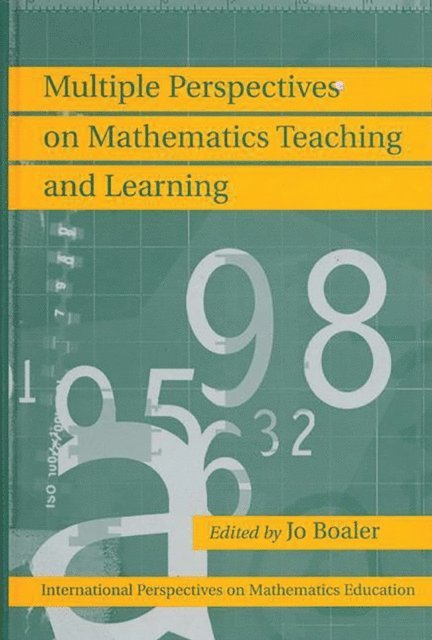
Multiple Perspectives on Mathematics Teaching and Learning offers a collection of chapters that take a new look at mathematics education. Leading authors, such as Deborah Ball, Paul Cobb, Jim Greeno, Stephen Lerman, and Michael Apple, draw from a range of perspectives in their analyses of mathematics teaching and learning. They address such practical problems as: the design of teaching and research that acknowledges the social nature of learning, maximizing the impact of teacher education programs, increasing the learning opportunities of students working in groups, and ameliorating the impact of male domination in mixed classrooms.These practical insights are combined with important advances in theory. Several of the authors address the nature of learning and teaching, including the ways in which theories and practices of mathematics education recognize learning as simultaneously social and individual. The issues addressed include teaching practices, equity, language, assessment, group work and the broader political context of mathematics reform. The contributors variously employ sociological, anthropological, psychological, sociocultural, political, and mathematical perspectives to produce powerful analyses of mathematics teaching and learning.
1 009 kr
Skickas inom 10-15 vardagar
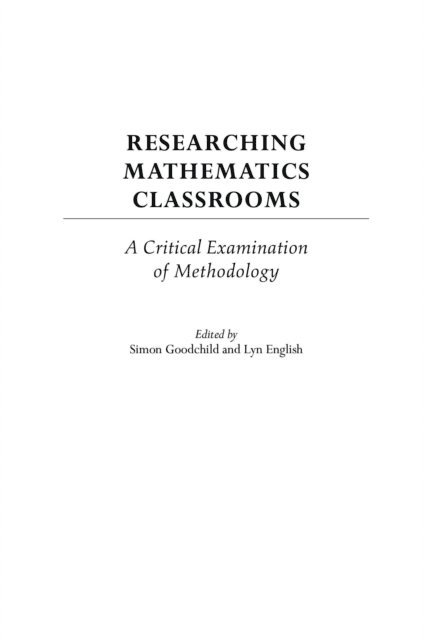
Critique of research methods and methodology is one of several key features of the regular dialogue between researchers. This critique takes place formally at conferences and seminars, and regularly in universities. Published critique is normally separated from the original work. This book brings together the writing of researcher and independent critique. Thus the book exposes to wider scrutiny the dialogue that exists between researchers. It will be of interest to all who are concerned to understand the nature and substance of this critique.The volume comprises a collection of accounts of classroom studies, each complemented by the reaction of an eminent researcher. The accounts and reactions are written to expose the nature of methodology of classroom research. It argues that methodology encompasses the choice of methods and the researchers' beliefs and values.
1 009 kr
Skickas inom 10-15 vardagar
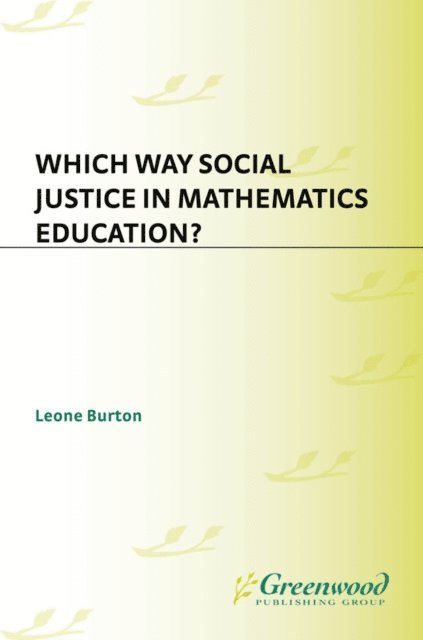
This contributed volume explores equity and social justice within the field of mathematics education. In part one, Helga Jungwirth's introductory chapter provides a strong theoretical overview that is based in actual classroom behaviors and a typology that classifies the various interpretations found within this volume. Also in part one, Laurie Hart discusses developments in equity research in the United States. Part two focuses on results of studies about social justice and their impact on learning in mathematics classrooms in various parts of the world. For example, in a chapter on Peru, social justice does not just encompass gender, but also inequalities in opportunities to learn, such as problems of resources, living and social conditions, communal demands and language needs. And, part three focuses on computers as a resource to mathematics teaching.The contributors raise several important social justice issues which have previously remained unresearched. Although there are a number of chapters specifically dealing with gender, many of the authors use one of the following strategies: their gender-specific questions are set in a wider socio-cultural context, they challenge what have threatened to become false orthodoxies, or they raise other important issues. These other issues include the meaning of democratic citizenship for mathematics classrooms, the links between parents and children learning mathematics, and the preconceptions of some teachers of underprivileged students in Australia. Other chapters explore different forms of classroom communication, participation, and assessment. The pieces on computers state that there is still not enough research to conclude whether computers in the mathematics classrooms are supportive of, or detrimental to, the learning of all students. The one thing on which every author in this volume does agree is that social justice in mathematics education has still not been attained, but that we must strive toward it to improve educational practices and society in general.