International Relations and the Great Powers – Serie
Visar alla böcker i serien International Relations and the Great Powers. Handla med fri frakt och snabb leverans.
3 produkter
3 produkter
502 kr
Skickas inom 10-15 vardagar
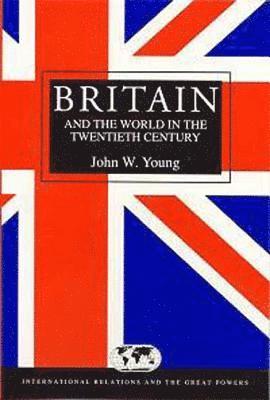
This book looks at all the main phases of British foreign policy from the 1890s to the 1990s. It not only explores such major events as the Boer War, Appeasement, and the Suez Crisis, but also looks well beyond traditional diplomacy, taking in strategic, technological, economic, and ideological factors, as well as looking at such subjects as the rise of propaganda agencies and the intelligence community. The author also details specific international relations and rivalries and charts domestic influences on policy.
475 kr
Skickas inom 10-15 vardagar
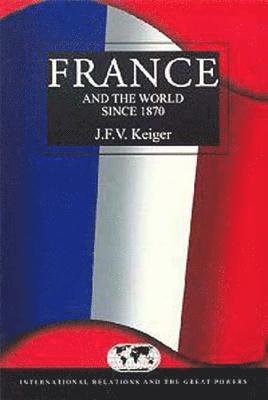
Here, John Keiger examines the subtle forces that have shaped France's international relations, from material aspects such as geography, demography, and economics, to more abstract features of France's national identity such as the notion of state and the impulse to spread French culture. The first study of its kind in English, the book is divided into thematic chapters that include discussions of how foreign policy is formulated and executed, the nature of strategy and defence, France's allies and adversaries, cultural diplomacy, and an assessment of French espionage. A final chapter examines France's position in the post-Cold War era, its adjustment to the new international system, and the extent to which old mentalities persist or have been resurrected
461 kr
Skickas inom 10-15 vardagar
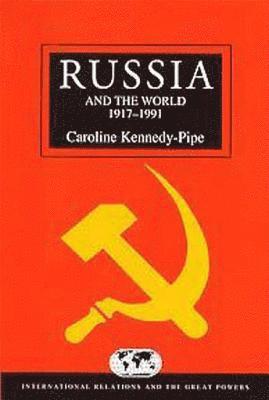
An investigation of the evolution of Soviet foreign policy from the Revolution of 1917 until the end of the Soviet era, tracing the origins and characteristics of Soviet external strategies from their Marxist-Leninist roots through to the collapse of communism. There is a careful analysis of Soviet foreign policy alongside the inception of the Bolshevik state with its global manifesto of revolutionary change; Stalin's struggle to survive the twin threats of a revisionist Germany and militant Japan through alliance with the capitalist states; the expansion of Soviet power in the closing stages of World War II and the subsequent Cold War; the Soviet search for some form of accommodation with the West from the 1960s onwards; the attempts of successive leaderships to find a way of regenerating the failing Soviet system and the impact of economic weakness on Soviet behaviour in both the Third World and Eastern Europe.Based on a wide range of sources, including Russian materials that have become available since the end of the Cold War, this work differs from many standard accounts in its emphasis of the factional nature of decision-making over external strategies and its description of competing strains in Soviet thinking about the outside world.