Investigating Visible Evidence: New Challenges for Documentary - Böcker
Visar alla böcker i serien Investigating Visible Evidence: New Challenges for Documentary. Handla med fri frakt och snabb leverans.
8 produkter
8 produkter
976 kr
Skickas inom 7-10 vardagar
Can the documentary be useful? Can a film change how its viewers think about the world and their potential role in it? In Kill the Documentary, the award-winning director Jill Godmilow issues an urgent call for a new kind of nonfiction filmmaking. She critiques documentary films from Nanook of the North to the recent Ken Burns/Lynn Novick series The Vietnam War. Tethered to what Godmilow calls the “pedigree of the real” and the “pornography of the real,” they fail to activate their viewers’ engagement with historical or present-day problems. Whether depicting the hardships of poverty or the horrors of war, conventional documentaries produce an “us-watching-them” mode that ultimately reinforces self-satisfaction and self-absorption.In place of the conventional documentary, Godmilow advocates for a “postrealist” cinema. Instead of offering the faux empathy and sentimental spectacle of mainstream documentaries, postrealist nonfiction films are acts of resistance. They are experimental, interventionist, performative, and transformative. Godmilow demonstrates how a film can produce meaningful, useful experience by forcefully challenging ways of knowing and how viewers come to understand the world. She considers her own career as a filmmaker as well as the formal and political strategies of artists such as Luis Buñuel, Georges Franju, Harun Farocki, Trinh T. Minh-ha, Rithy Panh, and other directors. Both manifesto and guidebook, Kill the Documentary proposes provocative new ways of making and watching films.
249 kr
Skickas inom 7-10 vardagar
Can the documentary be useful? Can a film change how its viewers think about the world and their potential role in it? In Kill the Documentary, the award-winning director Jill Godmilow issues an urgent call for a new kind of nonfiction filmmaking. She critiques documentary films from Nanook of the North to the recent Ken Burns/Lynn Novick series The Vietnam War. Tethered to what Godmilow calls the “pedigree of the real” and the “pornography of the real,” they fail to activate their viewers’ engagement with historical or present-day problems. Whether depicting the hardships of poverty or the horrors of war, conventional documentaries produce an “us-watching-them” mode that ultimately reinforces self-satisfaction and self-absorption.In place of the conventional documentary, Godmilow advocates for a “postrealist” cinema. Instead of offering the faux empathy and sentimental spectacle of mainstream documentaries, postrealist nonfiction films are acts of resistance. They are experimental, interventionist, performative, and transformative. Godmilow demonstrates how a film can produce meaningful, useful experience by forcefully challenging ways of knowing and how viewers come to understand the world. She considers her own career as a filmmaker as well as the formal and political strategies of artists such as Luis Buñuel, Georges Franju, Harun Farocki, Trinh T. Minh-ha, Rithy Panh, and other directors. Both manifesto and guidebook, Kill the Documentary proposes provocative new ways of making and watching films.
1 172 kr
Skickas inom 7-10 vardagar
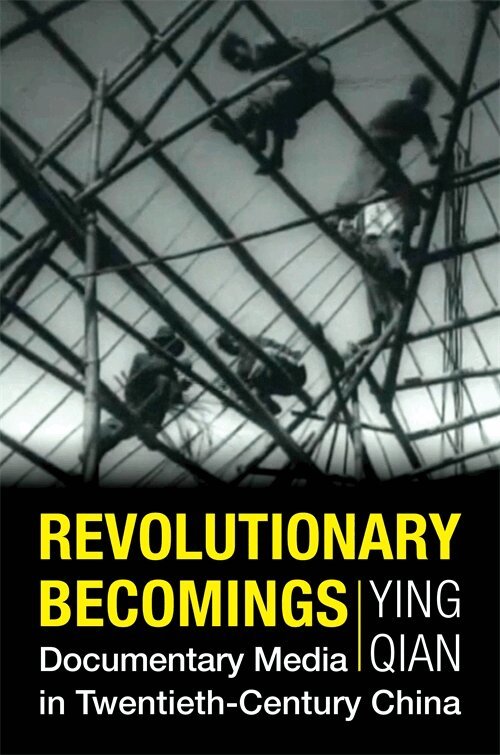
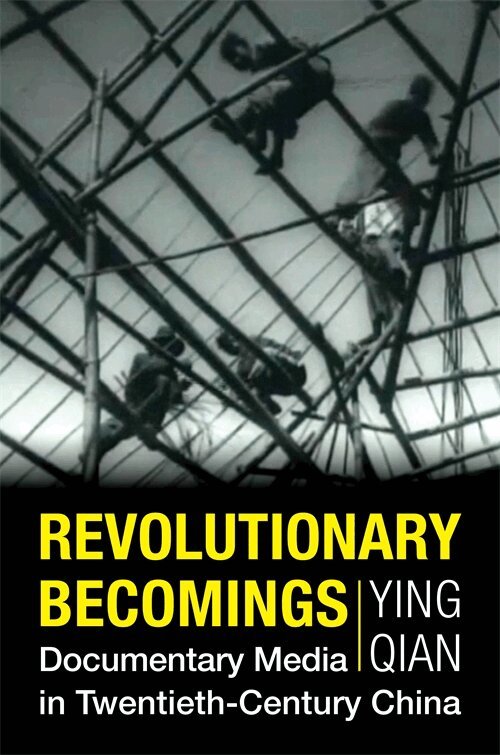
Winner, 2025 Lionel Trilling Book Award, Columbia CollegeWinner, 2024 Book Award, History Division, Association for Education in Journalism and Mass CommunicationHonorable Mention, 2024 Aldo and Jeanne Scaglione Prize for East Asian Studies, Modern Language AssociationFrom the toppling of the Qing Empire in 1911 to the political campaigns and mass protests in the Mao and post-Mao eras, revolutionary upheavals characterized China’s twentieth century. In Revolutionary Becomings¸ Ying Qian studies documentary film as an “eventful medium” deeply embedded in these upheavals and as a prism to investigate the entwined histories of media and China’s revolutionary movements.With meticulous historical excavation and attention to intermedial practices and transnational linkages, Qian discusses how early media practitioners at the turn of the twentieth century intermingled with rival politicians and warlords as well as civic and business organizations. She reveals the foundational role documentary media played in the Chinese Communist Revolution as a bridge between Marxist theories and Chinese historical conditions. In considering the years after the Communist Party came to power, Qian traces the dialectical relationships between media practice, political relationality, and revolutionary epistemology from production campaigns during the Great Leap Forward to the “class struggles” during the Cultural Revolution and the reorganization of society in the post-Mao decade. Exploring a wide range of previously uninvestigated works and intervening in key debates in documentary studies and film and media history, Revolutionary Becomings provides a groundbreaking assessment of the significance of media to the historical unfolding and actualization of revolutionary movements.
299 kr
Skickas inom 7-10 vardagar
Winner, 2025 Lionel Trilling Book Award, Columbia CollegeWinner, 2024 Book Award, History Division, Association for Education in Journalism and Mass CommunicationHonorable Mention, 2024 Aldo and Jeanne Scaglione Prize for East Asian Studies, Modern Language AssociationFrom the toppling of the Qing Empire in 1911 to the political campaigns and mass protests in the Mao and post-Mao eras, revolutionary upheavals characterized China’s twentieth century. In Revolutionary Becomings¸ Ying Qian studies documentary film as an “eventful medium” deeply embedded in these upheavals and as a prism to investigate the entwined histories of media and China’s revolutionary movements.With meticulous historical excavation and attention to intermedial practices and transnational linkages, Qian discusses how early media practitioners at the turn of the twentieth century intermingled with rival politicians and warlords as well as civic and business organizations. She reveals the foundational role documentary media played in the Chinese Communist Revolution as a bridge between Marxist theories and Chinese historical conditions. In considering the years after the Communist Party came to power, Qian traces the dialectical relationships between media practice, political relationality, and revolutionary epistemology from production campaigns during the Great Leap Forward to the “class struggles” during the Cultural Revolution and the reorganization of society in the post-Mao decade. Exploring a wide range of previously uninvestigated works and intervening in key debates in documentary studies and film and media history, Revolutionary Becomings provides a groundbreaking assessment of the significance of media to the historical unfolding and actualization of revolutionary movements.
Staging Nuremberg
How the United States and the Soviet Union Fought Over the Portrayal of Nazi Crimes
Inbunden, Engelska, 2026
1 578 kr
Kommande
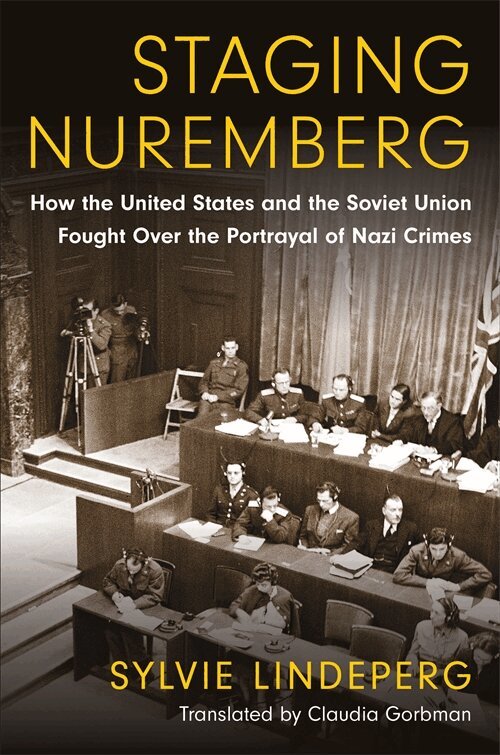
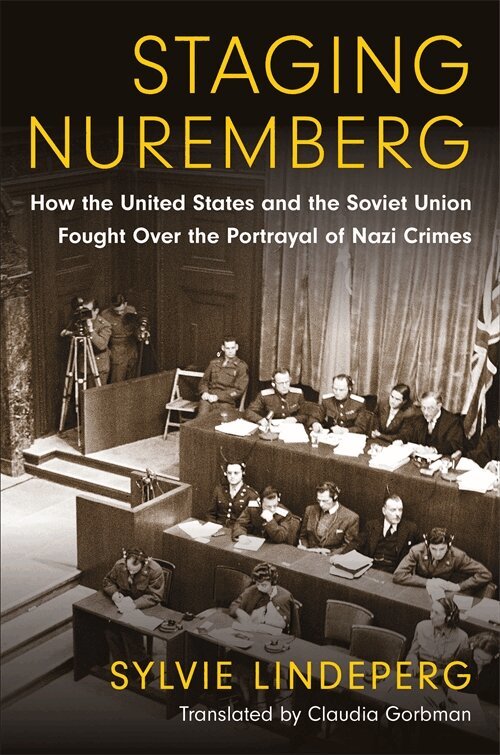
As victory in World War II drew near, the Allies decided to hold a major trial of Nazi leaders, which began in Nuremberg in November 1945. Conflict soon broke out between the United States and the Soviet Union over not only how to assess German guilt but also how to depict the trial. The Americans saw it as a judicial and media spectacle that would convey “the greatest moral tale ever told,” illustrated with Hollywood techniques. The Soviets, for their part, drew on extensive experience filming show trials to craft their own narrative of the tribunal.Sylvie Lindeperg offers a pioneering account of the cinematic stagecraft, storytelling, and imagery of the Nuremberg trials, revealing how film was used both as legal evidence and as a propaganda tool. She follows the American campaign to influence world opinion before, during, and after the trial, on stage and behind the scenes. Lindeberg chronicles how the hope of scripting a Hollywood-style courtroom drama crumbled amid rising geopolitical tensions and the mundane reality of the tribunal. The book interweaves in-depth reconstruction of the filming of the trial with portraits of the colorful characters who played leading or supporting roles. Drawing on American, British, Soviet, French, and German archives as well as analysis of films, newsreels, and photographs, Staging Nuremberg is a revelatory study of the theater of justice.
Staging Nuremberg
How the United States and the Soviet Union Fought Over the Portrayal of Nazi Crimes
Häftad, Engelska, 2026
384 kr
Kommande
As victory in World War II drew near, the Allies decided to hold a major trial of Nazi leaders, which began in Nuremberg in November 1945. Conflict soon broke out between the United States and the Soviet Union over not only how to assess German guilt but also how to depict the trial. The Americans saw it as a judicial and media spectacle that would convey “the greatest moral tale ever told,” illustrated with Hollywood techniques. The Soviets, for their part, drew on extensive experience filming show trials to craft their own narrative of the tribunal.Sylvie Lindeperg offers a pioneering account of the cinematic stagecraft, storytelling, and imagery of the Nuremberg trials, revealing how film was used both as legal evidence and as a propaganda tool. She follows the American campaign to influence world opinion before, during, and after the trial, on stage and behind the scenes. Lindeberg chronicles how the hope of scripting a Hollywood-style courtroom drama crumbled amid rising geopolitical tensions and the mundane reality of the tribunal. The book interweaves in-depth reconstruction of the filming of the trial with portraits of the colorful characters who played leading or supporting roles. Drawing on American, British, Soviet, French, and German archives as well as analysis of films, newsreels, and photographs, Staging Nuremberg is a revelatory study of the theater of justice.
1 172 kr
Skickas inom 7-10 vardagar
Documentary films are often celebrated with aural metaphors: they give “voice” to the “voiceless” and ask the public to “listen.” But when did listening become synonymous with social justice? How exactly do documentaries train audiences to listen when they ask them to right historic wrongs or hold power to account?The Documentary Audit challenges the association of listening with accountability and charts oppositional modes of listening otherwise. Pooja Rangan develops a framework for understanding how documentary practices have, under the mantle of accountability, provided a moral cover for listening habits that are used to profile, exclude, and incarcerate.From the British Crown’s promotional films to Zoom meeting recordings, from disability-informed filmmaking in Japan to forensic efforts to expose anti-Palestinian violence in Hebron, Rangan explores how historical and contemporary practitioners have challenged and refused the lures of normative documentary listening habits in order to listen with an accent, listen in crip time, and listen like an abolitionist. Through an interdisciplinary approach that bridges documentary and sound studies while considering raciolinguistics, disability access, and legal forensics, Rangan demonstrates how the question of listening is central to the study of documentary. Far from being a neutral ethic, The Documentary Audit shows, listening creates the reality it purports to verify—with transformative political possibilities.
299 kr
Skickas inom 7-10 vardagar
Documentary films are often celebrated with aural metaphors: they give “voice” to the “voiceless” and ask the public to “listen.” But when did listening become synonymous with social justice? How exactly do documentaries train audiences to listen when they ask them to right historic wrongs or hold power to account?The Documentary Audit challenges the association of listening with accountability and charts oppositional modes of listening otherwise. Pooja Rangan develops a framework for understanding how documentary practices have, under the mantle of accountability, provided a moral cover for listening habits that are used to profile, exclude, and incarcerate.From the British Crown’s promotional films to Zoom meeting recordings, from disability-informed filmmaking in Japan to forensic efforts to expose anti-Palestinian violence in Hebron, Rangan explores how historical and contemporary practitioners have challenged and refused the lures of normative documentary listening habits in order to listen with an accent, listen in crip time, and listen like an abolitionist. Through an interdisciplinary approach that bridges documentary and sound studies while considering raciolinguistics, disability access, and legal forensics, Rangan demonstrates how the question of listening is central to the study of documentary. Far from being a neutral ethic, The Documentary Audit shows, listening creates the reality it purports to verify—with transformative political possibilities.