Issues in the History of American Foreign Relations – serie
Visar alla böcker i serien Issues in the History of American Foreign Relations. Handla med fri frakt och snabb leverans.
9 produkter
9 produkter
214 kr
Skickas inom 10-15 vardagar
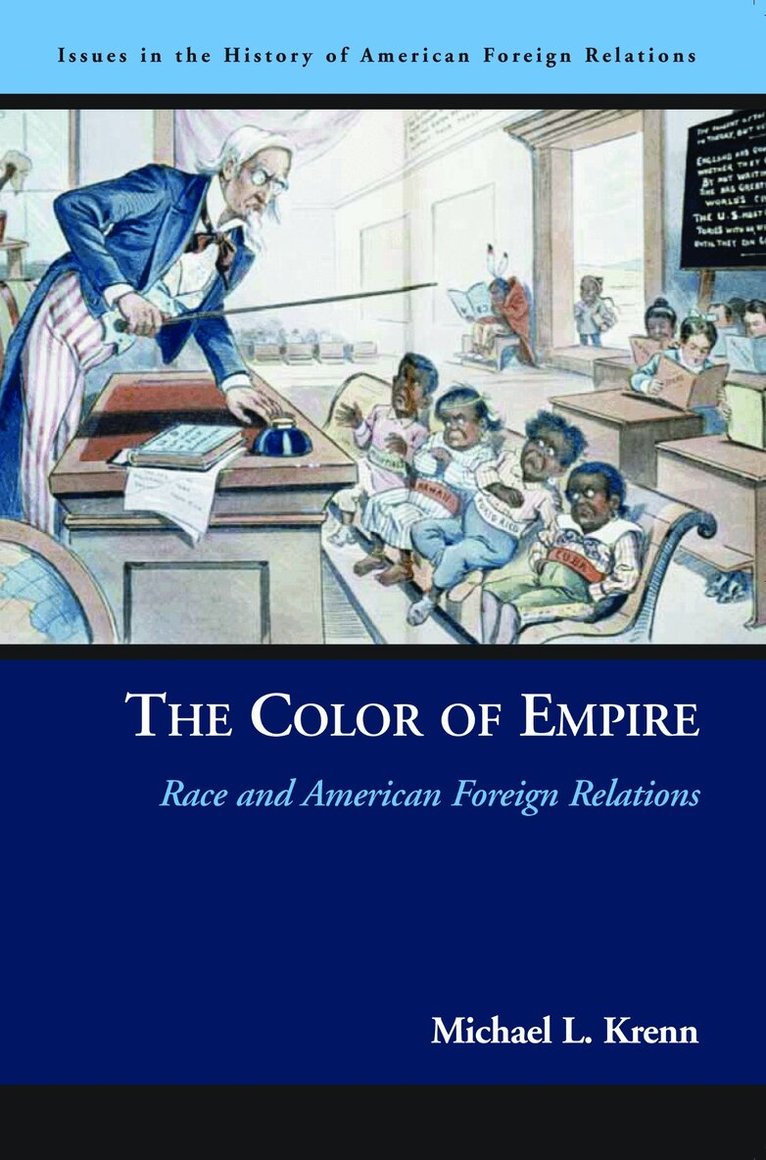
At first glance, it may be difficult to accept that race and racism play a major role, whether conscious or subconscious, in policymaking. But leaders are products of their upbringing and era, and even some of America's best-educated presidents and secretaries of state have been slave owners, segregationists, or bigots. Some belong to America's distant past, but it was not so long ago that the civil rights movement began to correct America's troubled race relations. While race has rarely served as the primary motivating factor in America's foreign policies, Michael Krenn shows that it has functioned as both a powerful justification for U.S. actions abroad and a significant influence on their shape, direction, and intensity. Portraying nonwhite races as inferior allowed U.S. policymakers to rationalize territorial expansion at the expense of Native Americans and Mexico, to demonize the enemy in wars fought against Filipino insurgents and Japanese soldiers, and to justify intervention in developing nations. Racism made America's leaders soft on European colonialism, and U.S. racial segregation laws were an obstacle to winning hearts and minds in the developing world during the Cold War. Race plays a more subtle role in U.S. foreign relations today, but speeches about turning the war on terror into a crusade, the abuse of detainees in military prisons, and apathy toward genocide in Darfur can be explained, in part, by prejudice. The Color of Empire challenges readers to recognize that American perceptions and prejudices about race have influenced the conduct of U.S. foreign relations from the colonial era to the present. This concise survey is an excellent introduction to the topic for both students and general readers.
238 kr
Skickas inom 7-10 vardagar
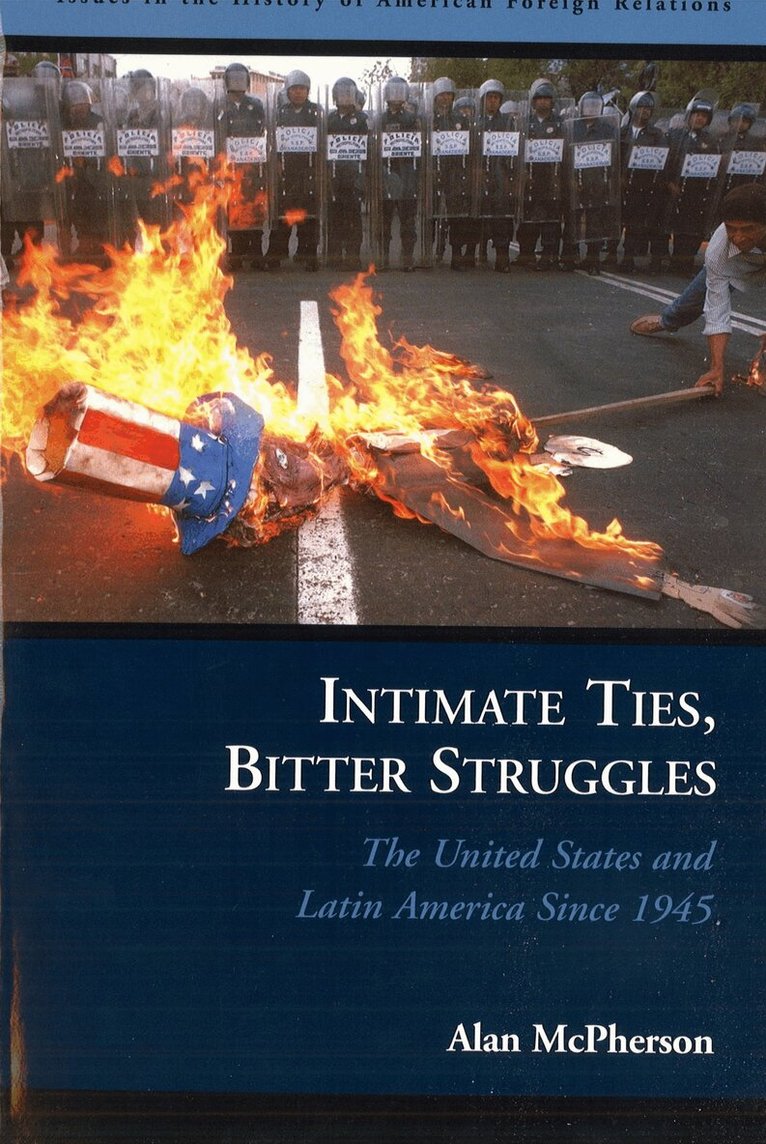
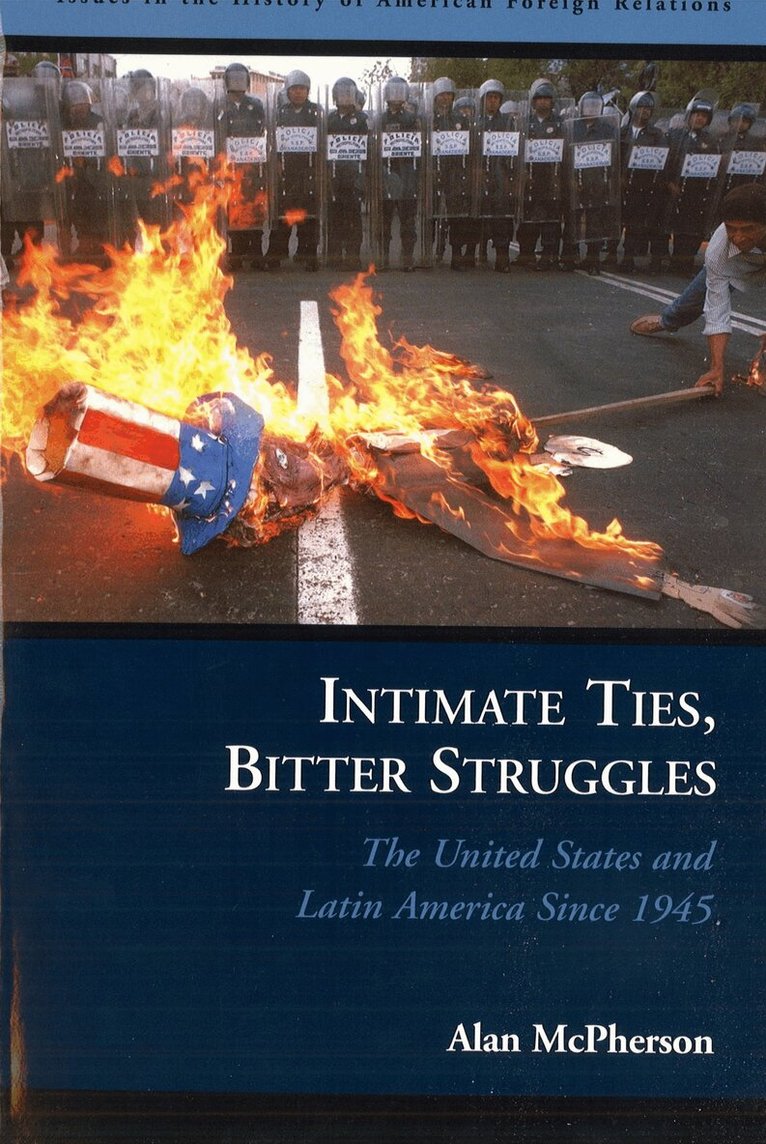
Over the last sixty years, the relationship between the United States and Latin America has been marred by ideological conflict, imbalances of power, and economic disparity. The U.S.-sponsored coup in Guatemala, the near lynching of Vice President Richard Nixon in Venezuela, and the disastrous Bay of Pigs invasion are a few reminders of the sometimes dramatic confrontations between North and South. Yet this relationship has also been characterized by accelerating economic and cultural interdependence that is significantly altering the old paradigm of U.S. hegemony and Latin American resistance. Alan McPherson uses multinational sources to survey and analyze the history of this relationship. Intimate Ties, Bitter Struggles reflects the most up-to-date research on state-to-state interactions and recognizes the influence of culture and non-state actors on international relations. Major topics include the debate over economic dependency, the U.S. response to revolutions in Latin America during the Cold War, military interventions and covert operations, human rights, migration, the North American Free Trade Agreement and economic integration, the Iran-Contra affair, the war on drugs, and Latinos in the United States. The author's concise narrative and selection of primary–source documents offer an ideal introduction to U.S.–Latin American relations for students and for anyone with an interest in understanding the dynamic interplay between these hemispheric neighbors.
Triumph of Internationalism
Franklin D. Roosevelt and a World in Crisis, 1933-1941
Häftad, Engelska, 2007
211 kr
Skickas inom 7-10 vardagar
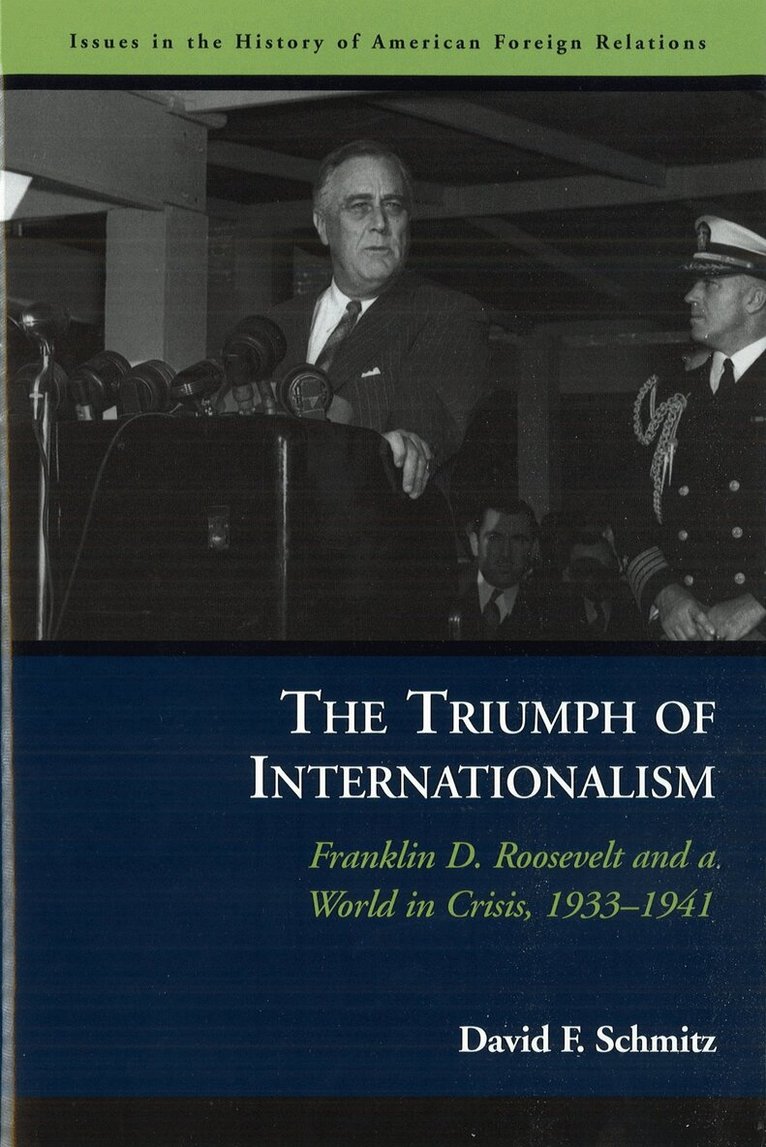
When Franklin D. Roosevelt became president in March 1933, he initially devoted most of his attention to finding a solution to the Great Depression. But the pull of war and the results of FDR's foreign policy ultimately had a deeper and more transformative impact on U.S. history. The Triumph of Internationalism offers a fresh, concise analysis and narrative of FDR's foreign policy from 1933 to America's entry into World War II in 1941. David Schmitz covers the attempts to solve the international economic crisis of the Great Depression, the Good Neighbor Policy in Latin America, the U.S. response to war in Europe and the Pacific, and other topics of this turbulent era. Schmitz describes Roosevelt as an internationalist who set out to promote U.S. interests abroad short of direct intervention. He tried to make amends for past transgressions with the nation's southern neighbors, eventually attempted to open and promote international trade to foster economic growth, and pursued containment policies intended to halt both the Japanese threat in the Pacific through deterrence and German aggression in Europe through economic appeasement. When his policies regarding the Axis powers failed, he began educating the American public about the dangers of Axis hegemony and rearming the nation for war. This effort required a profound shift in the American mind-set, given the prevailing isolationism, the disillusionment with America's involvement in World War I, and the preoccupation with domestic problems. A less powerful president would likely have failed, or perhaps not even attempted, to alter the prevailing public opinion. FDR revived American internationalism and reshaped the public's understanding of the national interest and defense. Roosevelt's policies and the outcome of World War II made the United States a superpower without equal.
Rise and Fall of Détente
American Foreign Policy and the Transformation of the Cold War
Häftad, Engelska, 2012
324 kr
Skickas inom 10-15 vardagar
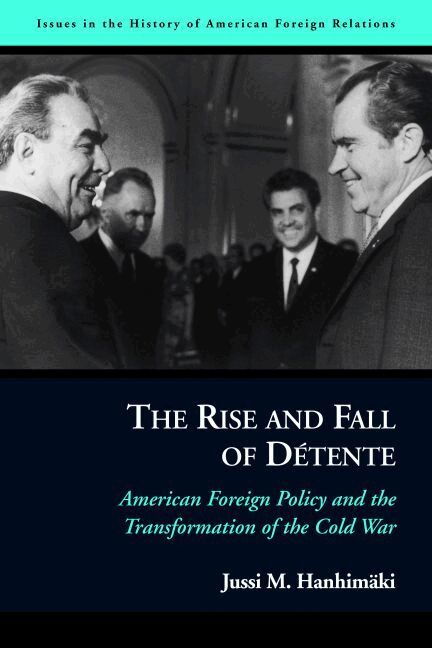
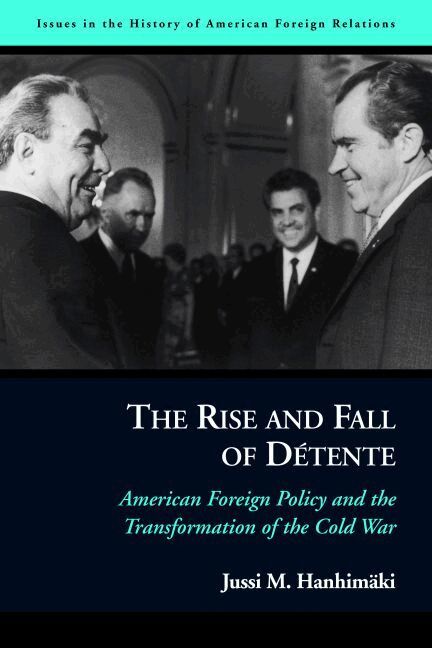
In keeping with the other titles in Robert J. McMahon's Issues in the History of American Foreign Relations series, Jussi M. Hanhimäki offers students and scholars a survey of the evolution of American foreign policy during a key period in recent history, the era of superpower détente and global transformation in the 1960s and 1970s. Describing détente as not only an era but also a strategy of waging the Cold War, Hanhimäki examines the reasons that led to the rise of détente, explores the highlights of the era's reduced East-West tensions, and explains the causes of détente's demise.He addresses many questions: What were the long-term and short-term causes of détente? Was it a policy "invented" in the United States or adopted under pressure from abroad? Did it represent a radical break with the past—a move from idealism to realism—or was it simply an attempt to prolong the Cold War bipolarity within the international system? Was détente a policy that grew from weakness and doubt (caused particularly by the Vietnam War)? What were its main achievements and shortcomings? What led to its end? In conclusion, he evaluates the role of détente in the dismantling of the Cold War international system.
269 kr
Skickas inom 10-15 vardagar
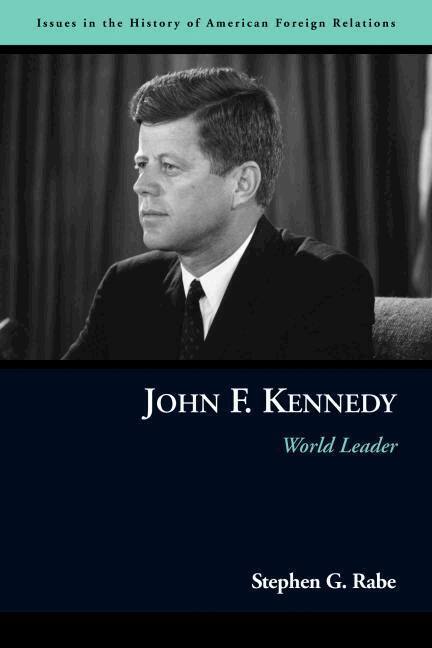
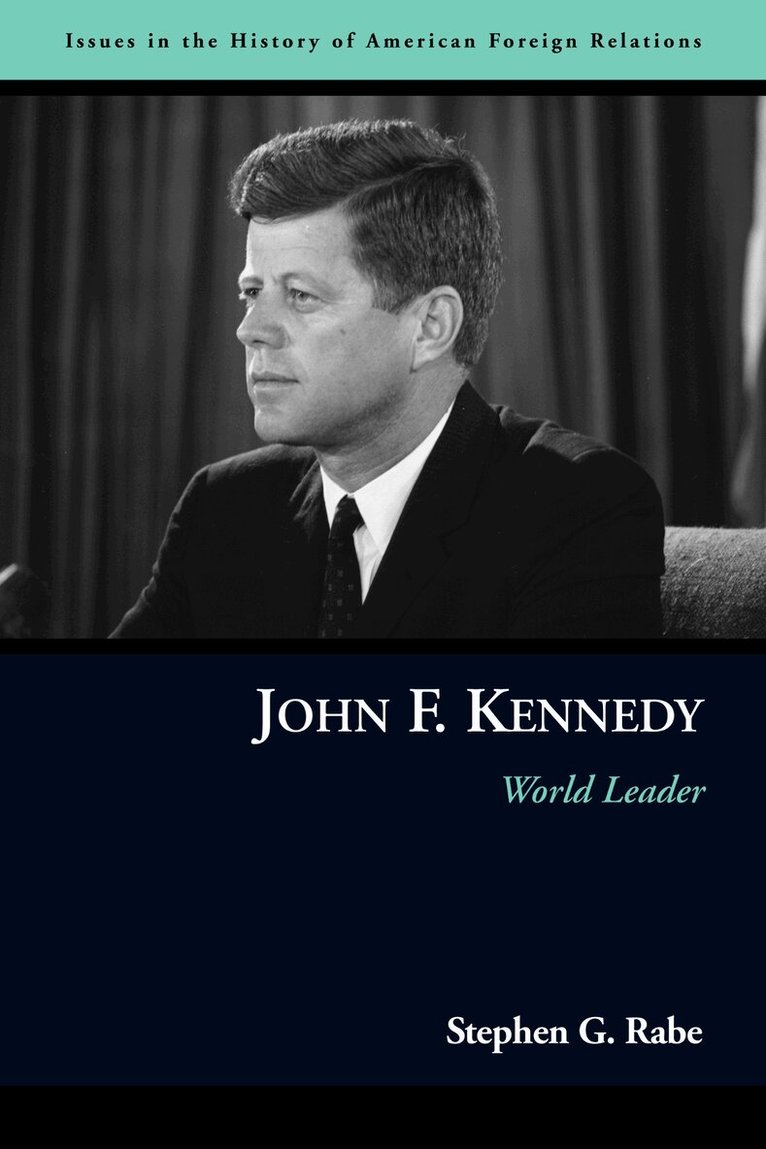
President John F. Kennedy remains a subject of fascination for both historians and citizens. Consistently ranked among the most popular U.S. presidents, Kennedy led the country during a time of rapid social change at home punctuated by critical foreign policy crises, among them the Bay of Pigs fiasco in Cuba, the showdown with the Soviet Union over the erection of the Berlin Wall, the Cuban missile crisis, and the escalation of American involvement in Vietnam.As Stephen G. Rabe explains in this introduction to American foreign policy at the height of the Cold War, Kennedy perceived himself as a foreign policy president. Time and again, the president used the threat of force, good diplomacy, and sound judgment to keep the world from falling into the abyss of nuclear war. But Kennedy did more than manage foreign policy crises. He launched major economic development programs for Latin America, India, and Egypt and dispatched Peace Corps volunteers around the world. He attempted to mediate the Arab-Israeli dispute and to stop the spread of nuclear weapons to China and Israel. Under Kennedy, the United States began for the first time to develop a policy for Africa.Taking a fresh look at Kennedy's wide-ranging efforts to change the world, Rabe devotes chapters to U.S. relations with the Soviet Union, Cuba, Latin America, and Vietnam. The author also evaluates Kennedy's approach to India, China, Egypt, and Israel and such African nations as Algeria, Angola, and South Africa. Rabe concludes by exploring whether Kennedy was contemplating a new approach toward the Soviet Union, one that, had Kennedy lived to see reelection, might have soon ushered in the era of détente.
659 kr
Skickas inom 7-10 vardagar
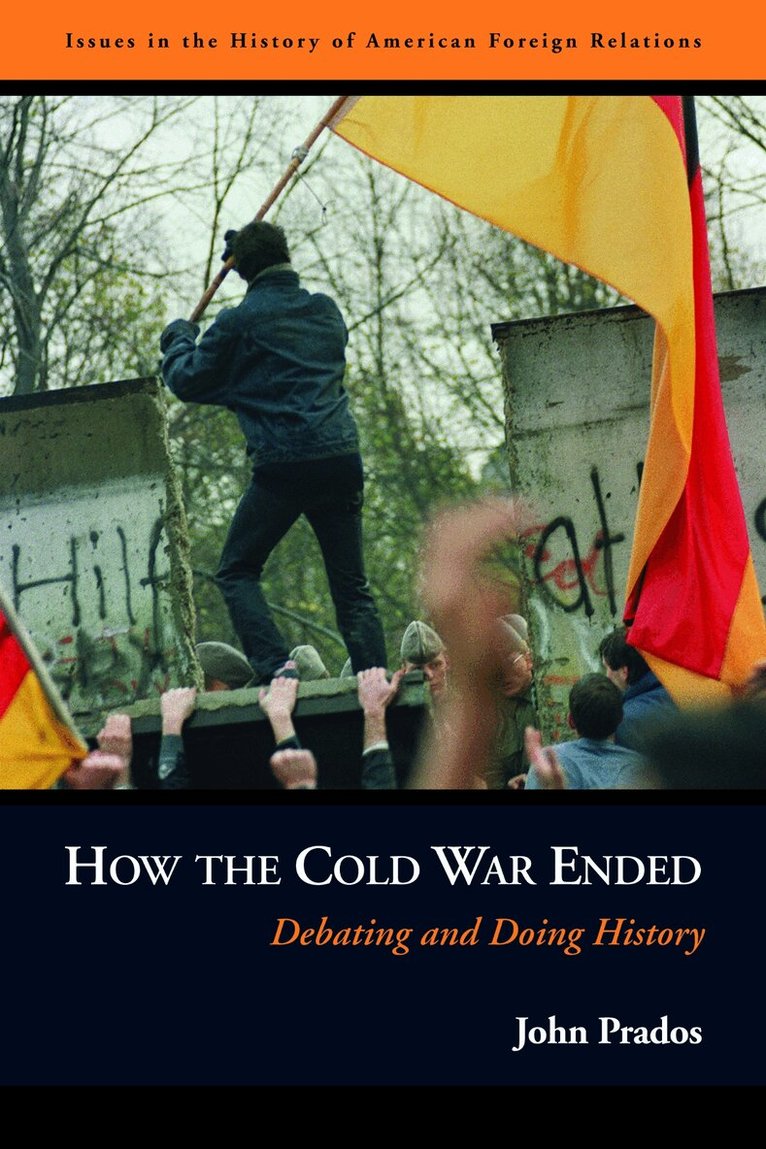
The Cold War continues to shape international relations almost twenty years after being acknowledged as the central event of the last half of the twentieth century. Interpretations of how it ended thus remain crucial to an accurate understanding of global events and foreign policy. The reasons for the Cold War's conclusion, and the timing of its ending, are disputed to this day. In this concise introduction to the Cold War and its enduring legacy, John Prados recognizes the debate between those who argue the United States was the key player in bringing it to a close and those who maintain that American actions were secondary factors. Like a crime scene investigator meticulously dissecting evidence, he applies a succession of different methods of historical analysis to illuminate the key cataclysmic events of the 1980s and early 1990s from a range of perspectives. He also incorporates evidence from European and Soviet intelligence sources into the study. The result is a stunning narrative that redefines the era, embraces debate, and deconstructs history, providing a coherent explanation for the upheavals that ended the conflict. How the Cold War Ended also provides an in-depth guide to conducting historical inquiries: how to choose a subject, how to frame a narrative, and how to conduct research and draw conclusions. Prados does this for a variety of methods of historical analysis, furnishing a how-to guide for "doing history" even as it explores a crucial case study.
265 kr
Skickas inom 7-10 vardagar
The Cold War continues to shape international relations almost twenty years after being acknowledged as the central event of the last half of the twentieth century. Interpretations of how it ended thus remain crucial to an accurate understanding of global events and foreign policy. The reasons for the Cold War's conclusion, and the timing of its ending, are disputed to this day. In this concise introduction to the Cold War and its enduring legacy, John Prados recognizes the debate between those who argue the United States was the key player in bringing it to a close and those who maintain that American actions were secondary factors. Like a crime scene investigator meticulously dissecting evidence, he applies a succession of different methods of historical analysis to illuminate the key cataclysmic events of the 1980s and early 1990s from a range of perspectives. He also incorporates evidence from European and Soviet intelligence sources into the study. The result is a stunning narrative that redefines the era, embraces debate, and deconstructs history, providing a coherent explanation for the upheavals that ended the conflict. How the Cold War Ended also provides an in-depth guide to conducting historical inquiries: how to choose a subject, how to frame a narrative, and how to conduct research and draw conclusions. Prados does this for a variety of methods of historical analysis, furnishing a how-to guide for "doing history" even as it explores a crucial case study.
659 kr
Skickas inom 7-10 vardagar
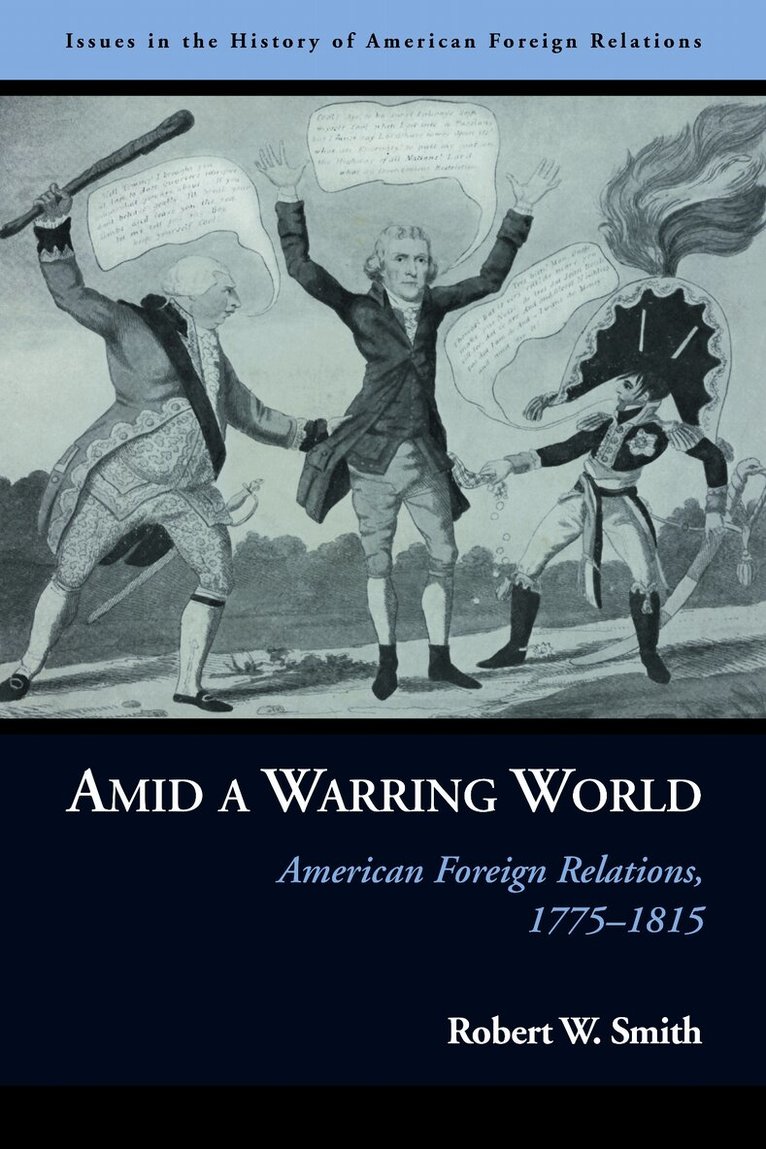
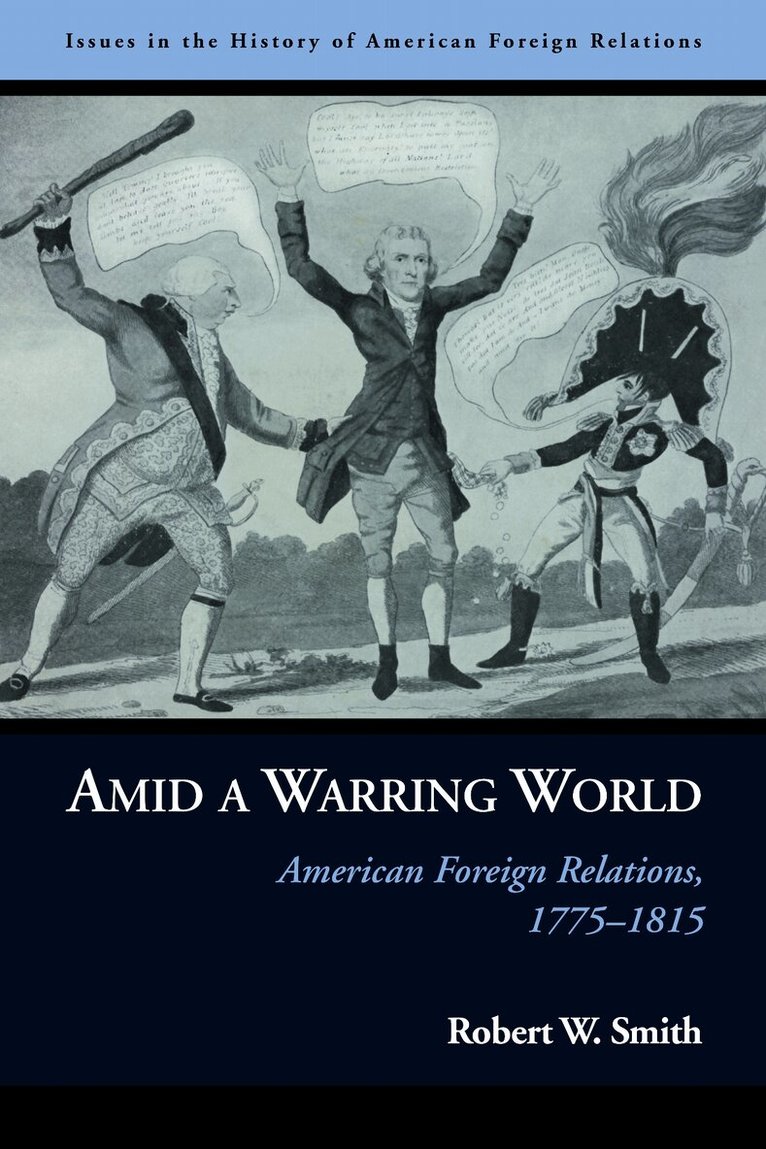
The period between 1775 and 1815 could be called the "critical period" of American foreign relations. At no time in American history was the existence of the republic in greater physical peril. Questions of foreign policy dominated American public life in a way unequalled until World War II. From the American Revolution through the War of 1812, the United States was a small power confronted by great powers hostile to each other and to the United States. Furthermore, the era was dominated by two great revolutions that reshaped the Atlantic world. The problem for American diplomats and foreign policymakers was to preserve the United States, both as an independent nation and as a republic, in a decidedly unequal contest with the great powers.According to Robert W. Smith, the question of American power lay at the heart of the debate over independence. The radicals believed that the American spirit and market were enough, and favored rapid independence and an aggressive promotion of neutral rights. The moderates doubted American power, and were inclined to move slowly and only with assured French assistance. By the end of the American Revolution, the moderates had won the debate. But their victory masked the defects of the confederation, until the diplomatic humiliations of the 1780s forced the United States to create a government that could properly harness American economic and military power. The debate over the power of the United States to reshape a hostile world remains as central today as in 1776.
238 kr
Skickas inom 7-10 vardagar
The period between 1775 and 1815 could be called the "critical period" of American foreign relations. At no time in American history was the existence of the republic in greater physical peril. Questions of foreign policy dominated American public life in a way unequalled until World War II. From the American Revolution through the War of 1812, the United States was a small power confronted by great powers hostile to each other and to the United States. Furthermore, the era was dominated by two great revolutions that reshaped the Atlantic world. The problem for American diplomats and foreign policymakers was to preserve the United States, both as an independent nation and as a republic, in a decidedly unequal contest with the great powers.According to Robert W. Smith, the question of American power lay at the heart of the debate over independence. The radicals believed that the American spirit and market were enough, and favored rapid independence and an aggressive promotion of neutral rights. The moderates doubted American power, and were inclined to move slowly and only with assured French assistance. By the end of the American Revolution, the moderates had won the debate. But their victory masked the defects of the confederation, until the diplomatic humiliations of the 1780s forced the United States to create a government that could properly harness American economic and military power. The debate over the power of the United States to reshape a hostile world remains as central today as in 1776.