Jazz Perspectives - Böcker
Visar alla böcker i serien Jazz Perspectives. Handla med fri frakt och snabb leverans.
17 produkter
17 produkter
369 kr
Skickas inom 7-10 vardagar
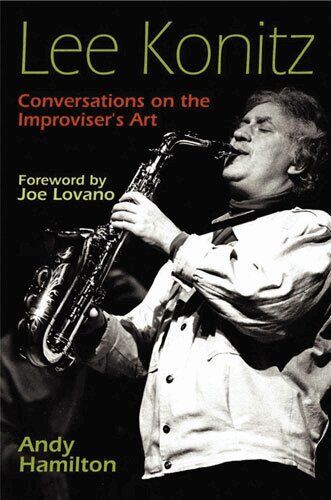
“Meticulously researched, detailed and documented, this long awaited overview justly establishes Konitz as one of the most consistently brilliant, adventurous and original improvisers in the jazz tradition—a genius as rare as Bird himself.”—John Zorn“Hamilton’s work may well mark the inception of a format new to writing on Western music, one which avoids both the self-aggrandizing of autobiography and the stylized subjectification of biography.”—The Wire“An extraordinary approach to a biography, with the man himself speaking for extended sessions. The main vibration I felt from Lee’s words was total honesty, almost to a fault. Konitz shows himself to be an acute observer of the scene, full of wisdom and deep musical insights, relevant to any historical period regardless of style. The asides by noted musicians are beautifully woven throughout the pages. I couldn’t put the book down—it is the definition of a living history.”—David LiebmanThe preeminent altoist associated with the “cool” school of jazz, Lee Konitz was one of the few saxophonists of his generation to forge a unique sound independent of the influence of Charlie Parker. In the late 1940s, Konitz began his career with the Claude Thornhill band, during which time he came into contact with Miles Davis, with whom he would later work on the legendary Birth of the Cool sessions. Konitz is perhaps best known through his association with Lennie Tristano, under whose influence much of his sound evolved, and for his work with Stan Kenton and Warne Marsh. His recordings have ranged from cool bop to experimental improvisation and have appeared on such labels as Prestige, Atlantic, Verve, and Polydor.Crafted out of numerous interviews between the author and his subject, the book offers a unique look at the story of Lee Konitz’s life and music, detailing Konitz’s own insights into his musical education and his experiences with such figures as Miles Davis, Stan Kenton, Warne Marsh, Lennie Tristano, Charles Mingus, Bud Powell, and Bill Evans.Andy Hamilton is a jazz pianist and contributor to major jazz and contemporary music magazines. He teaches philosophy, and the history and aesthetics of jazz, at Durham University in the United Kingdom. He is also the author of the book Aesthetics and Music (Continuum 2007). Joe Lovano is a Grammy Award–winning tenor saxophonist. His most recent album is Streams of Expression.
369 kr
Skickas inom 7-10 vardagar
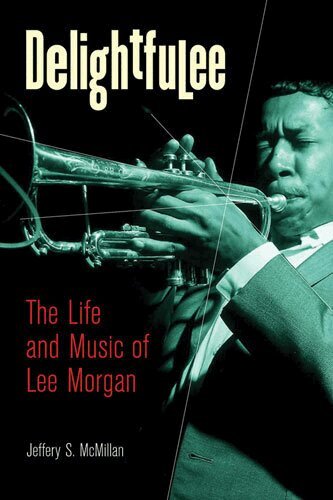
One of the most individual stylists of his time, trumpeter Lee Morgan began his professional career in Philadelphia at age fifteen. At eighteen, after a short stint with Art Blakey's Jazz Messengers, Morgan joined Dizzy Gillespie's orchestra, where he stayed until the group disbanded in 1958. A return to Blakey brought Morgan new opportunities, including his first successful attempts at composition. But however much his time with Blakey helped to advance his playing and writing, his boss's and his bandmates' destructive drug habits exerted just as strong an influence. Within three years, Morgan would be back home in Philadelphia, strung out on heroin and penniless.Morgan's return to music in the early to mid-sixties witnessed a tremendous evolution in his playing. Formerly a virtuoso in the model of his idol, Clifford Brown, Morgan brought to his critically acclaimed Blue Note records of the era an emotionally charged, muscular tone, full of poise and control. But it was with the record Sidewinder, recorded in 1963, that Morgan found his greatest fame and commercial success, due to the infectious groove of the title tune. By the time of his death, at thirty-three---murdered in a New York City club by his girlfriend during a gig---Morgan had begun a new phase of his career, experimenting with freer-forms of musical expression.Jeff McMillan's Delightfulee is the first biography to seriously examine Morgan's vast contributions to jazz, both as a performer and as a composer. Thanks to exclusive access to Lee Morgan's now-deceased brother, McMillan is also able to provide unparalleled insight into Morgan's personal and family lifeJeff McMillan received his master's degree from the Jazz History and Research program at Rutgers-Newark in 2000 and currently works as an archivist for the Metropolitan Opera in New York City.
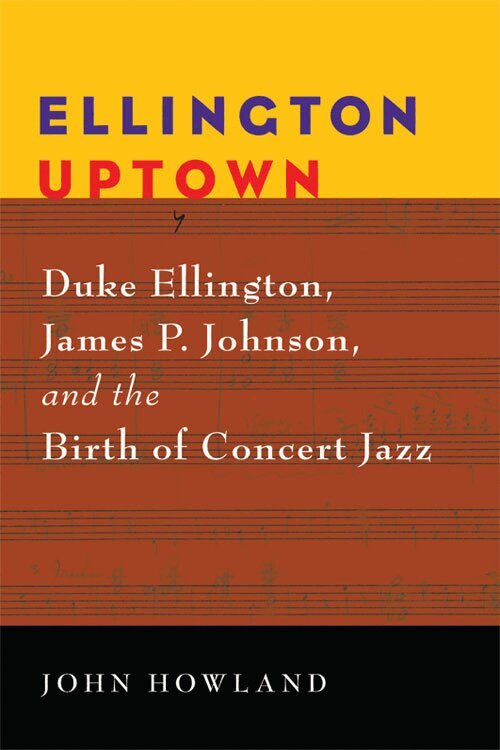
Ellington Uptown
Duke Ellington, James P. Johnson, and the Birth of Concert Jazz
Häftad, Engelska, 2009
373 kr
Skickas inom 7-10 vardagar
During the early decades of the twentieth century symphonic jazz involved an expansive family of music that emulated, paralleled, and intersected the jazz tradition. Though now largely forgotten, symphonic jazz was both a popular music -- arranging tradition and a repertory of hybrid concert works, both of which reveled in the mildly irreverent interbreeding of white and black and high and low music. While the roots of symphonic jazz can be traced to certain black ragtime orchestras of the teens, the idiom came to maturation in the music of 1920s white dance bands. Through a close examination of the music of Duke Ellington and James P. Johnson, Ellington Uptown uncovers compositions that have usually fallen in the cracks between concert music, jazz, and popular music. It also places the concert works of these two iconic figures in context through an investigation both of related compositions by black and white peers and of symphonic jazz---style arrangements from a diverse number of early sound films, Broadway musicals, Harlem nightclub floor shows, and select interwar radio programs. Both Ellington and Johnson were part of a close-knit community of several generations of Harlem musicians. Older figures like Will Marion Cook, Will Vodery, W. C. Handy, and James Reese Europe were the generation of black musicians that initially broke New York entertainment's racial barriers in the first two decades of the century. By the 1920s, Cook, Vodery, and Handy had become mentors to Harlem's younger musicians. This generational connection is a key for understanding Johnson’s and Ellington's ambitions to use the success of Harlem's white-oriented entertainment trade as a springboard for establishing a black concert music tradition based on Harlem jazz and popular music.
339 kr
Skickas inom 7-10 vardagar
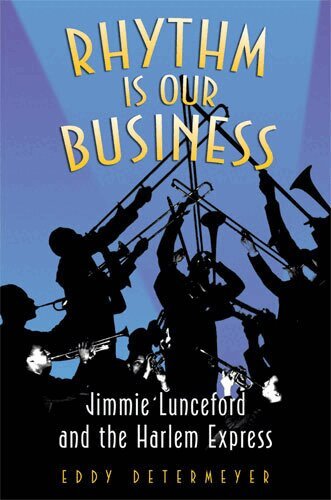
In the 1930s, swing music reigned, and the Jimmie Lunceford Orchestra was the hottest and hippest attraction on the black dance circuits. Known for its impeccable appearance and infectious rhythms, Lunceford's group was able to out-swing and outdraw any band. For ten consecutive years, they were the best-loved attraction at Harlem's famed Apollo Theater. The group's hit recordings sold in the hundreds of thousands, and Jimmie Lunceford's band rivaled Ellington's for popularity in the African American community. Jimmie Lunceford was also an innovator, elevating big-band showmanship to an art and introducing such novel instruments as the electric guitar and bass. The band's arrangements, written by Sy Oliver, Edwin Wilcox, Gerald Wilson, Billy Moore, Jr., and Tadd Dameron, were daring and forward looking, influencing generations of big-band writers.Rhythm Is Our Business traces the development of the Jimmie Lunceford Orchestra from its infant days as a high school band in Memphis to its record-breaking tours across the United States, Canada, and Europe. The book also unveils Lunceford's romantic yet ill-fated involvement with Yolande Du Bois, daughter of famous writer and opinion leader W.E.B. Du Bois. And by reconstructing Lunceford's last day, the book offers a glimpse into the mysteries surrounding the leader's untimely death. This is essential reading for anyone interested in the history and legacy of swing.Eddy Determeyer has been a freelance music journalist for more than three decades. In 1984 Determeyer wrote a seven-part series on Jimmie Lunceford for the Dutch magazine Jazz Nu. Determeyer has written thousands of articles on music for a variety of Dutch publications and is the author of several books. He currently produces the Holiday for Hipsters radio show for Dutch station Concertzender.Cover image: Lunceford brass section, ca. late 1936. Left to right: Paul Webster, Eddie Durham, Sy Oliver, Elmer Crumbley, Eddie Tompkins, Russell Bowles. (Bertil Lyttkens Collection)
415 kr
Skickas inom 7-10 vardagar
"The Music of Django Reinhardt is an impressive contribution to the field of jazz studies. The book offers a penetrating view into the music of one of jazz's most intriguing early figures."---Keith Waters, coauthor, Jazz: The First Hundred Years"An important addition to the literature on jazz, Givan's book provides many insights into Reinhardt’s solo building and unorthodox guitar playing; it is richly illustrated with many excellent musical transcriptions."---Thomas Owens, author of Bebop: The Music and Its Players"Givan has painstakingly assembled an analytical interpretation of Reinhardt's music that is rigorous, compelling, and illuminating. This book makes a unique contribution to the field of jazz studies and guitar music in general."---Brian Harker, author of Jazz: An American JourneyWhen most people think of the great jazz guitarist Django Reinhardt, they conjure up the unusual details of his colorful life: a childhood spent in gypsy encampments outside of Paris; the tragic caravan fire when he was eighteen that rendered his left hand nearly unusable; and his survival during World War II, when gypsies were massacred by the hundreds of thousands. The amazing story of Reinhardt’s life even became the basis for Woody Allen's Sweet and Lowdown.Yet, it is the music of Django Reinhardt that made him one of the most original guitarists in history. In particular, his partnership with violinist Stéphane Grappelli, in the Quintette du Hot Club de France, brought him international renown and the attention of some of the most important American jazz musicians of the day, including Coleman Hawkins, Benny Carter, and Duke Ellington.The Music of Django Reinhardt explores the story of the man and his music as never before. Benjamin Givan shows how one of jazz's greatest guitarists created his unparalleled sound. This book is an analytical study of his music, including his process, his improvisational style, and his instrumental technique.The book features transcriptions from records of the 1920s through the 1950s and includes detailed discussion of selected performances from one of the most important guitarists in history. Benjamin Givan is Assistant Professor of Music at Skidmore College. His writings on jazz have appeared in scholarly publications such as Current Musicology and the Musical Quarterly, as well as the popular jazz magazine Down Beat. He received his Ph.D. in music theory from Yale University.
314 kr
Skickas inom 7-10 vardagar
". . . [a] very readable dissection of all the different ways in which Herbie Hancock's 1973 album Head Hunters broke the mould. . . . An entertaining and thought-provoking read."---Jazzwise Magazine "An important and timely book. Pond's work reflects the insight an informed researcher and skilled performer can bring to the study of music."---Travis Jackson, Associate Professor of American Music, University of Chicago Winner of the U.S. chapter of the International Association for the Study of Popular Music's Woody Guthrie Award for most distinguished work on popular music. Steven Pond's Head Hunters captures a transitional moment in modern music history, a time when jazz and rock intermingled to create a new, often controversial, genre. At the forefront of that style was Head Hunters, Herbie Hancock's foray into the fusion jazz market. The album became a turning point for a radical shift in both the production and reception of jazz. It was the best-selling jazz record of all time to that point, and the music industry quickly responded to the expanded market, with production and promotion budgets rising tenfold. Such a shift helped musicians pry open the control-booth door, permanently enlarging their role in production. But critics, believing that rock and funk might be appropriating jazz to new musical ends---or more ominously, for commercial reasons---grew increasingly alarmed at what they saw as the beginning of the end of jazz. Steven F. Pond is Associate Professor of music at Cornell University. He will become Editor-in-Chief for the journal Jazz Perspectives in 2011.
384 kr
Skickas inom 7-10 vardagar
Dameronia is the first authoritative biography of Tadd Dameron, an important and widely influential figure in jazz history as one of the most significant composers and arrangers of jazz, swing, bebop, and big band. He arranged for names like Count Basie, Artie Shaw, Jimmie Lunceford, and Dizzy Gillespie and played with Bull Moose Jackson and Benny Golson. This book sets out to clarify Dameron's place in the development of jazz in the post–World War II era. It also attempts to shed light on the tragedy of his retreat from the center of jazz activity in the 1950s. By tracing Dameron's career, one finds that until 1958, when he was incarcerated for drug related offenses, he was at the forefront of developments in jazz, sometimes anticipating trends that would not develop fully for several years. Dameron was also an important influence on several high-profile musicians, including Miles Davis, Benny Golson, and Frank Foster. Dameron was a very private man, and while in some aspects of his life he will probably remain an enigma, this book manages to give an intimate portrait of his life at a couple of key stages: the height of his career in 1949 and the brief but productive period between his release from prison and his death.
Jazz and Machine-Age Imperialism
Music, "Race," and Intellectuals in France, 1918-1945
Häftad, Engelska, 2014
373 kr
Skickas inom 7-10 vardagar
Jeremy F. Lane’s Jazz and Machine-Age Imperialism is a bold challenge to the existing homogenous picture of the reception of American jazz in world-war era France. Lane’s book closely examines the reception of jazz among French-speaking intellectuals between 1918 and 1945 and is the first study to consider the relationships, sometimes symbiotic, sometimes antagonistic, between early white French jazz critics and those French-speaking intellectuals of color whose first encounters with the music in those years played a catalytic role in their emerging black or Creole consciousness. Jazz’s first arrival in France in 1918 coincided with a series of profound shocks to received notions of French national identity and cultural and moral superiority. These shocks, characteristic of the era of machine-age imperialism, had been provoked by the first total mechanized war, the accelerated introduction of Taylorist and Fordist production techniques into European factories, and the more frequent encounters with primitive “Others” in the imperial metropolis engendered by interwar imperialism. Through close readings of the work of early white French jazz critics, alongside the essays and poems of intellectuals of color such as the Nardal sisters, Léon-Gontran Damas, Léopold Sédar Senghor, and René Ménil, Jazz and Machine-Age Imperialism highlights the ways in which the French reception of jazz was bound up with a series of urgent contemporary debates about primitivism, imperialism, anti-imperialism, black and Creole consciousness, and the effects of American machine-age technologies on the minds and bodies of French citizens.
563 kr
Skickas inom 7-10 vardagar
Music Is My Life is the first comprehensive analysis of Louis Armstrong's autobiographical writings (including his books, essays, and letters) and their relation to his musical and visual performances. Combining approaches from autobiography theory, literary criticism, intermedia studies, cultural history, and musicology, Daniel Stein reconstructs Armstrong's performances of his life story across various media and for different audiences, complicating the monolithic and hagiographic views of the musician. The book will appeal to academic readers with an interest in African American studies, jazz studies, musicology, and popular culture, as well as general readers interested in Armstrong's life and music, jazz, and twentieth-century entertainment. While not a biography, it provides a key to understanding Armstrong's oeuvre as well as his complicated place in American history and twentieth-century media culture.
490 kr
Skickas inom 7-10 vardagar
How did French musicians and critics interpret jazz—that quintessentially American music—in the mid-twentieth century? How far did players reshape what they learned from records and visitors into more local jazz forms, and how did the music figure in those angry debates that so often suffused French cultural and political life? After Django begins with the famous interwar triumphs of Josephine Baker and Django Reinhardt, but, for the first time, the focus here falls on the French jazz practices of the postwar era. The work of important but neglected French musicians such as André Hodeir and Barney Wilen is examined in depth, as are native responses to Americans such as Miles Davis and Thelonious Monk. The book provides an original intertwining of musical and historical narrative, supported by extensive archival work; in clear and compelling prose, Perchard describes the problematic efforts towards aesthetic assimilation and transformation made by those concerned with jazz in fact and in idea, listening to the music as it sounded in discourses around local identity, art, 1968 radicalism, social democracy, and post colonial politics.
490 kr
Skickas inom 7-10 vardagar
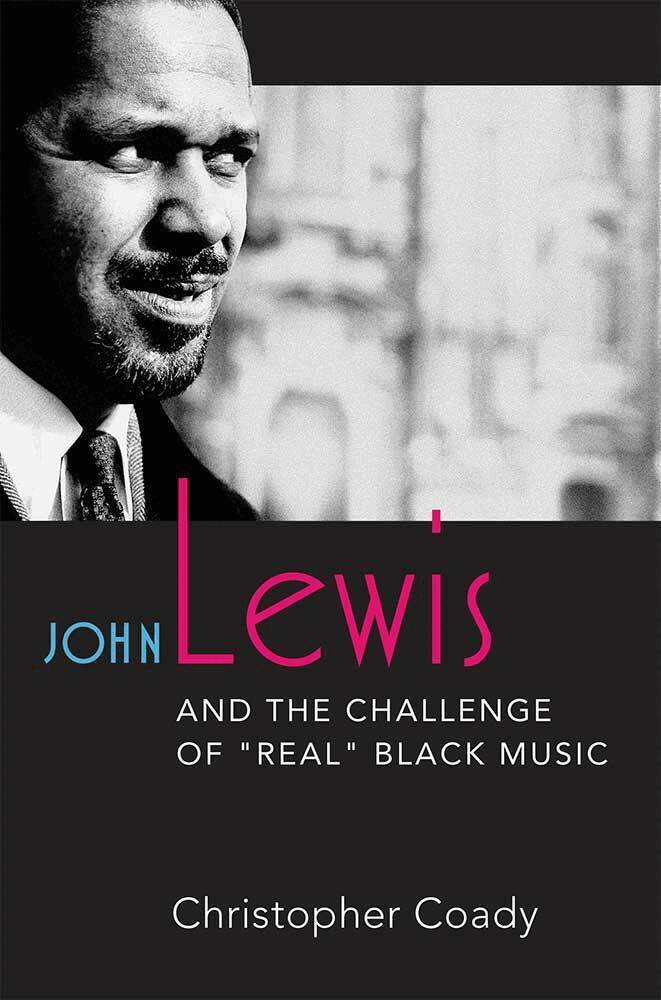
For critics and listeners, the reception of the 1950s jazz-classical hybrid Third Stream music has long been fraught. In John Lewis and the Challenge of “Real” Black Music, Christopher Coady explores the work of one of the form’s most vital practitioners, following Lewis from his role as an arranger for Miles Davis’s Birth of the Cool sessions to his leadership of the Modern Jazz Quartet, his tours of Europe, and his stewardship of the Lenox School of Jazz.Along the way Coady shows how Lewis’s fusion works helped shore up a failing jazz industry in the wake of the 1940s big band decline, forging a new sound grounded in middle-class African American musical traditions. By taking into account the sociocultural milieu of the 1950s, Coady provides a wider context for understanding the music Lewis wrote for the Modern Jazz Quartet and sets up new ways of thinking about Cool Jazz and Third Stream music more broadly.
248 kr
Skickas inom 7-10 vardagar
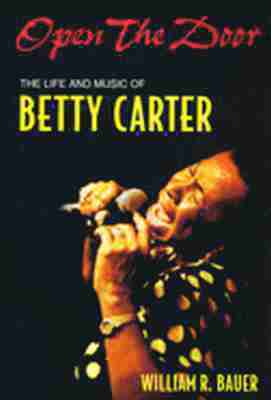
Betty Carter's lifelong influence on the music world is unparalleled. Her contributions to music as a jazz singer, composer, arranger, and teacher have fostered a generation of musicians and fans.This book looks at Betty Carter's contribution to the music world and delves behind the scenes to show Carter's growth as a businesswoman who took charge of her career.Drawing upon revealing interviews with Carter, the author shows how ever-changing shifts in the music industry affected the singer's life and influenced her music. Bauer shows through his analysis of her musical examples how Carter absorbed various musical influences, from Sarah Vaughan and Billie Holiday to Miles Davis, and made them her own. From her apprenticeship with Gladys Hampton, Carter grew to become a shrewd dealer who learned to do her own contracting, A&R, and marketing and distribution. By chronicling one of jazz's great singers and composers, the book sheds light on how early jazz musicians got their work to the public and how this process has changed during the past fifty years.
1 229 kr
Skickas inom 7-10 vardagar
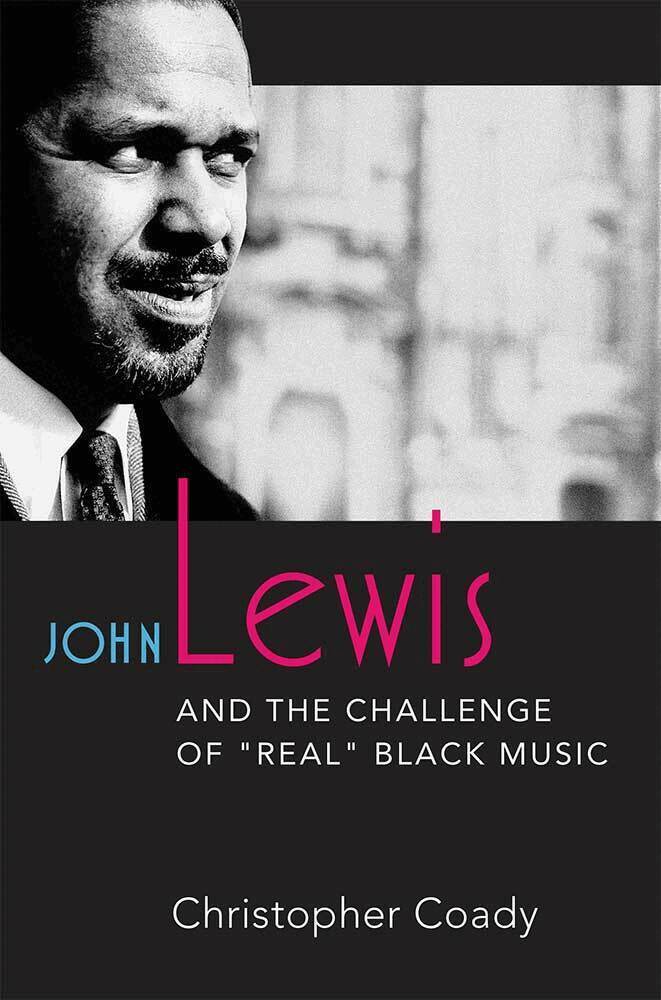
For critics and listeners, the reception of the 1950s jazz-classical hybrid Third Stream music has long been fraught. In John Lewis and the Challenge of “Real” Black Music, Christopher Coady explores the work of one of the form’s most vital practitioners, following Lewis from his role as an arranger for Miles Davis’s Birth of the Cool sessions to his leadership of the Modern Jazz Quartet, his tours of Europe, and his stewardship of the Lenox School of Jazz.Along the way Coady shows how Lewis’s fusion works helped shore up a failing jazz industry in the wake of the 1940s big band decline, forging a new sound grounded in middle-class African American musical traditions. By taking into account the sociocultural milieu of the 1950s, Coady provides a wider context for understanding the music Lewis wrote for the Modern Jazz Quartet and sets up new ways of thinking about Cool Jazz and Third Stream music more broadly.
279 kr
Skickas inom 7-10 vardagar
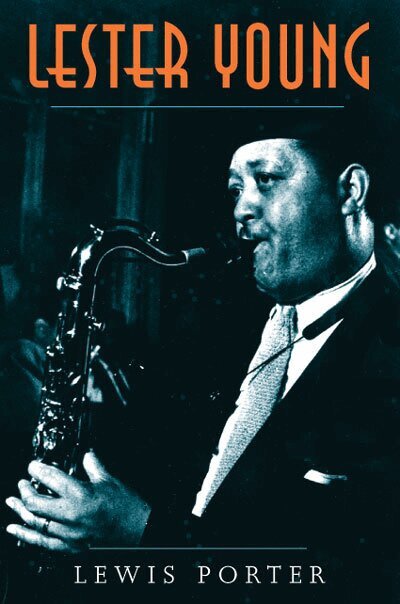
Praise for Lester Young:". . . a schematic of unparalleled insight and detail."---Down Beat"A monumental work."---Dizzy Gillespie". . . a major contribution to jazz scholarship . . . for its illumination of Lester Young's music and for setting the biographical record straight."---Dan MorgensternSeveral new biographies of Lester Young have been published in the years since Lewis Porter's Lester Young first appeared, but none have supplanted or even attempted the in-depth study that Porter brings to his subject's music. With the same care and scholarship that characterized his John Coltrane, Porter analyzes the music that made Lester Young "the most original tenor sax in jazz."In addition to helping us understand Lester Young's playing and stylistic evolution, Porter's analysis demonstrates that Young's playing at the end of his career did not mark a serious decline over his earlier style, as many critics have claimed.
324 kr
Skickas inom 7-10 vardagar
A revival of a classic oral biography of four nearly overlooked jazz giants
559 kr
Skickas inom 7-10 vardagar
Part music history, part cultural meditation, part travel narrative, Jazz Journeys to Japan is the first book to address the experiences of individual players -- Japanese jazz greats such as Toshiko Akiyoshi, Masahiko Satoh, Makoto Ozone, and Yosuke Yamashita.William Minor navigates the converging streams of Western music and Eastern tradition, revealing through interviews with musicians, critics, and producers the unique synthesis that results from this convergence. And, turning conventional wisdom on its ear, he disproves the widely held notion that Japanese jazz artists don't "swing." Along the way, we experience Minor's growing appreciation of Japanese culture, which mirrors his subjects' discovery of American jazz.William Minor's previous books include Unzipped Souls: A Jazz Journey through the Soviet Union, and Monterey Jazz Festival: Forty Legendary Years. He has written for Downbeat, Jazz Times, Jazz Notes, Coda, and Swing Journal.
714 kr
Skickas inom 7-10 vardagar
“In Lennie Tristano: His Life in Music, Shim has provided a comprehensive biographical and analytical account of one of jazz’s most important and most frequently misunderstood figures. Her insights into Tristano’s personality are well nuanced, and the focus on his teaching makes a unique contribution to the history of jazz. This vividly written study is likely to become a standard work.”—Brian Priestley, author of Chasin’ the Bird: The Life and Legacy of Charlie Parker and coauthor of The Rough Guide to Jazz“Eunmi Shim’s book is clearly a labor of love. Her thorough examination of Tristano’s teaching is particularly important, for no one previously has assembled the thoughts of so many former students. Her illuminating transcriptions of, and commentaries on, Tristano’s solos are also valuable. Lennie Tristano is an important contribution to the literature on jazz.”—Thomas Owens, author of Bebop: The Music and Its Players“Comprehensive, objective, and acute in its judgments, this is the biography of Lennie Tristano we have been waiting for.”—Larry Kart, author of Jazz in Search of ItselfLennie Tristano occupies a rare position not only in jazz history but in the history of twentieth-century music. Emerging from an era when modernism was the guiding principle in art, Tristano explored musical avenues that were avant-garde even by modernism’s experimental standards. In so doing, he tested and transcended the boundaries of jazz.In 1949, years before musicians such as Ornette Coleman and Cecil Taylor took credit for the movement, Tristano made the first recordings of “free jazz,” a new kind of group improvisation based on spontaneous interaction among band members without any regard for predetermined form, harmony, or rhythm. Then, in the 1950s, Tristano broke new ground by his use of multitracking.Tristano was also a pioneer in the teaching of jazz, devoting the latter part of his career almost exclusively to music instruction. He founded a jazz school—the first of its kind—among whose students were saxophonists Warne Marsh and Lee Konitz, and pianist Sal Mosca.With its blend of oral history, archival research, and musical analysis, Lennie Tristano sheds new light on the important role Tristano played in the jazz world and introduces this often-overlooked musician to a new generation of jazz aficionados.Eunmi Shim received her Ph.D. in musicology from the University of Illinois at Urbana-Champaign and is now Assistant Professor of Music at Worcester Polytechnic Institute. This is her first book.