Jerusalem-Harvard Lectures - Böcker
Visar alla böcker i serien Jerusalem-Harvard Lectures. Handla med fri frakt och snabb leverans.
7 produkter
7 produkter
Del 3 - Jerusalem-Harvard Lectures
Acts of Meaning
Four Lectures on Mind and Culture
Häftad, Engelska, 1993
405 kr
Skickas inom 10-15 vardagar
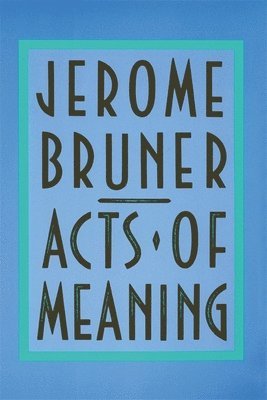
Jerome Bruner argues that the cognitive revolution, with its current fixation on mind as “information processor,” has led psychology away from the deeper objective of understanding mind as a creator of meanings. Only by breaking out of the limitations imposed by a computational model of mind can we grasp the special interaction through which mind both constitutes and is constituted by culture.
240 kr
Skickas inom 7-10 vardagar
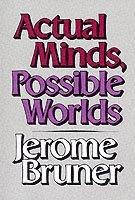
In this characteristically graceful and provocative book, Jerome Bruner, one of the principal architects of the cognitive revolution, sets forth nothing less than a new agenda for the study of mind. According to Professor Bruner, cognitive science has set its sights too narrowly on the logical, systematic aspects of mental life—those thought processes we use to solve puzzles, test hypotheses, and advance explanations. There is obviously another side to the mind—a side devoted to the irrepressibly human acts of imagination that allow us to make experience meaningful. This is the side of the mind that leads to good stories, gripping drama, primitive myths and rituals, and plausible historical accounts. Bruner calls it the “narrative mode,” and his book makes important advances in the effort to unravel its nature.Drawing on recent work in literary theory, linguistics, and symbolic anthropology, as well as cognitive and developmental psychology, Professor Bruner examines the mental acts that enter into the imaginative creation of possible worlds, and he shows how the activity of imaginary world making undergirds human science, literature, and philosophy, as well as everyday thinking, and even our sense of self.Over twenty years ago, Jerome Bruner first sketched his ideas about the mind’s other side in his justly admired book, On Knowing: Essays for the Left Hand. Actual Minds, Possible Worlds can be read as a sequel to this earlier work, but it is a sequel that goes well beyond its predecessor by providing rich examples of just how the mind’s narrative mode can be successfully studied. The collective force of these examples points the way toward a more humane and subtle approach to the investigation of how the mind works.
Del 5 - Jerusalem-Harvard Lectures
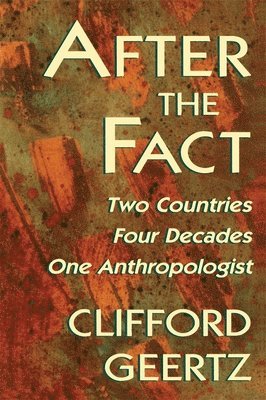
After the Fact
Two Countries, Four Decades, One Anthropologist
Häftad, Engelska, 1996
306 kr
Skickas inom 10-15 vardagar
"Suppose," Clifford Geertz suggests, "having entangled yourself every now and again over four decades or so in the goings-on in two provincial towns, one a Southeast Asian bend in the road, one a North African outpost and passage point, you wished to say something about how those goings-on had changed." A narrative presents itself, a tour of indices and trends, perhaps a memoir? None, however, will suffice, because in forty years more has changed than those two towns--the anthropologist, for instance, anthropology itself, even the intellectual and moral world in which the discipline exists. And so, in looking back on four decades of anthropology in the field, Geertz has created a work that is characteristically unclassifiable, a personal history that is also a retrospective reflection on developments in the human sciences amid political, social, and cultural changes in the world. An elegant summation of one of the most remarkable careers in anthropology, it is at the same time an eloquent statement of the purposes and possibilities of anthropology's interpretive powers.To view his two towns in time, Pare in Indonesia and Sefrou in Morocco, Geertz adopts various perspectives on anthropological research and analysis during the post-colonial period, the Cold War, and the emergence of the new states of Asia and Africa. Throughout, he clarifies his own position on a broad series of issues at once empirical, methodological, theoretical, and personal. The result is a truly original book, one that displays a particular way of practicing the human sciences and thus a particular--and particularly efficacious--view of what these sciences are, have been, and should become.
Del 7 - Jerusalem-Harvard Lectures
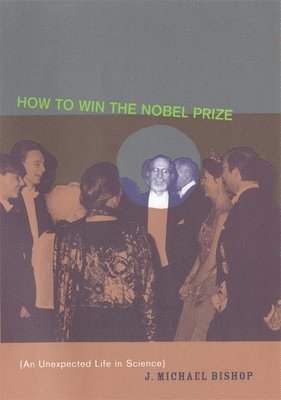
How to Win the Nobel Prize
An Unexpected Life in Science
Häftad, Engelska, 2004
315 kr
Skickas inom 10-15 vardagar
In 1989 Michael Bishop and Harold Varmus were awarded the Nobel Prize for their discovery that normal genes under certain conditions can cause cancer. In this book, Bishop tells us how he and Varmus made their momentous discovery. More than a lively account of the making of a brilliant scientist, How to Win the Nobel Prize is also a broader narrative combining two major and intertwined strands of medical history: the long and ongoing struggles to control infectious diseases and to find and attack the causes of cancer.Alongside his own story, that of a youthful humanist evolving into an ambivalent medical student, an accidental microbiologist, and finally a world-class researcher, Bishop gives us a fast-paced and engrossing tale of the microbe hunters. It is a narrative enlivened by vivid anecdotes about our deadliest microbial enemies--the Black Death, cholera, syphilis, tuberculosis, malaria, smallpox, HIV--and by biographical sketches of the scientists who led the fight against these scourges.Bishop then provides an introduction for nonscientists to the molecular underpinnings of cancer and concludes with an analysis of many of today's most important science-related controversies--ranging from stem cell research to the attack on evolution to scientific misconduct. How to Win the Nobel Prize affords us the pleasure of hearing about science from a brilliant practitioner who is a humanist at heart. Bishop's perspective will be valued by anyone interested in biomedical research and in the past, present, and future of the battle against cancer.
297 kr
Skickas inom 10-15 vardagar
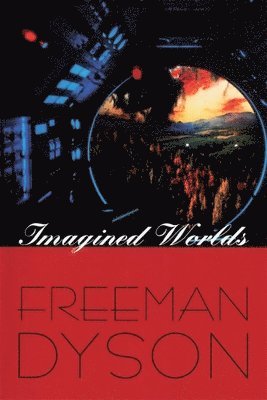
Imagine a world where whole epochs will pass, cultures rise and fall, between a telephone call and the reply. Think of the human race multiplying 500-million fold, or evolving new, distinct species. Consider the technology of space colonization, computer-assisted reproduction, the “Martian potato.” One hundred years after H. G. Wells visited the future in The Time Machine, Freeman Dyson marshals his uncommon gifts as a scientist and storyteller to take us once more to that ever-closer, ever-receding time to come.Since Disturbing the Universe, the book that first brought him international renown, Freeman Dyson has been helping us see ourselves and our world from a scientist’s point of view. In Imagined Worlds he brings this perspective to a speculative future to show us where science and technology, real and imagined, may be taking us. The stories he tells—about “Napoleonic” versus “Tolstoyan” styles of doing science; the coming era of radioneurology and radiotelepathy; the works of writers from Aldous Huxley to Michael Crichton to William Blake; Samuel Gompers and the American labor movement—come from science, science fiction, and history. Sharing in the joy and gloom of these sources, Dyson seeks out the lessons we must learn from all three if we are to understand our future and guide it in hopeful directions.Whether looking at the Gaia theory or the future of nuclear weapons, science fiction or the dangers of “science worship,” seagoing kayaks or the Pluto Express, Dyson is concerned with ethics, with how we might mitigate the evil consequences of technology and enhance the good. At the heart of it all is the belief once expressed by the biologist J. B. S. Haldane, that progress in science will bring enormous confusion and misery to humankind unless it is accompanied by progress in ethics.
Del 4 - Jerusalem-Harvard Lectures
Pitch of Philosophy
Autobiographical Exercises
Häftad, Engelska, 1996
318 kr
Skickas inom 10-15 vardagar
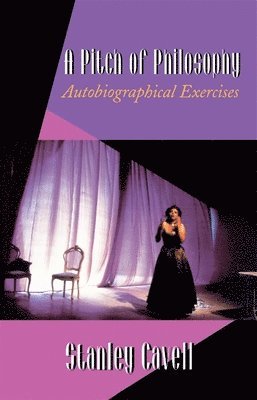
This book is an invitation to the life of philosophy in the United States, as Emerson once lived it and as Stanley Cavell now lives it—in all its topographical ambiguity. Cavell talks about his vocation in connection with what he calls voice—the tone of philosophy—and his right to take that tone, and to describe an anecdotal journey toward the discovery of his own voice.
Del 2 - Jerusalem-Harvard Lectures
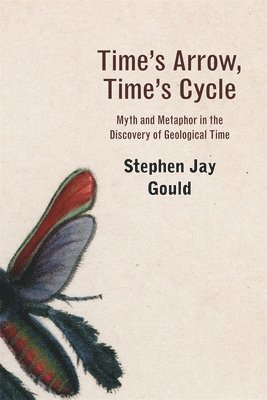
Time’s Arrow, Time’s Cycle
Myth and Metaphor in the Discovery of Geological Time
Häftad, Engelska, 1988
282 kr
Skickas inom 7-10 vardagar
Rarely has a scholar attained such popular acclaim merely by doing what he does best and enjoys most. But such is Stephen Jay Gould’s command of paleontology and evolutionary theory, and his gift for brilliant explication, that he has brought dust and dead bones to life, and developed an immense following for the seeming arcana of this field.In Time’s Arrow, Time’s Cycle his subject is nothing less than geology’s signal contribution to human thought—the discovery of “deep time,” the vastness of earth’s history, a history so ancient that we can comprehend it only as metaphor. He follows a single thread through three documents that mark the transition in our thinking from thousands to billions of years: Thomas Burnet’s four-volume Sacred Theory of the Earth (1680–1690), James Hutton’s Theory of the Earth (1795), and Charles Lyell��s three-volume Principles of Geology (1830–1833).Gould’s major theme is the role of metaphor in the formulation and testing of scientific theories—in this case the insight provided by the oldest traditional dichotomy of Judeo-Christian thought: the directionality of time’s arrow or the immanence of time’s cycle. Gould follows these metaphors through these three great documents and shows how their influence, more than the empirical observation of rocks in the field, provoked the supposed discovery of deep time by Hutton and Lyell. Gould breaks through the traditional “cardboard” history of geological textbooks (the progressive march to truth inspired by more and better observations) by showing that Burnet, the villain of conventional accounts, was a rationalist (not a theologically driven miracle-monger) whose rich reconstruction of earth history emphasized the need for both time’s arrow (narrative history) and time’s cycle (immanent laws), while Hutton and Lyell, our traditional heroes, denied the richness of history by their exclusive focus upon time’s arrow.