Joe Feddersen - Böcker
Visar alla böcker i serien Joe Feddersen. Handla med fri frakt och snabb leverans.
2 produkter
2 produkter
442 kr
Skickas inom 7-10 vardagar
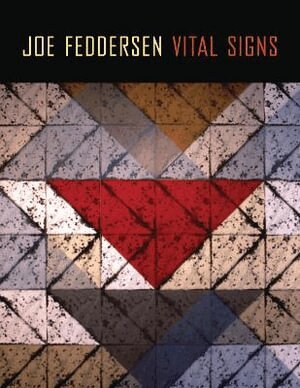
Vital signs, the pulses and patterns of the body, are indicators of essential life functions. The powerful work of Joe Feddersen reveals, like vital signs themselves, the state of the human condition from the vantage point of a contemporary artist who has inherited an ancient aesthetic tradition.Arising from Plateau Indian iconographic interpretations of the human-environment relationship, Feddersen's prints, weavings, and glass sculptures explore the interrelationships between contemporary urban place markers and indigenous design. Following in the footsteps of his Plateau Indian ancestors who "spoke to the land in the patterns of the baskets," Feddersen interprets the urbanscapes and the landscapes surrounding him and transforms those rhythms into art forms that are both coolly modern and warmly expressionistic.Joe Feddersen was born in 1953, in Omak, Washington, just off the Colville Indian Reservation. His mother was Okanogan and Lakes from Penticton, Canada; his father was the son of German immigrants. He has been a member of the art faculty at Evergreen State College in Olympia, Washington, since 1989.Rebecca J. Dobkins is a curator at the Hallie Ford Museum of Art and associate professor of anthropology at Willamette University, Salem, Oregon. Barbara Earl Thomas is a painter and writer living in Seattle. Gail Tremblay is a member of the faculty of the Evergreen State College, Olympia, Washington.
563 kr
Skickas inom 3-6 vardagar
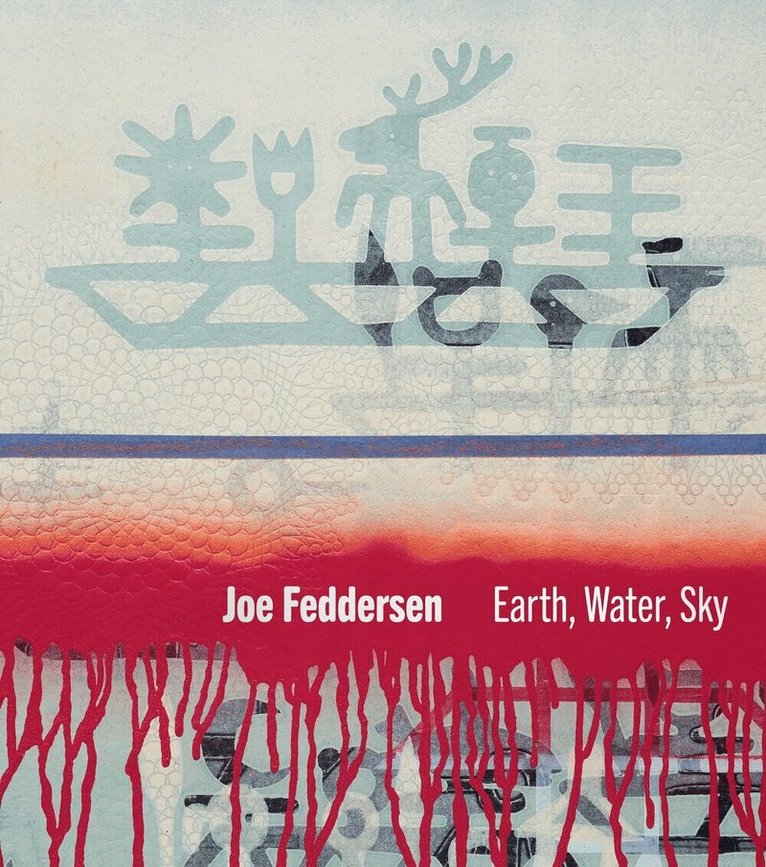
Presents the diverse work of an Indigenous artist of the Pacific NorthwestJoe Feddersen (b. 1953; Arrow Lakes/Okanagan, Confederated Tribes of the Colville Reservation) is an American artist whose work is informed by his relationship to place, specifically the Plateau region between the Cascade Range and Rocky Mountains. Much of Feddersen’s work is influenced by traditional Plateau-style basketry, which reflects northwestern landscapes, flora, and fauna. He also draws from the cultural landscape of his home: current events, regional histories, tribal legacies, personal narratives, and contemporary dialogues. Spanning printmaking, weaving, glass, and ceramics, Feddersen’s work both celebrates his culture and speaks to a Plateau-Native viewpoint of the contemporary world. Accompanying the first major retrospective exhibition of the artist’s work, Joe Feddersen: Earth, Water, Sky showcases Feddersen’s art and examines his four-decade career as an Indigenous artist working in the Pacific Northwest. Essays by the editors explore an Indigenous perspective on landscape and how Plateau-Native cosmological viewpoints manifest in Feddersen’s work. A selection of poetry by authors from the artist’s past collaborations as well as a biography highlighting interviews from Feddersen’s friends, family, and students are also included.