Johns Hopkins Biographies of Disease – serie
Visar alla böcker i serien Johns Hopkins Biographies of Disease. Handla med fri frakt och snabb leverans.
13 produkter
13 produkter
354 kr
Skickas inom 7-10 vardagar
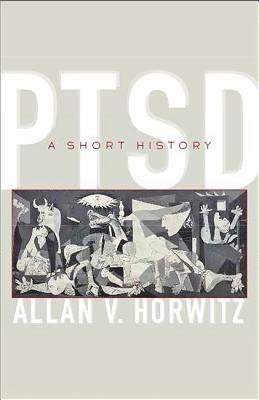
A comprehensive history of PTSD.Post-traumatic stress disorder—and its predecessor diagnoses, including soldier’s heart, railroad spine, and shell shock—was recognized as a psychiatric disorder in the latter part of the nineteenth century. The psychic impacts of train crashes, wars, and sexual shocks among children first drew psychiatric attention. Later, enormous numbers of soldiers suffering from battlefield traumas returned from the world wars. It was not until the 1980s that PTSD became a formal diagnosis, in part to recognize the intense psychic suffering of Vietnam War veterans and women with trauma-related personality disorders. PTSD now occupies a dominant place in not only the mental health professions but also major social institutions and mainstream culture, making it the signature mental disorder of the early twenty-first century. In PTSD, Allan V. Horwitz traces the fluctuations in definitions of and responses to traumatic psychic conditions. Arguing that PTSD, perhaps more than any other diagnostic category, is a lens for showing major historical changes in conceptions of mental illness, he surveys the conditions most likely to produce traumas, the results of those traumas, and how to evaluate the claims of trauma victims. Illuminating a number of central issues about psychic disturbances more generally—including the relative importance of external stressors and internal vulnerabilities in causing mental illness, the benefits and costs of mental illness labels, and the influence of gender on expressions of mental disturbance—PTSD is a compact yet comprehensive survey. The book will appeal to diverse audiences, including the educated public, students across the psychological and social sciences, and trauma victims who are interested in socio-historical approaches to their condition.Praise for Allan V. Horwitz’s Anxiety: A Short History“The definitive overview of the history of anxiety.”—Bulletin of the History of Medicine“A lucid, erudite and brisk intellectual history driven by a clear and persuasive central argument.”—Social History of Medicine“An enlightening tour of anxiety, set at a sensible pace, with an exceptional scholar and writer leading the way.”—Library Journal
363 kr
Tillfälligt slut
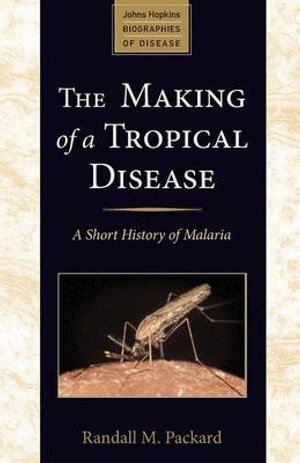
Malaria sickens hundreds of millions of people-and kills one to three million-each year. Despite massive efforts to eradicate the disease, it remains a major public health problem in poorer tropical regions. But malaria has not always been concentrated in tropical areas. How did other regions control malaria and why does the disease still flourish in some parts of the globe? From Russia to Bengal to Palm Beach, Randall Packard's far-ranging narrative traces the natural and social forces that help malaria spread and make it deadly. He finds that war, land development, crumbling health systems, and globalization-coupled with climate change and changes in the distribution and flow of water-create conditions in which malaria's carrier mosquitoes thrive. The combination of these forces, Packard contends, makes the tropical regions today a perfect home for the disease. Authoritative, fascinating, and eye-opening, this short history of malaria concludes with policy recommendations for improving control strategies and saving lives.
317 kr
Tillfälligt slut
Small and bean shaped, the kidneys are sophisticated organs that filter waste from the blood. A number of diseases and disorders-including diabetes and hypertension-can harm the kidneys and cause them to fail. Historian and nephrologist Steven J. Peitzman traces the medical history of kidney disease alongside the personal experience of illness. Drawing on diaries, letters, literary narratives, and scientific writings, Peitzman charts the triumphs of medical innovators like Richard Bright, Thomas Addis, and Belding Scribner as well as the stories of persons, famous and not, who have struggled with the disease. Conditions once known as "Bright's Disease" are now recognized as complex disorders with names such as glomerulopathy and acute tubular necrosis. Treatments have evolved from abdominal tapping and dietetics to hemodialysis and transplantation. Medical advances have improved the well-being and prognosis of persons with failing kidneys. Yet such persons continue on an arduous journey of chronic illness. Peitzman travels with them, from diagnosis to treatment, and witnesses their remarkable ability to cope.Joining the clinician's perspective with the historian's analysis, this fascinating chronicle offers insight into how diseases are defined, categorized, and understood and explains current concepts of how kidney disease behaves and how modern therapy works.
363 kr
Tillfälligt slut
This provocative history of bipolar disorder illuminates how perceptions of illness, if not the illnesses themselves, are mutable over time. Beginning with the origins of the concept of mania-and the term maniac-in ancient Greek and Roman civilizations, renowned psychiatrist David Healy examines how concepts of mental afflictions evolved as scientific breakthroughs established connections between brain function and mental illness. Healy recounts the changing definitions of mania through the centuries, explores the effects of new terminology and growing public awareness of the disease on culture and society, and examines the rise of psychotropic treatments and pharmacological marketing over the past four decades. Along the way, Healy clears much of the confusion surrounding bipolar disorder even as he raises crucial questions about how, why, and by whom the disease is diagnosed. Drawing heavily on primary sources and supplemented with interviews and insight gained over Healy's long career, this lucid and engaging overview of mania sheds new light on one of humankind's most vexing ailments.
534 kr
Skickas inom 5-8 vardagar
A disease of soil, animals, and people, anthrax has threatened lives for at least two thousand years. Farmers have long recognized its lasting virulence, but in our time, anthrax has been associated with terrorism and warfare. What accounts for this frightening transformation? Death in a Small Package recounts how this ubiquitous agricultural disease came to be one of the deadliest and most feared biological weapons in the world. Bacillus anthracis is lethal. Animals killed by the disease are buried deep underground, where anthrax spores remain viable for decades or even centuries and, if accidentally disturbed, can cause new infections. But anthrax can be deliberately aerosolized and used to kill-as it was in the United States in 2001. Historian and veterinarian Susan D. Jones recounts the life story of anthrax through the biology of the bacillus; the political, economic, geographic, and scientific factors that affect anthrax prevalance; and the cultural beliefs about the disease that have shaped human responses to it.She explains how Bacillus anthracis became domesticated, discusses what researchers have learned from numerous outbreaks, and analyzes how the bacillus came to be weaponized and what this development means for the modern world. Jones compellingly narrates the biography of this frightfully hardy disease from the ancient world through the present day.
275 kr
Tillfälligt slut
Malaria sickens hundreds of millions of people-and kills one to three million-each year. Despite massive efforts to eradicate the disease, it remains a major public health problem in poorer tropical regions. But malaria has not always been concentrated in tropical areas. How did other regions control malaria and why does the disease still flourish in some parts of the globe? From Russia to Bengal to Palm Beach, Randall Packard's far-ranging narrative traces the natural and social forces that help malaria spread and make it deadly. He finds that war, land development, crumbling health systems, and globalization-coupled with climate change and changes in the distribution and flow of water-create conditions in which malaria's carrier mosquitoes thrive. The combination of these forces, Packard contends, makes the tropical regions today a perfect home for the disease. Authoritative, fascinating, and eye-opening, this short history of malaria concludes with policy recommendations for improving control strategies and saving lives.
333 kr
Skickas inom 7-10 vardagar
This provocative history of bipolar disorder illuminates how perceptions of illness, if not the illnesses themselves, are mutable over time. Beginning with the origins of the concept of mania-and the term maniac-in ancient Greek and Roman civilizations, renowned psychiatrist David Healy examines how concepts of mental afflictions evolved as scientific breakthroughs established connections between brain function and mental illness. Healy recounts the changing definitions of mania through the centuries, explores the effects of new terminology and growing public awareness of the disease on culture and society, and examines the rise of psychotropic treatments and pharmacological marketing over the past four decades. Along the way, Healy clears much of the confusion surrounding bipolar disorder even as he raises crucial questions about how, why, and by whom the disease is diagnosed. Drawing heavily on primary sources and supplemented with interviews and insight gained over Healy's long career, this lucid and engaging overview of mania sheds new light on one of humankind's most vexing ailments.
343 kr
Skickas inom 7-10 vardagar
More people today report feeling anxious than ever before-even while living in relatively safe and prosperous modern societies. Almost one in five people experiences an anxiety disorder each year, and more than a quarter of the population admits to an anxiety condition at some point in their lives. Here Allan V. Horwitz, a sociologist of mental illness and mental health, narrates how this condition has been experienced, understood, and treated through the ages-from Hippocrates, through Freud, to today. Anxiety is rooted in an ancient part of the brain, and our ability to be anxious is inherited from species far more ancient than humans. Anxiety is often adaptive: it enables us to respond to threats. But when normal fear yields to what psychiatry categorizes as anxiety disorders, it becomes maladaptive. As Horwitz explores the history and multiple identities of anxiety-melancholia, nerves, neuroses, phobias, and so on-it becomes clear that every age has had its own anxieties and that culture plays a role in shaping how anxiety is expressed.
282 kr
Tillfälligt slut
In a lifetime of practice, most physicians will never encounter a single case of PKU. Yet every physician in the industrialized world learns about the disease in medical school and, since the early 1960s, the newborn heel stick test for PKU has been mandatory in many countries. Diane B. Paul and Jeffrey P. Brosco's beautifully written book explains this paradox. PKU (phenylketonuria) is a genetic disorder that causes severe cognitive impairment if it is not detected and treated with a strict and difficult diet. Programs to detect PKU and start treatment early are deservedly considered a public health success story. Some have traded on this success to urge expanded newborn screening, defend basic research in genetics, and confront proponents of genetic determinism. In this context, treatment for PKU is typically represented as a simple matter of adhering to a low-phenylalanine diet. In reality, the challenges of living with PKU are daunting. In this first general history of PKU, a historian and a pediatrician explore how a rare genetic disease became the object of an unprecedented system for routine testing.The PKU Paradox is informed by interviews with scientists, clinicians, policymakers, and individuals who live with the disease. The questions it raises touch on ongoing controversies about newborn screening and what happens to blood samples collected at birth.
311 kr
Skickas inom 7-10 vardagar
In the middle of the twentieth century, few physicians could have predicted that the modern diagnostic category of osteoporosis would emerge to include millions of Americans, predominantly older women. Before World War II, popular attitudes held that the declining physical and mental health of older persons was neither preventable nor reversible and that older people had little to contribute. Moreover, the physiological processes that influenced the health of bones remained mysterious. In Aging Bones, Gerald N. Grob makes a historical inquiry into how this one aspect of aging came to be considered a disease. During the 1950s and 1960s, as more and more people lived to the age of 65, older people emerged as a self-conscious group with distinct interests, and they rejected the pejorative concept of senescence. But they had pressing health needs, and preventing age-related decline became a focus for researchers and clinicians alike.In analyzing how the normal aging of bones was transformed into a medical diagnosis requiring treatment, historian of medicine Grob explores developments in medical science as well as the social, intellectual, economic, demographic, and political changes that transformed American society in the post-World War II decades. Though seemingly straightforward, osteoporosis and its treatment are shaped by illusions about the conquest of disease and aging. These illusions, in turn, are instrumental in shaping our health care system. While bone density tests and osteoporosis treatments are now routinely prescribed, aggressive pharmaceutical intervention has produced results that are inconclusive at best. The fascinating history in Aging Bones will appeal to students and scholars in the history of medicine, health policy, gerontology, endocrinology, and orthopedics, as well as anyone who has been diagnosed with osteoporosis.
262 kr
Tillfälligt slut
Christopher Hamlin's magisterial work engages a common experience-fever-in all its varieties and meanings. Reviewing the representations of that condition from ancient times to the present, More Than Hot is a history of the world through the lens of fever. The book deals with the expression of fever, with the efforts of medical scientists to classify it, and with fever's changing social, cultural, and political significance. Long before there were thermometers to measure it, people recognized fever as a dangerous, if transitory, state of being. It was the most familiar form of alienation from the normal self, a concern to communities and states as well as to patients, families, and healers. The earliest medical writers struggled for a conceptual vocabulary to explain fever. During the Enlightenment, the idea of fever became a means to acknowledge the biological experiences that united humans. A century later, in the age of imperialism, it would become a key element of conquest, both an important way of differentiating places and races, and of imposing global expectations of health.Ultimately the concept would split: "fevers" were dangerous and often exotic epidemic diseases, while "fever" remained a curious physiological state, certainly distressing but usually benign. By the end of the twentieth century, that divergence divided the world between a global South profoundly affected by fevers - chiefly malaria - and a North where fever, now merely a symptom, was so medically trivial as to be transformed into a familiar motif of popular culture. A senior historian of science and medicine, Hamlin shares stories from individuals - some eminent, many forgotten - who exemplify aspects of fever: reflections of the fevered, for whom fevers, and especially the vivid hallucinations of delirium, were sometimes transformative; of those who cared for them (nurses and, often, mothers); and of those who sought to explain deadly epidemic outbreaks. Significant also are the arguments of the reformers, for whom fever stood as a proxy for manifold forms of injustice. Broad in scope and sweep, Hamlin's study is a reflection of how the meanings of diseases continue to shift, affecting not only the identities we create but often also our ability to survive.
262 kr
Tillfälligt slut
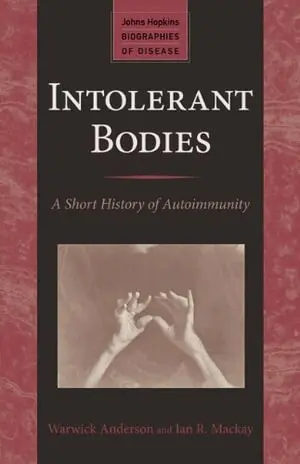
Autoimmune diseases, which affect 5 to 10 percent of the population, are as unpredictable in their course as they are paradoxical in their cause. They produce persistent suffering as they follow a drawn-out, often lifelong, pattern of remission and recurrence. Multiple sclerosis, lupus, rheumatoid arthritis, and type 1 diabetes - the diseases considered in this book - are but a handful of the conditions that can develop when the immune system goes awry. Intolerant Bodies is a unique collaboration between Ian Mackay, one of the prominent founders of clinical immunology, and Warwick Anderson, a leading historian of twentieth-century biomedical science. The authors narrate the changing scientific understanding of the cause of autoimmunity and explore the significance of having a disease in which one's body turns on itself. The book unfolds as a biography of a relatively new concept of pathogenesis, one that was accepted only in the 1950s.In their description of the onset, symptoms, and course of autoimmune diseases, Anderson and Mackay quote from the writings of Charles Dickens, Edgar Allan Poe, Joseph Heller, Flannery O'Connor, and other famous people who commented on or grappled with autoimmune disease. The authors also assess the work of the dedicated researchers and physicians who have struggled to understand the mysteries of autoimmunity. Connecting laboratory research, clinical medicine, social theory, and lived experience, Intolerant Bodies reveals how doctors and patients have come to terms, often reluctantly, with this novel and puzzling mechanism of disease causation.
419 kr
Skickas inom 7-10 vardagar
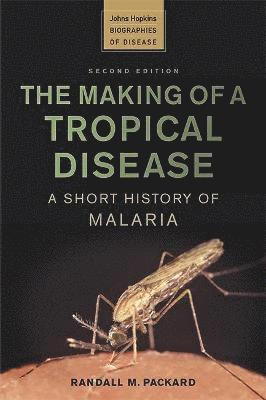
A global history of malaria that traces the natural and social forces that have shaped its spread and made it deadly, while limiting efforts to eliminate it.Malaria sickens hundreds of millions of people—and kills nearly a half a million—each year. Despite massive efforts to eradicate the disease, it remains a major public health problem in poorer tropical regions. But malaria has not always been concentrated in tropical areas. How did malaria disappear from other regions, and why does it persist in the tropics? From Russia to Bengal to Palm Beach, Randall M. Packard's far-ranging narrative shows how the history of malaria has been driven by the interplay of social, biological, economic, and environmental forces. The shifting alignment of these forces has largely determined the social and geographical distribution of the disease, including its initial global expansion, its subsequent retreat to the tropics, and its current persistence. Packard argues that efforts to control and eliminate malaria have often ignored this reality, relying on the use of biotechnologies to fight the disease. Failure to address the forces driving malaria transmission have undermined past control efforts.Describing major changes in both the epidemiology of malaria and efforts to control the disease, the revised edition of this acclaimed history, which was chosen as the 2008 End Malaria Awards Book of the Year in its original printing,• examines recent efforts to eradicate malaria following massive increases in funding and political commitment; • discusses the development of new malaria-fighting biotechnologies, including long-lasting insecticide-treated nets, rapid diagnostic tests, combination artemisinin therapies, and genetically modified mosquitoes; • explores the efficacy of newly developed vaccines; and • explains why eliminating malaria will also require addressing the social forces that drive the disease and building health infrastructures that can identify and treat the last cases of malaria.Authoritative, fascinating, and eye-opening, this short history of malaria concludes with policy recommendations for improving control strategies and saving lives.