Warwick Anderson – författare
Visar alla böcker från författaren Warwick Anderson. Handla med fri frakt och snabb leverans.
17 produkter
17 produkter
Inbunden, Engelska, 2003
396 kr
Skickas inom 5-8 vardagar
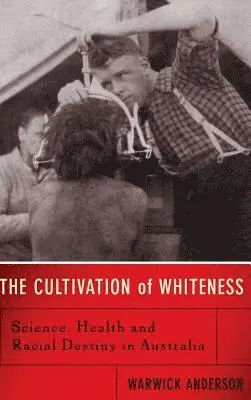
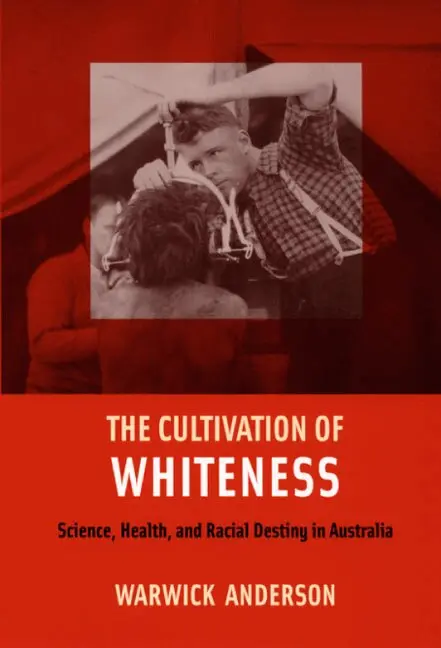
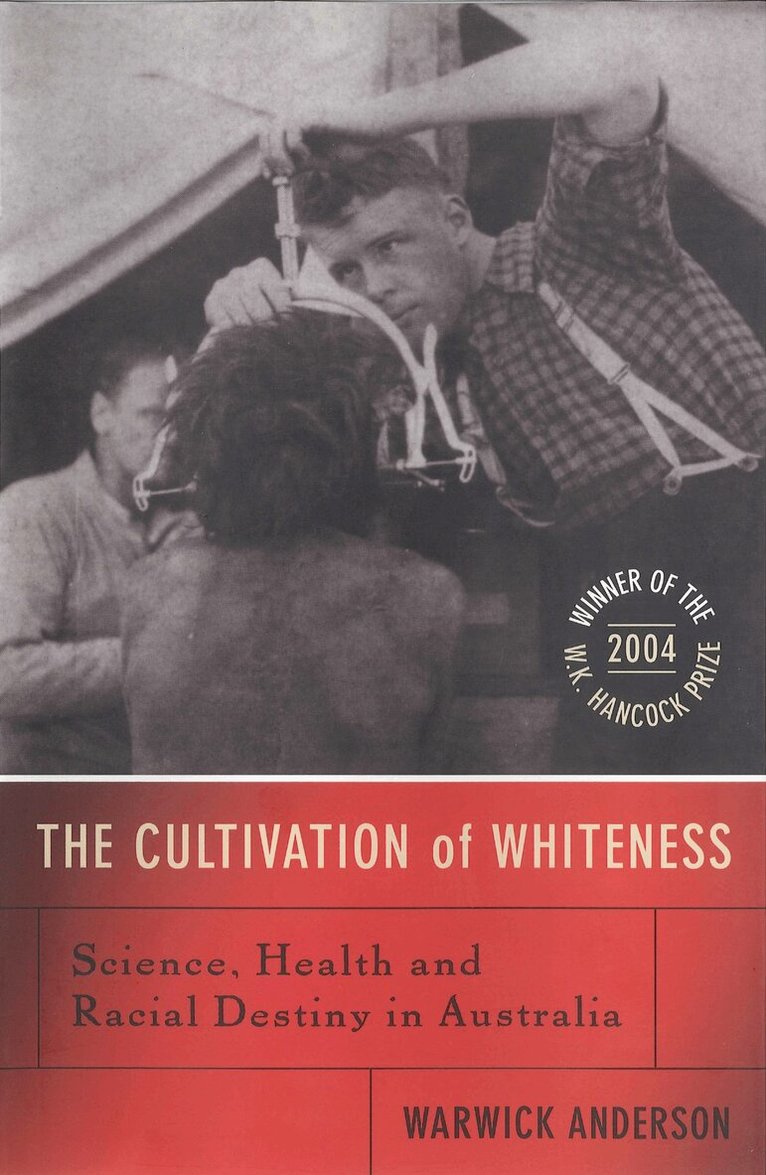
In nineteenth-century Australia, the main commentators on race and biological differences were doctors. But the medical profession entertained serious anxieties about the possibility of "racial denigration" of the white population in the new land, and medical and social scientists violated ethics and principles in pursuit of a more homogenized Australia. The Cultivation of Whiteness examines the notions of "whiteness" and racism, and introduces a whole new framework for discussion of the development of medicine and science. Warwick Anderson provides the first full account of the shocking experimentation in the 1920s and'30s on Aboriginal people of the central deserts- the Australian equivalent of the infamous Tuskegee Experiment. Lucid and entertaining throughout, this pioneering historical survey of ideas will help to reshape debate on race, ethnicity, citizenship, and environment everywhere.
Inbunden, Engelska, 2006
1 194 kr
Skickas inom 5-8 vardagar
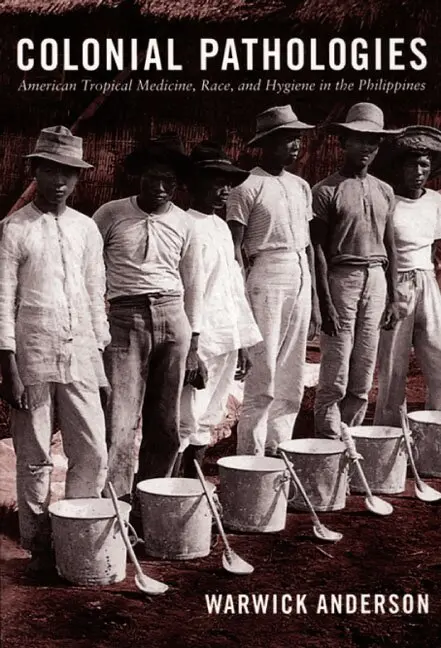
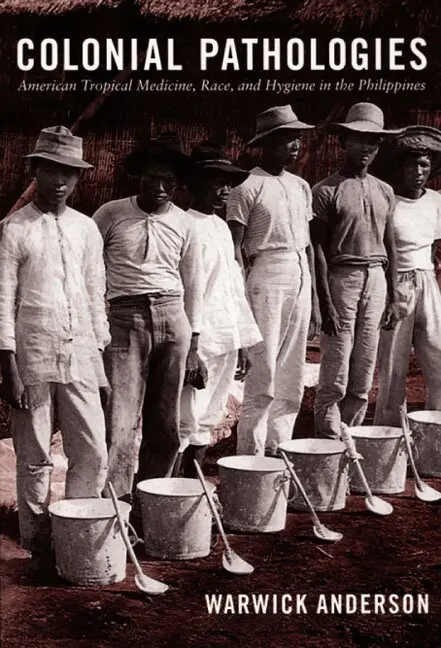
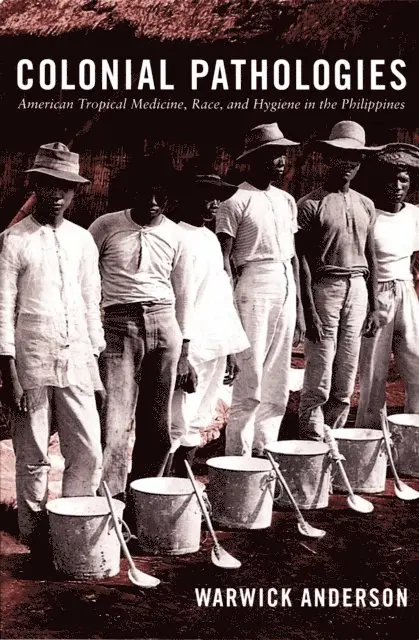
Colonial Pathologies is a groundbreaking history of the role of science and medicine in the American colonization of the Philippines from 1898 through the 1930s. Warwick Anderson describes how American colonizers sought to maintain their own health and stamina in a foreign environment while exerting control over and “civilizing” a population of seven million people spread out over seven thousand islands. In the process, he traces a significant transformation in the thinking of colonial doctors and scientists about what was most threatening to the health of white colonists. During the late nineteenth century, they understood the tropical environment as the greatest danger, and they sought to help their fellow colonizers to acclimate. Later, as their attention shifted to the role of microbial pathogens, colonial scientists came to view the Filipino people as a contaminated race, and they launched public health initiatives to reform Filipinos’ personal hygiene practices and social conduct.A vivid sense of a colonial culture characterized by an anxious and assertive white masculinity emerges from Anderson’s description of American efforts to treat and discipline allegedly errant Filipinos. His narrative encompasses a colonial obsession with native excrement, a leper colony intended to transform those considered most unclean and least socialized, and the hookworm and malaria programs implemented by the Rockefeller Foundation in the 1920s and 1930s. Throughout, Anderson is attentive to the circulation of intertwined ideas about race, science, and medicine. He points to colonial public health in the Philippines as a key influence on the subsequent development of military medicine and industrial hygiene, U.S. urban health services, and racialized development regimes in other parts of the world.
Häftad, Engelska, 2006
435 kr
Skickas inom 5-8 vardagar
The Cultivation of Whiteness is an award-winning history of scientific ideas about race and place in Australia from the time of the first European settlement through World War II. Chronicling the extensive use of biological theories and practices in the construction and “protection” of whiteness, Warwick Anderson describes how a displaced “Britishness” (or whiteness) was defined by scientists and doctors in relation to a harsh, strange environment and in opposition to other races. He also provides the first account of extensive scientific experimentation in the 1920s and 1930s on poor whites in tropical Australia and on Aboriginal people in the central deserts. “[Anderson] writes with passion, wit, and panache, and the principal virtues of The Cultivation of Whiteness are the old-fashioned ones of thoroughness, accuracy, and impeccable documentation. . . . [His] sensitive study is a model of how contentious historical issues can be confronted.”-W. F. Bynum, Times Literary Supplement“One of the virtues of The Cultivation of Whiteness is that it brings together aspects of Australian life and history that are now more often separated-race and environment, blood and soil, medicine and geography, tropical science and urban health, biological thought and national policy, Aboriginality and immigration, the body and the mind. The result is a rich and subtle history of ideas that is both intellectual and organic, and that vividly evokes past states of mind and their lingering, haunting power.”-Tom Griffiths, Sydney Morning Herald
Häftad, Engelska, 2006
325 kr
Skickas inom 5-8 vardagar
Colonial Pathologies is a groundbreaking history of the role of science and medicine in the American colonization of the Philippines from 1898 through the 1930s. Warwick Anderson describes how American colonizers sought to maintain their own health and stamina in a foreign environment while exerting control over and “civilizing” a population of seven million people spread out over seven thousand islands. In the process, he traces a significant transformation in the thinking of colonial doctors and scientists about what was most threatening to the health of white colonists. During the late nineteenth century, they understood the tropical environment as the greatest danger, and they sought to help their fellow colonizers to acclimate. Later, as their attention shifted to the role of microbial pathogens, colonial scientists came to view the Filipino people as a contaminated race, and they launched public health initiatives to reform Filipinos’ personal hygiene practices and social conduct.A vivid sense of a colonial culture characterized by an anxious and assertive white masculinity emerges from Anderson’s description of American efforts to treat and discipline allegedly errant Filipinos. His narrative encompasses a colonial obsession with native excrement, a leper colony intended to transform those considered most unclean and least socialized, and the hookworm and malaria programs implemented by the Rockefeller Foundation in the 1920s and 1930s. Throughout, Anderson is attentive to the circulation of intertwined ideas about race, science, and medicine. He points to colonial public health in the Philippines as a key influence on the subsequent development of military medicine and industrial hygiene, U.S. urban health services, and racialized development regimes in other parts of the world.
Inbunden, Engelska, 2011
1 305 kr
Skickas inom 5-8 vardagar
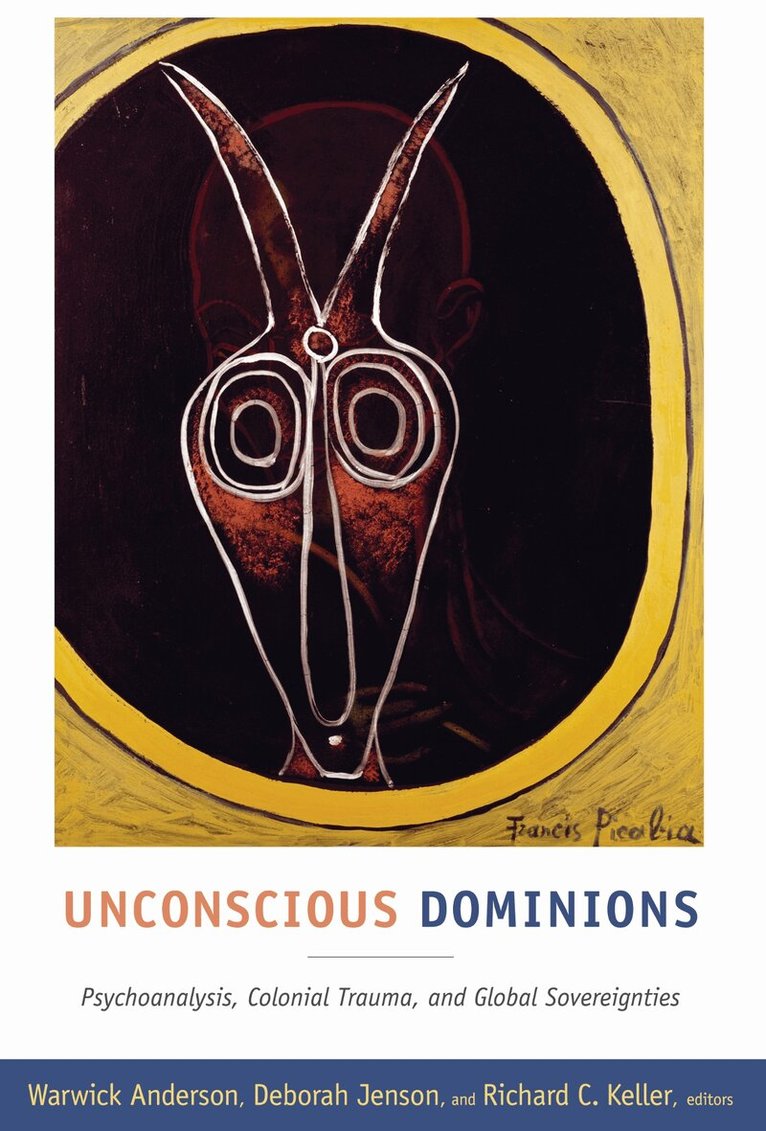
By the 1920s, psychoanalysis was a technology of both the late-colonial state and anti-imperialism. Insights from psychoanalysis shaped European and North American ideas about the colonial world and the character and potential of native cultures. Psychoanalytic discourse, from Freud’s description of female sexuality as a “dark continent” to his conceptualization of primitive societies and the origins of civilization, became inextricable from the ideologies underlying European expansionism. But as it was adapted in the colonies and then the postcolonies, psychoanalysis proved surprisingly useful for theorizing anticolonialism and postcolonial trauma.Our understandings of culture, citizenship, and self have a history that is colonial and psychoanalytic, but, until now, this intersection has scarcely been explored, much less examined in comparative perspective. Taking on that project, Unconscious Dominions assembles essays based on research in Australia, Brazil, France, Haiti, and Indonesia, as well as India, North Africa, and West Africa. Even as they reveal the modern psychoanalytic subject as constitutively colonial, they shed new light on how that subject went global: how people around the world came to recognize the hybrid configuration of unconscious, ego, and superego in themselves and others.ContributorsWarwick AndersonAlice BullardJohn CashJoy Damousi Didier FassinChristiane HartnackDeborah JensonRichard C. KellerRanjana KhannaMariano PlotkinHans Pols
Häftad, Engelska, 2011
543 kr
Skickas inom 3-6 vardagar
By the 1920s, psychoanalysis was a technology of both the late-colonial state and anti-imperialism. Insights from psychoanalysis shaped European and North American ideas about the colonial world and the character and potential of native cultures. Psychoanalytic discourse, from Freud’s description of female sexuality as a “dark continent” to his conceptualization of primitive societies and the origins of civilization, became inextricable from the ideologies underlying European expansionism. But as it was adapted in the colonies and then the postcolonies, psychoanalysis proved surprisingly useful for theorizing anticolonialism and postcolonial trauma.Our understandings of culture, citizenship, and self have a history that is colonial and psychoanalytic, but, until now, this intersection has scarcely been explored, much less examined in comparative perspective. Taking on that project, Unconscious Dominions assembles essays based on research in Australia, Brazil, France, Haiti, and Indonesia, as well as India, North Africa, and West Africa. Even as they reveal the modern psychoanalytic subject as constitutively colonial, they shed new light on how that subject went global: how people around the world came to recognize the hybrid configuration of unconscious, ego, and superego in themselves and others.ContributorsWarwick AndersonAlice BullardJohn CashJoy Damousi Didier FassinChristiane HartnackDeborah JensonRichard C. KellerRanjana KhannaMariano PlotkinHans Pols
Inbunden, Engelska, 2018
889 kr
Skickas inom 10-15 vardagar
How, when, and why has the Pacific been a locus for imagining different futures by those living there as well as passing through? What does that tell us about the distinctiveness or otherwise of this “sea of islands”? Foregrounding the work of leading and emerging scholars of Oceania, Pacific Futures brings together a diverse set of approaches to, and examples of, how futures are being conceived in the region and have been imagined in the past.Individual chapters engage the various and sometimes contested futures yearned for, unrealized, and even lost or forgotten, that are particular to the Pacific as a region, ocean, island network, destination, and home. Contributors recuperate the futures hoped for and dreamed up by a vast array of islanders and outlanders—from Indigenous federalists to Lutheran improvers to Cantonese small business owners—making these histories of the future visible. In so doing, the collection intervenes in debates about globalization in the Pacific––and how the region is acted on by outside forces––and postcolonial debates that emphasize the agency and resistance of Pacific peoples in the context of centuries of colonial endeavor. With a view to the effects of the “slow violence” of climate change, the volume also challenges scholars to think about the conditions of possibility for future-thinking at all in the midst of a global crisis that promises cataclysmic effects for the region.Pacific Futures highlights futures conceived in the context of a modernity coproduced by diverse Pacific peoples, taking resistance to categorization as a starting point rather than a conclusion. With its hospitable approach to thinking about history making and future thinking, one that is open to a wide range of methodological, epistemological, and political interests and commitments, the volume will encourage the writing of new histories of the Pacific and new ways of talking about history in this field, the region, and beyond.
Häftad, Engelska, 2020
325 kr
Skickas inom 5-8 vardagar
How, when, and why has the Pacific been a locus for imagining different futures by those living there as well as passing through? What does that tell us about the distinctiveness or otherwise of this "sea of islands"? Foregrounding the work of leading and emerging scholars of Oceania, Pacific Futures brings together a diverse set of approaches to, and examples of, how futures are being conceived in the region and have been imagined in the past.Individual chapters engage the various and sometimes contested futures yearned for, unrealized, and even lost or forgotten, that are particular to the Pacific as a region, ocean, island network, destination, and home. Contributors recuperate the futures hoped for and dreamed up by a vast array of islanders and outlanders - from Indigenous federalists to Lutheran improvers to Cantonese small business owners - making these histories of the future visible. In so doing, the collection intervenes in debates about globalization in the Pacific - and how the region is acted on by outside forces - and postcolonial debates that emphasize the agency and resistance of Pacific peoples in the context of centuries of colonial endeavor. With a view to the effects of the "slow violence" of climate change, the volume also challenges scholars to think about the conditions of possibility for future-thinking at all in the midst of a global crisis that promises cataclysmic effects for the region.Pacific Futures highlights futures conceived in the context of a modernity coproduced by diverse Pacific peoples, taking resistance to categorization as a starting point rather than a conclusion. With its hospitable approach to thinking about history making and future thinking, one that is open to a wide range of methodological, epistemological, and political interests and commitments, the volume will encourage the writing of new histories of the Pacific and new ways of talking about history in this field, the region, and beyond.
Häftad, Engelska, 2025
422 kr
Skickas inom 7-10 vardagar
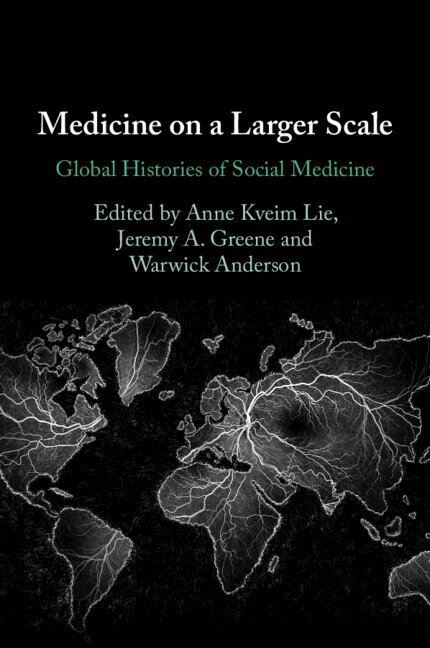
In a world of growing health inequity and ecological injustice, how do we revitalize medicine and public health to tackle new problems? This groundbreaking collection draws together case studies of social medicine in the Global South, radically shifting our understanding of social science in healthcare. Looking beyond a narrative originating in nineteenth-century Europe, a team of expert contributors explores a far broader set of roots and branches, with nodes in Sub-Saharan Africa, South America, Oceania, the Middle East, and Asia. This plural approach reframes and decolonizes the study of social medicine, highlighting connections to social justice and health equity, social science and state formation, bottom-up community initiatives, grassroots movements, and an array of revolutionary sensibilities. As a truly global history, this book offers a more usable past to imagine a new politics of social medicine for medical professionals and healthcare workers worldwide. This title is also available as open access on Cambridge Core.
Inbunden, Engelska, 2025
1 277 kr
Skickas inom 7-10 vardagar
In a world of growing health inequity and ecological injustice, how do we revitalize medicine and public health to tackle new problems? This groundbreaking collection draws together case studies of social medicine in the Global South, radically shifting our understanding of social science in healthcare. Looking beyond a narrative originating in nineteenth-century Europe, a team of expert contributors explores a far broader set of roots and branches, with nodes in Sub-Saharan Africa, South America, Oceania, the Middle East, and Asia. This plural approach reframes and decolonizes the study of social medicine, highlighting connections to social justice and health equity, social science and state formation, bottom-up community initiatives, grassroots movements, and an array of revolutionary sensibilities. As a truly global history, this book offers a more usable past to imagine a new politics of social medicine for medical professionals and healthcare workers worldwide. This title is also available as open access on Cambridge Core.
Häftad, Engelska, 2015
317 kr
Skickas inom 11-20 vardagar
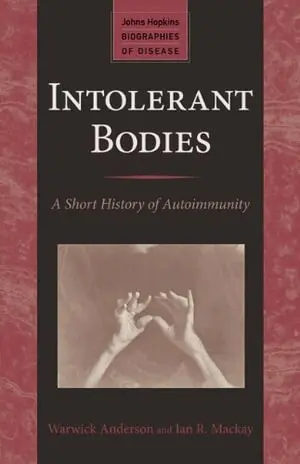
Autoimmune diseases, which affect 5 to 10 percent of the population, are as unpredictable in their course as they are paradoxical in their cause. They produce persistent suffering as they follow a drawn-out, often lifelong, pattern of remission and recurrence. Multiple sclerosis, lupus, rheumatoid arthritis, and type 1 diabetes - the diseases considered in this book - are but a handful of the conditions that can develop when the immune system goes awry. Intolerant Bodies is a unique collaboration between Ian Mackay, one of the prominent founders of clinical immunology, and Warwick Anderson, a leading historian of twentieth-century biomedical science. The authors narrate the changing scientific understanding of the cause of autoimmunity and explore the significance of having a disease in which one's body turns on itself. The book unfolds as a biography of a relatively new concept of pathogenesis, one that was accepted only in the 1950s.In their description of the onset, symptoms, and course of autoimmune diseases, Anderson and Mackay quote from the writings of Charles Dickens, Edgar Allan Poe, Joseph Heller, Flannery O'Connor, and other famous people who commented on or grappled with autoimmune disease. The authors also assess the work of the dedicated researchers and physicians who have struggled to understand the mysteries of autoimmunity. Connecting laboratory research, clinical medicine, social theory, and lived experience, Intolerant Bodies reveals how doctors and patients have come to terms, often reluctantly, with this novel and puzzling mechanism of disease causation.
Häftad, Engelska, 2019
395 kr
Skickas inom 5-8 vardagar
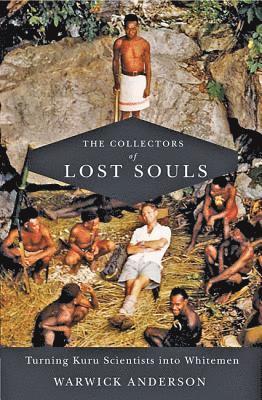
This riveting account of medical detective work traces the story of kuru, a fatal brain disease, and the pioneering scientists who spent decades searching for its cause and cure.Winner, William H. Welch Medal, American Association for the History of MedicineWinner, Ludwik Fleck Prize, Society for Social Studies of ScienceWinner, General History Award, New South Wales Premier's History AwardsWhen whites first encountered the Fore people in the isolated highlands of colonial New Guinea during the 1940s and 1950s, they found a people in the grip of a bizarre epidemic. Women and children succumbed to muscle weakness, uncontrollable tremors, and lack of coordination, until death inevitably supervened. Facing extinction, the Fore attributed their unique and terrifying affliction to a particularly malign form of sorcery.In The Collectors of Lost Souls, Warwick Anderson tells the story of the resilience of the Fore through this devastating plague, their transformation into modern people, and their compelling attraction for a throng of eccentric and adventurous scientists and anthropologists. Battling competing scientists and the colonial authorities, the brilliant and troubled American doctor D. Carleton Gajdusek determined that the cause of the epidemic—kuru—was a new and mysterious agent of infection, which he called a slow virus (now called a prion). Anthropologists and epidemiologists soon realized that the Fore practice of eating their loved ones after death had spread the slow virus. Though the Fore were never convinced, Gajdusek received the Nobel Prize for his discovery. Now revised and updated, the book includes an extensive new afterword that situates its impact within the fields of science and technology studies and the history of science. Additionally, the author now reflects on his long engagement with the scientists and the people afflicted, describing what has happened to them since the end of kuru. This astonishing story links first-contact encounters in New Guinea with laboratory experiments in Bethesda, Maryland; sorcery with science; cannibalism with compassion; and slow viruses with infectious proteins, reshaping our understanding of what it means to do science.
Inbunden, Engelska, 2024
684 kr
Skickas inom 5-8 vardagar
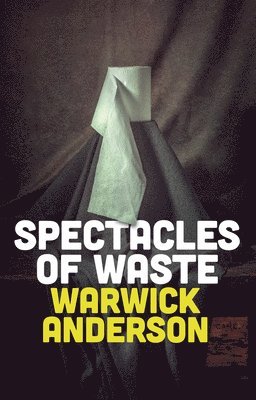
The modern bathroom is an ingenious compilation of locked doors, smooth porcelain, 4-ply tissue and antibacterial hand soap, but despite this miracle of indoor plumbing, we still can’t bear the thought that anyone else should know that our bodies produce waste. Why must we live by the rules of this intense scatological embarrassment?In Spectacles of Waste, leading historian of medicine Warwick Anderson reveals how human excrement has always complicated humanity’s attempts to become modern. From wastewater epidemiology and sewage snooping to fecal transplants and excremental art, he argues that our insistence on separating ourselves from our bodily waste has fundamentally shaped our philosophies, social theories, literature and art—even the emergence of high-tech science as we understand it today.Written with verve and aplomb, Anderson’s expert analysis reveals how in recent years, humanity has doubled down on abstracting and datafying our most abject waste, and unconsciously underlined its biopolitical signature across our lives.
Häftad, Engelska, 2024
215 kr
Skickas inom 5-8 vardagar
The modern bathroom is an ingenious compilation of locked doors, smooth porcelain, 4-ply tissue and antibacterial hand soap, but despite this miracle of indoor plumbing, we still can’t bear the thought that anyone else should know that our bodies produce waste. Why must we live by the rules of this intense scatological embarrassment?In Spectacles of Waste, leading historian of medicine Warwick Anderson reveals how human excrement has always complicated humanity’s attempts to become modern. From wastewater epidemiology and sewage snooping to fecal transplants and excremental art, he argues that our insistence on separating ourselves from our bodily waste has fundamentally shaped our philosophies, social theories, literature and art—even the emergence of high-tech science as we understand it today.Written with verve and aplomb, Anderson’s expert analysis reveals how in recent years, humanity has doubled down on abstracting and datafying our most abject waste, and unconsciously underlined its biopolitical signature across our lives.
Inbunden, Engelska, 2019
1 965 kr
Skickas inom 3-6 vardagar
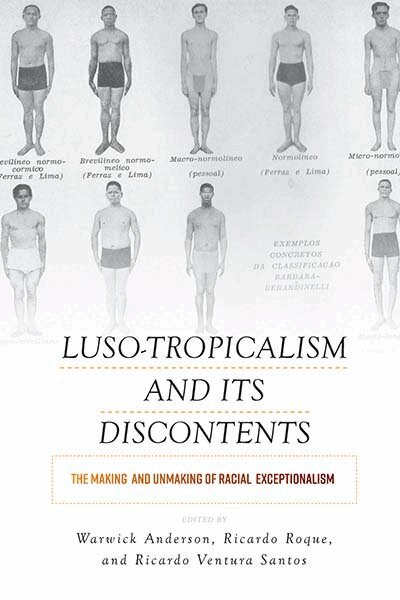
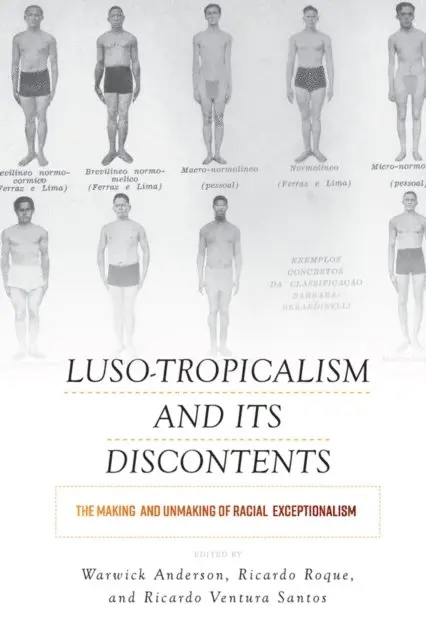
Modern perceptions of race across much of the Global South are indebted to the Brazilian social scientist Gilberto Freyre, who in works such as The Masters and the Slaves claimed that Portuguese colonialism produced exceptionally benign and tolerant race relations. This volume radically reinterprets Freyre’s Luso-tropicalist arguments and critically engages with the historical complexity of racial concepts and practices in the Portuguese-speaking world. Encompassing Brazil as well as Portuguese-speaking societies in Africa, Asia, and even Portugal itself, it places an interdisciplinary group of scholars in conversation to challenge the conventional understanding of twentieth-century racialization, proffering new insights into such controversial topics as human plasticity, racial amalgamation, and the tropes and proxies of whiteness.
Häftad, Engelska, 2022
569 kr
Skickas inom 3-6 vardagar
The Portuguese-speaking Global South, especially Brazil, often envisions itself as exceptional in its racial conceptions and politics. Luso-Tropicalism and Its Discontents reassesses Gilberto Freyre’s influential claims that Portuguese colonialism produced what came to be called “racial democracy,” and explores racialization beyond the common trope of “race-mixing.”
Inbunden, Engelska, 2026
1 903 kr
Skickas inom 3-6 vardagar
The Social Survey in Global Perspective traces the evolution of social surveys beyond celebrated metropolitan examples, exploring their worldwide impact across the twentieth and twenty-first centuries. Contributors examine surveys in diverse contexts—from colonial territories to grassroots women’s organizations—to reveal methodological challenges and profound social influence. The collection illuminates how surveys shaped state power, social movements, and individual identity while often reproducing existing hierarchies. By exploring the double-sided legacy of social surveying—as an engine of both progressive reform and state surveillance—this book offers a critical reassessment of empirical practices that continue to determine how we understand ourselves, our societies and our world.