Deborah Jenson - Böcker
Visar alla böcker från författaren Deborah Jenson. Handla med fri frakt och snabb leverans.
7 produkter
7 produkter
1 079 kr
Skickas inom 5-8 vardagar
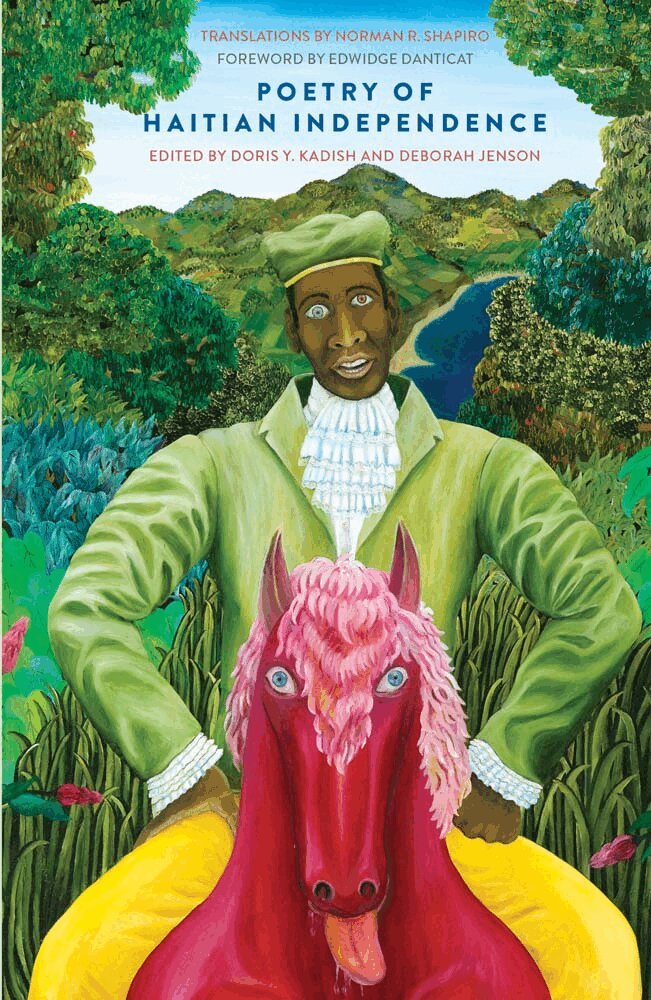
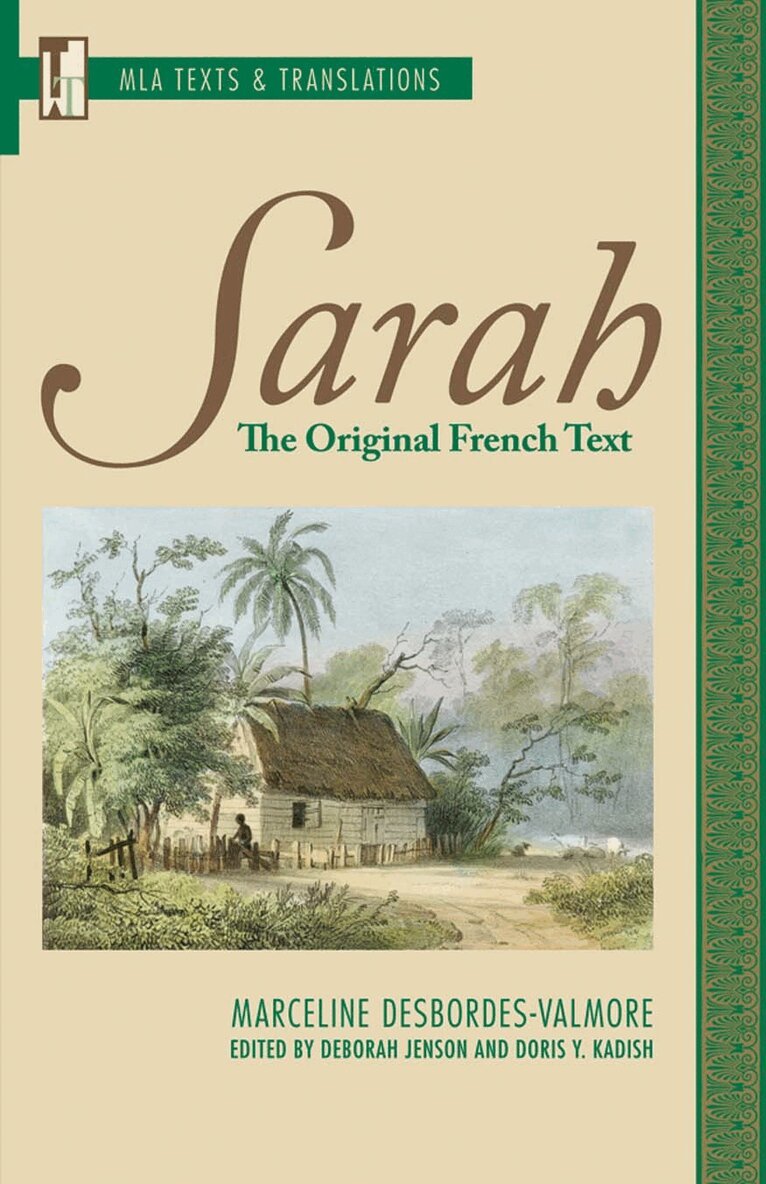
At the turn of the nineteenth century, Haiti became the first and only modern country born from a slave revolt. During the first decades of Haitian independence, a wealth of original poetry was created by the inhabitants of the former French Caribbean island colony and published in Haitian newspapers. These deeply felt poems celebrated the legitimacy of the new nation and the value of the authors’ African origins while revealing a common mission shared by all Haitians in the young republic: freedom from oppressors and equality for all. This powerfully moving collection of Haitian verse written between 1804 and the late 1840s sheds a much-needed light on an important and often neglected period in Haiti’s literary history. Editors Doris Kadish and Deborah Jenson have gathered together poetry that has remained largely unknown and difficult to access since its original publication two centuries ago. Featuring superb translations from the original French by Norman Shapiro and a foreword by the Haitian-born novelist Edwidge Danticat, this essential volume stands as a monument to a turning point in Haitian and world history and makes a significant corpus of poetry accessible to a wide audience for the first time.
606 kr
Kommande
339 kr
This collection presents six essays by one of France’s most remarkable contemporary authors. A notoriously playful stylist, here Hélène Cixous explores how the problematics of the sexes—viewed as a paradigm for all difference, which is the organizing principle behind identity and meaning—manifest themselves, write themselves, in texts. These superb translations do full justice to Cixous’s prose, to its songlike flow and allusive brilliance.
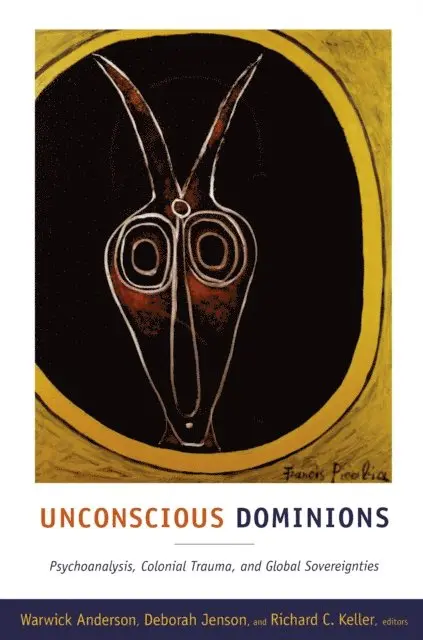
Unconscious Dominions
Psychoanalysis, Colonial Trauma, and Global Sovereignties
Inbunden, Engelska, 2011
1 289 kr
Skickas inom 7-10 vardagar
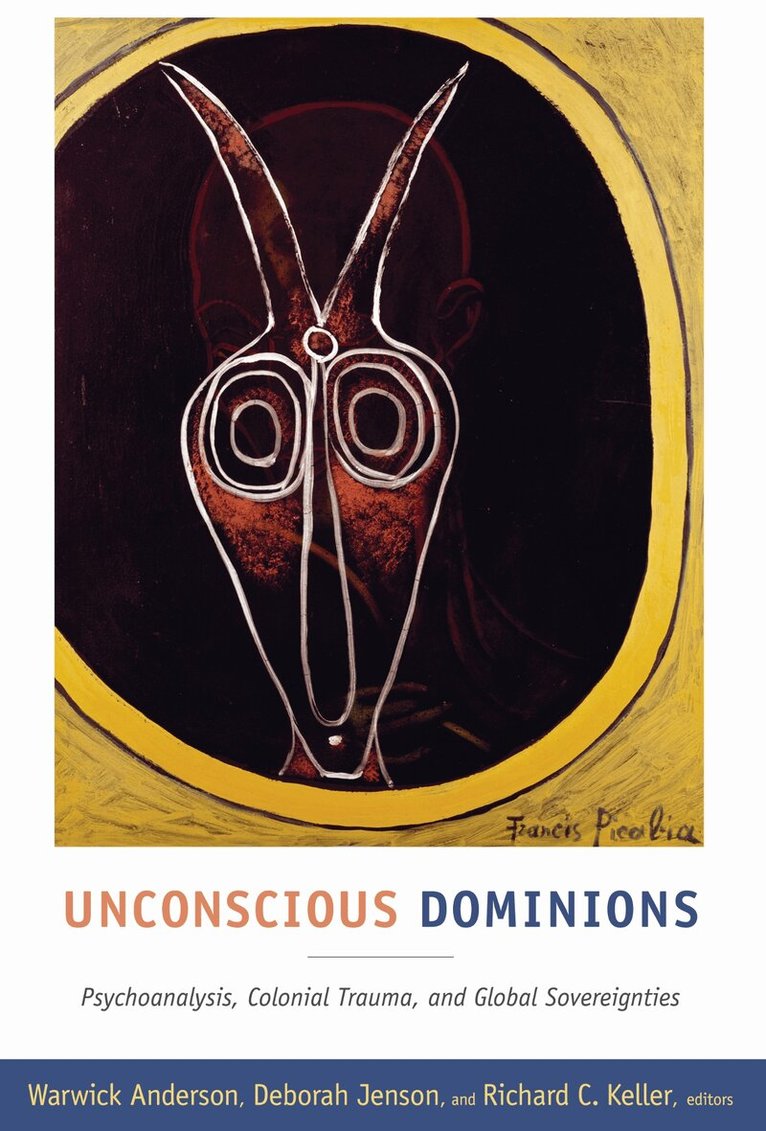
By the 1920s, psychoanalysis was a technology of both the late-colonial state and anti-imperialism. Insights from psychoanalysis shaped European and North American ideas about the colonial world and the character and potential of native cultures. Psychoanalytic discourse, from Freud’s description of female sexuality as a “dark continent” to his conceptualization of primitive societies and the origins of civilization, became inextricable from the ideologies underlying European expansionism. But as it was adapted in the colonies and then the postcolonies, psychoanalysis proved surprisingly useful for theorizing anticolonialism and postcolonial trauma.Our understandings of culture, citizenship, and self have a history that is colonial and psychoanalytic, but, until now, this intersection has scarcely been explored, much less examined in comparative perspective. Taking on that project, Unconscious Dominions assembles essays based on research in Australia, Brazil, France, Haiti, and Indonesia, as well as India, North Africa, and West Africa. Even as they reveal the modern psychoanalytic subject as constitutively colonial, they shed new light on how that subject went global: how people around the world came to recognize the hybrid configuration of unconscious, ego, and superego in themselves and others.ContributorsWarwick AndersonAlice BullardJohn CashJoy Damousi Didier FassinChristiane HartnackDeborah JensonRichard C. KellerRanjana KhannaMariano PlotkinHans Pols
Unconscious Dominions
Psychoanalysis, Colonial Trauma, and Global Sovereignties
Häftad, Engelska, 2011
557 kr
Skickas inom 3-6 vardagar
By the 1920s, psychoanalysis was a technology of both the late-colonial state and anti-imperialism. Insights from psychoanalysis shaped European and North American ideas about the colonial world and the character and potential of native cultures. Psychoanalytic discourse, from Freud’s description of female sexuality as a “dark continent” to his conceptualization of primitive societies and the origins of civilization, became inextricable from the ideologies underlying European expansionism. But as it was adapted in the colonies and then the postcolonies, psychoanalysis proved surprisingly useful for theorizing anticolonialism and postcolonial trauma.Our understandings of culture, citizenship, and self have a history that is colonial and psychoanalytic, but, until now, this intersection has scarcely been explored, much less examined in comparative perspective. Taking on that project, Unconscious Dominions assembles essays based on research in Australia, Brazil, France, Haiti, and Indonesia, as well as India, North Africa, and West Africa. Even as they reveal the modern psychoanalytic subject as constitutively colonial, they shed new light on how that subject went global: how people around the world came to recognize the hybrid configuration of unconscious, ego, and superego in themselves and others.ContributorsWarwick AndersonAlice BullardJohn CashJoy Damousi Didier FassinChristiane HartnackDeborah JensonRichard C. KellerRanjana KhannaMariano PlotkinHans Pols
Del 4 - Liverpool Studies in International Slavery
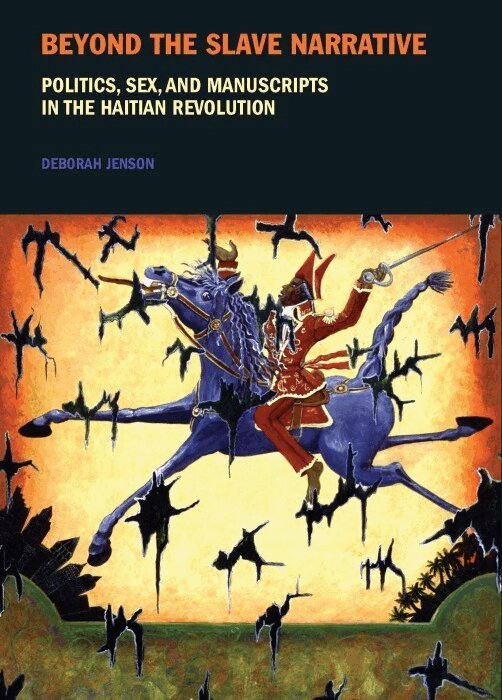
Beyond the Slave Narrative
Politics, Sex, and Manuscripts in the Haitian Revolution
Inbunden, Engelska, 2011
2 134 kr
Skickas inom 7-10 vardagar
The Haitian Revolution has generated responses from commentators in fields ranging from philosophy to historiography to twentieth-century literary and artistic studies. But what about the written work produced at the time, by Haitians? This book is the first to present an account of a specifically Haitian literary tradition in the Revolutionary era. Beyond the Slave Narrative shows the emergence of two strands of textual innovation, both evolving from the new revolutionary consciousness: the remarkable political texts produced by Haitian revolutionary leaders Toussaint Louverture and Jean-Jacques Dessalines, and popular Creole poetry from anonymous courtesans in Saint-Domingue's libertine culture. These textual forms, though they differ from each other, both demonstrate the increasing cultural autonomy and literary voice of non-white populations in the colony at the time of revolution. Unschooled generals and courtesans, long presented as voiceless, are at last revealed to be legitimate speakers and authors.These Haitian French and Creole texts have been neglected as a foundation of Afro-diasporic literature by former slaves in the Atlantic world for two reasons: because they do not fit the generic criteria of the slave narrative (which is rooted in the autobiographical experience of enslavement); and because they are mediated texts, relayed to the print-cultural Atlantic domain not by the speakers themselves, but by secretaries or refugee colonists. These texts challenge how we think about authorial voice, writing, print culture, and cultural autonomy in the context of the formerly enslaved, and demand that we reassess our historical understanding of the Haitian Independence and its relationship to an international world of contemporary readers.
Del 4 - Liverpool Studies in International Slavery
Beyond the Slave Narrative
Politics, Sex, and Manuscripts in the Haitian Revolution
Häftad, Engelska, 2012
582 kr
Skickas inom 7-10 vardagar
The Haitian Revolution has generated responses from commentators in fields ranging from philosophy to historiography to twentieth-century literary and artistic studies. But what about the written work produced at the time, by Haitians? This book is the first to present an account of a specifically Haitian literary tradition in the Revolutionary era. Beyond the Slave Narrative shows the emergence of two strands of textual innovation, both evolving from the new revolutionary consciousness: the remarkable political texts produced by Haitian revolutionary leaders Toussaint Louverture and Jean-Jacques Dessalines, and popular Creole poetry from anonymous courtesans in Saint-Domingue's libertine culture. These textual forms, though they differ from each other, both demonstrate the increasing cultural autonomy and literary voice of non-white populations in the colony at the time of revolution. Unschooled generals and courtesans, long presented as voiceless, are at last revealed to be legitimate speakers and authors.These Haitian French and Creole texts have been neglected as a foundation of Afro-diasporic literature by former slaves in the Atlantic world for two reasons: because they do not fit the generic criteria of the slave narrative (which is rooted in the autobiographical experience of enslavement); and because they are mediated texts, relayed to the print-cultural Atlantic domain not by the speakers themselves, but by secretaries or refugee colonists. These texts challenge how we think about authorial voice, writing, print culture, and cultural autonomy in the context of the formerly enslaved, and demand that we reassess our historical understanding of the Haitian Independence and its relationship to an international world of contemporary readers.