Miranda Johnson - Böcker
Visar alla böcker från författaren Miranda Johnson. Handla med fri frakt och snabb leverans.
4 produkter
4 produkter
1 810 kr
Skickas inom 5-8 vardagar
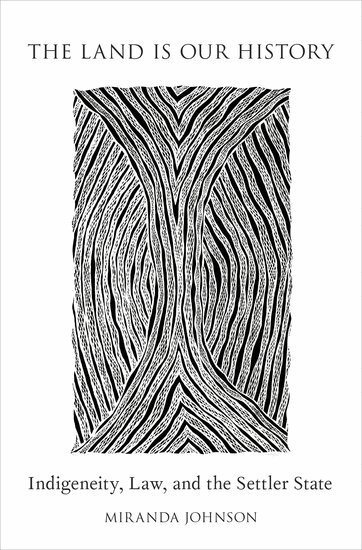
The Land Is Our History tells the story of indigenous legal activism at a critical political and cultural juncture in Australia, Canada, and New Zealand. In the late 1960s, indigenous activists protested assimilation policies and the usurpation of their lands as a new mining boom took off, radically threatening their collective identities. Often excluded from legal recourse in the past, indigenous leaders took their claims to court with remarkable results. For the first time, their distinctive histories were admitted as evidence of their rights. Miranda Johnson examines how indigenous peoples advocated for themselves in courts and commissions of inquiry between the early 1970s to the mid-1990s, chronicling an extraordinary and overlooked history in which virtually disenfranchised peoples forced powerful settler democracies to reckon with their demands. Based on extensive archival research and interviews with leading participants, The Land Is Our History brings to the fore complex and rich discussions among activists, lawyers, anthropologists, judges, and others in the context of legal cases in far-flung communities dealing with rights, history, and identity. The effects of these debates were unexpectedly wide-ranging. By asserting that they were the first peoples of the land, indigenous leaders compelled the powerful settler states that surrounded them to negotiate their rights and status. Fracturing national myths and making new stories of origin necessary, indigenous peoples' claims challenged settler societies to rethink their sense of belonging.
482 kr
Skickas inom 5-8 vardagar
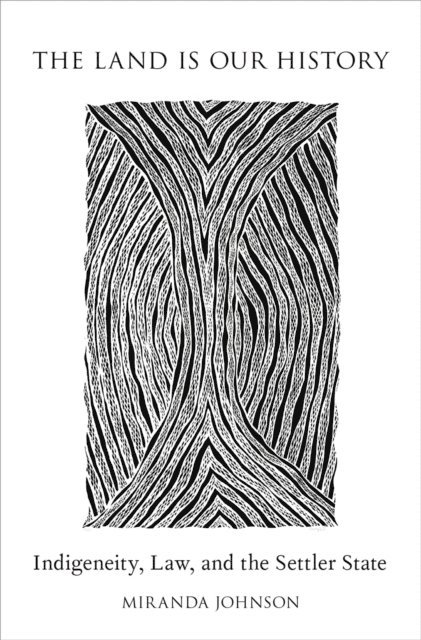
The Land Is Our History tells the story of indigenous legal activism at a critical political and cultural juncture in Australia, Canada, and New Zealand. In the late 1960s, indigenous activists protested assimilation policies and the usurpation of their lands as a new mining boom took off, radically threatening their collective identities. Often excluded from legal recourse in the past, indigenous leaders took their claims to court with remarkable results. For the first time, their distinctive histories were admitted as evidence of their rights. Miranda Johnson examines how indigenous peoples advocated for themselves in courts and commissions of inquiry between the early 1970s to the mid-1990s, chronicling an extraordinary and overlooked history in which virtually disenfranchised peoples forced powerful settler democracies to reckon with their demands. Based on extensive archival research and interviews with leading participants, The Land Is Our History brings to the fore complex and rich discussions among activists, lawyers, anthropologists, judges, and others in the context of legal cases in far-flung communities dealing with rights, history, and identity. The effects of these debates were unexpectedly wide-ranging. By asserting that they were the first peoples of the land, indigenous leaders compelled the powerful settler states that surrounded them to negotiate their rights and status. Fracturing national myths and making new stories of origin necessary, indigenous peoples' claims challenged settler societies to rethink their sense of belonging.
874 kr
Skickas inom 10-15 vardagar
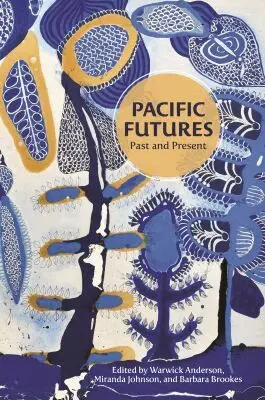
How, when, and why has the Pacific been a locus for imagining different futures by those living there as well as passing through? What does that tell us about the distinctiveness or otherwise of this “sea of islands”? Foregrounding the work of leading and emerging scholars of Oceania, Pacific Futures brings together a diverse set of approaches to, and examples of, how futures are being conceived in the region and have been imagined in the past.Individual chapters engage the various and sometimes contested futures yearned for, unrealized, and even lost or forgotten, that are particular to the Pacific as a region, ocean, island network, destination, and home. Contributors recuperate the futures hoped for and dreamed up by a vast array of islanders and outlanders—from Indigenous federalists to Lutheran improvers to Cantonese small business owners—making these histories of the future visible. In so doing, the collection intervenes in debates about globalization in the Pacific––and how the region is acted on by outside forces––and postcolonial debates that emphasize the agency and resistance of Pacific peoples in the context of centuries of colonial endeavor. With a view to the effects of the “slow violence” of climate change, the volume also challenges scholars to think about the conditions of possibility for future-thinking at all in the midst of a global crisis that promises cataclysmic effects for the region.Pacific Futures highlights futures conceived in the context of a modernity coproduced by diverse Pacific peoples, taking resistance to categorization as a starting point rather than a conclusion. With its hospitable approach to thinking about history making and future thinking, one that is open to a wide range of methodological, epistemological, and political interests and commitments, the volume will encourage the writing of new histories of the Pacific and new ways of talking about history in this field, the region, and beyond.
319 kr
Skickas inom 7-10 vardagar
How, when, and why has the Pacific been a locus for imagining different futures by those living there as well as passing through? What does that tell us about the distinctiveness or otherwise of this "sea of islands"? Foregrounding the work of leading and emerging scholars of Oceania, Pacific Futures brings together a diverse set of approaches to, and examples of, how futures are being conceived in the region and have been imagined in the past.Individual chapters engage the various and sometimes contested futures yearned for, unrealized, and even lost or forgotten, that are particular to the Pacific as a region, ocean, island network, destination, and home. Contributors recuperate the futures hoped for and dreamed up by a vast array of islanders and outlanders - from Indigenous federalists to Lutheran improvers to Cantonese small business owners - making these histories of the future visible. In so doing, the collection intervenes in debates about globalization in the Pacific - and how the region is acted on by outside forces - and postcolonial debates that emphasize the agency and resistance of Pacific peoples in the context of centuries of colonial endeavor. With a view to the effects of the "slow violence" of climate change, the volume also challenges scholars to think about the conditions of possibility for future-thinking at all in the midst of a global crisis that promises cataclysmic effects for the region.Pacific Futures highlights futures conceived in the context of a modernity coproduced by diverse Pacific peoples, taking resistance to categorization as a starting point rather than a conclusion. With its hospitable approach to thinking about history making and future thinking, one that is open to a wide range of methodological, epistemological, and political interests and commitments, the volume will encourage the writing of new histories of the Pacific and new ways of talking about history in this field, the region, and beyond.