Johns Hopkins New Translations from Antiquity - Böcker
Visar alla böcker i serien Johns Hopkins New Translations from Antiquity. Handla med fri frakt och snabb leverans.
18 produkter
18 produkter
555 kr
Tillfälligt slut
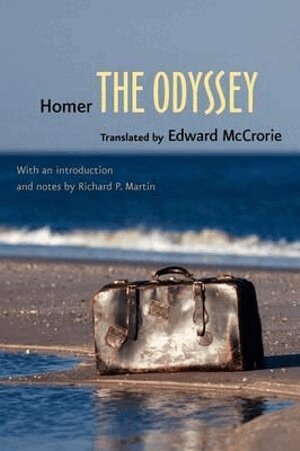
"Tell us, Goddess, daughter of Zeus, start in your own place: when all the rest at Troy had fled from that steep doom and gone back home, away from war and the salt sea, only this man longed for his wife and a way home." Homer's Odyssey, at once an exciting epic of strife and subterfuge and a deeply felt tale of love and devotion, stands at the very beginning of the Western literary tradition. From ancient Greece to the present day its influence on later literature has been unsurpassed, and for centuries translators have approached the meter, tone, and pace of Homer's poetry with a variety of strategies. Chapman and Pope paid keen attention to color, drama, and vivacity of style, rendering the Greek verse loosely and inventively. In the twentieth century, translators such as Lattimore kept rigorously close to the sense of each word in the original; others, including Fitzgerald and Fagles, have departed further from the language of the original, employing their own inventive modern style.Poet and translator Edward McCrorie now opens new territory in this striking rendition, which captures the spare, powerful tone of Homer's epic while engaging contemporary readers with its brisk pace, idiomatic language, and lively characterization. McCrorie closely reproduces the Greek metrical patterns and employs a diction and syntax that reflects the plain, at times stark, quality of Homer's lines, rather than later English poetic styles. Avoiding both the stiffness of word-for-word literalism and the exaggeration and distortion of free adaptation, this translation dramatically evokes the ancient sound and sense of the poem. McCrorie's is truly an Odyssey for the twenty-first century. To accompany this innovative translation, noted classical scholar Richard Martin has written an accessible and wide-ranging introduction explaining the historical and literary context of the Odyssey, its theological and cultural underpinnings, Homer's poetic strategies and narrative techniques, and his cast of characters.In addition, Martin provides detailed notes-far more extensive than those in other editions-addressing key themes and concepts; the histories of persons, gods, events, and myths; literary motifs and devices; and plot development. Also included is a pronunciation glossary and character index.
742 kr
Tillfälligt slut
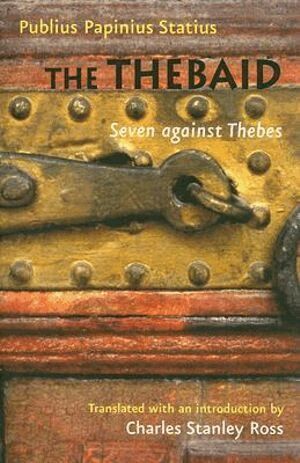
A classical epic of fratricide and war, the Thebaid retells the legendary conflict between the sons of Oedipus-Polynices and Eteocles-for control of the city of Thebes. The Latin poet Statius reworks a familiar story from Greek myth, dramatized long before by Aeschylus in his tragedy Seven against Thebes. Statius chose his subject well: the Rome of his day, ruled by the emperor Domitian, was not too distant from the civil wars that had threatened the survival of the empire. Published in 92 A.D., the Thebaid was an immediate success, and its fame grew in succeeding centuries. It reached its peak of popularity in the later Middle Ages and Renaissance, influencing Dante, Chaucer, and perhaps Shakespeare. In recent times, however, it has received perhaps less attention than it deserves, in large part because there has been no accessible, dynamic translation of the work into English. Charles Stanley Ross offers a compelling version of the Thebaid rendered into forceful, modern English. Casting Statius's Latin hexameter into a lively iambic pentameter more natural to the modern ear, Ross frees the work from the archaic formality that has marred previous translations.His translation reinvigorates the Thebaid as a whole: its meditative first half and its violent second half; its intimate portrayal of defeat and retribution, and the need to seek justice at any cost. In a wide-ranging introduction, Ross provides an overview of the poem: its composition, reception and legacy; its major themes and literary influences; and its place in Statius' life. And in a helpful series of notes, he offers background information on the major characters and incidents.
675 kr
Tillfälligt slut
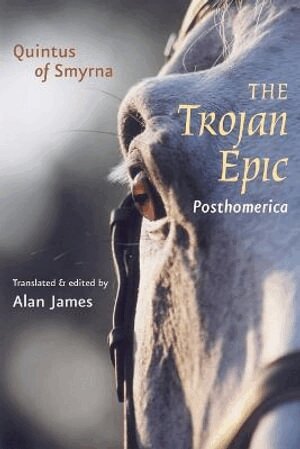
Composed in the third century A.D., the Trojan Epic is the earliest surviving literary evidence for many of the traditions of the Trojan War passed down from ancient Greece. Also known as the Posthomerica, or "sequel to Homer," the Trojan Epic chronicles the course of the war after the burial of Troy's greatest hero, Hektor. Quintus, believed to have been an educated Greek living in Roman Asia Minor, included some of the war's most legendary events: the death of Achilles, the Trojan Horse, and the destruction of Troy. But because Quintus deliberately imitated Homer's language and style, his work has been dismissed by many scholars as pastiche. A vivid and entertaining story in its own right, the Trojan Epic is also particularly significant for what it reveals about its sources-the much older, now lost Greek epics about the Trojan War known collectively as the Epic Cycle. Written in the Homeric era, these poems recounted events not included in the Iliad or the Odyssey. As Alan James makes clear in this vibrant and faithful new translation, Quintus's work deserves attention for its literary-historical importance and its narrative power.James's line-by-line verse translation in English reveals the original as an exciting and eloquent tale of gods and heroes, bravery and cunning, hubris and brutality. James includes a substantial introduction which places the work in its literary and historical context, a detailed and annotated book-by-book summary of the epic, a commentary dealing mainly with sources, and an explanatory index of proper names. Brilliantly revitalized by James, the Trojan Epic will appeal to a wide range of readers interested in Greek mythology and the legend of Troy.
277 kr
Tillfälligt slut
"Tell us, Goddess, daughter of Zeus, start in your own place: when all the rest at Troy had fled from that steep doom and gone back home, away from war and the salt sea, only this man longed for his wife and a way home." Homer's Odyssey, at once an exciting epic of strife and subterfuge and a deeply felt tale of love and devotion, stands at the very beginning of the Western literary tradition. From ancient Greece to the present day its influence on later literature has been unsurpassed, and for centuries translators have approached the meter, tone, and pace of Homer's poetry with a variety of strategies. Chapman and Pope paid keen attention to color, drama, and vivacity of style, rendering the Greek verse loosely and inventively. In the twentieth century, translators such as Lattimore kept rigorously close to the sense of each word in the original; others, including Fitzgerald and Fagles, have departed further from the language of the original, employing their own inventive modern style.Poet and translator Edward McCrorie now opens new territory in this striking rendition, which captures the spare, powerful tone of Homer's epic while engaging contemporary readers with its brisk pace, idiomatic language, and lively characterization. McCrorie closely reproduces the Greek metrical patterns and employs a diction and syntax that reflects the plain, at times stark, quality of Homer's lines, rather than later English poetic styles. Avoiding both the stiffness of word-for-word literalism and the exaggeration and distortion of free adaptation, this translation dramatically evokes the ancient sound and sense of the poem. McCrorie's is truly an Odyssey for the twenty-first century. To accompany this innovative translation, noted classical scholar Richard Martin has written an accessible and wide-ranging introduction explaining the historical and literary context of the Odyssey, its theological and cultural underpinnings, Homer's poetic strategies and narrative techniques, and his cast of characters.In addition, Martin provides detailed notes-far more extensive than those in other editions-addressing key themes and concepts; the histories of persons, gods, events, and myths; literary motifs and devices; and plot development. Also included is a pronunciation glossary and character index.
409 kr
Skickas inom 7-10 vardagar
Composed in the third century A.D., the Trojan Epic is the earliest surviving literary evidence for many of the traditions of the Trojan War passed down from ancient Greece. Also known as the Posthomerica, or "sequel to Homer," the Trojan Epic chronicles the course of the war after the burial of Troy's greatest hero, Hektor. Quintus, believed to have been an educated Greek living in Roman Asia Minor, included some of the war's most legendary events: the death of Achilles, the Trojan Horse, and the destruction of Troy. But because Quintus deliberately imitated Homer's language and style, his work has been dismissed by many scholars as pastiche. A vivid and entertaining story in its own right, the Trojan Epic is also particularly significant for what it reveals about its sources-the much older, now lost Greek epics about the Trojan War known collectively as the Epic Cycle. Written in the Homeric era, these poems recounted events not included in the Iliad or the Odyssey. As Alan James makes clear in this vibrant and faithful new translation, Quintus's work deserves attention for its literary-historical importance and its narrative power.James's line-by-line verse translation in English reveals the original as an exciting and eloquent tale of gods and heroes, bravery and cunning, hubris and brutality. James includes a substantial introduction which places the work in its literary and historical context, a detailed and annotated book-by-book summary of the epic, a commentary dealing mainly with sources, and an explanatory index of proper names. Brilliantly revitalized by James, the Trojan Epic will appeal to a wide range of readers interested in Greek mythology and the legend of Troy.
401 kr
Tillfälligt slut
A classical epic of fratricide and war, the Thebaid retells the legendary conflict between the sons of Oedipus-Polynices and Eteocles-for control of the city of Thebes. The Latin poet Statius reworks a familiar story from Greek myth, dramatized long before by Aeschylus in his tragedy Seven against Thebes. Statius chose his subject well: the Rome of his day, ruled by the emperor Domitian, was not too distant from the civil wars that had threatened the survival of the empire. Published in 92 A.D., the Thebaid was an immediate success, and its fame grew in succeeding centuries. It reached its peak of popularity in the later Middle Ages and Renaissance, influencing Dante, Chaucer, and perhaps Shakespeare. In recent times, however, it has received perhaps less attention than it deserves, in large part because there has been no accessible, dynamic translation of the work into English. Charles Stanley Ross offers a compelling version of the Thebaid rendered into forceful, modern English. Casting Statius's Latin hexameter into a lively iambic pentameter more natural to the modern ear, Ross frees the work from the archaic formality that has marred previous translations.His translation reinvigorates the Thebaid as a whole: its meditative first half and its violent second half; its intimate portrayal of defeat and retribution, and the need to seek justice at any cost. In a wide-ranging introduction, Ross provides an overview of the poem: its composition, reception and legacy; its major themes and literary influences; and its place in Statius' life. And in a helpful series of notes, he offers background information on the major characters and incidents.
600 kr
Tillfälligt slut
This groundbreaking new translation of Horace's most widely read collection of poetry is rendered in modern, metrical English verse rather than the more common free verse found in many other translations. Jeffrey H. Kaimowitz adapts the Roman poet's rich and metrically varied poetry to English formal verse, reproducing the works in a way that maintains fidelity to the tone, timbre, and style of the originals while conforming to the rules of English prosody. Each poem is true to the sense and aesthetic pleasure of the Latin and carries with it the dignity, concision, and movement characteristic of Horace's writing. Kaimowitz presents each translation with annotations, providing the context necessary for understanding and enjoying Horace's work. He also comments on textual instability and explains how he constructed his verse renditions to mirror Horatian Latin. Horace and The Odes are introduced in lively fashion by noted classicist Ronnie Ancona.
315 kr
Tillfälligt slut
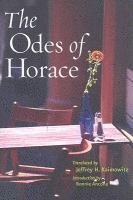
This groundbreaking new translation of Horace's most widely read collection of poetry is rendered in modern, metrical English verse rather than the more common free verse found in many other translations. Jeffrey H. Kaimowitz adapts the Roman poet's rich and metrically varied poetry to English formal verse, reproducing the works in a way that maintains fidelity to the tone, timbre, and style of the originals while conforming to the rules of English prosody. Each poem is true to the sense and aesthetic pleasure of the Latin and carries with it the dignity, concision, and movement characteristic of Horace's writing. Kaimowitz presents each translation with annotations, providing the context necessary for understanding and enjoying Horace's work. He also comments on textual instability and explains how he constructed his verse renditions to mirror Horatian Latin. Horace and The Odes are introduced in lively fashion by noted classicist Ronnie Ancona.
600 kr
Tillfälligt slut
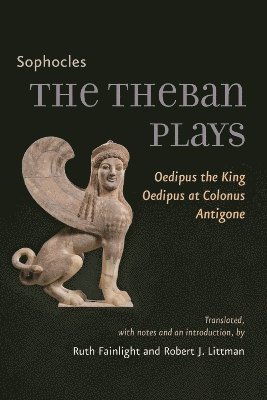
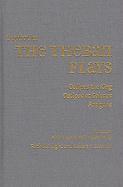
Sophocles' Theban Plays- Oedipus the King, Oedipus at Colonus, and Antigone-lie at the core of the Western literary canon. They are extensively translated, universally taught, and frequently performed. Chronicling the downfall of Oedipus, the legendary king of Thebes, and his descendants, the Theban Plays are as relevant to present-day thought about love, duty, patriotism, family, and war as when they were written 2,500 years ago. Recent translations of the plays, while linguistically correct, often fail to capture the beauty of Sophocles' original words. In combining the skills of a distinguished poet, Ruth Fainlight, and an eminent classical scholar, Robert J. Littman, this new edition of the Theban Plays is both a major work of poetry and a faithful translation of the original works. Thoughtful introductions, extensive notes, and glossaries frame each of the plays within their historical contexts and illuminate important themes, mythological roots, and previous interpretations. This elegant and uncommonly readable translation will make these seminal Greek tragedies accessible to a new generation of readers.
400 kr
Skickas inom 5-8 vardagar
Sophocles' Theban Plays- Oedipus the King, Oedipus at Colonus, and Antigone-lie at the core of the Western literary canon. They are extensively translated, universally taught, and frequently performed. Chronicling the downfall of Oedipus, the legendary king of Thebes, and his descendants, the Theban Plays are as relevant to present-day thought about love, duty, patriotism, family, and war as when they were written 2,500 years ago. Recent translations of the plays, while linguistically correct, often fail to capture the beauty of Sophocles' original words. In combining the skills of a distinguished poet, Ruth Fainlight, and an eminent classical scholar, Robert J. Littman, this new edition of the Theban Plays is both a major work of poetry and a faithful translation of the original works. Thoughtful introductions, extensive notes, and glossaries frame each of the plays within their historical contexts and illuminate important themes, mythological roots, and previous interpretations. This elegant and uncommonly readable translation will make these seminal Greek tragedies accessible to a new generation of readers.
600 kr
Tillfälligt slut
After the Iliad and the Odyssey, the Phaenomena was the most widely read poem in the ancient world. Its fame was immediate. It was translated into Latin by Ovid and Cicero and quoted by St. Paul in the New Testament, and it was one of the few Greek poems translated into Arabic. Aratus' Phaenomena is a didactic poem-a practical manual in verse that teaches the reader to identify constellations and predict weather. The poem also explains the relationship between celestial phenomena and such human affairs as agriculture and navigation. Despite the historical and pedagogical importance of the poem, no English edition suitable for students and general readers has been available for decades. Aaron Poochigian's lively translation makes accessible one of the most influential poets of antiquity. Poochigian's interpretation of the Phaenomena reestablishes the ancient link between poetry and science and demonstrates that verse is an effective medium for instruction.Featuring references to Classical mythology and science, star charts of the northern and southern skies, extensive notes, and an introduction to the work's stylistic features and literary reception, this dynamic work will appeal to students of Ancient Greece who want to deepen their understanding of the Classical world.
382 kr
Skickas
After the Iliad and the Odyssey, the Phaenomena was the most widely read poem in the ancient world. Its fame was immediate. It was translated into Latin by Ovid and Cicero and quoted by St. Paul in the New Testament, and it was one of the few Greek poems translated into Arabic. Aratus' Phaenomena is a didactic poem-a practical manual in verse that teaches the reader to identify constellations and predict weather. The poem also explains the relationship between celestial phenomena and such human affairs as agriculture and navigation. Despite the historical and pedagogical importance of the poem, no English edition suitable for students and general readers has been available for decades. Aaron Poochigian's lively translation makes accessible one of the most influential poets of antiquity. Poochigian's interpretation of the Phaenomena reestablishes the ancient link between poetry and science and demonstrates that verse is an effective medium for instruction.Featuring references to Classical mythology and science, star charts of the northern and southern skies, extensive notes, and an introduction to the work's stylistic features and literary reception, this dynamic work will appeal to students of Ancient Greece who want to deepen their understanding of the Classical world.
540 kr
Tillfälligt slut
You've just won the gold medal, what are you going to do? In Ancient Greece, your patron could throw a feast in your honor and have a poet write a hymn of praise to you. The great poet Pindar composed many such odes for victorious athletes. Esteemed classicist Anne Pippin Burnett presents a fresh and exuberant translation of Pindar's victory songs. The typical Pindaric ode reflects three separate moments: the instant of success in contest, the victory night with its disorderly revels, and the actual banquet of family and friends where the commissioned poem is being offered as entertainment. In their essential effect, these songs transform a physical triumph, as experienced by one man, into a sense of elation shared by his peers-men who have gathered to dine and to drink. Athletic odes were presented by small bands of dancing singers, influencing the audience with music and dance as well as by words. These translations respect the form of the originals, keeping the stanzas that shaped repeating melodies and danced figures and using rhythms meant to suggest performers in motion. Pindar's songs were meant to entertain and exalt groups of drinking men.These translations revive the confident excitement of their original performances.
373 kr
Skickas inom 5-8 vardagar
You've just won the gold medal, what are you going to do? In Ancient Greece, your patron could throw a feast in your honor and have a poet write a hymn of praise to you. The great poet Pindar composed many such odes for victorious athletes. Esteemed classicist Anne Pippin Burnett presents a fresh and exuberant translation of Pindar's victory songs. The typical Pindaric ode reflects three separate moments: the instant of success in contest, the victory night with its disorderly revels, and the actual banquet of family and friends where the commissioned poem is being offered as entertainment. In their essential effect, these songs transform a physical triumph, as experienced by one man, into a sense of elation shared by his peers-men who have gathered to dine and to drink. Athletic odes were presented by small bands of dancing singers, influencing the audience with music and dance as well as by words. These translations respect the form of the originals, keeping the stanzas that shaped repeating melodies and danced figures and using rhythms meant to suggest performers in motion. Pindar's songs were meant to entertain and exalt groups of drinking men.These translations revive the confident excitement of their original performances.
660 kr
Tillfälligt slut
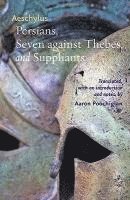
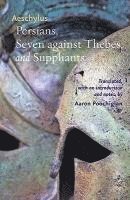
Aaron Poochigian's new translations of Aeschylus's earliest extant plays provide the clearest rendering yet of their formal structure. The distinction between spoken and sung rhythms is as sharp as it is in the source texts, and for the first time readers in English can fully grasp the balanced, harmonious arrangement of choral odes. The importance of these works to the history of drama and tragedy and to the history of classical literature is beyond question, and their themes of military hubris and foreign versus native are deeply relevant today. Persians offers a surprisingly sympathetic portrayal of the Athenians' most hated enemy; in Seven against Thebes Argive invaders, though no less Greek than the Thebans themselves, are portrayed as barbarians; and in Suppliants the city of Argos is called upon to protect Egyptian refugees. Based on textual evidence and the archaeological remains of the Theater of Dionysus at Athens, Poochigian's introductory overview of stage properties and accompanying stage directions allow readers to experience the plays as they were performed in their own time. He is most careful in his translations of the plays' choral odes.Instead of rendering them with little or no form, Poochigian has preserved the comprehensive structures Aeschylus himself employed. Readers are thus able to recognize Aeschylus as a master of poetry as well as of drama. Poochigian's translations are the most accurate renditions of the poetry and dramaturgy of the original works available. Intended to be both read as literature and performed as plays, these translations are lucid and readable, while remaining staunchly faithful to the texts.
315 kr
Tillfälligt slut
Aaron Poochigian's new translations of Aeschylus's earliest extant plays provide the clearest rendering yet of their formal structure. The distinction between spoken and sung rhythms is as sharp as it is in the source texts, and for the first time readers in English can fully grasp the balanced, harmonious arrangement of choral odes. The importance of these works to the history of drama and tragedy and to the history of classical literature is beyond question, and their themes of military hubris and foreign versus native are deeply relevant today. Persians offers a surprisingly sympathetic portrayal of the Athenians' most hated enemy; in Seven against Thebes Argive invaders, though no less Greek than the Thebans themselves, are portrayed as barbarians; and in Suppliants the city of Argos is called upon to protect Egyptian refugees. Based on textual evidence and the archaeological remains of the Theater of Dionysus at Athens, Poochigian's introductory overview of stage properties and accompanying stage directions allow readers to experience the plays as they were performed in their own time. He is most careful in his translations of the plays' choral odes.Instead of rendering them with little or no form, Poochigian has preserved the comprehensive structures Aeschylus himself employed. Readers are thus able to recognize Aeschylus as a master of poetry as well as of drama. Poochigian's translations are the most accurate renditions of the poetry and dramaturgy of the original works available. Intended to be both read as literature and performed as plays, these translations are lucid and readable, while remaining staunchly faithful to the texts.
749 kr
Skickas inom 11-20 vardagar
Sing of rage, Goddess, that bane of Akhilleus, Peleus' son, which caused untold pain for Akhaians, sent down throngs of powerful spirits to Aides, war-chiefs rendered the prize of dogs and every sort of bird. Edward McCrorie's new translation of Homer's classic epic of the "Trojan War" captures the falling rhythms of a doomed "Troy". McCrorie presents the sundry epithets and resonant symbols of Homer's verse style and remains as close to the Greek's meaning as research allows. The work is an epic with a flexible contemporary feel to it, capturing the wide-ranging tempos of the original. It underscores the honor of soldiers and dwells upon the machinations of Moira, each man's and woman's portion in life. Noted Homeric scholar Erwin Cook contributes a substantial introduction and extensive notes written to guide both students and general readers through relevant elements of ancient Greek history and culture. This version of the "Iliad" is ideal for readings and performances.
385 kr
Skickas inom 7-10 vardagar
Sing of rage, Goddess, that bane of Akhilleus, Peleus' son, which caused untold pain for Akhaians, sent down throngs of powerful spirits to aides, war-chiefs rendered the prize of dogs and everysort of bird. Edward McCrorie's new translation of Homer's classic epic of the "Trojan War" captures the falling rhythms of a doomed "Troy". McCrorie presents the sundry epithets and resonant symbols of Homer's verse style and remains as close to the Greek's meaning as research allows. The work is an epic with a flexible contemporary feel to it, capturing the wide-ranging tempos of the original. It underscores the honor of soldiers and dwells upon the machinations of "Moira", each man's and woman's portion in life. Noted Homeric scholar Erwin Cook contributes a substantial introduction and extensive notes written to guide both students and general readers through relevant elements of ancient Greek history and culture. This version of the "Iliad" is ideal for readings and performances.