Johns Hopkins Studies in Globalization – serie
Visar alla böcker i serien Johns Hopkins Studies in Globalization. Handla med fri frakt och snabb leverans.
5 produkter
5 produkter
644 kr
Skickas
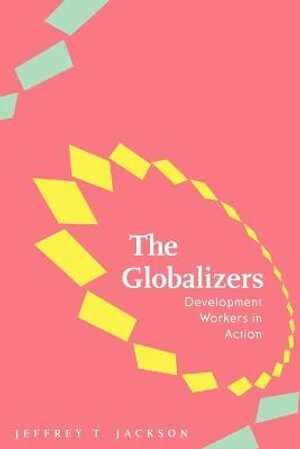
Using Honduras as a case study, Jeffrey T. Jackson illuminates the processes by which wealthy western countries target countries in Latin America, Asia, Africa, and the Middle East for political economic construction, or nation building. In the process, he draws a provocative connection between the efforts of international development workers and the emergence of global governance. Jackson examines the significant roles played by international development workers-"the globalizers"-operating in Honduras over the past thirty years, particularly in the troubled construction of the El Cajon hydroelectric dam, the creation of maquiladoras, and the multinational relief, recovery, and reconstruction efforts following Hurricane Mitch. He finds in the international development community a close-knit coalition of policy makers who have inserted themselves into the local political process and pushed the Honduran nation-state to conform to international norms and integrate into a transnational structure of governance.Jackson examines the mechanisms of power at the disposal of these development organizations, the expertise of those administering development aid, the agency of development workers, and the benefits that accrue to donor countries. In doing so he makes a persuasive connection between nation building and global governance-raising important questions about whose nations are being built and why.
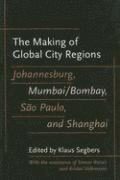
Making of Global City Regions
Johannesburg, Mumbai/Bombay, São Paulo, and Shanghai
Inbunden, Engelska, 2007
594 kr
Tillfälligt slut
As sites for economic, social, and political innovation, Johannesburg, Mumbai/Bombay, Sao Paulo, and Shanghai function as gateways to the global economy for their respective countries and the surrounding regions. City administrators face intense competition for foreign investment, and they must develop strategies to make their cities-which remain outside of the OECD-world class. The Making of Global City Regions traces the emergence of each city in the global economy and examines the link between the dynamics of globalization and changing urban governances. The contributors describe how metropolitan leaders deal with the twin phenomena of globalization and the devolution of the state as they adjust to their city's new emerging role in the global system. The contributors provide an overview of the individuals and organizations who make each city competitive in a global context and describe how they market and promote themselves to the world. In addition, senior administrators of these regions-Roland Hunter, Vidyadhar K. Phatak, Jorge Wilheim, and Zhu Linchu, respectively-offer valuable insight into the development of their city regions.The volume concludes with a summary of lessons learned. Contributors: Robert A. Beauregard, Csaba Deak, Ranjit Hoskote, Roland Hunter, Pedro Jacobi, Zhu Linchu, Alan Mabin, Jim Masselos, Susan Parnell, Sujata Patel, Vidyadhar K. Phatak, Sueli Schiffer Klaus Segbers, Zhongxin Sun, Richard Tomlinson, Krister Volkmann, Jorge Wilheim, Fulong Wu, and Weiping Wu.
526 kr
Skickas inom 5-8 vardagar
In The Globalizers, author Jeffrey T. Jackson studies globalization and development aid in Honduras. While many scholars focus on the transnational corporation, Jackson believes that the international development profession may be even more important for globalization because it is often the development professionals who lay the groundwork for transnationals to establish themselves in developing nations. By drawing upon specific examples of development aid in Honduras, by such organizations as the World Bank and the Inter-American Development Bank, Jackson avoids the general, abstract discussion often associated with globalization studies.
671 kr
Skickas inom 7-10 vardagar
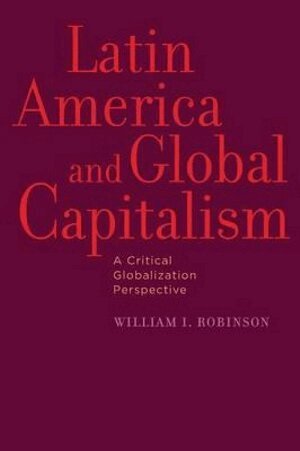
This ambitious volume chronicles and analyzes from a critical globalization perspective the social, economic, and political changes sweeping across Latin America from the 1970s through the present day. Sociologist William I. Robinson summarizes his theory of globalization and discusses how Latin America's political economy has changed as the states integrate into the new global production and financial system, focusing specifically on the rise of nontraditional agricultural exports, the explosion of maquiladoras, transnational tourism, and the export of labor and the import of remittances. He follows with an overview of the clash among global capitalist forces, neoliberalism, and the new left in Latin America, looking closely at the challenges and dilemmas resistance movements face and their prospects for success.Through three case studies-the struggles of the region's indigenous peoples, the immigrants rights movement in the United States, and the Bolivarian Revolution in Venezuela-Robinson documents and explains the causes of regional socio-political tensions, provides a theoretical framework for understanding the present turbulence, and suggests possible outcomes to the conflicts. Based on years of fieldwork and empirical research, this study elucidates the tensions that globalization has created and shows why Latin America is a battleground for those seeking to shape the twenty-first century's world order.
471 kr
This ambitious volume chronicles and analyzes from a critical globalization perspective the social, economic, and political changes sweeping across Latin America from the 1970s through the present day. Sociologist William I. Robinson summarizes his theory of globalization and discusses how Latin America's political economy has changed as the states integrate into the new global production and financial system, focusing specifically on the rise of nontraditional agricultural exports, the explosion of maquiladoras, transnational tourism, and the export of labor and the import of remittances. He follows with an overview of the clash among global capitalist forces, neoliberalism, and the new left in Latin America, looking closely at the challenges and dilemmas resistance movements face and their prospects for success.Through three case studies-the struggles of the region's indigenous peoples, the immigrants rights movement in the United States, and the Bolivarian Revolution in Venezuela-Robinson documents and explains the causes of regional socio-political tensions, provides a theoretical framework for understanding the present turbulence, and suggests possible outcomes to the conflicts. Based on years of fieldwork and empirical research, this study elucidates the tensions that globalization has created and shows why Latin America is a battleground for those seeking to shape the twenty-first century's world order.