JPS Essential Judaism - Böcker
Visar alla böcker i serien JPS Essential Judaism. Handla med fri frakt och snabb leverans.
7 produkter
7 produkter
233 kr
Skickas inom 10-15 vardagar
The Bible is an enduring source of inspiration for the human heart and mind, and readers of Thinking about the Torah will be rewarded with an enhanced understanding of this great work’s deeper meanings. Drawing on Western philosophy and particularly Jewish philosophy, Kenneth Seeskin delves into ten core biblical verses and the powerful ideas that emerge from them. He speaks to readers on every page and invites conversation about topics central to human existence: how finite beings can relate to the infinite, what love is, the role of ethics in religion, and the meaning of holiness. Seeskin raises questions we all ask and responds to them with curiosity and compassion, weaving into his own perceptive commentary insights from great Jewish thinkers such as Maimonides, Spinoza, Buber, Rosenzweig, and Levinas, as well as Plato, Aristotle, Augustine, Luther, Kant, and Kierkegaard. The Bible is concerned with how we think as well as how we follow the commandments, rituals, and customs. Seeskin inspires us to read the Torah with an open mind and think about the lessons it teaches us.
433 kr
Skickas inom 10-15 vardagar
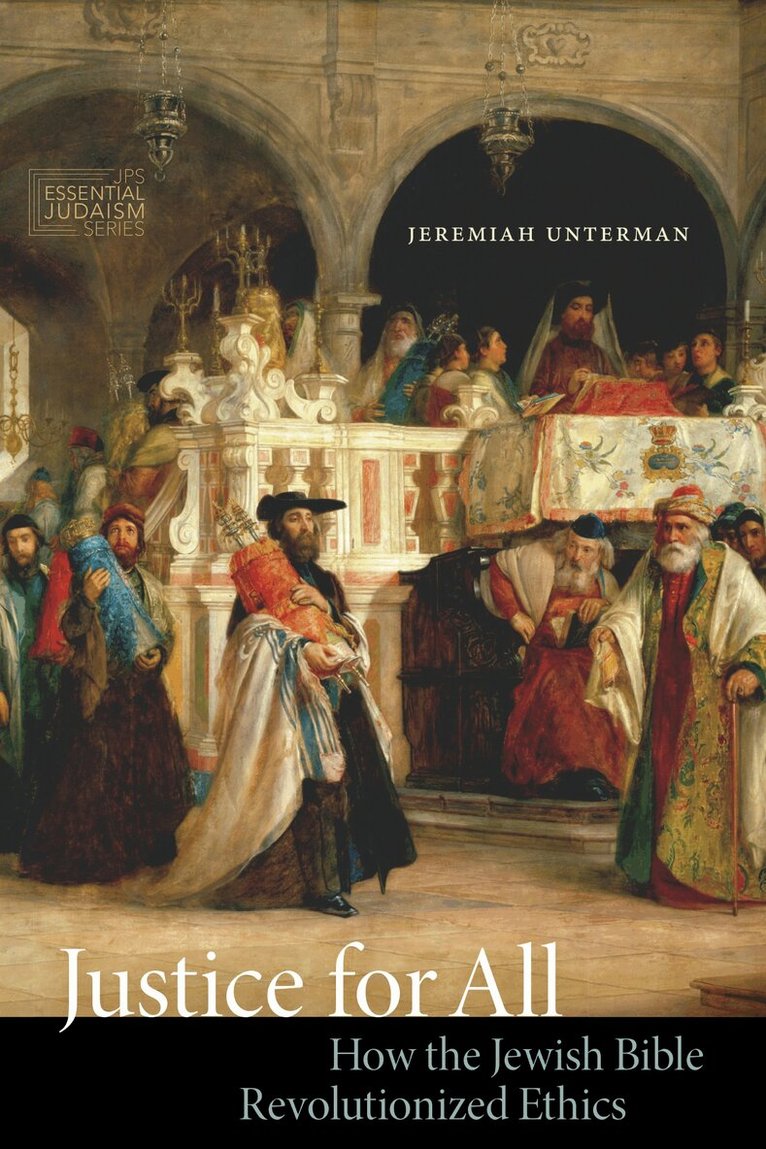
Justice for All demonstrates that the Jewish Bible, by radically changing the course of ethical thought, came to exercise enormous influence on Jewish thought and law and also laid the basis for Christian ethics and the broader development of modern Western civilization.Jeremiah Unterman shows us persuasively that the ethics of the Jewish Bible represent a significant moral advance over Ancient Near East cultures. Moreover, he elucidates how the Bible’s unique conception of ethical monotheism, innovative understanding of covenantal law, and revolutionary messages from the prophets form the foundation of many Western civilization ideals. Justice for All connects these timeless biblical texts to the persistent themes of our times: immigration policy, forgiveness and reconciliation, care for the less privileged, and attaining hope for the future despite destruction and exile in this world.
366 kr
Skickas inom 10-15 vardagar
A Top Ten Book for Parish Ministry from the Academy of Parish ClergyWho-or what-is God? Is God like a person? Does God have a gender? Does God have a special relationship with the Jewish people? Does God intervene in our lives? Is God good-and, if yes, why does evil persist in the world? In investigating how Jewish thinkers have approached these and other questions, Rabbi Kari H. Tuling elucidates many compelling-and contrasting-ways of thinking about God in Jewish tradition.Thinking about God addresses the genuinely intertextual nature of evolving Jewish God concepts. Just as in Jewish thought the Bible and other historical texts are living documents, still present and relevant to the conversation unfolding now, and just as a Jewish theologian examining a core concept responds to the full tapestry of Jewish thought on the subject all at once, this book is organized topically, covers Jewish sources (including liturgy) from the biblical to the postmodern era, and highlights the interplay between texts over time, up through our own era.A highly accessible resource for introductory students, Thinking about God also makes important yet challenging theological texts understandable. By breaking down each selected text into its core components, Tuling helps the reader absorb it both on its own terms and in the context of essential theological questions of the ages. Readers of all backgrounds will discover new ways to contemplate God. Access a study guide.
313 kr
Skickas inom 10-15 vardagar
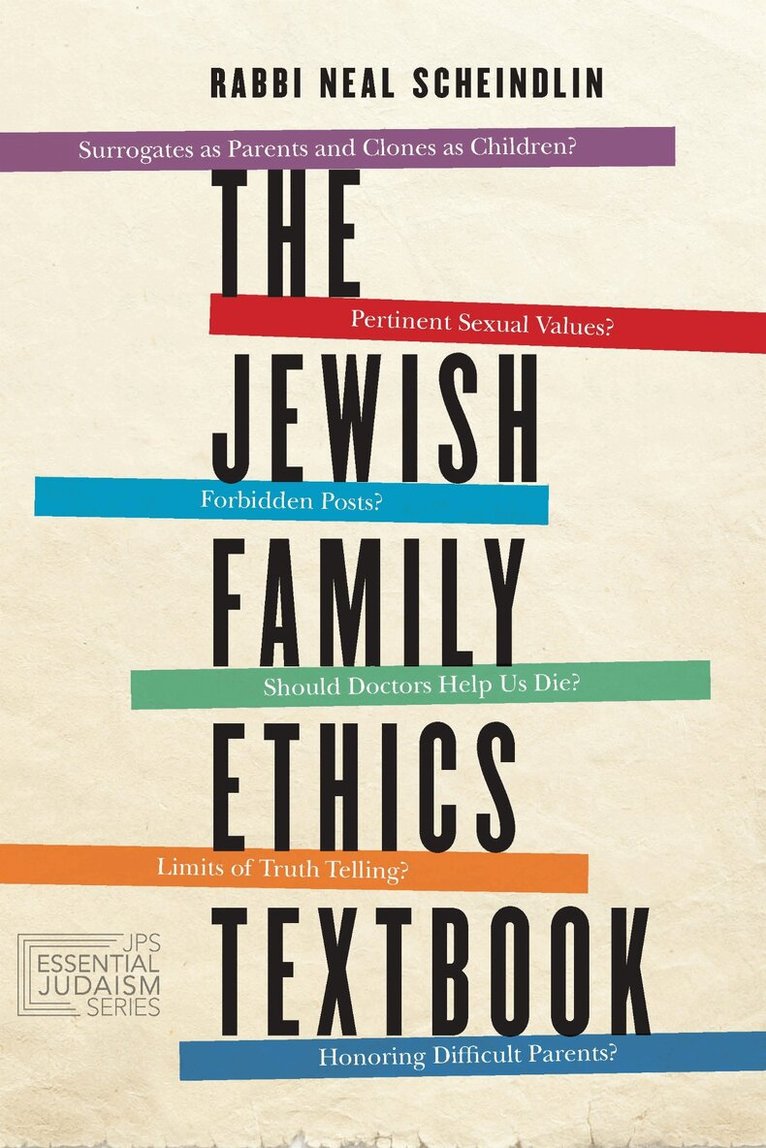
2021 National Jewish Book Award Finalist for Contemporary Jewish Life and PracticeJudaism offers us unique-and often divergent-insights into contemporary moral quandaries. How can we use social media without hurting others? Should people become parents through cloning? Should doctors help us die?The first ethics book to address social media and technology ethics through a Jewish lens, along with teaching the additional skills of analyzing classical Jewish texts, The Jewish Family Ethics Textbook guides teachers and students of all ages in mining classical and modern Jewish texts to inform ethical decision-making. Both sophisticated and accessible, the book tackles challenges in parent-child relationships, personal and academic integrity, social media, sexual intimacy, conception, abortion, and end of life. Case studies, largely drawn from real life, concretize the dilemmas. Multifaceted texts from tradition (translated from Hebrew and Aramaic) to modernity build on one another to shed light on the deliberations. Questions for inquiry, commentary, and a summation of the texts’ implications for the case studies deepen and open up the dialogue.In keeping with the tradition of maḥloket, preserving multiple points of view, “We need not accept any of our forebears’ ideas uncritically,” Rabbi Neal Scheindlin explains. “The texts provide opportunities to discover ideas that help us think through ethical dilemmas, while leaving room for us to discuss and draw our own conclusions.”
361 kr
Skickas inom 7-10 vardagar
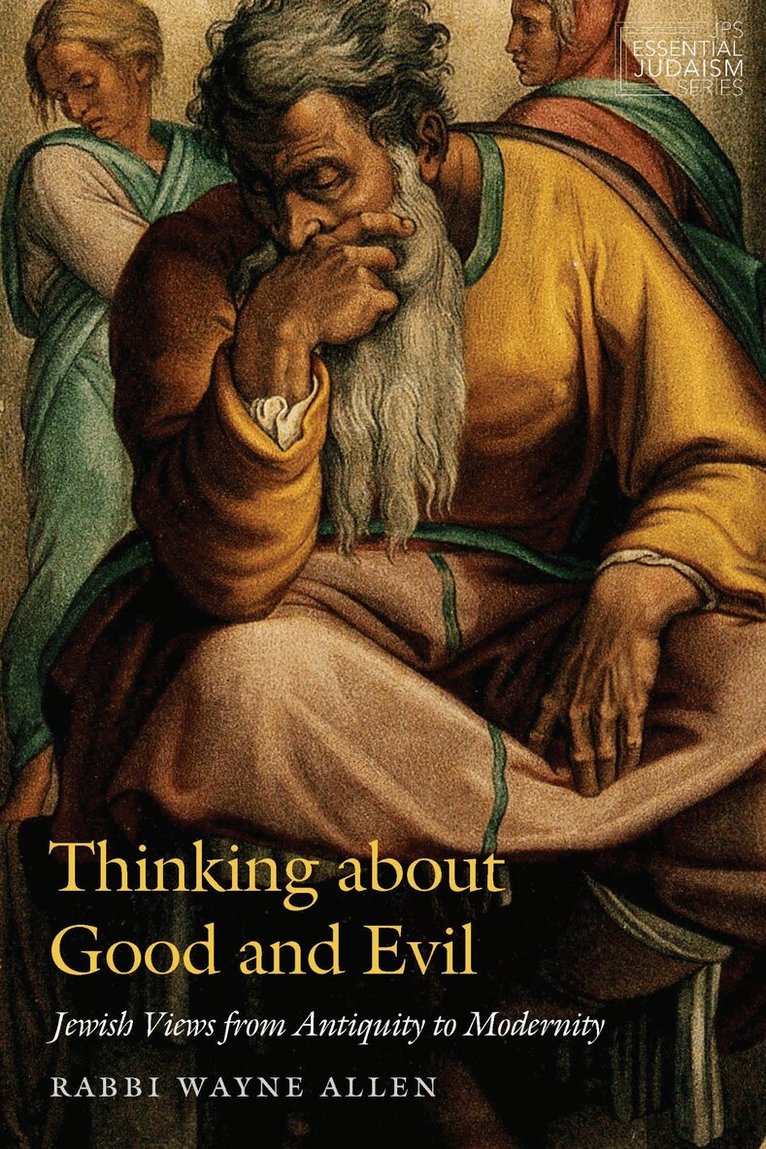
2022 Top Five Reference Book from Academy of Parish Clergy The most comprehensive book on the topic, Thinking about Good and Evil traces the most salient Jewish ideas about why innocent people seem to suffer, why evil individuals seem to prosper, and God’s role in such matters of (in)justice, from antiquity to the present.Starting with the Bible and Apocrypha, Rabbi Wayne Allen takes us through the Talmud; medieval Jewish philosophers and Jewish mystical sources; the Ba’al Shem Tov and his disciples; early modern thinkers such as Spinoza, Mendelssohn, and Luzzatto; and, finally, modern thinkers such as Cohen, Buber, Kaplan, and Plaskow. Each chapter analyzes individual thinkers’ arguments and synthesizes their collective ideas on the nature of good and evil and questions of justice. Allen also exposes vastly divergent Jewish thinking about the Holocaust: traditionalist (e.g., Ehrenreich), revisionist (e.g., Rubenstein, Jonas), and deflective (e.g., Soloveitchik, Wiesel).Rabbi Allen’s engaging, accessible volume illuminates well-known, obscure, and novel Jewish solutions to the problem of good and evil.
230 kr
Skickas inom 7-10 vardagar
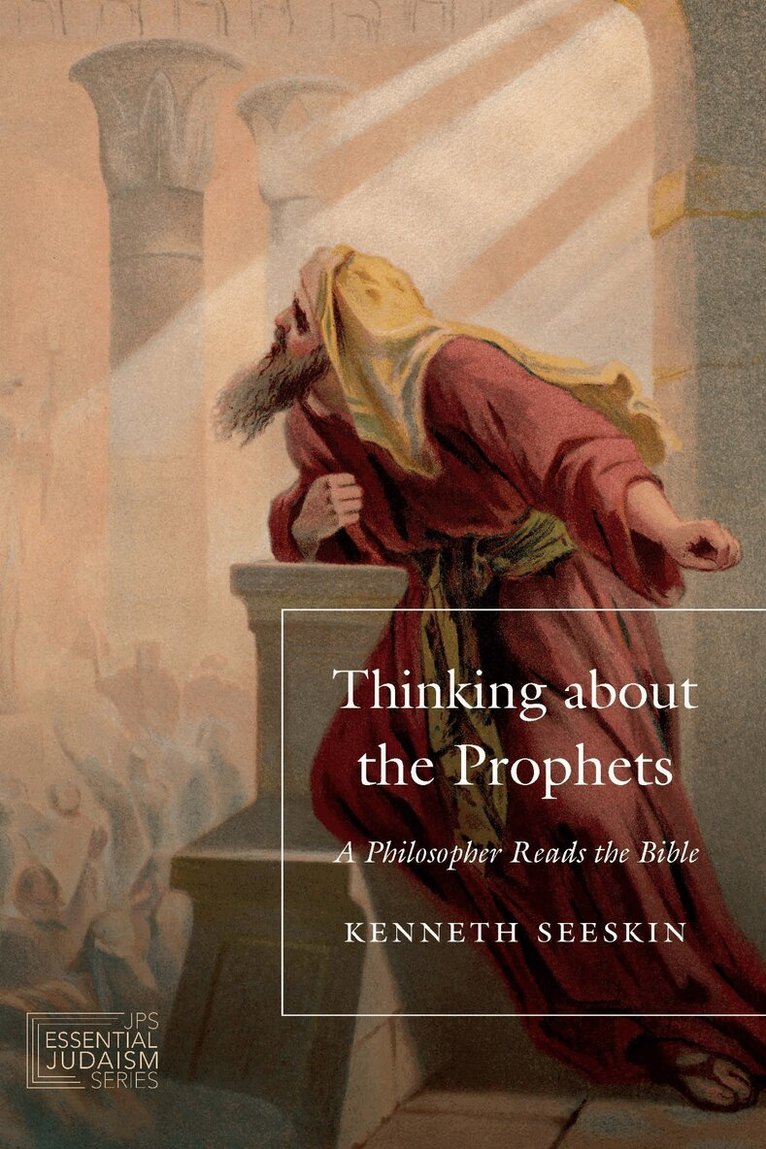
Readers of all levels will find this volume an accessible and provoking introduction to the enduring significance of biblical prophecy.Rethinking the great literary prophets whose ministry ran from the eighth to the sixth centuries BCE-Amos, Hosea, First Isaiah, Jeremiah, Ezekiel, Second Isaiah, and Job-Thinking about the Prophets examines their often-shocking teachings in light of their times, their influence on later Western and Jewish thinkers, and their enduring lessons for all of us. As a noted scholar of Jewish philosophy, Kenneth Seeskin teases out philosophical, ethical, and theological questions in the writings, such as the nature of moral reasoning, the divine persona, divine providence, the suffering of the innocent, the power of repentance, and what it means to believe in a monotheistic conception of God.Seeskin demonstrates that great ideas are not limited by time or place, but rather once put forth, take on a life of their own. Thus he interweaves the medieval and modern philosophers Maimonides, Kant, Cohen, Buber, Levinas, Heschel, and Soloveitchik, all of whom read the prophets and had important things to say as a result. We come to see the prophets perhaps in equal measure as divinely authorized whistle-blowers and profound thinkers of the human condition.
313 kr
Skickas inom 10-15 vardagar
2023 Reference Book of the Year from the Academy of Parish ClergyThroughout our history, Jews have traditionally responded to our trials with hope, psychologist David Arnow says, because we have had ready access to Judaism’s abundant reservoir of hope. The first book to plumb the depths of this reservoir, Choosing Hope journeys from biblical times to our day to explore nine fundamental sources of hope in Judaism: Teshuvah-the method to fulfill our hope to become better human beings Tikkun Olam-the hope that we can repair the world by working together Abraham and Sarah-models of persisting in hope amid trials Exodus-the archetype of redemptive hope Covenant-the hope for a durable relationship with the One of Being Job-the “hard-fought hope” that brings a grief-stricken man back to life World to Come-the sustaining hope that death is not the end Israel-high hope activists work to build a just and inclusive society for all Israelis Jewish Humor-“hope’s last weapon” in our darkest days Grounded in a contemporary theology that situates the responsibility for creating a better world in human hands, with God acting through us, Choosing Hope can help us both affirm hope in times of trial and transmit our deepest hopes to the next generation.