• Fri frakt över 249 kr
  • •
  • Snabba leveranser
  • •
  • Billiga böcker
Kundservice

Du är på sajten för privatpersoner.

Företag, bibliotek eller offentlig verksamhet?

Du handlar på classic.bokus.com, där alla dina funktioner finns intakta.
Till classic.bokus.com
Bokus logotyp. Gå till startsidan.
  • Erbjudanden
  • Nyheter
  • Student
  • Topplistor
  • Barn & ungdom
  • Bokus Play
  • E-böcker
  • Pocketböcker
  • Spel & pussel

10% rabatt på allt med kod: NYSTART10 →

Sidfot

Mina sidor

    Hjälp

    • Kundservice
    • Vanliga frågor och svar
    • Frakt och leverans
    • Retur vid ångerrätt
    • Reklamera vara
    • Betalning
    • Köpvillkor
    • Allmänna villkor
    • Information om webbplatsens tillgänglighet

    Om Bokus

    • Om oss
    • Pressrum
    • För studenter
    • För företag
    • För bibliotek och offentlig verksamhet
    • För leverantörer
    • Hållbarhet

    Populärt

    • Aktuella erbjudanden
    • Presentkort
    • Studentlitteratur
    • Nya böcker
    • Topplistor
    • Signerade böcker
    • Engelska böcker

    Inspiration

    • Boktips
    • BookTok
    • Populära bokserier
    • Barnbokskaraktärer
    • Populära författare
    Logotyp för Bokus
    Följ oss på Facebook (extern länk)Följ oss på Instagram (extern länk)Följ oss på YouTube (extern länk)Följ oss på TikTok (extern länk)
    bokus @ CookiesAnpassa cookiesIntegritetspolicyKöpvillkor
    Till Citymail hemsida (extern länk)Till Budbee hemsida (extern länk)Till Postnord hemsida (extern länk)Till Schenker hemsida (extern länk)Till Early Bird hemsida (extern länk)Till Walleys hemsida (extern länk)
    1. Filosofi och religion
    2. Religion och tro
    3. Religion: allmänt

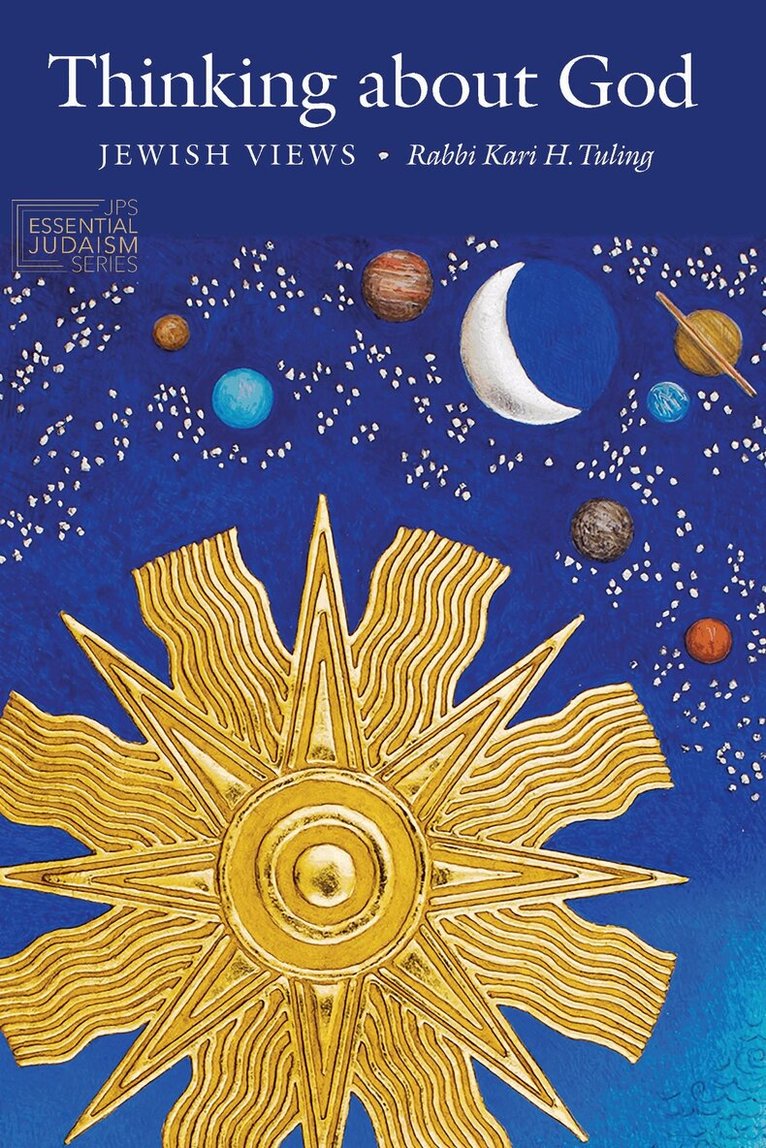
    Thinking About God

    Jewish Views

    AvKari Hofmaister Tuling

    Häftad, Engelska, 2020

    Del i serien JPS Essential Judaism

    382 kr

    Beställningsvara. Skickas inom 10-15 vardagar. Fri frakt över 249 kr.

    Beskrivning

    A Top Ten Book for Parish Ministry from the Academy of Parish ClergyWho-or what-is God? Is God like a person? Does God have a gender? Does God have a special relationship with the Jewish people? Does God intervene in our lives? Is God good-and, if yes, why does evil persist in the world? In investigating how Jewish thinkers have approached these and other questions, Rabbi Kari H. Tuling elucidates many compelling-and contrasting-ways of thinking about God in Jewish tradition.Thinking about God addresses the genuinely intertextual nature of evolving Jewish God concepts. Just as in Jewish thought the Bible and other historical texts are living documents, still present and relevant to the conversation unfolding now, and just as a Jewish theologian examining a core concept responds to the full tapestry of Jewish thought on the subject all at once, this book is organized topically, covers Jewish sources (including liturgy) from the biblical to the postmodern era, and highlights the interplay between texts over time, up through our own era.A highly accessible resource for introductory students, Thinking about God also makes important yet challenging theological texts understandable. By breaking down each selected text into its core components, Tuling helps the reader absorb it both on its own terms and in the context of essential theological questions of the ages. Readers of all backgrounds will discover new ways to contemplate God. Access a study guide.

    Produktinformation

    • Utgivningsdatum:2020-08-01
    • Mått:152 x 229 x 26 mm
    • Vikt:582 g
    • Format:Häftad
    • Språk:Engelska
    • Serie:JPS Essential Judaism
    • Antal sidor:424
    • Förlag:Jewish Publication Society
    • ISBN:9780827613010

    Utforska kategorier

    • Religion: allmänt inom Filosofi och religion
    • Judendom inom Filosofi och religion

    Mer om författaren

    Rabbi Kari H. Tuling currently serves Congregation Kol Haverim, Glastonbury, Connecticut. Previously she served as rabbi at Temple Beth Israel, Plattsburgh, New York, and as an instructor at the State University of New York, Plattsburgh.

    Recensioner i media

    "Rabbi Tuling analyzes a range of Jewish thought on major theological questions throughout history in her sharp debut."-Publishers Weekly "A highly accessible resource for introductory students, Thinking about God also makes important yet challenging theological texts understandable. By breaking down each selected text into its core components, Tuling helps the reader absorb it both on its own terms and in the context of essential theological questions of the ages. Readers of all backgrounds will discover new ways to contemplate God."-Dov Peretz Elkins, Jewish Media Review "The differing viewpoints offered in Thinking About God are fascinating. . . . Spiritual seekers and those interested in the development of Jewish theology will find much to enjoy."-Reporter "We’re using Thinking about God as the text for our Jewish studies discussion group at Temple Beth Shalom of Hastings-on-Hudson, New York. Our small intellectually lively group has met, usually bi-weekly, for several decades, every year focusing on a text that illuminates an important theme in Jewish history and thought. The group is finding the book informative and provocative."-Robert Seltzer,Professor Emeritus, Hunter College CUNY  “Rabbi Kari H. Tuling has provided a comprehensive, learned, and absorbing approach to the central religious issue of faith. In employing voices throughout Jewish tradition as well as her own voice to prod and guide the reader to think in different ways about God, she proves herself a master pedagogue who engages the reader on every page. This is an important religious book!”-Rabbi David Ellenson, chancellor emeritus, Hebrew Union College–Jewish Institute of Religion “Growing out of a university-level Jewish studies course, Thinking about God: Jewish Views serves as a comprehensive and exceptionally accessible complement to the Jewish studies classroom. Tuling’s analysis is delightfully methodical-furnishing thoughtful observations and comparisons among Jewish belief promulgated within traditional sources, subsequently challenged by the modern, emancipatory influences of the European Enlightenment, and further disrupted by postmodern interrogations into the very necessity of God. At the same time, in leading the reader beyond conventional texts on Jewish thought, this work has much in common with the creative, groundbreaking theological reflections of Buber, Levinas, and Rosenzweig.”-Jonathan R. Slater, director, Jewish Studies Program, State University of New York, Plattsburgh “This is a great book-a wonderful resource for anyone teaching or learning about Jewish theology. Accessible yet scholarly, it opens up critical discussions about what Jews have believed in the past and the present and therefore helps shape the Jewish future. A truly valuable addition to all Jewish bookshelves.”-Rabbi Elyse Goldstein, author of ReVisions: Seeing Torah through a Feminist Lens “Thinking about God presents a fresh, intertextual approach to Jewish theology that will be attractive to students and instructors alike. Furthermore, Tuling offers clear and accessible examples of philosophical concepts, and walks readers step-by-step through complicated texts.”-Rabbi Oren J. Hayon, senior rabbi, Congregation Emanu El Houston “Kari Tuling takes you by the hand and guides you to an understanding and appreciation of Judaism’s most profound teachings about God. Thinking about God is an invaluable resource for the university and adult education classroom.”-Gila Safran-Naveh, department head, Judaic Studies, McMicken College of Arts and Sciences

    Innehållsförteckning

    • AcknowledgmentsIntroductionPart 1. Is God the Creator and Source of All Being-Including Evil?1. What Does It Mean to Say That God Created the World?1.1. A Biblical View: In the Image of God1.2. From the Liturgy: God Renews Creation Day by Day1.3. A Rabbinic View: The Trouble with Angels1.4. A Medieval View: Ibn Pakuda’s Logical Analysis1.5. A Modern View: Green’s Divine Helpmate1.6. A Modern View: Kushner’s Sermon1.7. Summary of Views1.8. Meaning of the Seven-Day Creation Narrative1.9. Intended Role of Humanity2. How Does Evil Exist in a World with a Good God?2.1. A Biblical View: Romping in the Garden of Eden2.2. From the Liturgy: The Soul You Have Given Me Is Pure2.3. A Rabbinic View: The Impulse to Good and the Impulse to Evil2.4. A Medieval View: Maimonides on Adam’s Sin2.5. A Modern View: Cohen on God’s Holiness2.6. A Modern View: Kushner on Bad Things That Happen2.7. Summary of Views2.8. The Question of Free Will2.9. Why Does God Allow Evil to Exist?Part 2. Does God Have a Personality-or Is God an Impersonal Force?3. Is God Like a Person?3.1. A Biblical View: Moses Asks to Behold God’s Presence3.2. From the Liturgy: Forgiveness and God’s Body3.3. A Rabbinic View: Where Is God’s Place?3.4. A Medieval View: Maimonides and the Attributes of Action3.5. A Modern View: Buber’s Dialogic Approach3.6. A Modern View: Green’s Non-Dualism3.7. Summary of Views3.8. Thinking of God as a Person3.9. Imagining a Personal God vs. Imagining God as an Impersonal Force4. Does God Have a Gender?4.1. A Biblical View: What Does Gender Have to Do with It?4.2. From the Liturgy: Our Father, Our King4.3. A Rabbinic View: God’s Fire and the Patriarchy4.4. A Medieval View: Scholem Explains the Rise of the Shekhinah4.5. A Modern View: Plaskow’s Feminist Critique4.6. A Modern View: Adler and the “Pudding Stone”4.7. A Modern View: Falk’s Poetic Rewrite4.8. Summary of Views4.9. Implications of Masculine Images of God4.10. Rethinking the Meaning of Traditional Texts with Male Imagery5. What Does It Mean to Declare God Is One?5.1. A Biblical View: Hear, O Israel5.2. From the Liturgy: The Shema and Its Blessings5.3. A Rabbinic View: A Deathbed Shema5.4. A Medieval View: Maimonides’ Meditation5.5. A Modern View: Schneerson’s Explicit Mysticism5.6. A Modern View: Soloveitchik Is Ever the Rationalist5.7. A Modern View: Schachter-Shalomi’s Embodied Prayer5.8. Summary of Views5.9. The Meaning of Bearing Witness to God’s Oneness5.10. Praying as One (Community)Part 3. Does God Redeem-or Might God Not Redeem?6. Does God Intervene in Our Lives?6.1. A Biblical View: Hannah Prays for a Son6.2. From the Liturgy: A Tkhines for Pregnancy6.3. A Rabbinic View: Hannah Persuades God to Act6.4. A Medieval View: Ibn Pakuda Argues for Predetermination6.5. A Modern View: Heschel’s Partnership with God6.6. A Modern View: Kaplan’s Rejection of Supernaturalism6.7. Summary of Views6.8. Does God Act on Behalf of the Jewish Community?6.9. Is the Creation of the State of Israel Evidence of Divine Providence?7. Does God Intervene in History?7.1. A Biblical View: What Was Meant for Evil, God Meant for Good7.2. From the Liturgy: The Martyrdom of Jewish Sages7.3. A Rabbinic View: Why Does Suffering Happen?7.4. A Medieval View: Meir ben Baruch Memorializes the Talmud7.5. A Modern View: Cohen and the Suffering Servant7.6. A Modern View: Rubenstein and the Death of God7.7. A Modern View: Jonas Offers a New Mythic Structure7.8. A Modern View: Greenberg Senses God’s Suffering7.9. Summary of Views7.10. Why Was God Silent during the Holocaust?7.11. Suffering and the Human-God RelationshipPart 4. Is God a Covenantal Partner and Lawgiver-or Might These Roles Be Rethought in the Modern Age?8. What is the Relationship between God and Israel?8.1. A Biblical View: Enacting a Covenant8.2. From the Liturgy: Shabbat Reenacts the Covenant8.3. A Rabbinic View: Where Is the Evidence of God’s Love?8.4. A Medieval View: Halevi’s Defense of the “Despised Faith”8.5. A Modern View: Soloveitchik’s Mathematical Approach8.6. A Modern View: Borowitz’s Metaphorical Covenant8.7. A Modern View: Fishbane’s Hermeneutical Theology8.8. A Modern View: Hartman’s “Autoimmune Disease”8.9. Summary of Views8.10. Meaning of Enacting the Covenant8.11. Covenant as Metaphor9. Is It a Binding Covenant?9.1. A Biblical View: Preparing for Revelation9.2. From the Liturgy: With Great Love9.3. A Rabbinic View: God Holds Sinai over Their Heads9.4. A Medieval View: Ibn Pakuda and the Duty to Obey9.5. A Modern View: Rosenzweig’s Universal Love9.6. A Modern View: Novak’s Concern for Human Rights9.7. Summary of Views9.8. Is the Covenant Binding if the Bible Was Not Revealed by God?9.9. Existing Peacefully in a Pluralistic World10. How Should the Revealed Law Be Understood?10.1. A Biblical View: It Is Not in Heaven10.2. From the Liturgy: This Is the Torah10.3. A Rabbinic View: Halakhah according to the Rabbinic Majority10.4. A Medieval View: Saadia on Why Prophecy Is Needed10.5. A Modern View: Steinberg on Who Is Fit to Interpret Revealed Law10.6. A Modern View: Heschel’s Understanding of Revelation10.7. Summary of Views10.8. Accounting for the Rise of Literalism10.9. Reimagining a Foundational DocumentConclusionNotesBibliographyIndex