Karnac Introductions - Böcker
Visar alla böcker i serien Karnac Introductions. Handla med fri frakt och snabb leverans.
3 produkter
3 produkter
315 kr
Skickas inom 5-8 vardagar
This book is an introduction to the ideas of the Swiss psychologist and psychoanalyst, C. G. Jung. The first chapter describes his early home life whilst subsequent chapters are devoted to his work in various sectors. This started in psychiatry at Burghölzli Hospital in Zürich, where Eugen Bleuler was the Director, a significant figure in Jung’s life for many years. The book goes on to describe at some length the professional relationship between Freud and Jung, and the disastrous impact of their subsequent acrimonious split in 1913 on themselves but, more importantly, on the profession of psychoanalysis itself, both at that time and subsequently.Several chapters elaborate Jung’s main concepts, including an extensive investigation of his all-important work on psychological alchemy, which includes 10 black and white illustrations from the alchemical text The Rosarium Philosophorum and 10 black and white ox-herding pictures of Kuo-an from the twelfth-century Buddhist tradition. The rest of the book depicts some of the significant women and men who contributed to analytical psychology, which is the term Jung chose to designate his psychoanalytic discipline. This is used interchangeably with the term psychoanalysis as many Jungians designate themselves psychoanalysts, including the author, as a New York State licensed psychoanalyst. This is also an account of some of the scientific, philosophical, and psychological influences on Jung’s thinking.The book concludes with an entry on China, where the author has spent the last few years analysing, lecturing, supervising, and teaching analytical psychology to Chinese psychotherapists, counsellors, and students in Beijing and Shanghai.This comprehensive work is essential reading for all those with an interest in C. G. Jung and his work.
270 kr
Skickas inom 5-8 vardagar
This book attempts to do justice to the depth and complexity of depression – as to its causes and its treatment in psychotherapy. It challenges the reductive medical view of depression as a serotonin deficiency resulting in a collection of undesirable symptoms to be dispatched with antidepressants or CBT exercises. Rather, it locates the origins of depression in childhood adversity, primarily caused by unattuned, cold, critical, hostile or abusive caregiving. Insecure attachment interacts with other elements of a stressful life history as well as with genetic makeup to pave the way for depression. Such a childhood has long-term impacts on the setting of the stress and threat responses of the nervous system.Depression fundamentally indicates a weak and non-resilient sense of self, coupled with limited capacities for trust and either autonomy or intimacy in relationships. These are the issues that must be tackled in psychotherapy. Since depression carries a message for the sufferer, it must be investigated for its meaning. Why has the individual withdrawn from life and what are they being asked to change in how they live and relate?Before this reparative and creative phase of therapy can begin, however, we must remember that depression is not just ‘low’ mood but also ‘stuck’ mood. Rigid beliefs and processes that block therapeutic engagement can be gently questioned by helping the client see that they are held by only one part of the self, whereas other ‘for growth’ parts carry hope and a willingness to play and explore. Overall, it is crucial in working with depression to see and to relate to the client as a whole person; not simply a bundle of cognitive shortcomings to be corrected, but as an emotional, organismic, relational, existential and spiritual being.Depression: An Introduction presents a biopsychosocial model, combining developmental and attachment perspectives with genetics and neurobiology. Its therapeutic orientation is humanistic and integrative but has much to offer anyone wanting to know more about this widely known but little understood condition.
244 kr
Skickas
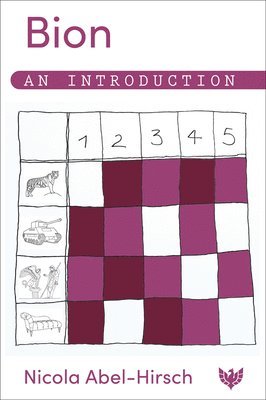
Bion’s life spanned key events in the twentieth century. Born in India in 1897, he came to boarding school in England aged 8 and at 18 fought in the tanks in World War One. He trained as a doctor between the wars and, in his World War Two work for the army, he was an innovator. After the war, he became a patient of Melanie Klein, qualified as a psychoanalyst, and was part of an extraordinary period in psychoanalysis of work with psychotic mechanisms in patients. In the late 1950s, he identified the configuration container/contained as being at the heart of human development. He looked outside of psychoanalysis to philosophers, scientists, mathematicians, and even theo-mystical thinkers. His work evolved radically throughout the 1960s and, at age 70 when many would be thinking of slowing down, he emigrated to California and began to travel internationally, giving lectures and supervisions across three continents. After Freud, Bion appears to be the most quoted psychoanalyst of our time and this book provides the opportunity, even for those familiar with his work, to gain insight into its sheer breadth, showcased so brilliantly in this slim volume.As author of Bion: 365 Quotes, Nicola Abel-Hirsch’s immersion in Bion’s vast œuvre has enabled a comprehensive introduction to Bion and his work. Her lightness of touch, whilst retaining the necessary depth, makes it a joy to read. Bion and his work can be somewhat enigmatic but Abel-Hirsch’s understanding offers the ideal introduction to the man and his work.