Kritik: German Literary Theory and Cultural Studies Series – serie
Visar alla böcker i serien Kritik: German Literary Theory and Cultural Studies Series. Handla med fri frakt och snabb leverans.
11 produkter
11 produkter
263 kr
Skickas inom 10-15 vardagar
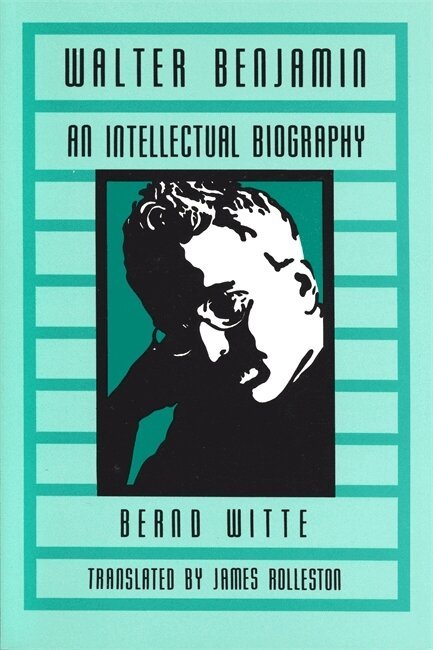
This biography of Walter Benjamin provides an introduction to his thought.
592 kr
Skickas inom 10-15 vardagar
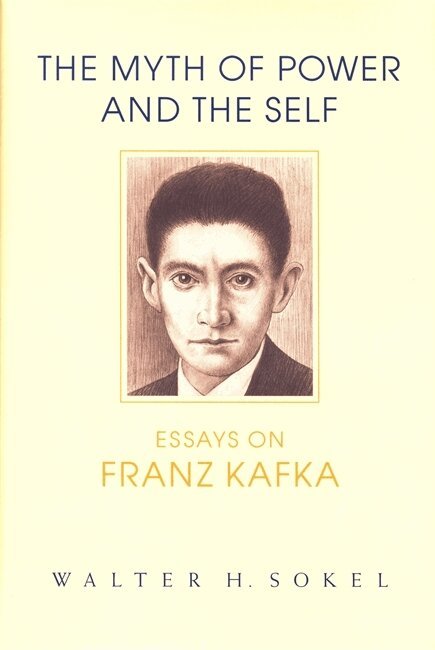
A collection of essays on Franz Kafka by the foremost scholar of Kafka. Franz Kafka (1883-1924) has come to be one of the most influential writers of the twentieth century. Born into a Jewish middle-class family in Prague, Bohemia, Kafka was in many ways a solitary figure, isolated in his own mind from any true community of friendship and alienated from his own Jewish heritage. Kafka's writings reflect his inner turmoil, and his novels became a symbol of the anxiety and alienation that pervaded much of twentieth-century society. The Myth of Power and the Self brings together Walter Sokel's most significant essays on Kafka written over a period of thirty-one years, 1966-1997. This volume begins with a discussion of Sokel's 1966 pamphlet on Kafka and a summary of his 1964 book, Tragik und Ironie (Tragedy and Irony), which has never been translated into English, and includes several essays published in English for the first time. Sokel places Kafka's writings in a very large cultural context by fusing Freudian and Expressionist perspectives and incorporating more theoretical approaches - linguistic theory, Gnosticism, and aspects of Derrida - into his synthesis. This superb collection of essays by one of the most qualified Kafka scholars today will bring new understanding to Kafka's work and will be of interest to literary critics, intellectual historians, and students and scholars of German literature and Kafka.
269 kr
Skickas inom 10-15 vardagar
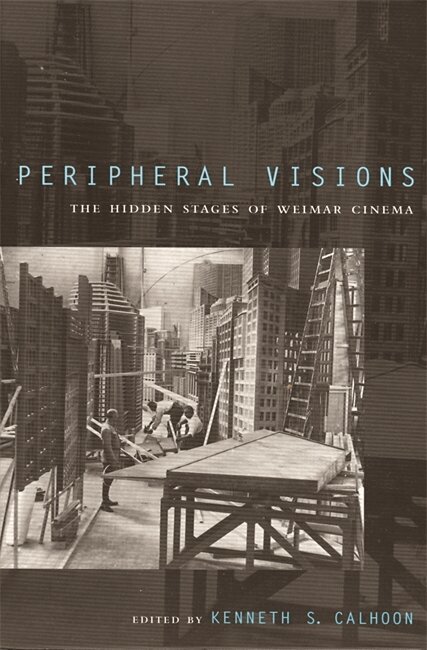
The title of this collection echoes Siegfried Kracauer's statement that the lavish movie palaces of 1920s Germany served to stimulate peripheral vision and thus prevent the audience from being absorbed by the spectacle itself. In consideration of questions concerning spatial transformations in and around Weimar cinema, the eight essays in this volume, though some more explicitly than others, have Kracauer as their interlocutor. The first major critic of classic German cinema, Kracauer is patron of the optics that seeks insight on the periphery, inviting the analysis of those other spaces that are implicated, if not present, in the films themselves. The films treated in this volume include such Expressionist mainstays as Lang's ""Metropolis"" and Murnau's ""Nosferatu"" as well as generally less familar works such as Ruttman's ""Berlin, Symphony of a City"", Jessner's ""Backstairs"", Berger's ""Day and Night"" and the mountain films of Fanck and Riefenstahl. Among the ""hidden stages"" analyzed are amusement parks, carnivals, department stores, train compartments, city streets, the womb, the theatre, the chamber, basement apartments - and ultimately Neubabelsberg, the gargantuan studio-complex near Berlin where so many of these peripheral spaces came to be simulated. With references that range from set architecture to Christmas celebrations, from the poetry of Rilke to chamber music, from the introduction of sound to Macy's parades, and from an ""urban unconscious"" to a ""cinematic sublime"", ""Peripheral Visions"" is a collection that should be of interest to students and scholars of film and German cultural studies.
285 kr
Skickas inom 10-15 vardagar
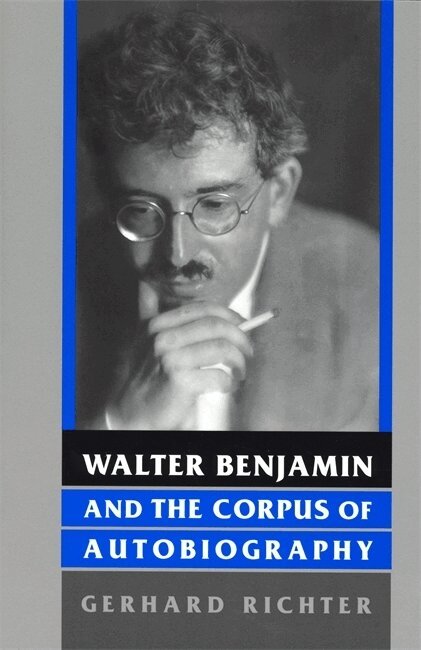
Walter Benjamin is considered one of the most significant writers and theorists in 20th-century Western culture. The author of this work shows that Benjamin's engagement with the political cannot be understood in terms of unified concepts, but rather should be understood from his language.
Fabricating Pleasure
Fashion, Entertainment, and Cultural Consumption in Germany, 1780-1830
Inbunden, Engelska, 2005
709 kr
Skickas inom 10-15 vardagar
Entertainment, defined as occasions for creating pleasure, added an important dimension to the lifestyle and self-definition of the German middle class around the turn of the nineteenth century. Modern forms of culture and consumption appearing around this time not only enhanced pleasure in physical sensations but also enabled imaginary sensations in the absence of actual stimuli. Desiring, rather than having, became an important mode of cultural consumption, linking products and practices with self-image, serving to express social identity in an increasingly more anonymous society - a society where the modern freedom of choice brought with it a loss of tradition and the stability attached to it. Fabricating Pleasure traces the creation of this unique form of domestic culture, showing how the bourgeoisie of late-eighteenth- and early-nineteenth-century Germany fused consumption with high culture. Author Karin Wurst illuminates the sociohistorical context and the emergence of the modern middle class, its differentiation, and its conception of culture. In her thoughtful analysis, Wurst reconstructs the roles of Empfindsamkeit (sensibility) and the new love paradigm, examining the change in mentality they fostered through the reconceptualization of pleasure and entertainment. The book also discusses the relationship between print culture (using Bertuch's Journal des Luxus und der Moden as its prime example) and an increase in social mobility. From art and music to fashion and travel, Wurst places these popular forms of entertainment and pleasurable diversion in their social and historical contexts and also shows how they have remarkable bearing on present-day debates on cultural literacy.
595 kr
Skickas inom 10-15 vardagar
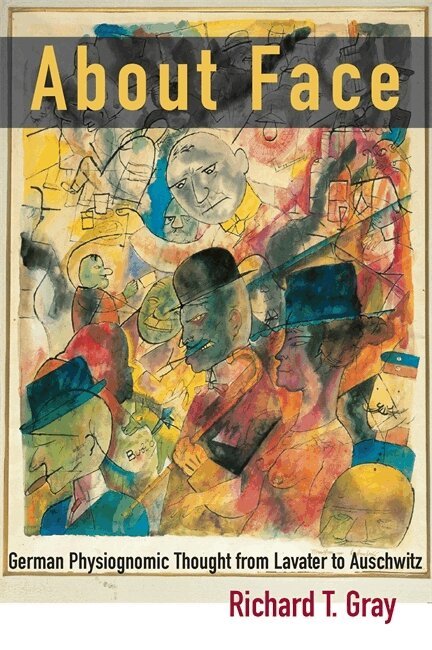
Once associated with astrology and occultist prophecy, the art of interpreting personal character based on facial and other physical features dates back to antiquity. About Face tells the intriguing story of how physiognomics became particularly popular during the Enlightenment, no longer as a mere parlor game but as an empirically grounded discipline. The story expands to illuminate an entire tradition within German culture, stretching from Goethe to the rise of Nazism. In About Face, Richard T. Gray explores the dialectical reversal - from the occult to the scientific realm - that entered physiognomic thought in the late eighteenth century, beginning with the positivistic writings of Swiss pastor Johann Caspar Lavater. Originally claimed to promote understanding and love, physiognomics devolved into a system aimed at valorizing a specific set of physical, moral, and emotional traits and stamping everything else as ""deviant."" This development not only reinforced racial, national, and characterological prejudices but also lent such beliefs a presumably scientific grounding. In the period following World War I, physiognomics experienced yet another unprecedented boom in popularity. Gray explains how physiognomics had by then become a highly respected ""super-discipline"" that embraced many prominent strands of German thought: the Romantic philosophy of nature, the ""life philosophy"" propagated by Dilthey and Nietzsche, the cultural pessimism of Schopenhauer, Husserl's method of intuitive observation, Freudian psychoanalysis, and early-twentieth-century eugenics and racial biology. A rich exploration of German culture, About Face offers fresh insight into the intellectual climate that allowed the dangerous thinking of National Socialism to take hold.
715 kr
Skickas inom 10-15 vardagar
The German-speaking inhabitants of central Europe did not automatically think of themselves as ""Germans"" - not before 1871 and not always after unification. In fact, they spoke mutually incomprehensible dialects, owed allegiance to different leaders, worshiped in different churches, and would not have recognized each other's customs. If asked about their identity, these prospective Germans might have answered Austrian, Bavarian, or Prussian, and they could as easily have used more local labels or resorted to occupational markers. For this disparate population to think of itself as ""German,"" that word had to acquire content - people had to learn a whole set of stories they could tell themselves and others in answer to the question of identity. History, Fiction, and Germany chronicles how German nationalism developed simultaneously with the historical novel and the field of history, both at universities and in middlebrow reading material. The book examines Germany's emerging national narrative as nineteenth-century writers adapted it to their own visions and to changing circumstances. These writers found and popularized the nation's heroes and heroines, demonized its villains and enemies, and projected the nation's hopes and dreams for the future. Author Brent O. Peterson argues that it was the production and consumption of national history - the writing and reading of the nation - that filled Germany with Germans. Although the task of national narration was never complete and never produced a single, universally accepted version of German national identity, tales from Germans' gradually shared history did more to create Germany than any statesman, general, or philosopher. History, Fiction, and Germany provides a valuable resource for scholars and students of German studies, as well as anyone interested in history and the articulation of national identity.
Time's Visible Surface
Alois Riegl and the Discourse on History and Temporality in Fin-de-Siecle Vienna
Inbunden, Engelska, 2006
654 kr
Skickas inom 10-15 vardagar
Alois Riegl's art history has influenced thinkers as diverse as Erwin Panofsky, Georg Lukacs, Walter Benjamin, Paul Feyerabend, Gilles Deteuze, and Felix Guattari. One of the founders of the modern discipline of art history, Riegl is best known for his theories of representation. Yet his inquiries into the role of temporality in artistic production - including his argument that art conveys a culture's consciousness of time - show him to be a more wide-ranging and influential commentator on historiographical issues than has been previously acknowledged. In ""Time's Visible Surface"", Michael Gubser presents Riegl's work as a sustained examination of the categories of temporality and history in art. Supported by a rich exploration of Riegl's writings, Gubser argues that Riegl viewed artworks as registering historical time visibly in artistic forms. Gubser's discussion of Riegl's academic milieu also challenges the widespread belief that Austrian modernism adopted a self-consciously a historical worldview. By analyzing the works of Riegl's professors and colleagues at the University of Vienna, Gubser shows that Riegl's interest in temporality, from his early articles on calendar art through later volumes on the Roman art industry and Dutch portraiture, fit into a broad discourse on time, history, and empiricism that engaged Viennese thinkers such as the philosopher Franz Brentano, the historian Theodor von Sickel, and the art historian Franz Wickhoff. By expanding our understanding of Riegl and his intellectual context, ""Time's Visible Surface"" demonstrates that Riegl is a pivotal figure in cultural theory and that fin-de-siecle Vienna holds continued relevance for today's cultural and philosophical debates.
669 kr
Skickas inom 10-15 vardagar
When Paul Celan was charged with plagiarism in 1960, the ensuing public debate in West Germany threw the poet into a major personal crisis even though most German critics immediately came to his defense. This crisis coincided with a transformative moment in the history of Holocaust remembrance, its first generational reimagining in the wake of a number of highly publicized criminal trials. Words from Abroad takes its lead from this disjunction between public ritual and private crisis to chart the emergence of a new literary diaspora, examining German Jewish writers who were dislocated in the course of World War II and began rewriting their own displacement more than a decade after the war. The idea of diaspora had ceased to be a constructive element of Jewish culture in Germany during the nineteenth-century process of emancipation and assimilation, though this book argues that it becomes crucial in articulating the possibility of German Jewish identity after the Holocaust. Along with the works of Paul Celan, Words from Abroad examines selected German Jewish writers such as Peter Weiss and Nelly Sachs. The study of these authors is framed by theoretical reflections on the play of distance and proximity in German Jewish intellectuals after the Holocaust, including Theodor W. Adorno, Jean Amery, and Gunther Anders. Drawing on postcolonial theory, diaspora studies, trauma theory, and psychoanalytical theory, author Katja Garloff offers an original and nuanced reading of the way in which these writers, in the wake of the Holocaust, experienced and variously created a vision of dispersion as both traumatic and productive. Words from Abroad is an important tool in investigating the works of these German Jewish writers and thinkers, but it is also a contribution to the interdisciplinary scholarship on trauma and displacement itself.
641 kr
Skickas inom 10-15 vardagar
This is a landmark study on Aby Warburg's life and work, translated into English.In ""Aby Warburg and Anti-Semitism"", Charlotte Schoell-Glass provides an unprecedented look at the life and writings of cultural critic Aby Warburg through the prism of Warburg's little-known political views. Schoell-Glass argues provocatively based on archival research that Warburg's work and teachings developed as a reaction to the growing anti-Semitism in Germany, which he saw as a threat to classical education and university scholarship. Translated into English for the first time, ""Aby Warburg and Anti-Semitism"" sheds much needed light on Warburg's views on Judaism and the politics of his time.Aby Warburg, scion of a well-known Jewish banking family in Hamburg, sacrificed his birthright to pursue a career as a private scholar. As an independent art historian, he devoted himself almost exclusively to reinterpreting the revival of antiquity within the Renaissance, urging other art historians to approach their work as a brand of the larger study of image making and philosophy. In this study, Schoell-Glass examines Warburg's most influential essays on Durer, Rembrandt, and the Sassetti Chapel and his most innovative concepts - the accessories of motion, the pathos formula, and the afterlife of antiquity - to illustrate how Warburg persistently showed a deep concern over a disappointing and unstable outside world within his own work. Schoell-Glass shows how Warburg attempts to make a response to anti-Semitism the only way he knew how, despite his awareness of the diminishing societal relevance of that response.From this study of Warburg, Schoell-Glass produces a multilayered case study of the encounter between twentieth-century politics and scholarship. Art historians, German historians, and scholars of Jewish studies and cultural studies will be grateful for this volume.
700 kr
Skickas inom 10-15 vardagar
Wearied by his life as an administrator at the Duke's court in Weimar, in 1786 Johann Wolfgang von Goethe departed unannounced in the middle of the night for what had been the destination of his imagination since childhood: Italy. His extended stay there dramatically affected his views of art, architecture, prose, poetry, and science. When he returned to Germany and Weimar, Goethe's experiences translated into his life and work in ways that influenced countless others as they developed Germany's own brand of high culture. ""The Spell of Italy: Vacation, Magic, and the Attraction of Goethe"" tracks the peculiar space Italy occupies in the cultural consciousness of German writers by reconsidering the Italian journeys of Goethe and Winckelmann and the legacy of those journeys in the works of Heine, Nietzsche, Freud, Mann, Carossa, and Bachmann. Author Richard Block contests previous assumptions about Italy as a place to encounter classical culture and creative rebirth. His study examines the degree to which Germany's literary and cultural traditions appropriated a phantasmic Italy, showing how Winckelmann's art history and Goethe's Italian journey predisposed later writers to search for an aesthetic ideal in Italy that did not exist, and how their search for this absent ideal eventually resulted in disillusionment and deception. Building on previous work on Goethe, literary theory, and cultural history, ""The Spell of Italy"" offers compelling new ways of understanding Germany's fascination with Italy from the eighteenth century to its troubled political history of the twentieth century.