Kuroda Classics in East Asian Buddhism - Böcker
Visar alla böcker i serien Kuroda Classics in East Asian Buddhism. Handla med fri frakt och snabb leverans.
6 produkter
6 produkter
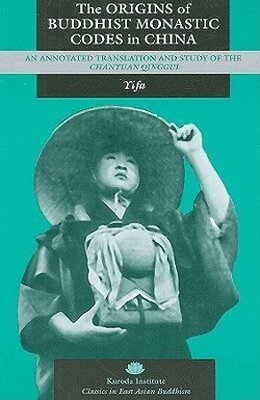
Origins of Buddhist Monastic Codes in China
An Annotated Translation and Study of the Chanyuan Qinggui
Häftad, Engelska, 2009
225 kr
Skickas inom 11-20 vardagar
The Origins of Buddhist Monastic Codes in China contains the first complete translation of China’s earliest and most influential monastic code. The twelfth-century text Chanyuan qinggui (Rules of Purity for the Chan Monastery) provides a wealth of detail on all aspects of life in public Buddhist monasteries during the Sung (960–1279).Part One consists of Yifa’s overview of the development of monastic regulations in Chinese Buddhist history, a biography of the text’s author, and an analysis of the social and cultural context of premodern Chinese Buddhist monasticism. Of particular importance are the interconnections made between Chan traditions and the dual heritages of Chinese culture and Indian Buddhist Vinaya. Although much of the text’s source material is traced directly to the Vinayas and the works of the Vinaya advocate Daoan (312–385) and the Lü master Daoxuan (596–667), the Chanyuan qinggui includes elements foreign to the original Vinaya texts―elements incorporated from Chinese governmental policies and traditional Chinese etiquette. Following the translator’s overview is a complete translation of the text, extensively annotated.
344 kr
Skickas inom 3-6 vardagar
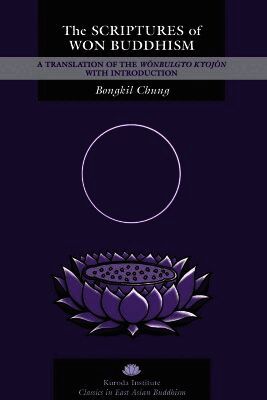
Won Buddhism, one of the major religions of modern Korea, was established in 1916 by Pak Chung-bin (1891–1943), later known as Sotaesan. In 1943 Sotaesan published a collection of Buddhist writings, the Correct Canon of Buddhism (Pulgyo chongjon), which included the doctrine of his new order. Four years later, the second patriarch, Chongsan (1900–1962), had the order compile a new canon, which was published in 1962. This work, translated here as The Scriptures of Won Buddhism (Wonbulgyo kyojon), consists of the Canon (a redaction of the first part of the Pulgyo chongjon) and the analects and chronicle of the founder known as the Scripture of Sotaesan. The present translation incorporates critical tenets from the 1943 Canon that were altered in the redaction process and offers persuasive arguments for their re-inclusion.
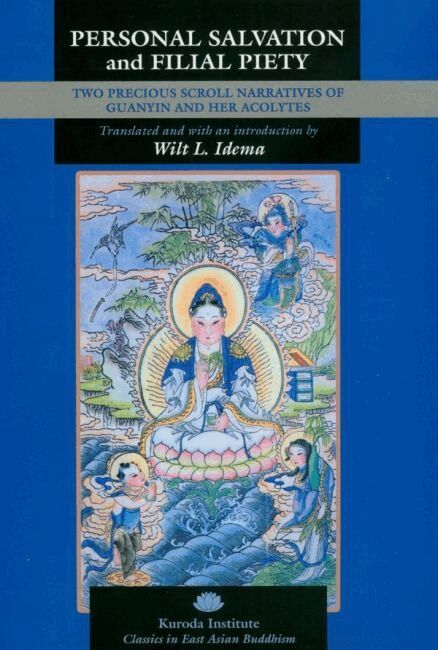
Personal Salvation and Filial Piety
Two Precious Scroll Narratives of Guanyin and Her Acolytes
Häftad, Engelska, 2022
235 kr
Skickas inom 7-10 vardagar
The Bodhisattva Avalokitesvara was a handsome prince when he entered China. As Guanyin, the bodhisattva was venerated from the eleventh century onward in the shape of a beautiful woman who became a universal savior. Throughout the last millennium, the female Guanyin has enjoyed wide and fervid veneration throughout East Asia and has appeared as a major character in literature and legend. In one tale, Guanyin (as the princess Miaoshan) returns from the dead after being executed by the king, her father, for refusing to marry. The most popular version of this legend is The Precious Scroll of Incense Mountain (Xiangshan baojuan), a long narrative in prose and verse and a work of considerable literary merit. It emphasizes the conflict between father and daughter, in the course of which all conventional arguments against a religious lifestyle are paraded and rebutted. A lengthy description of Guanyin’s visit to the underworld, which focuses on the conflict between grace and justice, is also included.Personal Salvation and Filial Piety offers a complete and fully annotated translation of The Precious Scroll, based on a nineteenth-century edition. The translation is preceded by a substantial introduction that discusses the origin of the text and the genre to which it belongs and highlights the similarities and differences between the scroll and female saints’ lives from medieval Europe. There follows a translation of the much-shorter Precious Scroll of Good-in-Talent and Dragon Daughter, which provides a humorous account of how Guanyin acquired the three acolytes—Sudhana, Nagakanya, and a white parrot—who are often shown surrounding her in popular prints.As the first English-language translation of major "precious scrolls," Personal Salvation and Filial Piety will appeal to a wide range of readers—from scholars of Chinese literature to students of Buddhism. Beyond the field of East Asian studies, it will interest specialists in comparative religion and literature and feminist theologians. Because of its lively and moving narratives, the text is suitable for courses on popular Buddhist religiosity (particularly female religiosity) in Chinese society.
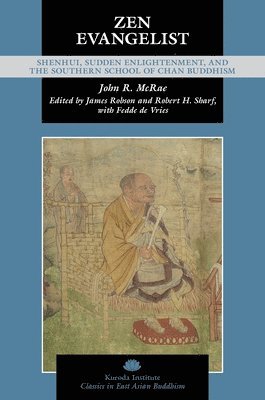
Zen Evangelist
Shenhui, Sudden Enlightenment, and the Southern School of Chan Buddhism
Inbunden, Engelska, 2023
732 kr
Skickas inom 7-10 vardagar
Huineng (638–713), author and hero of the Platform Sutra, is often credited with founding the Southern school of Chan Buddhism and its radical doctrine of "sudden enlightenment." However, manuscripts discovered at Dunhuang at the beginning of the twentieth century reveal that the real architect of the Southern school was Huineng’s student Shenhui (684–758). An ardent evangelist for his master’s teaching and a sharp critic of rival meditation teachers of his day, Shenhui was responsible for Huineng’s recognition as the "sixth patriarch," for the promotion and eventual triumph of the sudden teaching, and for a somewhat combative style of Chan discourse that came to be known as "encounter dialogue." Shenhui’s historical importance in the rise and success of Chan is beyond dispute, yet until now there has been no complete translation of his corpus into English.This volume brings together John McRae’s lifetime of work on the Shenhui corpus, including extensively annotated translations of all five of Shenhui’s texts discovered at Dunhuang as well as McRae’s seminal studies of Shenhui’s life, teachings, and legacy. McRae’s research explores the degree to which the received view of the Northern school teachings is a fiction created by Shenhui to score rhetorical points and that Northern and Southern teachings may have been closer to one another than the canonical narrative depicts. McRae explains Shenhui’s critical role in shaping what would later emerge as "classical Chan," while remaining skeptical about the glowing image of Shenhui as an effective mentor and inspired revolutionary. This posthumously published book is the fulfillment of McRae’s wish to make Shenhui’s surviving writings accessible through carefully annotated English translations, allowing readers to form their own opinions.
205 kr
Skickas inom 7-10 vardagar
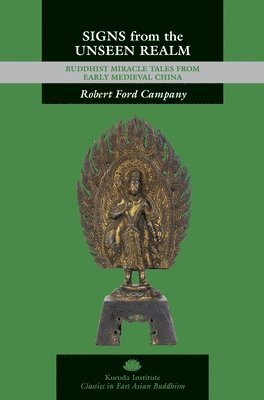
In early medieval China hundreds of Buddhist miracle texts were circulated, inaugurating a trend that would continue for centuries. Each tale recounted extraordinary events involving Chinese persons and places—events seen as verifying claims made in Buddhist scriptures, demonstrating the reality of karmic retribution, or confirming the efficacy of Buddhist devotional practices. Robert Ford Campany, one of North America’s preeminent scholars of Chinese religion, presents in this volume the first complete, annotated translation, with in-depth commentary, of the largest extant collection of miracle tales from the early medieval period, Wang Yan’s Records of Signs from the Unseen Realm, compiled around 490 C.E.In addition to the translation, Campany provides a substantial study of the text and its author in their historical and religious settings. He shows how these lively tales helped integrate Buddhism into Chinese society at the same time that they served as platforms for religious contestation and persuasion. Campany offers a nuanced, clear methodological discussion of how such narratives, being products of social memory, may be read as valuable evidence for the history of religion and culture.Readers interested in Buddhism; historians of Chinese religions, culture, society, and literature; scholars of comparative religion: All will find Signs from the Unseen Realm a stimulating and rich contribution to scholarship.
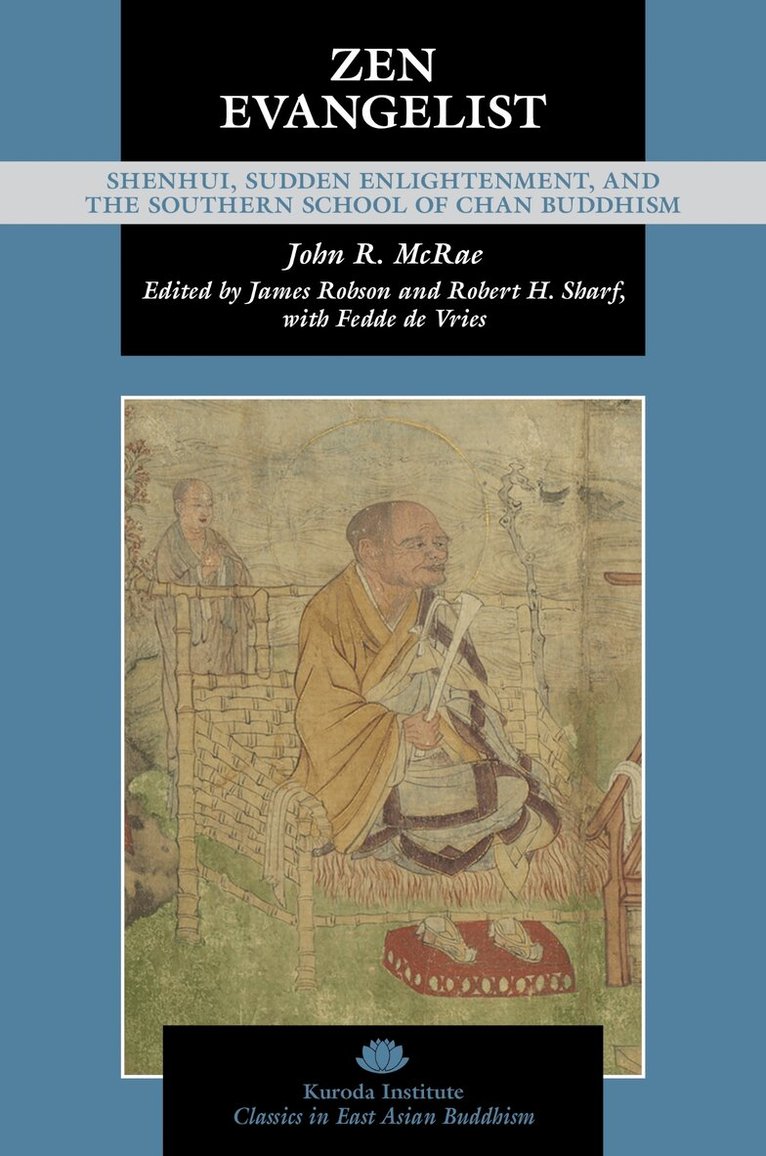
Zen Evangelist
Shenhui, Sudden Enlightenment, and the Southern School of Chan Buddhism
Häftad, Engelska, 2025
205 kr
Skickas inom 7-10 vardagar
Huineng (638–713), author and hero of the Platform Sutra, is often credited with founding the Southern school of Chan Buddhism and its radical doctrine of "sudden enlightenment." However, manuscripts discovered at Dunhuang at the beginning of the twentieth century reveal that the real architect of the Southern school was Huineng’s student Shenhui (684–758). An ardent evangelist for his master’s teaching and a sharp critic of rival meditation teachers of his day, Shenhui was responsible for Huineng’s recognition as the "sixth patriarch," for the promotion and eventual triumph of the sudden teaching, and for a somewhat combative style of Chan discourse that came to be known as "encounter dialogue." Shenhui’s historical importance in the rise and success of Chan is beyond dispute, yet until now there has been no complete translation of his corpus into English.This volume brings together John McRae’s lifetime of work on the Shenhui corpus, including extensively annotated translations of all five of Shenhui’s texts discovered at Dunhuang as well as McRae’s seminal studies of Shenhui’s life, teachings, and legacy. McRae’s research explores the degree to which the received view of the Northern school teachings is a fiction created by Shenhui to score rhetorical points and that Northern and Southern teachings may have been closer to one another than the canonical narrative depicts. McRae explains Shenhui’s critical role in shaping what would later emerge as "classical Chan," while remaining skeptical about the glowing image of Shenhui as an effective mentor and inspired revolutionary. This posthumously published book is the fulfillment of McRae’s wish to make Shenhui’s surviving writings accessible through carefully annotated English translations, allowing readers to form their own opinions.