KWR Watercycle Research Institute Series – serie
Visar alla böcker i serien KWR Watercycle Research Institute Series. Handla med fri frakt och snabb leverans.
9 produkter
9 produkter
Cause and Prevention of Clogging of Wells Abstracting Groundwater from Unconsolidated Aquifers
Häftad, Engelska, 2011
1 697 kr
Tillfälligt slut
Part of Groundwater Set - Buy all six books and save over 30% on buying separately! Groundwater serves many purposes. It is a source of public and private drinking water, it is utilized as an industrial feedstock and it is used in agriculture for irrigation and cattle watering. The abstraction of groundwater also serves many civil engineering purposes such as structures, construction pit dewatering and remediation of polluted groundwater. Furthermore, groundwater is increasingly used for supply and storage of energy for the cooling and heating of buildings. Many wells abstracting groundwater suffer from impaired performance as a result of clogging by mechanical or biogeochemical processes. This represents a significant economic loss due to volume reductions, cost of well rehabilitations or construction of new wells. Cause and Prevention of Clogging of Wells Abstracting Groundwater from Unconsolidated Aquifers provides a comprehensive description of the various causes and processes associated with well clogging in addition to describing methodologies for diagnosis and prevention.
1 697 kr
Tillfälligt slut
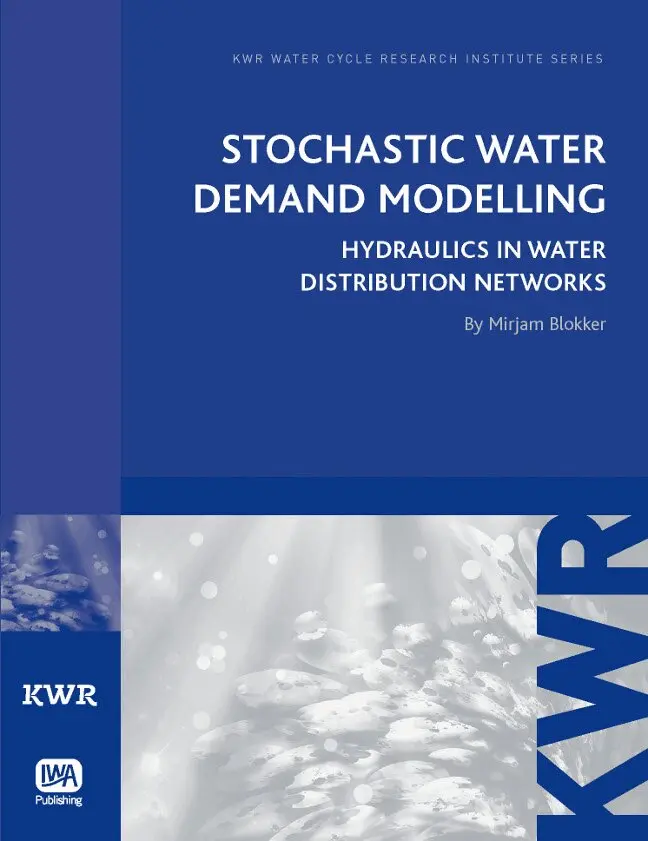
Water quality processes in the drinking water distribution network are strongly influenced by the flow velocity and residence time of the water in the network. In order to understand how the water quality changes in the drinking water distribution network, a good understanding of hydraulics is required. Specifically in the periphery of the network, where customers are connected, the hydraulics can change rapidly. During the night time the water is almost stagnant and the residence time increases. In the morning, when everybody gets up and flushes the toilet and takes a shower, high flow velocities can occur. During the remainder of the day flow velocities are low. The stochastic endues model SIMDEUM was developed to simulate water use on a small time scale (1 s) and small spatial scale (per fixture). SIMDEUM enables a good model of flow velocities, residence times and the connected water quality processes in the water distribution network. Stochastic Water Demand Modelling: Hydraulics in Water Distribution Networks describes the requirements of hydraulics in water quality modelling and provides insight into the development of detailed residential and non-residential water demand models. The book illustrates the use of detailed demand models in water quality models with respect to the variation in residence times and the relation with particle accumulation and resuspension. The models are compared to measurements in several real drinking water distribution networks.
1 697 kr
Tillfälligt slut
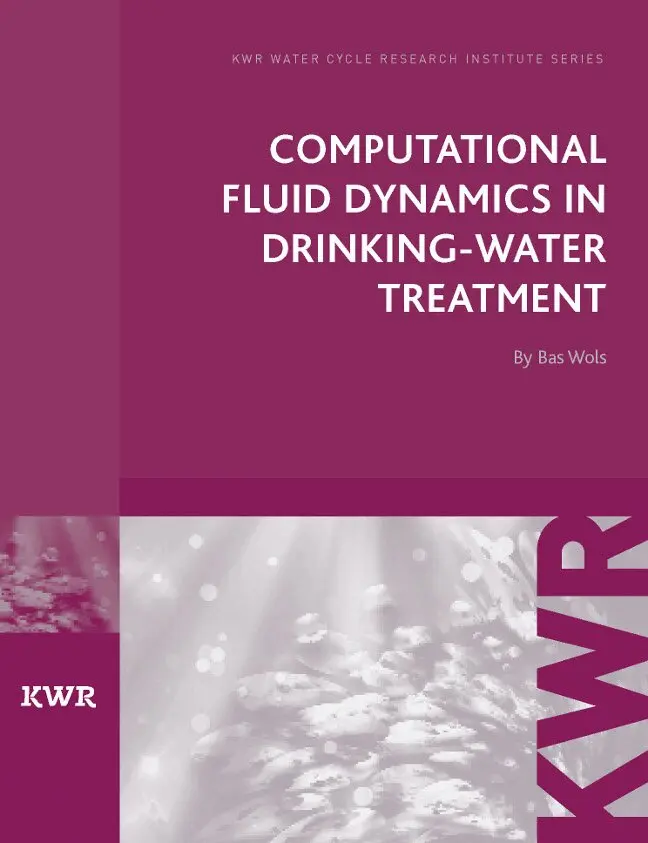
Special Offer: KWR Drinking Water Treatment Set - Buy all five books together and save £119!Computational Fluid Dynamics (CFD) uses advanced numerical models to predict flow, mixing and (bio)-chemical reactions. In drinking water engineering, CFD is increasingly applied to predict the performance of treatment installations and to optimise these installations. A lack of understanding of the hydraulics in drinking water treatment systems has resulted in suboptimal design of installations. The formation of unwanted disinfection-by-products and the energy consumption or use of chemicals is therefore higher than necessary. The aim of this work is to better understand the hydraulic and (bio)-chemical processes in drinking water treatment installations using experimental and numerical techniques. By combining these techniques, CFD modelling is further developed as a tool to evaluate the performance of these installations. This leads to new insights in the applicability of models in ozone and UV systems, and new insights in design concepts of these systems. CFD modelling proves to be a powerful tool to understand the hydrodynamic and (bio)-chemical processes in drinking water systems. If applied properly, accounting for the complex turbulent motions and validated by experiments, this tool leads to a better design of UV reactors, ozone systems and other systems dictated by hydraulics.
1 759 kr
Tillfälligt slut
People and societies conceptualise and experience time in fundamentally different ways. This basic aspect of perception significantly influences the way we frame problems and conceive solutions. This book shows how time perspectives differ across national cultures and across professional roles. It shows how these differences generate ambiguity when it comes to defining problems and devising solutions in the water sector. This is especially important when dealing with problems such as Sustainable Water Resources Management and Climate Change that involve (culturally and professionally) diverse stakeholders. Response strategies to such problems inherently require concerted action because of the large spatial and temporal scale on which they take place and to minimise the occurrence of conflicting interventions. This disparity between diverse problem perceptions and the need for collective understanding and united action is increasingly recognised as an important concern in the field of water resource management. The conclusions are important because the time horizons considered in planning and setting research agendas influence what problems are perceived, what questions are asked, and what solutions are sought. In general, more time needs to be invested in framing problems. This is particularly important for participatory planning and transdisciplinary research where the diversity in Motivational Space is greatest. It is recommended that Motivational Space be collectively and explicitly framed from the outset of all planning projects, especially in terms of Temporal Extent. When it comes to setting research agendas it is important to match the Motivational Space of those who prioritize the questions with the goal of the research programme. Author: Andrew James Segrave, KWR Watercycle Research Institute, Utrecht, The Netherlands
1 759 kr
Tillfälligt slut
The use of shallow geothermal energy (SGE) systems to acclimatize buildings has increased exponentially in the Netherlands and worldwide. In certain areas, SGE systems are constructed in aquifers also used for drinking water supply raising the question of potential groundwater quality impact. Impacts of Shallow Geothermal Energy on Groundwater Quality provides a hydrochemical and geomicrobial overview of the effects of ground source heat pumps and aquifer thermal energy storage. The area is investigated with field and laboratory experiments, and reactive transport models, showing that shallow geothermal energy systems can influence groundwater quality in a number of ways. Most prominent in open ground source heating systems operating at low temperature (<20°C) is the physical mixing of deep and shallow groundwater of different quality distorting the natural water quality stratification in aquifers. At a temperature of 25°C and beyond certain trace elements were observed to mobilize in laboratory experiments, and beyond 40°C redox conditions change significantly while the microbial community shift towards a thermophilic community. Based on the results of this research, guidelines are presented for monitoring and permitting of SGE systems. The book is a useful resource for regulators of these systems, water companies and installers of the SGE systems.Author: Matthijs Bonte, Amsterdam, The Netherlands
1 697 kr
Tillfälligt slut
Special Offer: KWR Drinking Water Treatment Set - Buy all five books together and save a total £119! The overall aim of Elimination of Micro-organisms by Water Treatment Processes is to present default values for the micro-organisms elimination or inactivation credit of universally used processes in water treatment (MEC or MIC). The growing interest in Quantitative Microbial Risk assessment (QMRA) for safe drinking water requires such data. These MEC or MIC values have been calculated from research on elimination of viruses, bacteria and bacterial spores and protozoa (oo)cysts (Cryptosporidium and Giardia) by these treatment processes published in the international literature. The data have been selected on the base of different quality criteria related to information on applied experimental conditions and used methods. Furthermore the studies have been categorized on base of their similarities with ‘real world’ conditions (selected micro-organisms, scale and conditions of the tested processes). The international literature data revealed a high variation in elimination. The major parameters and process control parameters affecting elimination are described. This new edition describes the state-of-the-art progress in research on conventional treatment, coagulation and flocculation, rapid granular filtration, slow sand filtration and UV disinfection. Visit the IWA WaterWiki to read and share material related to this title: http://www.iwawaterwiki.org/xwiki/bin/view/Articles/WaterbornePathogens
Stochastic Modelling of Drinking Water Treatment in Quantitative Microbial Risk Assessment
Häftad, Engelska, 2010
1 697 kr
Tillfälligt slut
Special Offer: KWR Drinking Water Treatment Set - Buy all five books together and save a total £119! Safe drinking water is a basic need for all human beings. Preventing microbial contamination of drinking water is of primary concern since endemic illness and outbreaks of infectious diseases can have significant social and economic consequences. Confirming absence of indicators of faecal contamination by water analysis only provides a limited verification of safety. By measuring pathogenic organisms in source water and modelling their reduction by treatment, a higher level of drinking water safety can be verified. This book provides stochastic methods to determine reduction of pathogenic microorganisms by drinking water treatment. These can be used to assess the level and variability of drinking water safety while taking uncertainty into account. The results can support decisions by risk managers about treatment design, operation, monitoring, and adaptation. Examples illustrate how the methods can be used in water safety plans to improve and secure production of safe drinking water. More information about the book can be found on the Water Wiki in an article written by the author here: http://www.iwawaterwiki.org/xwiki/bin/view/Articles/Quantifyingmicro-organismremovalforsafedrinkingwatersupplies
1 697 kr
Tillfälligt slut
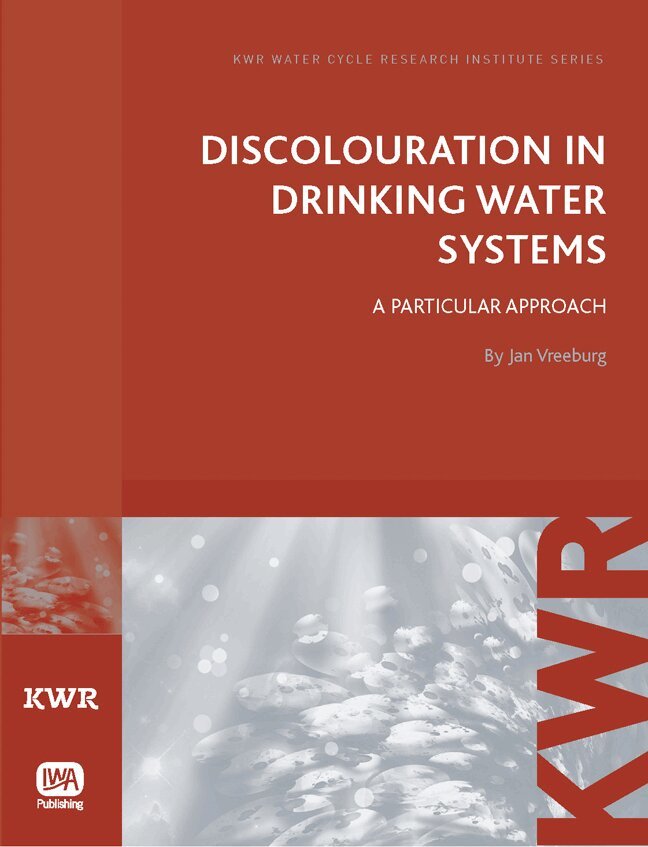
Special Offer: KWR Drinking Water Treatment Set - Buy all five books together and save a total £119! Discolouration in Drinking Water Systems analyses the particle-related processes involved in the generation of discolouration problems in the network. To this end, new measuring methods have been developed such as continuous monitoring of turbidity and particle count, the Resuspension Potential Method (RPM), and the Time Integrated Large Volume Sampler (TILVS). With these new methods the discolouration problem can be seen as related to loose deposits in the network. The incidental re-suspension of accumulated loose particles is the main cause of discolouration events in the network. The origin of the particles is mainly the treated drinking water, followed by processes in the network like post-flocculation, corrosion and leaching and biological growth and re-growth. Irrespective of the cause of the particles the accumulation to layers of loose deposits can initiate water quality problems. This book looks at how managing the accumulation is possible through controlling the velocity in the pipes and through removing the loose deposits through effective cleaning.
Quantitative Methods to Assess Capacity of Water Treatment to Eliminate Micro-Organisms
Häftad, Engelska, 2010
1 822 kr
Tillfälligt slut
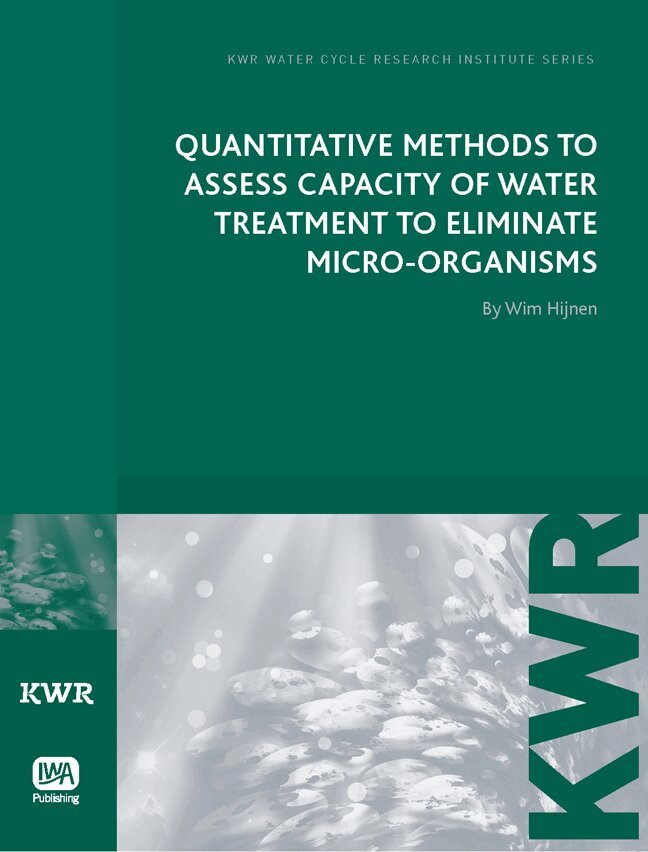
Special Offer: KWR Drinking Water Treatment Set - Buy all five books together and save a total £119! Ever since the recognition of the important role of water in the transmission of pathogenic micro-organisms in the 19th century, microbiological safety of drinking water has been a major research issue for microbiologists in the drinking water industry. The main objective of this book is to develop a general strategy to assess elimination capacity of water treatment processes for pathogens. It investigates: The potential use of faecal indicators Coli44, (including E. coli) and SSRC, (including C. perfringens) as process indicators to assess pathogen elimination in full-scale water treatment plants. The value of comparative challenge tests with pre-cultured organisms for the assessment of elimination capacity of full-scale processes, to study the effect of process conditions and to validate the use of process indicators. The use of literature data to assess elimination capacity of water treatment processes for pathogens and the effect of process conditions on this. Visit the IWA WaterWiki to read and share material related to this title: http://www.iwawaterwiki.org/xwiki/bin/view/Articles/WaterbornePathogens