
Stochastic Water Demand Modelling
1 756 kr
Skickas . Fri frakt över 249 kr.
Beskrivning
Water quality processes in the drinking water distribution network are strongly influenced by the flow velocity and residence time of the water in the network. In order to understand how the water quality changes in the drinking water distribution network, a good understanding of hydraulics is required. Specifically in the periphery of the network, where customers are connected, the hydraulics can change rapidly. During the night time the water is almost stagnant and the residence time increases. In the morning, when everybody gets up and flushes the toilet and takes a shower, high flow velocities can occur. During the remainder of the day flow velocities are low. The stochastic endues model SIMDEUM was developed to simulate water use on a small time scale (1 s) and small spatial scale (per fixture). SIMDEUM enables a good model of flow velocities, residence times and the connected water quality processes in the water distribution network. Stochastic Water Demand Modelling: Hydraulics in Water Distribution Networks describes the requirements of hydraulics in water quality modelling and provides insight into the development of detailed residential and non-residential water demand models. The book illustrates the use of detailed demand models in water quality models with respect to the variation in residence times and the relation with particle accumulation and resuspension. The models are compared to measurements in several real drinking water distribution networks.
Produktinformation
Utforska kategorier
Recensioner i media
Innehållsförteckning
Hoppa över listan
Mer från samma serie
Elimination of Micro-organisms by Water Treatment Processes
Wim A. M. Hijnen, Gertjan J. Medema
Häftad, 2010
1 756 kr
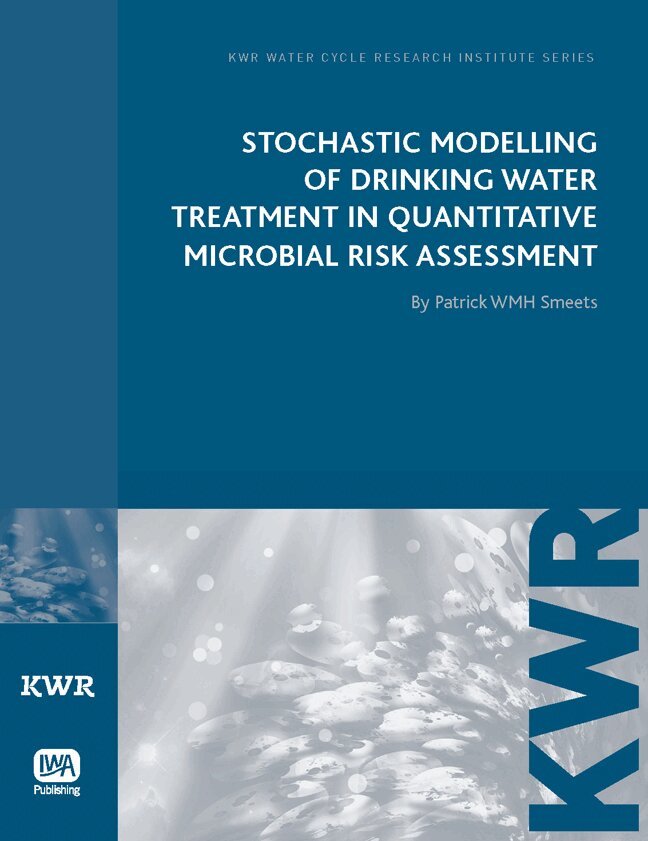
Stochastic Modelling of Drinking Water Treatment in Quantitative Microbial Risk Assessment
Patrick W. M. H. Smeets
Häftad, 2010
1 756 kr
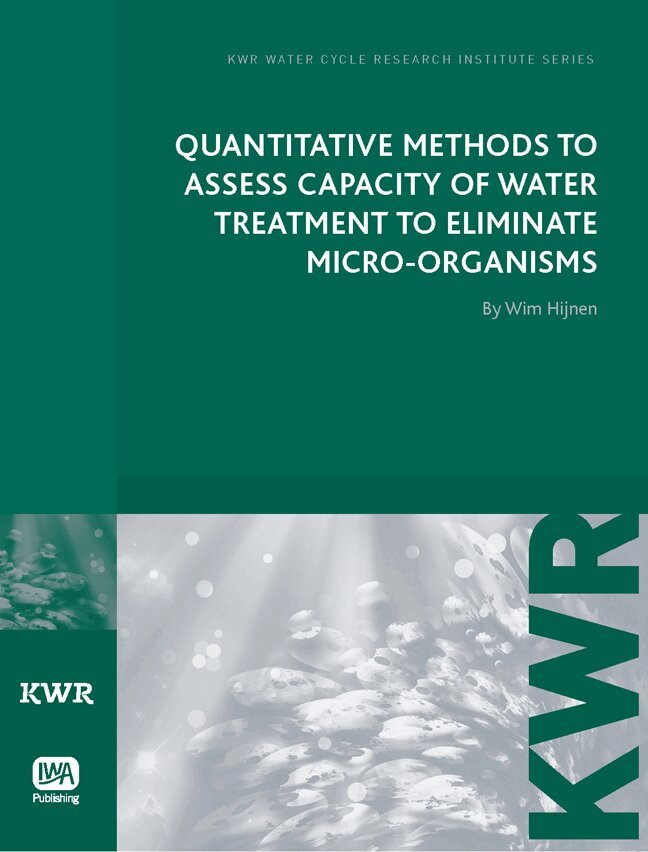
Quantitative Methods to Assess Capacity of Water Treatment to Eliminate Micro-Organisms
Wim A. M. Hijnen
Häftad, 2010
1 885 kr
Hoppa över listan


Du kanske också är intresserad av
Stochastic Modelling of Drinking Water Treatment in Quantitative Microbial Risk Assessment
Patrick W. M. H. Smeets
Häftad, 2010
1 756 kr
Elimination of Micro-organisms by Water Treatment Processes
Wim A. M. Hijnen, Gertjan J. Medema
Häftad, 2010
1 756 kr
Quantitative Methods to Assess Capacity of Water Treatment to Eliminate Micro-Organisms
Wim A. M. Hijnen
Häftad, 2010
1 885 kr
- Signerad!
Del 3
- -30%