Law and Society in the Ancient World - Böcker
Visar alla böcker i serien Law and Society in the Ancient World. Handla med fri frakt och snabb leverans.
7 produkter
7 produkter
1 215 kr
Skickas inom 7-10 vardagar
"Gardens and Neighbors will provide an important building block in the growing body of literature on the ways that Roman law, Roman society, and the economic concerns of the Romans jointly functioned in the real world."---Michael Peachin, New York UniversityAs is increasingly true today, fresh water in ancient Italy was a limited resource, made all the more precious by the Roman world's reliance on agriculture as its primary source of wealth. From estate to estate, the availability of water varied, in many cases forcing farmers in need of access to resort to the law. In Gardens and Neighbors: Private Water Rights in Roman Italy, Cynthia Bannon explores the uses of the law in controlling local water supplies. She investigates numerous issues critical to rural communities and the Roman economy. Her examination of the relationship between farmers and the land helps draw out an understanding of Roman attitudes toward the exploitation and conservation of natural resources and builds an understanding of law in daily Roman life.An editor of the series Law and Society in the Ancient World, Cynthia Jordan Bannon is also Associate Professor of Classical Studies at Indiana University, Bloomington. Her previous book was The Brothers of Romulus: Fraternal Pietas in Roman Law, Literature, and Society (1997). Visit the author's website: http://www.iub.edu/~classics/faculty/bannon.shtml.Jacket illustration: Barren Tuscan Fields in Winter © 2009 Scott Gilchrist. Image from stock.archivision.com.
693 kr
Skickas inom 7-10 vardagar
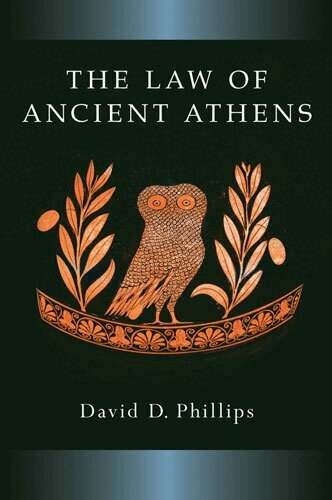
The Law of Ancient Athens contains the principal literary and epigraphical sources, in English, for Athenian law in the Archaic and Classical periods, from the first known historical trial (late seventh century) to the fall of the democracy in 322 BCE.This accessible and important volume is designed for teachers, students, and general readers interested in the ancient Greek world, the history of law, and the history of democracy, an Athenian invention during this period. Offering a comprehensive treatment of Athenian law, it assumes no prior knowledge of the subject and is organized in user-friendly fashion, progressing from the person to the family to property and obligations to the gods and to the state. David D. Phillips has translated all sources into English, and he has added significant introductory and explanatory material.Topics covered in the book include homicide and wounding; theft; marriage, children, and inheritance; citizenship; contracts and commerce; impiety; treason and other offenses against the state; and sexual offenses including rape and prostitution. The volume’s unique feature is its presentation of the actual primary sources for Athenian laws, with many key or disputed terms rendered in transliterated Greek. The translated sources, together with the topical introductions, notes, and references, will facilitate both research in the field and the teaching of increasingly popular courses on Athenian law and law in the ancient world.
1 159 kr
Skickas inom 7-10 vardagar
As the first Christian emperor of Rome, Constantine the Great has long interested those studying the establishment of Christianity. But Constantine is also notable for his ability to control a sprawling empire and effect major changes. The Justice of Constantine examines Constantine's judicial and administrative legislation and his efforts to maintain control over the imperial bureaucracy, to guarantee the working of Roman justice, and to keep the will of his subjects throughout the Roman Empire. John Dillon first analyzes the record of Constantine's legislation and its relationship to prior legislation. His initial chapters also serve as an introduction to Roman law and administration in later antiquity. Dillon then considers Constantine's public edicts and internal communications about access to law, trials and procedure, corruption, and punishment for administrative abuses. How imperial officials relied on correspondence with Constantine to resolve legal questions is also considered. A study of Constantine's expedited appellate system, to ensure provincial justice, concludes the book.Constantine's constitutions reveal much about the Theodosian Code and the laws included in it. Constantine consistently seeks direct sources of reliable information in order to enforce his will. In official correspondence, meanwhile, Constantine strives to maintain control over his officials through punishment; trusted agents; and the cultivation of accountability, rivalry, and suspicion among them.
1 593 kr
Skickas inom 7-10 vardagar
The Law of Ancient Athens contains the principal literary and epigraphical sources, in English, for Athenian law in the Archaic and Classical periods, from the first known historical trial (late seventh century) to the fall of the democracy in 322 BCE.This accessible and important volume is designed for teachers, students, and general readers interested in the ancient Greek world, the history of law, and the history of democracy, an Athenian invention during this period. Offering a comprehensive treatment of Athenian law, it assumes no prior knowledge of the subject and is organized in user-friendly fashion, progressing from the person to the family to property and obligations to the gods and to the state. David D. Phillips has translated all sources into English, and he has added significant introductory and explanatory material.Topics covered in the book include homicide and wounding; theft; marriage, children, and inheritance; citizenship; contracts and commerce; impiety; treason and other offenses against the state; and sexual offenses including rape and prostitution. The volume’s unique feature is its presentation of the actual primary sources for Athenian laws, with many key or disputed terms rendered in transliterated Greek. The translated sources, together with the topical introductions, notes, and references, will facilitate both research in the field and the teaching of increasingly popular courses on Athenian law and law in the ancient world.
1 026 kr
Skickas inom 7-10 vardagar
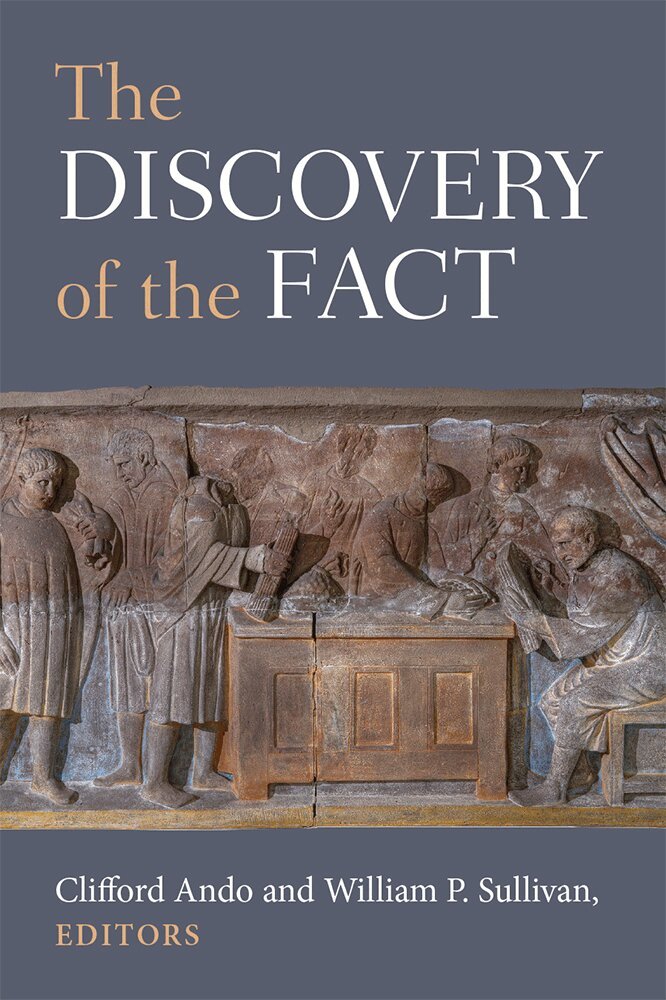
The Discovery of the Fact draws on expertise from lawyers, historians of philosophy, and scholars of classical studies and ancient history, to take a very modern perspective on an underexplored but essential domain of ancient legal history. Everyone is familiar with courts as adjudicators of facts. But legal institutions also played an essential role in the emergence of the notion of the fact, and contributed in a vital way to commonplace understandings of what is knowable and what is not. These issues have a particular importance in ancient Greece and Rome, the first western societies in which state law and state institutions of dispute resolution visibly play a decisive role in ordinary social and economic relations. The Discovery of the Fact investigates, historically and comparatively, the relationships among the law, legal institutions, and the boundaries of knowledge in classical Greece and Rome. Societies wanted citizens to conform to the law, but how could this be insured? On what foundation did ancient courts and institutions base their decisions, and how did they represent the reasoning behind their decisions when announcing them? Slaves were owned like things, and yet they had minds that ancients conceded were essentially unknowable. What was to be done? And where has the boundary been drawn between questions of law and questions of fact when designing processes of dispute resolution?
1 026 kr
Skickas inom 7-10 vardagar
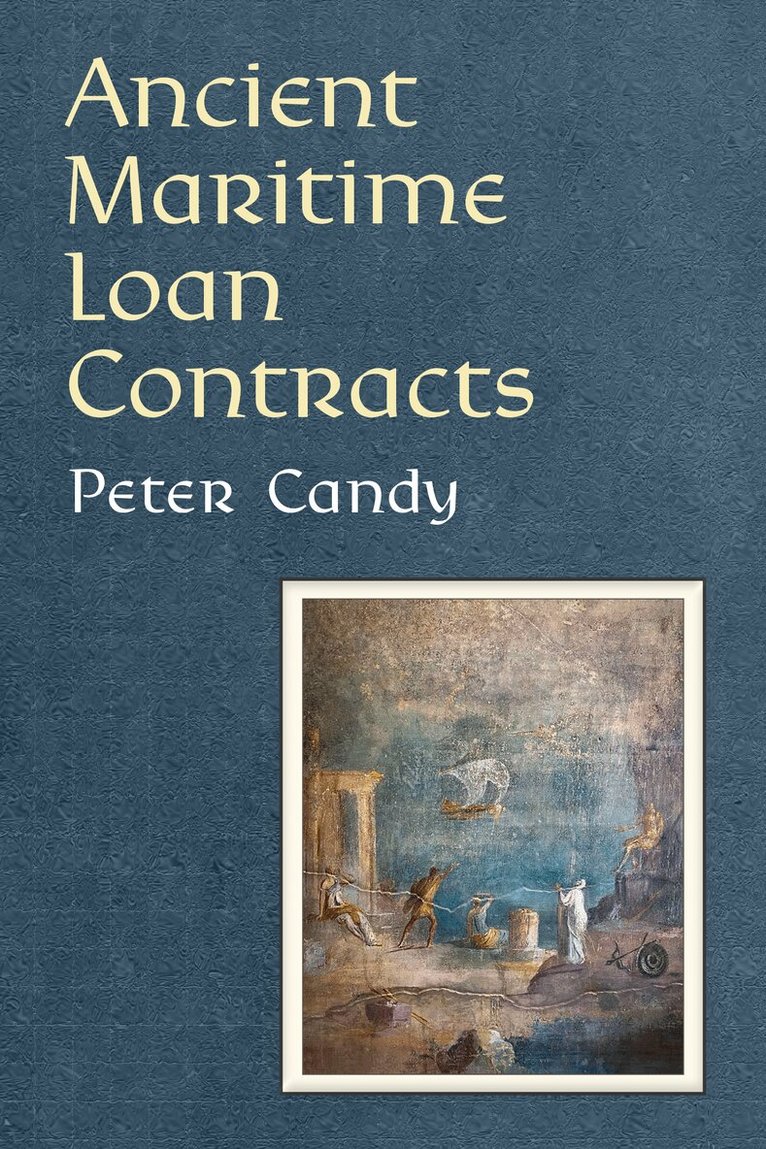
Ancient Maritime Loan Contracts studies the first millennium of the standard form contracts at the heart of ancient long-distance trade, from the fifth century BCE to Justinian. Maritime loan contracts recorded the terms of agreement on which a creditor lent a sum of money to a merchant or carrier to finance the purchase of a cargo for a trading expedition overseas. They were the lifeblood of the long-distance trade in bulk commodities that flourished in the Mediterranean and Black Seas and were also among the first private agreements to be fully committed to writing. From at least the fifth century BCE, these contracts were highly standardized in their terms, containing boilerplate clauses in a tried-and-tested construction. Maritime loan contracts continued to be used to finance maritime trade until the late Middle Ages, when they were only finally superseded by the contract of marine insurance. Combining a wide variety of papyrological, epigraphic, and legal evidence, Peter Candy’s framework illustrates the significance of these contracts in both their economic and legal context. By using an interdisciplinary approach, Ancient Maritime Loan Contracts addresses important questions about how maritime trade was financed in the context of the ancient economy; the response of individual legal cultures to maritime loan contracts; and the relationship between international commercial practice and legal development in the ancient world.
1 226 kr
Skickas inom 7-10 vardagar
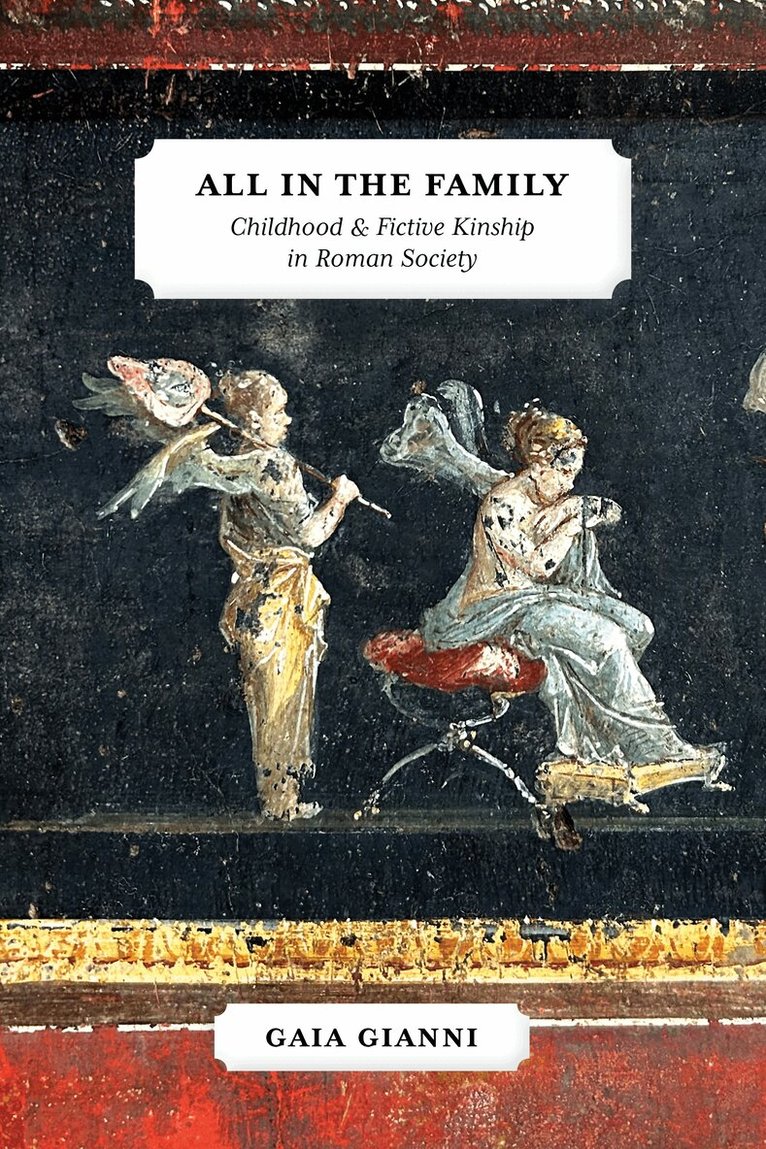
Gaia Gianni’s All in the Family explores how children shaped the development of pseudo-familial bonds, or fictive kinship, in Roman society during the early imperial period. Previous scholarship on the Roman family has primarily emphasized the patriarchal and nuclear structure of the Roman family, with children often represented as passive actors in a vacuum. Believing this to be an oversimplification of how the Roman family functioned, Gianni in her study focuses on the ways in which Roman families raised children and formed long-term relationships with individuals outside of the nuclear family, such as friends, neighbors, nurses, and caretakers, who gradually became full-fledged members of the family unit. Through a wide variety of literary works, legal documents, and funerary epitaphs for children set up by their families and caregivers, Gianni borrows from modern sociological and anthropological theories to argue that children acted as catalysts or connecting nodes in the creation of fictive kinship with individuals who were not part of the biologically determined family. In addition to illuminating the roles and experiences of these figures, All in the Family reveals how this social network was integrated into the family both in practice and in ideology, presenting a more complex view of the Roman family than the traditional nuclear structure.