Law and the Cognitive Sciences - Böcker
Visar alla böcker i serien Law and the Cognitive Sciences. Handla med fri frakt och snabb leverans.
7 produkter
7 produkter
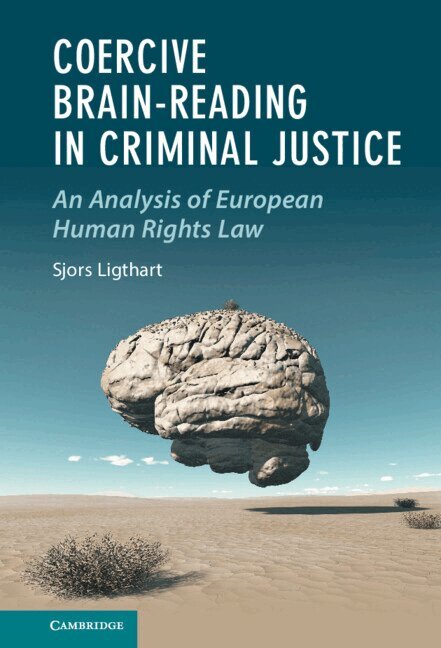
Coercive Brain-Reading in Criminal Justice
An Analysis of European Human Rights Law
Inbunden, Engelska, 2022
1 072 kr
Skickas inom 7-10 vardagar
Emerging neurotechnology offers increasingly individualised brain information, enabling researchers to identify mental states and content. When accurate and valid, these brain-reading technologies also provide data that could be useful in criminal legal procedures, such as memory detection with EEG and the prediction of recidivism with fMRI. Yet, unlike in medicine, individuals involved in criminal cases will often be reluctant to undergo brain-reading procedures. This raises the question of whether coercive brain-reading could be permissible in criminal law. Coercive Brain-Reading in Criminal Justice examines this question in view of European human rights: the prohibition of ill-treatment, the right to privacy, freedom of thought, freedom of expression, and the privilege against self-incrimination. The book argues that, at present, the established framework of human rights does not exclude coercive brain-reading. It does, however, delimit the permissible use of forensic brain-reading without valid consent. This cautionary, cutting-edge book lays a crucial foundation for understanding the future of criminal legal proceedings in a world of ever-advancing neurotechnology.
The Real Pain of Punishment
Prison, Belonging, and the Quest for Humanized Justice
Inbunden, Engelska, 2026
1 316 kr
Kommande
The Real Pain of Punishment explores the true pains of incarceration using insights from empirical sciences and people with lived prison experiences. The book highlights the concept of 'belonging' as an unprecedented lens for critically interrogating the legitimacy of incarceration across penal theory, sentencing practice, and human rights frameworks. The chapters chart pathways for bridging the gap between the normative idea of punishment and the stark realities of prison life. The final chapter, written with scholars currently and formerly incarcerated in a New York State facility, reflects on how embracing belonging within penal approaches can inform responses to harm grounded in humanization, proximity, empowerment, and collaboration. With this chapter and more, the book, advances a call for deeper epistemic dialogue within legal discourse on crime, punishment, and justice. This title is part of the Flip it Open Programme and may also be available open access. Check our website Cambridge Core for details.
1 324 kr
Skickas inom 7-10 vardagar
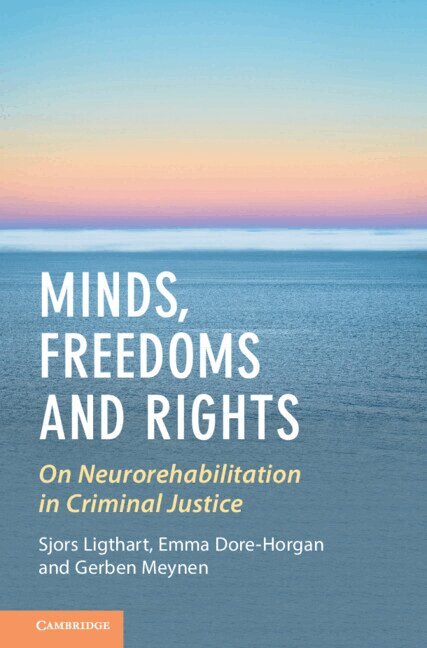
Recent developments in the cognitive sciences, particularly the emergence of neurotechnologies and their potential applications in a variety of contexts, have prompted a debate on what freedoms and rights people have in relation to their brains and minds. Lawyers and philosophers are especially interested in the possibilities offered by the neurosciences in conducting risk assessments and risk management. Minds, Freedoms and Rights deepens our understanding of these legal issues by investigating the human rights that relate to the mind and by exploring their implications for possible uses for neurotechnology for criminal rehabilitation or 'neurorehabilitation'. By harnessing and integrating both legal and ethical perspectives, the authors establish possible uses of neurorehabilitation that are cutting-edge yet simultaneously protect and respect human rights and freedoms. This title is also available as open access on Cambridge Core.
1 266 kr
Skickas inom 7-10 vardagar
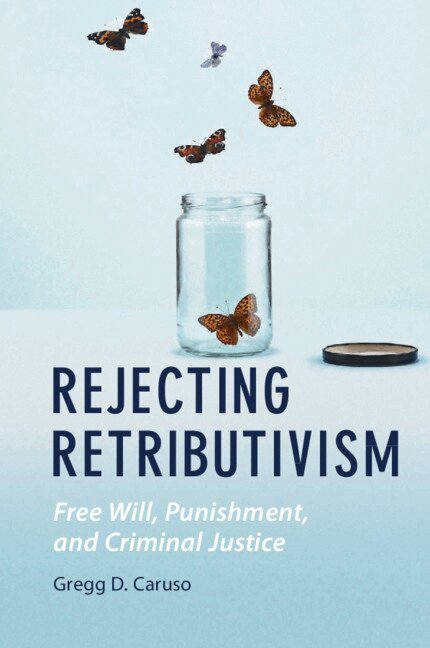
Within the criminal justice system, one of the most prominent justifications for legal punishment is retributivism. The retributive justification of legal punishment maintains that wrongdoers are morally responsible for their actions and deserve to be punished in proportion to their wrongdoing. This book argues against retributivism and develops a viable alternative that is both ethically defensible and practical. Introducing six distinct reasons for rejecting retributivism, Gregg D. Caruso contends that it is unclear that agents possess the kind of free will and moral responsibility needed to justify this view of punishment. While a number of alternatives to retributivism exist - including consequentialist deterrence, educational, and communicative theories - they have ethical problems of their own. Moving beyond existing theories, Caruso presents a new non-retributive approach called the public health-quarantine model. In stark contrast to retributivism, the public health-quarantine model provides a more human, holistic, and effective approach to dealing with criminal behavior.
1 387 kr
Skickas inom 7-10 vardagar
Are the cognitive sciences relevant for law? How do they influence legal theory and practice? Should lawyers become part-time cognitive scientists? The recent advances in the cognitive sciences have reshaped our conceptions of human decision-making and behavior. Many claim, for instance, that we can no longer view ourselves as purely rational agents equipped with free will. This change is vitally important for lawyers, who are forced to rethink the foundations of their theories and the framework of legal practice. Featuring multidisciplinary scholars from around the world, this book offers a comprehensive overview of the emerging field of law and the cognitive sciences. It develops new theories and provides often provocative insights into the relationship between the cognitive sciences and various dimensions of the law including legal philosophy and methodology, doctrinal issues, and evidence.
467 kr
Skickas inom 7-10 vardagar
Within the criminal justice system, one of the most prominent justifications for legal punishment is retributivism. The retributive justification of legal punishment maintains that wrongdoers are morally responsible for their actions and deserve to be punished in proportion to their wrongdoing. This book argues against retributivism and develops a viable alternative that is both ethically defensible and practical. Introducing six distinct reasons for rejecting retributivism, Gregg D. Caruso contends that it is unclear that agents possess the kind of free will and moral responsibility needed to justify this view of punishment. While a number of alternatives to retributivism exist - including consequentialist deterrence, educational, and communicative theories - they have ethical problems of their own. Moving beyond existing theories, Caruso presents a new non-retributive approach called the public health-quarantine model. In stark contrast to retributivism, the public health-quarantine model provides a more human, holistic, and effective approach to dealing with criminal behavior.
334 kr
Skickas inom 7-10 vardagar
Are the cognitive sciences relevant for law? How do they influence legal theory and practice? Should lawyers become part-time cognitive scientists? The recent advances in the cognitive sciences have reshaped our conceptions of human decision-making and behavior. Many claim, for instance, that we can no longer view ourselves as purely rational agents equipped with free will. This change is vitally important for lawyers, who are forced to rethink the foundations of their theories and the framework of legal practice. Featuring multidisciplinary scholars from around the world, this book offers a comprehensive overview of the emerging field of law and the cognitive sciences. It develops new theories and provides often provocative insights into the relationship between the cognitive sciences and various dimensions of the law including legal philosophy and methodology, doctrinal issues, and evidence.