• Fri frakt över 249 kr
  • •
  • Snabba leveranser
  • •
  • Billiga böcker
Kundservice

Du är på sajten för privatpersoner.

Företag, bibliotek eller offentlig verksamhet?

Du handlar på classic.bokus.com, där alla dina funktioner finns intakta.
Till classic.bokus.com
Bokus logotyp. Gå till startsidan.
  • Erbjudanden
  • Nyheter
  • Student
  • Topplistor
  • Barn & ungdom
  • Bokus Play
  • E-böcker
  • Pocketböcker
  • Spel & pussel

10% rabatt på allt med kod: NYSTART10 →

Sidfot

Mina sidor

    Hjälp

    • Kundservice
    • Vanliga frågor och svar
    • Frakt och leverans
    • Retur vid ångerrätt
    • Reklamera vara
    • Betalning
    • Köpvillkor
    • Allmänna villkor
    • Information om webbplatsens tillgänglighet

    Om Bokus

    • Om oss
    • Pressrum
    • För studenter
    • För företag
    • För bibliotek och offentlig verksamhet
    • För leverantörer
    • Hållbarhet

    Populärt

    • Aktuella erbjudanden
    • Presentkort
    • Studentlitteratur
    • Nya böcker
    • Topplistor
    • Signerade böcker
    • Engelska böcker

    Inspiration

    • Boktips
    • BookTok
    • Populära bokserier
    • Barnbokskaraktärer
    • Populära författare
    Logotyp för Bokus
    Följ oss på Facebook (extern länk)Följ oss på Instagram (extern länk)Följ oss på YouTube (extern länk)Följ oss på TikTok (extern länk)
    bokus @ CookiesAnpassa cookiesIntegritetspolicyKöpvillkor
    Till Citymail hemsida (extern länk)Till Budbee hemsida (extern länk)Till Postnord hemsida (extern länk)Till Schenker hemsida (extern länk)Till Early Bird hemsida (extern länk)Till Walleys hemsida (extern länk)
    1. Juridik
    2. Särskilda rättsområden
    3. Straffrätt: process och brott

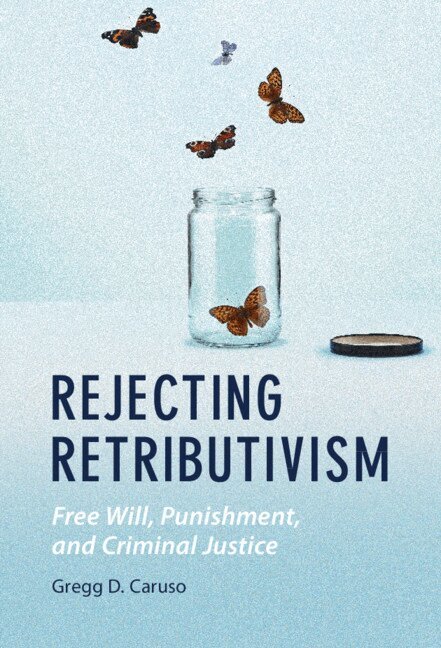
    Rejecting Retributivism

    Free Will, Punishment, and Criminal Justice

    AvGregg D. Caruso

    Inbunden, Engelska, 2021

    Del i serien Law and the Cognitive Sciences

    1 351 kr

    Beställningsvara. Skickas inom 10-15 vardagar. Fri frakt över 249 kr.

    Fler format och utgåvor

    E-bok

    581 kr

    Häftad

    500 kr

    E-bok

    581 kr

    Beskrivning

    Within the criminal justice system, one of the most prominent justifications for legal punishment is retributivism. The retributive justification of legal punishment maintains that wrongdoers are morally responsible for their actions and deserve to be punished in proportion to their wrongdoing. This book argues against retributivism and develops a viable alternative that is both ethically defensible and practical. Introducing six distinct reasons for rejecting retributivism, Gregg D. Caruso contends that it is unclear that agents possess the kind of free will and moral responsibility needed to justify this view of punishment. While a number of alternatives to retributivism exist - including consequentialist deterrence, educational, and communicative theories - they have ethical problems of their own. Moving beyond existing theories, Caruso presents a new non-retributive approach called the public health-quarantine model. In stark contrast to retributivism, the public health-quarantine model provides a more human, holistic, and effective approach to dealing with criminal behavior.

    Produktinformation

    • Utgivningsdatum:2021-04-29
    • Mått:230 x 150 x 25 mm
    • Vikt:720 g
    • Format:Inbunden
    • Språk:Engelska
    • Serie:Law and the Cognitive Sciences
    • Antal sidor:400
    • Förlag:Cambridge University Press
    • ISBN:9781108484701

    Utforska kategorier

    • Straffrätt: process och brott inom Juridik

    Mer om författaren

    Gregg D. Caruso is Professor of Philosophy at SUNY Corning and Honorary Professor of Philosophy at Macquarie University. He is also the Co-Director of the Justice Without Retribution Network (JWRN) at the University of Aberdeen School of Law. His research interests include free will, agency, and responsibility, as well as philosophy of mind, cognitive science, neuroethics, moral psychology, criminal law, punishment, and public policy. His books include Just Deserts: Debating Free Will (with Daniel C. Dennett, 2021), Free Will and Consciousness: A Determinist Account of the Illusion of Free Will (2012), ​Exploring the Illusion of Free Will and Moral Responsibility (2013), Science and Religion: 5 Questions (2014), Neuroexistentialism: Meaning, Morals, and Purpose in the Age of Neuroscience ​(co-edited with Owen Flanagan), and Free Will Skepticism in Law and Society (co-edited with Elizabeth Shaw and Derk Pereboom).

    Recensioner i media

    'Caruso mounts a series of robust challenges not just to retributivism (his main target) but also to other recent attempts to provide justifying rationalisations of the institution of criminal punishment: the most striking and original of these are the metaphysical and epistemological challenges that he grounds in scepticism about free will and desert. He then develops, in impressive and empirically informed detail, an alternative, 'public health-quarantine' model of crime prevention, grounded in part on the right of self-defence. This aims not only to provide more humanely effective ways of preventing crime, but also to serve the aims of social justice, and to ensure a proper respect for the interests and the dignity of offenders. Those who want to defend the practice of criminal punishment will need to meet Caruso's challenges, while those who wonder whether and how we could do without this practice will find imaginative food for thought in his proposals.' Antony Duff, University of Minnesota

    Innehållsförteckning

    • Acknowledgments; 1. Free will, legal punishment, and retributivism; 2. Free will skepticism: hard incompatibilism and hard luck; 3. The epistemic argument against retributivism; 4. Additional reasons for rejecting retributivism; 5. Consequentialist, educational, and mixed theories of punishment; 6. Public health-quarantine model I: a non-retributive approach to criminal behavior; 7. Public health-quarantine model II: the social determinants of health & criminal behavior; 8. Public health-quarantine model iii: human dignity, victims' rights, rehabilitation, and preemptive incapacitation; 9. Public health-quarantine model IV: funishment, deterrence, evidentiary standards, and indefinite detention; References; Index.