Legal Perspectives on Brexit - Böcker
Visar alla böcker i serien Legal Perspectives on Brexit. Handla med fri frakt och snabb leverans.
15 produkter
15 produkter
552 kr
Tillfälligt slut
693 kr
Skickas inom 10-15 vardagar
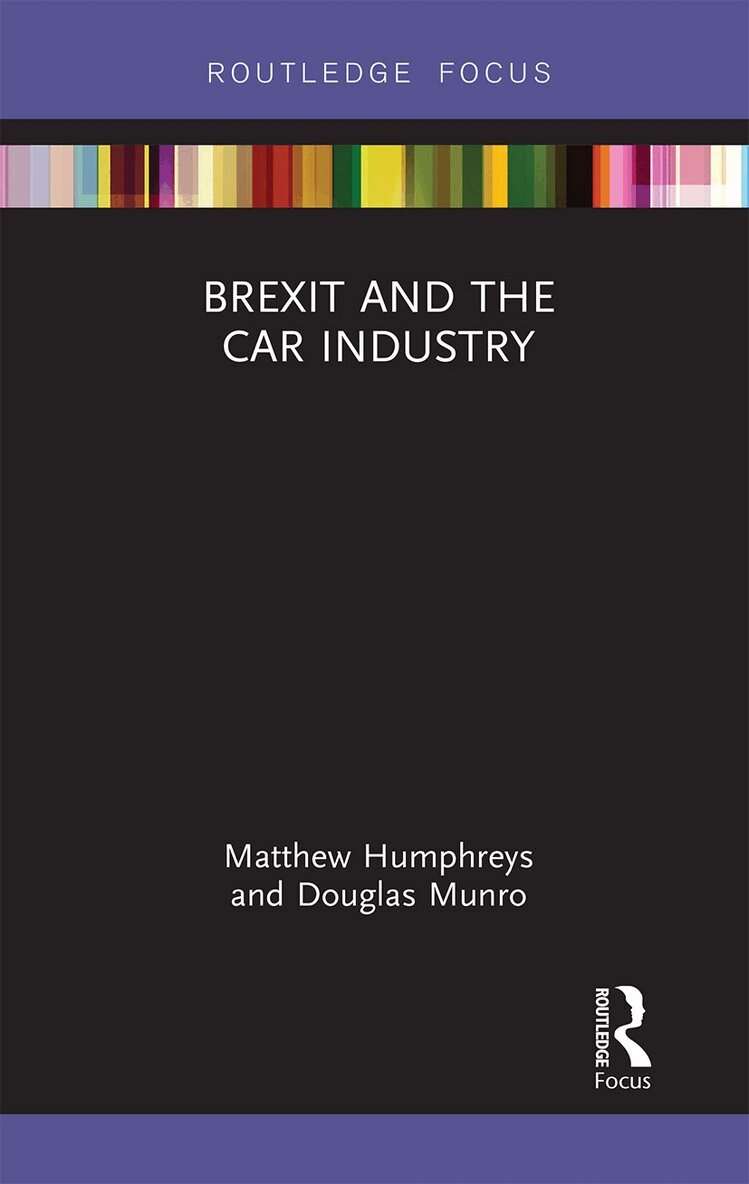
One of the principal arguments put forth by Brexit supporters is that by freeing the UK from the stranglehold of EU law, the country will be able to expand its markets through increased bilateral trade and enhance economic growth. This book tests this proposition by reference to the car industry.Brexit and the Car Industry explores the international position of the car market to argue that the hope of Brexit bringing regulatory freedom is illusory. The book starts by examining the structure of the vehicle industry, how its regulatory framework evolved and how the environment in which it operates is constrained by international standards and the practicalities associated with trading across different regulatory systems. By examining the evolution of vehicle regulations, particularly related to the environment, it argues that a UK independent path is not only impractical but self-defeating. The private car market is structured in such a way that is global, and meeting the various international regulatory requirements is a price of entry requirement which no bilateral trade agreements are likely to alter. The book also considers changing environment affecting the car industry in the context of an aspiration for regulatory freedom. The response to climate change and the impact of technological change – specifically driverless vehicles – are big questions for the industry and both are examined in this book. The book also considers the emergence of large metropolitan areas imposing their own use and environmental requirements operating separately to national standards. The future of electric and autonomous vehicles combined with the complexity of the regulatory environment with both international and localised pollution measures make the UK navigating a safe independent path through with a viable car industry highly questionable. Providing a comprehensive review of the relationship between regulatory frameworks and free trading models, this book is aimed at industry and legal professionals. It will also be of interest to students studying market behaviour, free trade law and the free movement of goods, and environmental protection.
319 kr
Skickas inom 10-15 vardagar
Focusing on the consequences of Brexit for aviation law, this book presents the key legal issues for aviation business and administration, as well as all major stakeholders that could potentially be affected by Brexit. This will include airlines, airports, aerospace manufacturers, regulatory and judicial institutions, passengers and employees. The book will indicate groups of legal acts disturbed by Brexit and those few that will remain untouched, and develop on this basis a digest of regulatory and institutional problems that will arise in various areas of the discussed sector. Finally, the short title will deliberate on the directions of possible actions which may be undertaken to avoid post-Brexit legal incoherence. This review should give essential guidance to the industry and the authorities on both sides of the English Channel as to what to expect and how to prepare for the forthcoming legal earthquake.
256 kr
Skickas inom 10-15 vardagar
This book provides the first comprehensive analysis of the immediate and likely longer-term consequences of Brexit for the UK’s competition law regime and includes the competition and subsidy control provisions of the EU-UK Trade and Cooperation Agreement. It has been written to be of value to scholars and practitioners of competition law, whilst also providing a useful guide to readers with only limited understanding of competition rules. The book provides a detailed critical discussion of how Brexit impacts on five key aspects of competition policy in the UK: legislation, institutions and cooperation; antitrust rules that prohibit anti-competitive agreements and the abuse of a dominant position; private enforcement, in particular actions for damages; regulation of mergers and acquisitions; and State aid or subsidy control rules.
1 924 kr
Skickas inom 10-15 vardagar
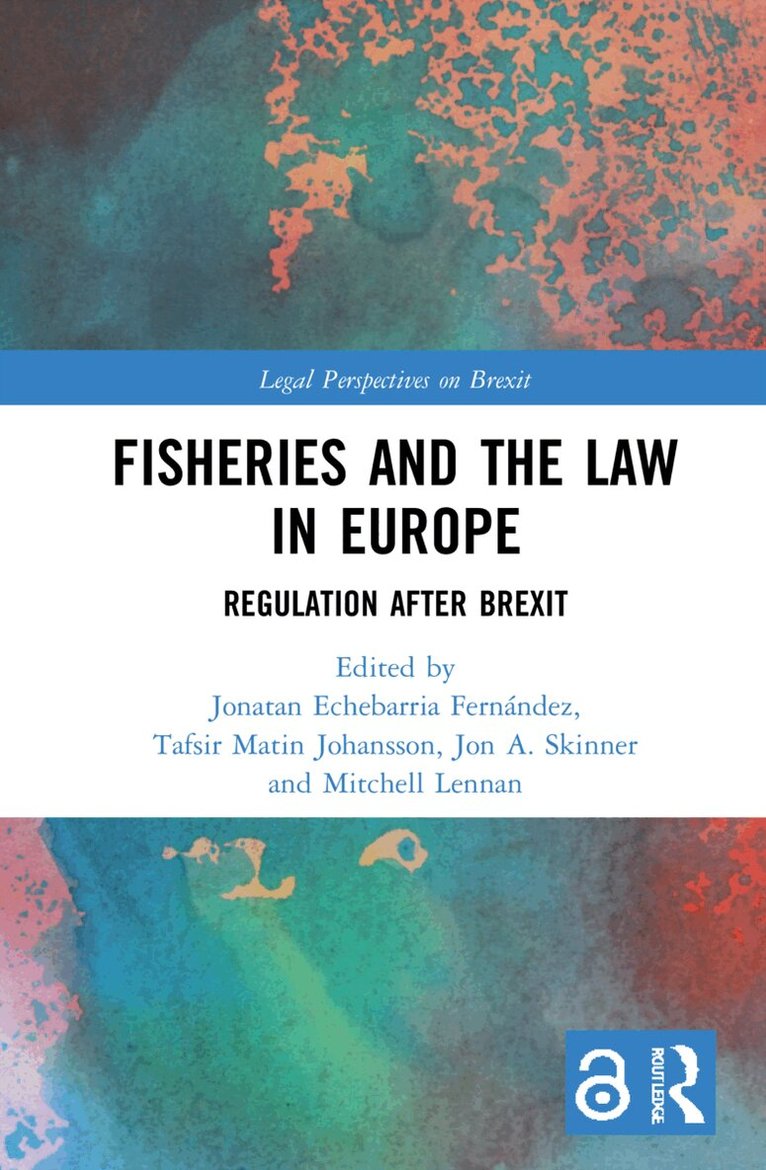
Examining fisheries, Brexit, the Trade and Cooperation Agreement (TCA) and its consequences for the Fishing Industry in the UK and the EU, this book explores key issues within the complex topic of fisheries after Brexit. Assessing the new fishing relationship between the UK and the EU, which will continue to develop over the next decade, it provides an important study of the state of fisheries post-Brexit. Taking a cross-cutting economic, legal and policy approach, the book outlines the social and economic impacts of Brexit on the UK and EU fishing industries. It critically analyses the provisions relevant to fisheries in the TCA, reflects on the bilateral fishing negotiations between the EU, UK and Norway, providing inferences as to what the "new and special relationship" might be in fisheries. It then focuses on the 2020 Fisheries Act and explores internal divergences in the nations of the UK because of devolution. Taking an international approach, the work offers an exploration of cooperation in fisheries enforcement, international and regional obligations in marine conservation, and the new horizons for the UK in international fisheries organizations and arrangements now it is no longer a member of the EU. It offers an overview of expert opinion on fisheries post-Brexit, highlighting lessons learned and future developments for fisheries in a post-Brexit world. Having finally signed the Trade and Cooperation Agreement on 31 December 2020 after tense negotiations, the United Kingdom and European Union have found themselves in a new fisheries relationship. This book maps the complex social, economic, legal and policy issues of fisheries in a post-Brexit world and will be of interest to stakeholders and scholars.
568 kr
Skickas inom 10-15 vardagar
Examining fisheries, Brexit, the Trade and Cooperation Agreement (TCA) and its consequences for the Fishing Industry in the UK and the EU, this book explores key issues within the complex topic of fisheries after Brexit. Assessing the new fishing relationship between the UK and the EU, which will continue to develop over the next decade, it provides an important study of the state of fisheries post-Brexit. Taking a cross-cutting economic, legal and policy approach, the book outlines the social and economic impacts of Brexit on the UK and EU fishing industries. It critically analyses the provisions relevant to fisheries in the TCA, reflects on the bilateral fishing negotiations between the EU, UK and Norway, providing inferences as to what the "new and special relationship" might be in fisheries. It then focuses on the 2020 Fisheries Act and explores internal divergences in the nations of the UK because of devolution. Taking an international approach, the work offers an exploration of cooperation in fisheries enforcement, international and regional obligations in marine conservation, and the new horizons for the UK in international fisheries organizations and arrangements now it is no longer a member of the EU. It offers an overview of expert opinion on fisheries post-Brexit, highlighting lessons learned and future developments for fisheries in a post-Brexit world. Having finally signed the Trade and Cooperation Agreement on 31 December 2020 after tense negotiations, the United Kingdom and European Union have found themselves in a new fisheries relationship. This book maps the complex social, economic, legal and policy issues of fisheries in a post-Brexit world and will be of interest to stakeholders and scholars.
568 kr
Skickas inom 10-15 vardagar
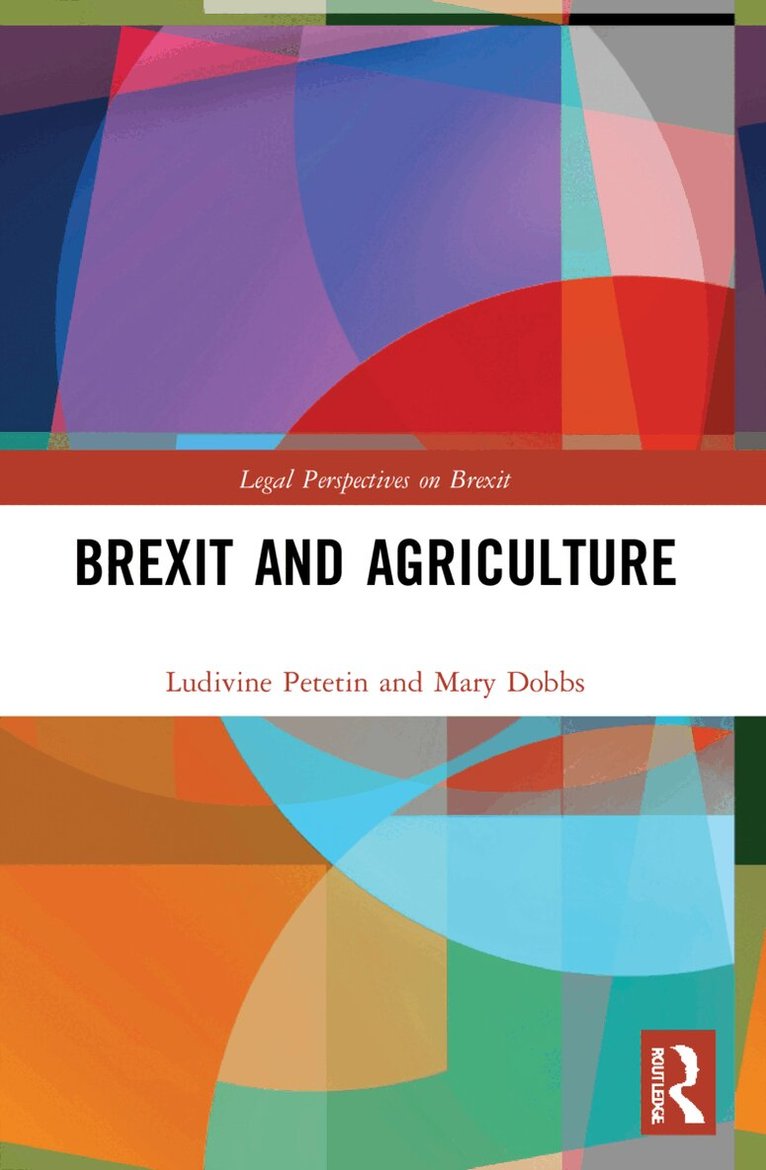
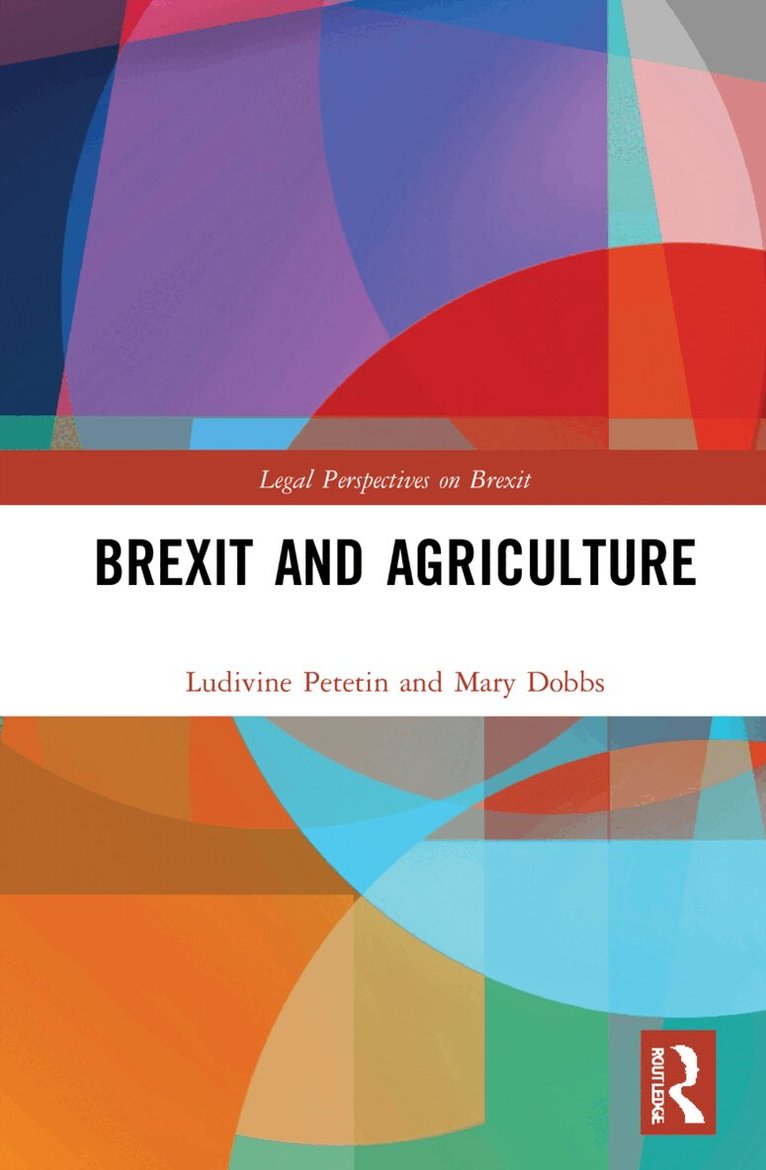
Acknowledging the challenges and opportunities raised by Brexit for the agrifood supply chain and agricultural policies across the UK, this book provides the first in-depth analysis of agricultural policy developments across the UK’s four nations rooted in strong theoretical and practical underpinnings.Arguing that the four nations could be more ambitious in departing from the Common Agricultural Policy and extending beyond the ‘public money for public goods’ approach adopted across the UK, it critiques the core attributes of their policies with focuses including the debate over outcome-based schemes, governance mechanisms, impacts on farm diversity and path dependency on the Common Agricultural Policy and English approaches. It promotes a ‘resilient agriculture’ paradigm and utilises social-ecological services, net zero, agroecology and agri-food democracy as the main pathways to achieve this. In doing so, it scrutinises the evolving contextual, political and legal landscape within which devolved and UK agricultural policies are developing from a multilevel governance perspective, examining the implications of WTO law for the UK and its devolved administrations to determine environmental, food and animal welfare standards under the GATT, the SPS and TBT Agreements and financial support schemes under the Agreement on Agriculture.The book assesses the significance of the Northern Ireland Protocol, the Trade and Cooperation Agreement with the EU and other free trade agreements for standards across the UK and access to markets. From a domestic perspective, challenges to devolution and the stability of the Union are highlighted. Elements of unilateral recentralisation are visible via financing mechanisms, the UK Internal Market Act and the Agriculture Act. The book’s interdisciplinary nature makes it of interest to lawyers, political scientists, economists, human geographers and scientists, as well as policymakers, agricultural communities, civil society organisations and think tanks in the devolved administrations, the UK, the EU and beyond.
306 kr
Skickas inom 10-15 vardagar
One of the principal arguments put forth by Brexit supporters is that by freeing the UK from the stranglehold of EU law, the country will be able to expand its markets through increased bilateral trade and enhance economic growth. This book tests this proposition by reference to the car industry.Brexit and the Car Industry explores the international position of the car market to argue that the hope of Brexit bringing regulatory freedom is illusory. The book starts by examining the structure of the vehicle industry, how its regulatory framework evolved and how the environment in which it operates is constrained by international standards and the practicalities associated with trading across different regulatory systems. By examining the evolution of vehicle regulations, particularly related to the environment, it argues that a UK independent path is not only impractical but self-defeating. The private car market is structured in such a way that is global, and meeting the various international regulatory requirements is a price of entry requirement which no bilateral trade agreements are likely to alter. The book also considers changing environment affecting the car industry in the context of an aspiration for regulatory freedom. The response to climate change and the impact of technological change – specifically driverless vehicles – are big questions for the industry and both are examined in this book. The book also considers the emergence of large metropolitan areas imposing their own use and environmental requirements operating separately to national standards. The future of electric and autonomous vehicles combined with the complexity of the regulatory environment with both international and localised pollution measures make the UK navigating a safe independent path through with a viable car industry highly questionable. Providing a comprehensive review of the relationship between regulatory frameworks and free trading models, this book is aimed at industry and legal professionals. It will also be of interest to students studying market behaviour, free trade law and the free movement of goods, and environmental protection.
306 kr
Skickas inom 10-15 vardagar
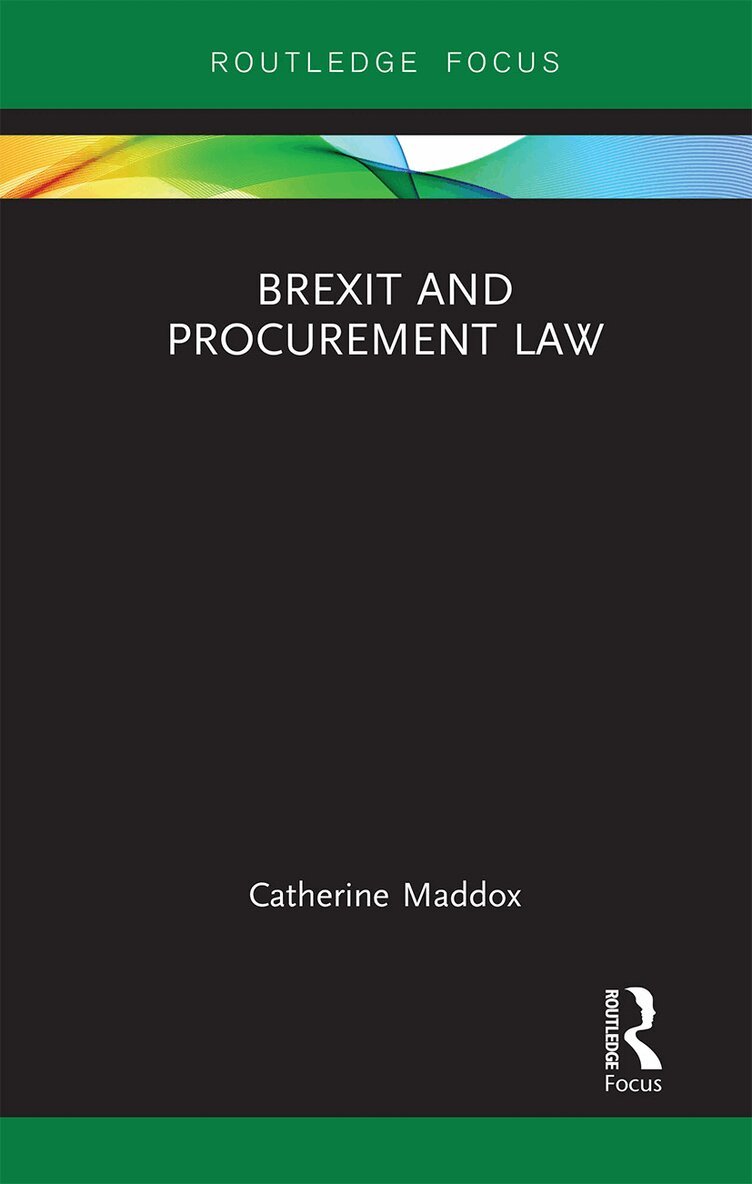
Public procurement law, regulating public sector purchasing of certain contracts for goods, works and services, is an area of EU law which is closely intertwined with the UK's economy. It will almost inevitably be affected by the consequences of Brexit.At a time of significant uncertainty, this book explores policy directions which domestic procurement law could take in the future, including whether 'Buy National' policies might feasibly be introduced, or whether existing procurement procedures could be significantly reviewed.
1 800 kr
Skickas inom 10-15 vardagar
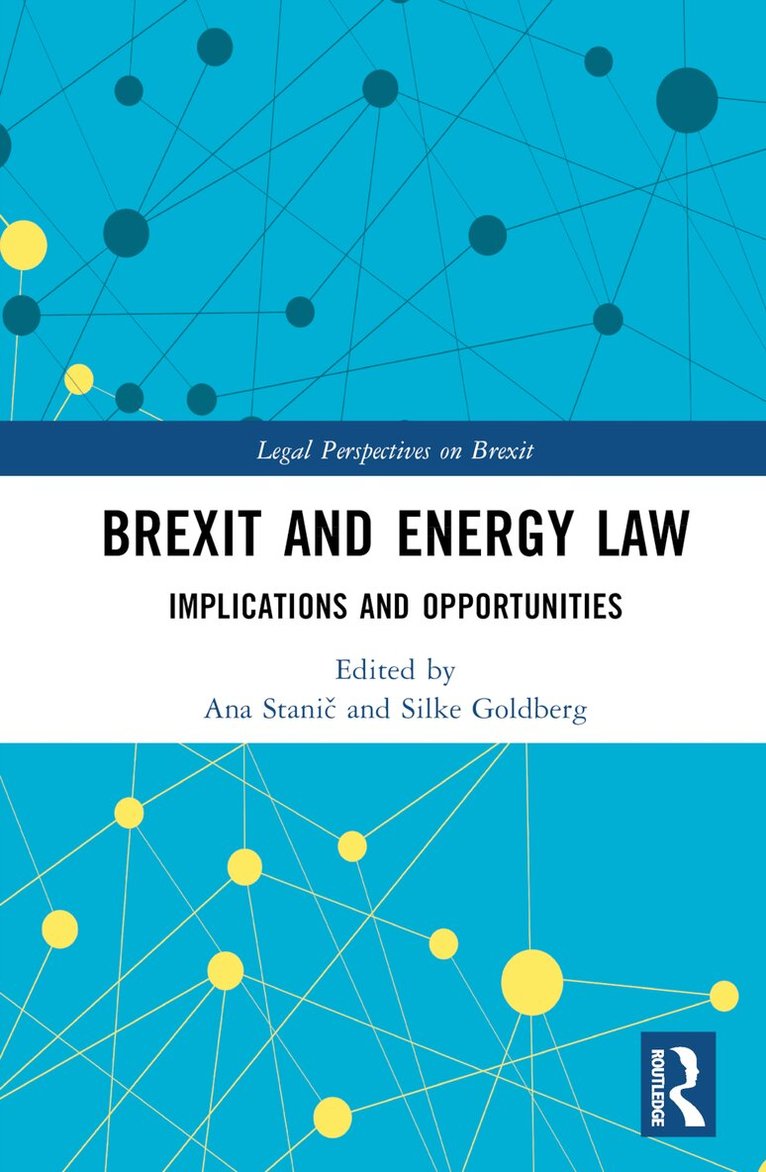
Bringing together leading experts from across the UK and Europe, this book provides a comprehensive analysis of the impact of Brexit on the energy sector in the UK and in the European Union and its Member States. In recent decades, the trend within the EU has been towards greater integration and liberalisation of energy markets. Through the development of the Union’s internal energy market and the funding of cross-border energy infrastructure, EU membership facilitates cross-border trade in energy, promotes security of energy supply, and, via the European Atomic Energy Community (Euratom), allows EU Member States to trade in nuclear material for energy production. Brexit changes all of this. The significant level of integration and interdependence in EU energy policy means that the UK’s departure from the Union poses many challenges for the UK, the EU, and EU Member States. While certain energy-related arrangements have been addressed, the relationship between the UK and EU in the energy sector has been changed fundamentally. In this context, important and interrelated questions arise, such as the following: Under what terms will energy trading between the EU and UK now take place? What access will the UK have to EU energy markets? What does Brexit mean for the security of energy supply? What does the UK’s departure from Euratom mean for nuclear research? Can the crossborder single energy market (SEM) on the island of Ireland continue following Brexit? What implications does Brexit have for renewables, the environment, and climate change? Brexit comes at a time when the European energy sector is undergoing the processes of decarbonisation and energy transition. This book offers researchers, legal practitioners, and policy advisers in-depth understanding of the interplay between these challenges and Brexit.
531 kr
Skickas inom 10-15 vardagar
Bringing together leading experts from across the UK and Europe, this book provides a comprehensive analysis of the impact of Brexit on the energy sector in the UK and in the European Union and its Member States. In recent decades, the trend within the EU has been towards greater integration and liberalisation of energy markets. Through the development of the Union’s internal energy market and the funding of cross-border energy infrastructure, EU membership facilitates cross-border trade in energy, promotes security of energy supply, and, via the European Atomic Energy Community (Euratom), allows EU Member States to trade in nuclear material for energy production. Brexit changes all of this. The significant level of integration and interdependence in EU energy policy means that the UK’s departure from the Union poses many challenges for the UK, the EU, and EU Member States. While certain energy-related arrangements have been addressed, the relationship between the UK and EU in the energy sector has been changed fundamentally. In this context, important and interrelated questions arise, such as the following: Under what terms will energy trading between the EU and UK now take place? What access will the UK have to EU energy markets? What does Brexit mean for the security of energy supply? What does the UK’s departure from Euratom mean for nuclear research? Can the crossborder single energy market (SEM) on the island of Ireland continue following Brexit? What implications does Brexit have for renewables, the environment, and climate change? Brexit comes at a time when the European energy sector is undergoing the processes of decarbonisation and energy transition. This book offers researchers, legal practitioners, and policy advisers in-depth understanding of the interplay between these challenges and Brexit.
643 kr
Skickas inom 10-15 vardagar
This book provides the first comprehensive analysis of the immediate and likely longer-term consequences of Brexit for the UK’s competition law regime and includes the competition and subsidy control provisions of the EU-UK Trade and Cooperation Agreement. It has been written to be of value to scholars and practitioners of competition law, whilst also providing a useful guide to readers with only limited understanding of competition rules. The book provides a detailed critical discussion of how Brexit impacts on five key aspects of competition policy in the UK: legislation, institutions and cooperation; antitrust rules that prohibit anti-competitive agreements and the abuse of a dominant position; private enforcement, in particular actions for damages; regulation of mergers and acquisitions; and State aid or subsidy control rules.
2 357 kr
Skickas inom 10-15 vardagar
Acknowledging the challenges and opportunities raised by Brexit for the agrifood supply chain and agricultural policies across the UK, this book provides the first in-depth analysis of agricultural policy developments across the UK’s four nations rooted in strong theoretical and practical underpinnings.Arguing that the four nations could be more ambitious in departing from the Common Agricultural Policy and extending beyond the ‘public money for public goods’ approach adopted across the UK, it critiques the core attributes of their policies with focuses including the debate over outcome-based schemes, governance mechanisms, impacts on farm diversity and path dependency on the Common Agricultural Policy and English approaches. It promotes a ‘resilient agriculture’ paradigm and utilises social-ecological services, net zero, agroecology and agri-food democracy as the main pathways to achieve this. In doing so, it scrutinises the evolving contextual, political and legal landscape within which devolved and UK agricultural policies are developing from a multilevel governance perspective, examining the implications of WTO law for the UK and its devolved administrations to determine environmental, food and animal welfare standards under the GATT, the SPS and TBT Agreements and financial support schemes under the Agreement on Agriculture.The book assesses the significance of the Northern Ireland Protocol, the Trade and Cooperation Agreement with the EU and other free trade agreements for standards across the UK and access to markets. From a domestic perspective, challenges to devolution and the stability of the Union are highlighted. Elements of unilateral recentralisation are visible via financing mechanisms, the UK Internal Market Act and the Agriculture Act. The book’s interdisciplinary nature makes it of interest to lawyers, political scientists, economists, human geographers and scientists, as well as policymakers, agricultural communities, civil society organisations and think tanks in the devolved administrations, the UK, the EU and beyond.
756 kr
Skickas inom 10-15 vardagar
Public procurement law, regulating public sector purchasing of certain contracts for goods, works and services, is an area of EU law which is closely intertwined with the UK's economy. It will almost inevitably be affected by the consequences of Brexit.At a time of significant uncertainty, this book explores policy directions which domestic procurement law could take in the future, including whether 'Buy National' policies might feasibly be introduced, or whether existing procurement procedures could be significantly reviewed.
756 kr
Skickas inom 10-15 vardagar
Focusing on the consequences of Brexit for aviation law, this book presents the key legal issues for aviation business and administration, as well as all major stakeholders that could potentially be affected by Brexit. This will include airlines, airports, aerospace manufacturers, regulatory and judicial institutions, passengers and employees. The book will indicate groups of legal acts disturbed by Brexit and those few that will remain untouched, and develop on this basis a digest of regulatory and institutional problems that will arise in various areas of the discussed sector. Finally, the short title will deliberate on the directions of possible actions which may be undertaken to avoid post-Brexit legal incoherence. This review should give essential guidance to the industry and the authorities on both sides of the English Channel as to what to expect and how to prepare for the forthcoming legal earthquake.