Life and Times New Series - Böcker
Visar alla böcker i serien Life and Times New Series. Handla med fri frakt och snabb leverans.
9 produkter
9 produkter
252 kr
Tillfälligt slut
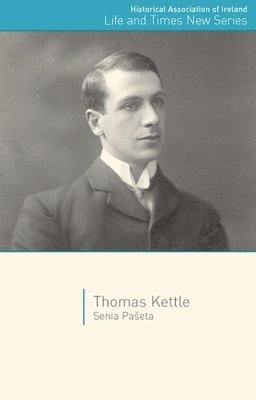
Thomas Kettle: political activist, journalist, orator, poet, essayist, lawyer, nationalist MP, professor, recruiter, soldier and casualty of war. Born on 9 February 1880, he was killed in the opening minutes of the allied invasion of Ginchy on 9 September 1916, having insisted on leading his men into battle. A leader of the younger generation of constitutional nationalists in his own time, he was all but forgotten as a result of the radicalisation of Irish politics after 1916. His memory was largely kept alive by studies of Ireland's participation in the Great War and by his final poem, written for his daughter Betty, which has appeared in several collections of War poetry. But Thomas Kettle was more than a soldier and recruiter.Although he did not always choose the 'right side', Kettle in fact had a hand in nearly every major political struggle in early twentieth-century Ireland. His struggles with alcoholism and depression overshadowed his great promise, ensuring that his biography is as much a story of wasted potential as it is of great achievement.
252 kr
Tillfälligt slut
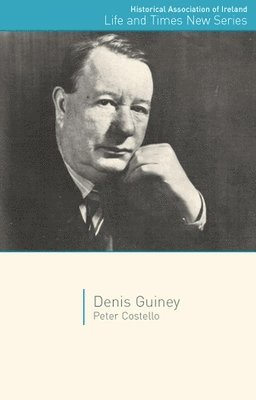
Denis Guiney (1893-1967) was one of the most remarkable Irishmen of his generation, who exerted through his business career a significant influence on the development of the economy and lifestyle of modern Ireland. As a draper, he rose from working in small country shops to become the owner of one of the country's biggest enterprises, the largest private company then in Ireland, the successor to part of a commercial empire created by a series of earlier Irish entrepreneurs, which he transformed to serve the ever-increasing and ever-changing needs of the population of a new kind of Ireland. He is one of those whose lives have materially contributed to the creation of the country's modern prosperity. Many talked airily of a 'New Ireland'. Denis Guiney helped create it.
252 kr
Tillfälligt slut
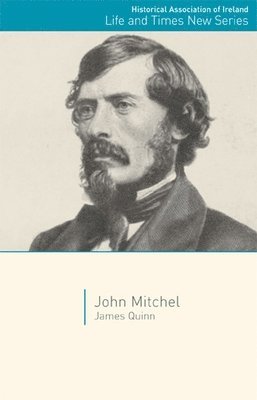
John Mitchel (1815-75) was born at Camnish, near Dungiven, Co. Derry, the son of a Presbyterian minister. After qualifying as a solicitor, he became a leading contributor to the Nation newspaper and the most militant of the Young Irelanders. Sentenced to 14 years' transportation for attempting to incite rebellion in Ireland in 1848, in captivity he wrote his famous "Jail Journal", which starkly expressed his hatred of the British empire and had an immense influence on later nationalists. Escaping to America after five years, he became a strong supporter of slavery and the Confederate States, and two of his sons died fighting for the South.The harshness of his views, especially his violent hatred of Britain and support for slavery, does much to explain Mitchel's neglect in recent decades. He was, however, one of the most powerful polemical journalists of the nineteenth century and a central figure in the revival of militant Irish nationalism. His portrayal of the famine as deliberate genocide became central to nationalist orthodoxy, and his hatred of British rule and contempt for parliamentary politics did much to inspire Fenianism.This new biography attempts to discover the origins of Mitchel's views, to examine their influence, and to place his anglophobia in a more general critique of the age in which he lived.
209 kr
Tillfälligt slut
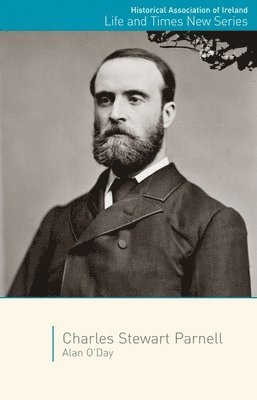
Charles Stewart Parnell has proved a compelling figure in his own time and to ours. A Protestant landlord who possessed few of the gifts that inspire mass adoration, he was the unlikely object of popular veneration. His long liaison with a married woman, Katharine O'Shea, exposed him to the fury of the Catholic Church. Other Protestants secured niches in the pantheon of national heroes but nearly all earned their places as victims of British rule; Parnell's destruction came at Irish hands. Since initial publication in 1998, new evidence and fresh interpretations allow for a fuller and yet more complex portrait for this revised account of Parnell's life. This revision considers Parnell's career within the context of his times, Anglo-Irish affairs, and theoretical perspectives. It makes extensive use of Parnell's public and parliamentary speeches, arguing that he was an exemplar of new forms of political communication and expressed a coherent ideology rooted in the liberal radicalism of the age. In the end he was a victim of his own successes and of a virulent nationalism that squeezed out the immediate possibility of an inclusive nation.Parnell's vision, though, was never wholly submerged and would reappear in the more cosmopolitan atmosphere of contemporary Ireland.
245 kr
Tillfälligt slut
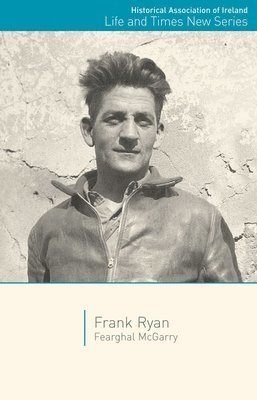
One of the most famous revolutionaries in Irish history, Frank Ryan fought in the War of Independence and Irish Civil War, before becoming a leader of the inter-war Irish Republican Army. Embracing socialist republicanism in the 1930s, Ryan became a founding member of the short-lived but influential Republican Congress, and led the Irish contingent within the International Brigades during the Spanish Civil War. Following his capture by Franco's forces, his release was secured by the efforts of German military intelligence which sought to use him to further its wartime alliance with the IRA. He spent the final years of his life as an advisor to the Nazi regime. This study provides a concise reinterpretation of Ryan's controversial life and legacy based on primary sources, including much previously unpublished material. Setting Ryan's career within the wider context of the violent politics of inter-war Europe, it examines his remarkable ideological journey from socialist republicanism to Nazi collaboration. It concludes by examining why - despite his lack of political success - Ryan became such a widely admired figure in modern Irish politics.
203 kr
Tillfälligt slut
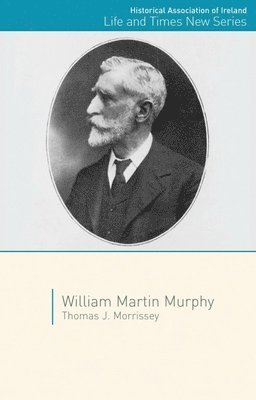
William Martin Murphy (1845-1919) was one of the most successful of Irish entrepreneurs and businessmen. As well as being a good employer, Murphy was an international financier, and a contractor of railways and tramways on three continents as well as in Britain and Ireland. He revolutionised the Irish newspaper industry, was a patriot who opposed concessions in the Home Rule Bill, supported Sinn Fein as a political party, and vigorously opposed conscription and partition. Although he was a man with a strong social conscience and sense of social responsibility, he came to be viewed as something of an ogre and regarded as the man who starved the workers of Dublin into submission in 1913-14 and who called for the execution of James Connolly in 1916. This book re-examines Murphy's remarkable career.
209 kr
Tillfälligt slut
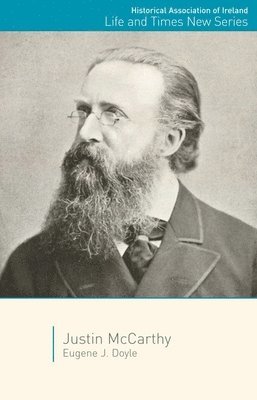
Justin McCarthy (1830-1912) is the forgotten leader of the Irish Home Rule Movement. Overshadowed by Parnell before him and the 1916 leaders shortly after his death, McCarthy's considerable contribution to the national cause has been largely overlooked. Without his conciliatory chairmanship (1890-6), the Irish Party would have subdivided further after the Parnell split; the critical Liberal alliance would have ended; and the House of Commons would not have passed Gladstone's second Home Rule Bill in 1893. Born in Cork but living in London, McCarthy was not a career politician, but rather a respected and financially successful writer, who championed many liberal causes long before becoming actively involved in politics. He was elected a Home Rule Party MP in 1879, and the party's vice-chairman the following year. His subsequent time as chairman, beginning with the 1890 split, spanned a period of intense struggle over the second Home Rule Bill. During these demanding years he sacrificed his health and income for the national cause - 'the religion of my life'.This biography restores its subject to his rightful place in the front rank of Irish leaders - Parnell, McCarthy, Redmond - who led the Irish Party into parliamentary battle in pursuit of Home Rule.
245 kr
Tillfälligt slut
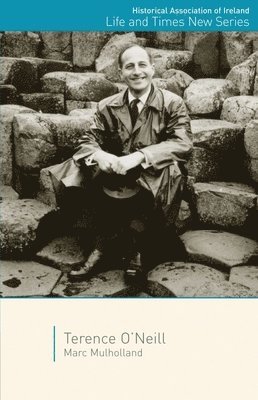
Terence O'Neill came to power as Prime Minister of Northern Ireland in 1963 with a bold plan to 'literally transform the face of Ulster'. For the next six years O'Neill proved himself to be Stormont's most controversial leader. Though born of the gentry, he was determined to break from the past. Motorways replaced railways, a New City was planned, and a New University built. By meeting with Taoiseachs of the Irish republic, O'Neill intended no less than to end the long cross-border Cold War. Most audaciously, he worked to end the centuries old political divide between catholic and protestant, even if this meant plunging his own Ulster Unionist Party into crisis. O'Neill stirred up passion and anger. While many saw him as Ireland's great hope, Ian Paisley denounced him as a traitor and Unionist ministers plotted his downfall. When the civil rights movement took to the streets in 1968, O'Neill's response was prophetic: 'it is a short step from the throwing of paving stones to the laying of tombstones.'Confronted by demonstrations and counter-demonstrations, pressure from London and rebellion in his own party, O'Neill gambled all on in a bid to re-cast the very shape of politics in the province. When finally he was 'literally blown from office' in April 1969, in the midst of rioting and loyalist bombs, thirty years of violence had begun. Marc Mulholland's study of O'Neill argues for the centrality of O'Neill to modern Irish history. Based upon exhaustive research, it brings to focus a period when Northern Ireland really did stand at the crossroads.
209 kr
Tillfälligt slut
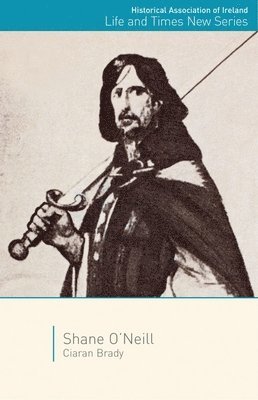
Shane O'Neill played a key role in Ireland's story in the sixteenth century, yet he has suffered a peculiar fate. Memorialised in drama, poetry and fiction as 'Shane the Proud', he has been remarkably neglected by historians who have been content - or resigned - to accept the largely personalised accounts of his character and actions, broadcast by his enemies, as a fair estimation of his historical significance. In this extended and critical study of Shane's life and times, Ciaran Brady, leading historian in Early Modern History, returns this neglected and misunderstood historical figure to his rightful place - at the centre of this turbulent period in Irish history. Based on a detailed examination of all the available primary sources, and also on a critical examination of the stories and myths that came to surround Shane, Brady offers an original interpretation that sets Shane against the multi-layered backgrounds of Ulster, Irish and English Court politics of his time - moving away from the conventional cultural stereotypes through which Shane and his contemporaries have been customarily interpreted.In doing so Brady reveals not only the highly complex nature of the problems confronting Shane and his English adversaries, and the genuine nature of the attempts of both sides to find a permanent solution on mutually acceptable terms, but also the combination of surface contingencies and deeper ideological forces that doomed their efforts to failure.