Lost Urban Classics - Böcker
Visar alla böcker i serien Lost Urban Classics. Handla med fri frakt och snabb leverans.
6 produkter
6 produkter
2 088 kr
Skickas inom 10-15 vardagar
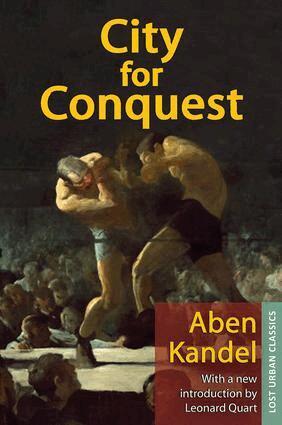
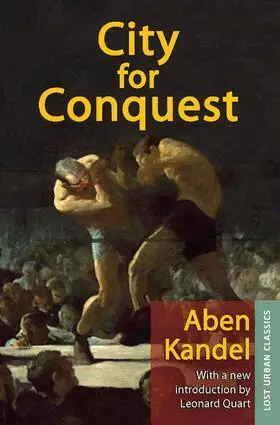
F. Scott Fitzgerald's The Great Gatsby still captivates readers with its vision of 1920s New York as a city of infinite potential, where ambition and defeat live hand in hand. This sentiment is captured, with even greater acuity, in the pages of Aben Kandel's nearly forgotten masterpiece of urban life, City for Conquest (1936). The source of the classic 1940s James Cagney film of the same name, this panoramic New York novel captures the complex patterns of city life, vividly evoking a metropolis of dreams and nightmares.Kandel portrays a volatile city inhabited by the aristocrat, the criminal, the idealist, the bohemian, the driven, the entrapped, and the impoverished, all equally striving "to make a dent in this town." The city itself is booming, its new constructions callously built on destruction, supplanting with equal disdain the slums of Brooklyn and the farm fields of the Bronx. This feverish microcosm of humanity inhabits a world of immense inequality where "six blocks from Wall Street, people haven't got a dime, six blocks from duplex apartments, people live in hovels" and "between the scarlet sore and the apple of the eye there lay a thick eyebrow of indifference."A literary triumph in the tradition of Stephen Crane's Maggie: A Girl of the Streets and John Dos Passos' Manhattan Transfer, and out of print for far too long, City for Conquest is the inaugural work of fiction in Transaction's new Lost Urban Classics series.
2 357 kr
Skickas inom 10-15 vardagar
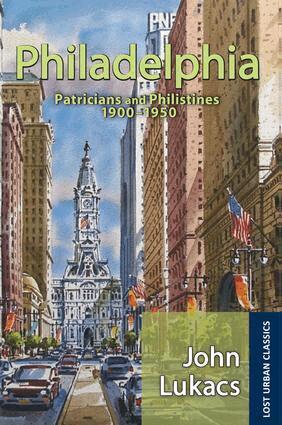
An unorthodox historian known and respected for his work on the grand conflicts of nations and civilizations, John Lukacs has peopled a smaller canvas in this volume, with seven colourful figures who flourished in Philadelphia before 1950. Their stories are framed by chapters that describe the city in 1900 and in 1950.The Philadelphians selected are a political boss, Boies Penrose; a magazine mogul, Edward Bok; an elegant writer, Agnes Repplier; an impetuous diplomat, William C. Bullitt; a lawyer, George Wharton Pepper; a prophet of decline, Owen Wister; and a great art collector, Albert C. Barnes. The political boss was perhaps the most monumental political figure of his age. The magazine mogul was the most famous embodiment of the American success story during his lifetime. The now almost forgotten writer was the Jane Austen of the essay. The diplomat was the most brilliant of ambassadors. The terrible-tempered collector was a radical proponent of his unusual theory of art.Through these seven portraits, Lukacs paints a picture of Philadelphia that is "like all living things, having the power to change out of recognition and yet remain the same." This work is a must read for all historians and Philadelphians.
2 150 kr
Skickas inom 10-15 vardagar
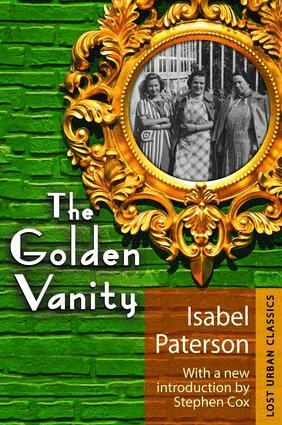
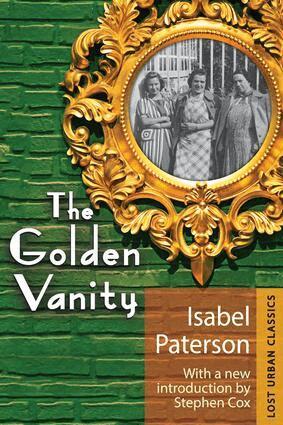
In The Great Gatsby, F.Scott Fitzgerald told the tale of a high society love affair that became an iconic depiction of life during the Jazz Age of the 1920s. After the 1929 stock market crash, life took an ironic downturn even for the wealthy. Written in light of these events, The Golden Vanity is both a social comedy of errors and a sardonic view of the Jazz Age and the crash, told through the lives of three self-assertive women who could not be more different. Cousins Gina, Geraldine, and Mysie are all inhabitants of New York City, but their lives could not be more different. A secretary starts a new job rife with romantic entanglements, a best-selling novelist is undermined by her husband's attempts to win big on the stock market, and an actress leads an unconventional, yet surprisingly intellectual, life. Isabel Paterson follows their stories through the economic collapse and demonstrates, with sophisticated wit, that "doing what everyone else is doing" is not the best way to survive such times. Originally published in 1934, The Golden Vanity has been out of print for far too long. A new introduction by Stephen Cox illuminates the novel's important historical footprint and places it in a modern context.
733 kr
Skickas inom 10-15 vardagar
An unorthodox historian known and respected for his work on the grand conflicts of nations and civilizations, John Lukacs has peopled a smaller canvas in this volume, with seven colourful figures who flourished in Philadelphia before 1950. Their stories are framed by chapters that describe the city in 1900 and in 1950.The Philadelphians selected are a political boss, Boies Penrose; a magazine mogul, Edward Bok; an elegant writer, Agnes Repplier; an impetuous diplomat, William C. Bullitt; a lawyer, George Wharton Pepper; a prophet of decline, Owen Wister; and a great art collector, Albert C. Barnes. The political boss was perhaps the most monumental political figure of his age. The magazine mogul was the most famous embodiment of the American success story during his lifetime. The now almost forgotten writer was the Jane Austen of the essay. The diplomat was the most brilliant of ambassadors. The terrible-tempered collector was a radical proponent of his unusual theory of art.Through these seven portraits, Lukacs paints a picture of Philadelphia that is "like all living things, having the power to change out of recognition and yet remain the same." This work is a must read for all historians—and Philadelphians.
787 kr
Skickas inom 10-15 vardagar
F. Scott Fitzgerald's The Great Gatsby still captivates readers with its vision of 1920s New York as a city of infinite potential, where ambition and defeat live hand in hand. This sentiment is captured, with even greater acuity, in the pages of Aben Kandel's nearly forgotten masterpiece of urban life, City for Conquest (1936). The source of the classic 1940s James Cagney film of the same name, this panoramic New York novel captures the complex patterns of city life, vividly evoking a metropolis of dreams and nightmares.Kandel portrays a volatile city inhabited by the aristocrat, the criminal, the idealist, the bohemian, the driven, the entrapped, and the impoverished, all equally striving "to make a dent in this town." The city itself is booming, its new constructions callously built on destruction, supplanting with equal disdain the slums of Brooklyn and the farm fields of the Bronx. This feverish microcosm of humanity inhabits a world of immense inequality where "six blocks from Wall Street, people haven't got a dime, six blocks from duplex apartments, people live in hovels" and "between the scarlet sore and the apple of the eye there lay a thick eyebrow of indifference."A literary triumph in the tradition of Stephen Crane's Maggie: A Girl of the Streets and John Dos Passos' Manhattan Transfer, and out of print for far too long, City for Conquest is the inaugural work of fiction in Transaction's new Lost Urban Classics series.
787 kr
Skickas inom 10-15 vardagar
In The Great Gatsby, F.Scott Fitzgerald told the tale of a high society love affair that became an iconic depiction of life during the Jazz Age of the 1920s. After the 1929 stock market crash, life took an ironic downturn even for the wealthy. Written in light of these events, The Golden Vanity is both a social comedy of errors and a sardonic view of the Jazz Age and the crash, told through the lives of three self-assertive women who could not be more different. Cousins Gina, Geraldine, and Mysie are all inhabitants of New York City, but their lives could not be more different. A secretary starts a new job rife with romantic entanglements, a best-selling novelist is undermined by her husband's attempts to win big on the stock market, and an actress leads an unconventional, yet surprisingly intellectual, life. Isabel Paterson follows their stories through the economic collapse and demonstrates, with sophisticated wit, that "doing what everyone else is doing" is not the best way to survive such times. Originally published in 1934, The Golden Vanity has been out of print for far too long. A new introduction by Stephen Cox illuminates the novel's important historical footprint and places it in a modern context.