Made in Michigan Writers - Böcker
Visar alla böcker i serien Made in Michigan Writers. Handla med fri frakt och snabb leverans.
4 produkter
4 produkter
289 kr
Skickas inom 10-15 vardagar
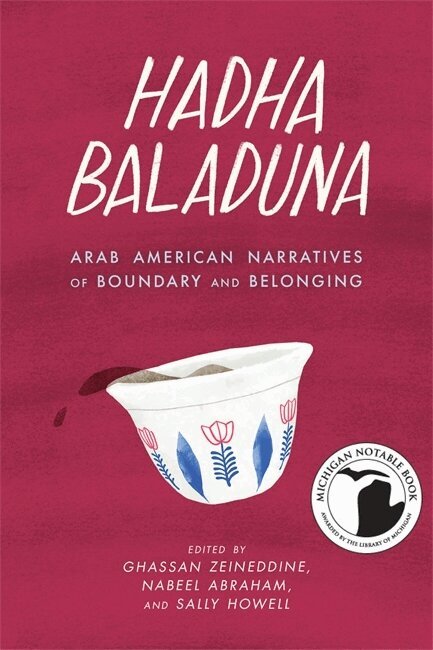
Essays and poems exploring the diverse range of the Arab American experience.This collection begins with stories of immigration and exile by following newcomers' attempts to assimilate into American society. Editors Ghassan Zeineddine, Nabeel Abraham, and Sally Howell have assembled emerging and established writers who examine notions of home, belonging, and citizenship from a wide array of communities, including cultural heritages originating from Lebanon, Palestine, Iraq, and Yemen. The strong pattern in Arab Detroit today is to oppose marginalization through avid participation in almost every form of American identity-making. This engaged stance is not a by-product of culture, but a new way of thinking about the US in relation to one's homeland.Hadha Baladuna ("this is our country") is the first work of creative nonfiction in the field of Arab American literature that focuses entirely on the Arab diaspora in Metro Detroit, an area with the highest concentration of Arab Americans in the US. Narratives move from a young Lebanese man in the early 1920s peddling his wares along country roads to an aspiring Iraqi-Lebanese poet who turns to the music of Tupac Shakur for inspiration. The anthology then pivots to experiences growing up Arab American in Detroit and Dearborn, capturing the cultural vibrancy of urban neighborhoods and dramatizing the complexity of what it means to be Arab, particularly from the vantage point of biracial writers. Included in these works is a fearless account of domestic and sexual abuse and a story of a woman who comes to terms with her queer identity in a community that is not entirely accepting. The volume also includes photographs from award-winning artist Rania Matar that present heterogenous images of Arab American women set against the arresting backdrop of Detroit. The anthology concludes with explorations of political activism dating back to the 1960s and Dearborn's shifting demographic landscape. Hadha Baladuna will shed light on the shifting position of Arab Americans in an era of escalating tension between the United States and the Arab region.
247 kr
Skickas inom 10-15 vardagar
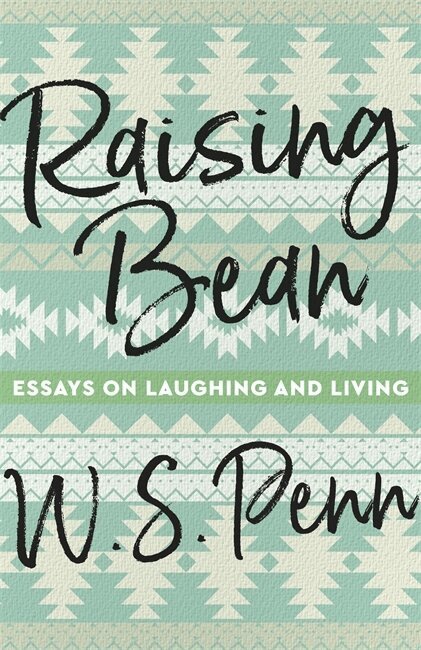
Essays from a Native American grandfather to help navigate life's difficult experiences.Offered in the oral traditions of the Nez Perce, Native American writer W. S. Penn records the conversations he held with his granddaughter, lovingly referred to as ""Bean,"" as he guided her toward adulthood while confronting society's interest in possessions, fairness, and status. Drawing on his own family history and Native mythology, Penn charts a way through life where each endeavor is a journey—an opportunity to love, to learn, or to interact—rather than the means to a prize at the end.Divided into five parts, Penn addresses topics such as the power of words, race and identity, school, and how to be. In the essay "In the Nick of Names," Penn takes an amused look at the words we use for people and how their power, real or imagined, can alter our perception of an entire group. To Have and On Hold is an essay about wanting to assimilate into a group but at the risk of losing a good bit of yourself. "A Harvest Moon" is a humorous anecdote about a Native grandfather visiting his granddaughter's classroom and the absurdities of being a professional Indian. "Not Nobody" uses "Be All that You Can Be Week" at Bean's school to reveal the lessons and advantages of being a "nobody." In "From Paper to Person," Penn imagines the joy that may come to Bean when she spends time with her Paper People—three-foot-tall drawings, mounted on stiff cardboard—and as she grows into a young woman like her mom, able to say she is a person who is happy with what she has and not sorry for what she doesn't.Comical and engaging, the essays in Raising Bean will appeal to readers of all backgrounds and interests, especially those with a curiosity in language, perception, humor, and the ways in which Native people guide their families and friends with stories.
237 kr
Skickas inom 10-15 vardagar
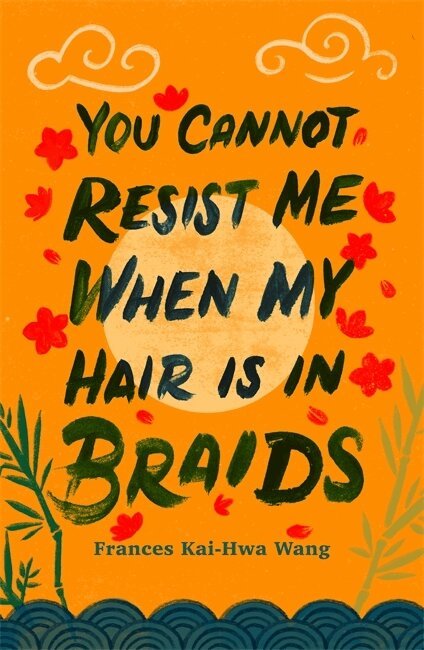
Lyrical, hilarious, and heartbreaking collection exploring Asian American identity, love, community, and power.In the aftermath of a messy divorce, Frances Kai-Hwa Wang writes in the hope of beginning to build a new life with four children, bossy aunties, unreliable suitors, and an uncertain political landscape. The lyric essays in this collection deftly navigate the space between cultures and reflect on lessons learned from both Asian American elders and young multiracial children, punctuated by moments rich with cultural and linguistic nuance. In her prologue, Wang explains, "Buddhists say that suffering comes from unsatisfied desire, so for years I tried to close the door to desire. I was so successful, I not only closed the door, I locked it, barred it, nailed it shut, then stacked a bunch of furniture in front of it. And now that door is open, wide open, and all my insides are spilling out.Full of current events of the day and #HashtagsOfTheMoment, the topics in the collection are wide ranging, including cooking food to show love, surviving Chinese School, being an underpaid lecturer, defending against yellow dildos, navigating immigration issues, finding love in a time of elections, crying with children separated from their parents at the border, charting the landscape of frugal/hoarder elders during the pandemic, witnessing COVID-inspired anti–Asian American violence while reflecting on the death of Vincent Chin, teaching her sixteen-year-old son to drive after the deaths of Trayvon Martin and George Floyd, and trusting the power of writing herself into existence. Within these lyric essays, some of which are accompanied by artwork and art installations, Wang finds the courage and hope to speak out for herself and for an entire generation of Asian American women.A notable work in the landscape of Asian American literature as well as Midwest and Michigan-based literature, You Cannot Resist Me When My Hair Is in Braids features a clear and powerful voice that brings all people together in these political and pandemic times.
237 kr
Skickas inom 10-15 vardagar
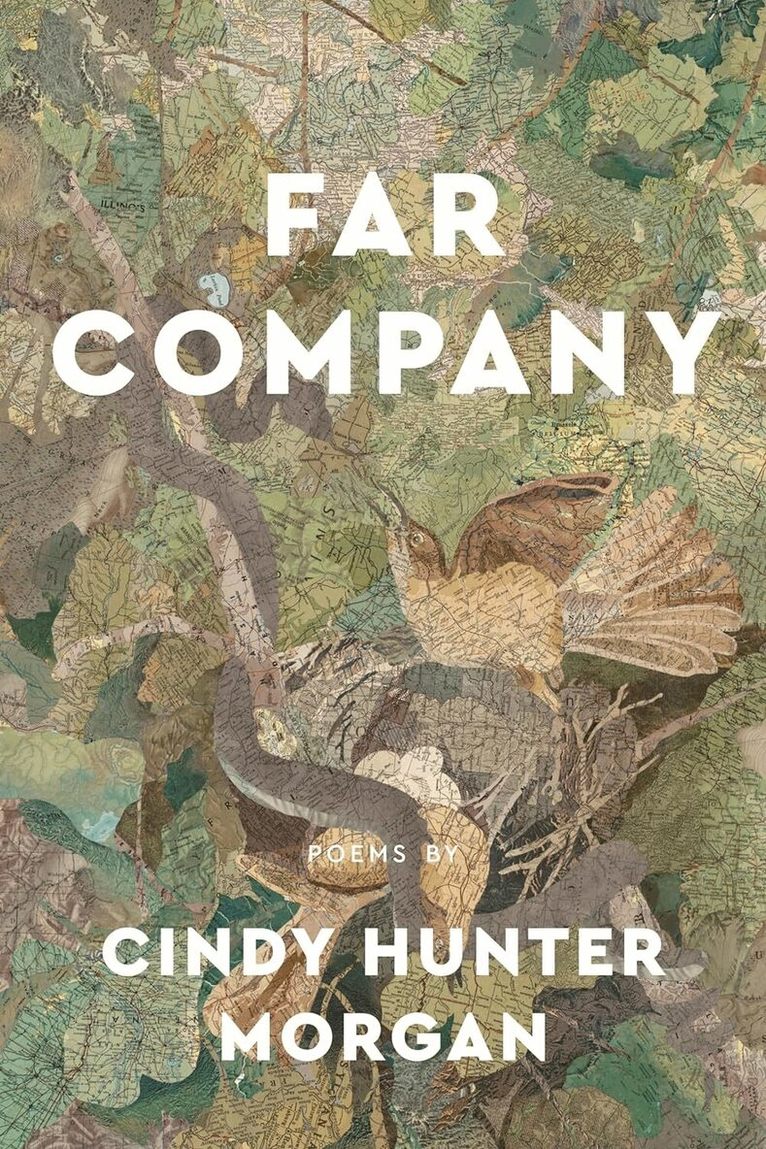
Poems that underscore how we commune with those long loved and long gone.In Far Company, we hear Cindy Hunter Morgan thinking about the many ways we carry the natural world inside of us as a kind of embedded cartography. Many of these poems commune not only with lost ancestors but also past poets. We hear conversations with Emily Dickinson, James Wright, Walt Whitman, and W. S. Merwin. These poets, who are part of Hunter Morgan's poetic lineage, are beloved figures in the far company she keeps, but the poems she writes are distinctly hers. Poet Larissa Szporluk remarked, "The poems in this collection are quiet and deceptively simple. My first response was to be amazed by a seeming innocence in delivery—straightforward, picturesque, and compassionate—that then matured like a crystal into something precious and masterful. We are left with the whole forest having met all the trees one by one. There is so much respect in this collection—respect for natural processes that include intergenerational relationships, shared territories, and myths.The poems in Far Company reveal a mind and a heart negotiating both self and world with compassion and invention. They are cinematic in the way they navigate loss, memory, dislocation, hope, and love—abstractions evoked in deeply specific and nuanced ways. There is the drone that flies over Hunter Morgan's grandparents'farm before the house burns and the stag-handled knife in a pocket, its single blade "folded inside like a secret" on a train in Greece. But this collection is full of quieter cinema, too—a grandfather bending to cinch the girth of a horse, days "green / with snap peas and wild tendrils," and "raindrops beading like sweat/ on the lips of snapdragons." The root of this book is Hunter Morgan's love for family and her love for the land her family has shared.These poems map a journey to many places, inward and outward, and engage with the natural world and the built world, moving between both of those environments in ways that acknowledge the complexities of such crossings. Often melancholic but never sentimental, this collection belongs with any reader who seeks out literature in the organic world.