Medicine and Culture - Böcker
Visar alla böcker i serien Medicine and Culture. Handla med fri frakt och snabb leverans.
5 produkter
5 produkter
302 kr
Tillfälligt slut
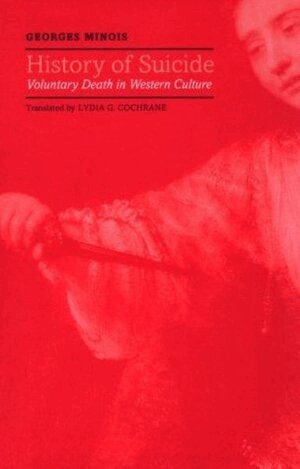
In this compact and illuminating history, Georges Minois examines how a culture's attitudes about suicide reflect its larger beliefs and values-attitudes toward life and death, duty and honor, pain and pleasure. Minois begins his survey with classical Greece and Rome, where suicide was acceptable-even heroic-under some circumstances. With the rise of Christianity, however, suicide was unequivocally condemned as self-murder and an insult to God. With the Renaissance and its renewed interest in classical culture, suicide reemerged as a philosophical issue. Minois finds examples of changing attitudes in key Renaissance texts by Bacon, Montaigne, Sidney, Donne, and Shakespeare. By 1700, the term suicide had replaced self-murder and the subject began to interest the emerging scientific disciplines. Minois follows the ongoing evaluation of suicide through the Enlightenment and the Romantic periods, and he examines attitudes that emerge in nineteenth- and twentieth-century science, law, philosophy, and literature. Minois concludes with comments on the most recent turn in this long and complex history-the emotional debate over euthanasia, assisted suicide, and the right to die.
302 kr
Tillfälligt slut
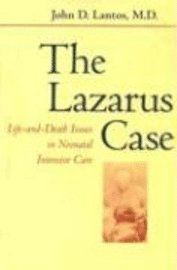
In this new, startlingly original book, John D. Lantos weaves a compelling story that captures the dilemmas of modern medical practice. The Lazarus Case: Life-and-Death Issues in Neonatal Intensive Care begins with a fictional malpractice case-an amalgam of typical cases in which Lantos appeared as an expert witness-and uses it as the framework for addressing the ethical issues surrounding neonatal intensive care. Lantos draws on his experience in neonatal medicine, pediatrics, and medical ethics to explore multiple ethical dilemmas through one poignant representative situation. In Lantos's model case, a doctor decides to stop resuscitation of a premature infant, a tiny "preemie" who seems past reasonable care. The baby survives with severe neurological defects and the parents sue the doctor, alleging that stopping treatment was negligent. From this case, Lantos considers our moral obligations to critically ill babies, the meaning of negligence, and the sorts of social structures that shape the moral consciences of doctors. Each chapter begins with Lantos deposing in the conference room of the plaintiffs' lawyers.The questions put to Lantos throughout the deposition spark an engrossing retelling of his personal experiences with premature babies, as well as his thoughtful discussions of ethics, morality, history, and medical statistics. Sprinkled throughout the book are references to fictional works by Camus, Dostoevsky, Shakespeare, Twain, and others. Lantos uses these literary examples to further illustrate the ambiguities, misunderstandings, responsibilities, and evasions that plague our decisions regarding life and death, medical care and medical education, and ultimately the cost and value of preserving the lives of the most vulnerable among us.
Diagnosing Literary Genius
A Cultural History of Psychiatry in Russia, 1880-1930
Inbunden, Engelska, 2002
600 kr
Tillfälligt slut
The vital place of literature and the figure of the writer in Russian society and history have been extensively studied, but their role in the evolution of psychiatry is less well known. In Diagnosing Literary Genius: A Cultural History of Psychiatry in Russia, 1880-1930, Irina Sirotkina explores the transformations of Russian psychiatric practice through its relationship to literature. During this period, psychiatrists began to view literature as both an indicator of the nation's mental health and an integral part of its well-being. By aligning themselves with writers, psychiatrists argued that the aim of their science was not dissimilar to the literary project of exploring the human soul and reflecting on the psychological ailments of the age. Through the writing of pathographies (medical biographies), psychiatrists strengthened their social standing, debated political issues under the guise of literary criticism, and asserted moral as well as professional claims.By examining the psychiatric engagement with the works of Fyodor Dostoevsky, Nikolai Gogol, Leo Tolstoy, and the decadents and revolutionaries, Sirotkina provides a rich account of Russia's medical and literary history during this turbulent revolutionary period.
498 kr
Skickas inom 5-8 vardagar
Colonial experience was profoundly structured by disease, as expansion brought people into contact with new and deadly maladies. Pathogens were exchanged on a scale far greater than ever before. Native populations were decimated by wave after wave of Old World diseases. In turn, colonists suffered disease and mortality rates much higher than in their home countries. Not only disease, but the idea of disease, and the response to it, deeply affected both colonizers and those colonized. In Romanticism and Colonial Disease, Alan Bewell focuses on the British response to colonial disease as medical and literary writers, in a period roughly from the end of the eighteenth century to the middle of the nineteenth century, grappled to understand this new world of disease. Bewell finds this literature characterized by increasing anxiety about the global dimensions of disease and the epidemiological cost of empire. Colonialism infiltrated the heart of Romantic literature, affecting not only the Romantics' framing of disease but also their understanding of England's position in the colonial world.The first major study of the massive impact of colonial disease on British culture during the Romantic period, Romanticism and Colonial Disease charts the emergence of the idea of the colonial world as a pathogenic space in need of a cure, and examines the role of disease in the making and unmaking of national identities.
322 kr
Skickas inom 7-10 vardagar
In this new, startlingly original book, John D. Lantos weaves a compelling story that captures the dilemmas of modern medical practice. The Lazarus Case: Life-and-Death Issues in Neonatal Intensive Care begins with a fictional malpractice case-an amalgam of typical cases in which Lantos appeared as an expert witness-and uses it as the framework for addressing the ethical issues surrounding neonatal intensive care. Lantos draws on his experience in neonatal medicine, pediatrics, and medical ethics to explore multiple ethical dilemmas through one poignant representative situation. In Lantos's model case, a doctor decides to stop resuscitation of a premature infant, a tiny "preemie" who seems past reasonable care. The baby survives with severe neurological defects and the parents sue the doctor, alleging that stopping treatment was negligent. From this case, Lantos considers our moral obligations to critically ill babies, the meaning of negligence, and the sorts of social structures that shape the moral consciences of doctors. Each chapter begins with Lantos deposing in the conference room of the plaintiffs' lawyers.The questions put to Lantos throughout the deposition spark an engrossing retelling of his personal experiences with premature babies, as well as his thoughtful discussions of ethics, morality, history, and medical statistics. Sprinkled throughout the book are references to fictional works by Camus, Dostoevsky, Shakespeare, Twain, and others. Lantos uses these literary examples to further illustrate the ambiguities, misunderstandings, responsibilities, and evasions that plague our decisions regarding life and death, medical care and medical education, and ultimately the cost and value of preserving the lives of the most vulnerable among us.